
You walk out on a February morning and see a crack in a favorite pot, or a split in the bark of a plant you babied all summer. Winter damage in containers has more than one cause, so the fix depends on what is actually breaking.
Roots in pots are also more exposed to cold than roots in the ground. Here is how to tell the problems apart and what can lower the risk.
Identify what is actually cracking
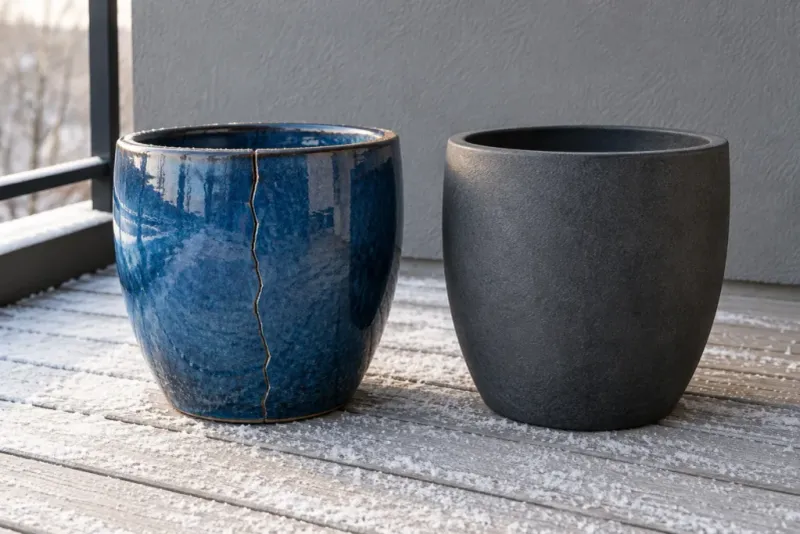
Before you buy mulch or drag pots around, look closely at what split. A crack in the container, a split in the bark, and injured roots are three different problems with three different fixes.
Porous clay and terra-cotta pots can crack in freeze-thaw weather. Illinois Extension explains that water held in the pores of the pot can expand when it freezes and crack the container.
Bark damage often has other causes. UC IPM describes sunscald, which happens when bark warms in sunlight and then cools quickly.
Delaware Extension covers frost cracking, linked to temperature changes on the sunny side of a trunk.
Insulating around the root ball deals with cold exposure below the surface. It will not explain or prevent every crack you see, and it does not repair damage that has already happened.
Why container roots face more winter exposure
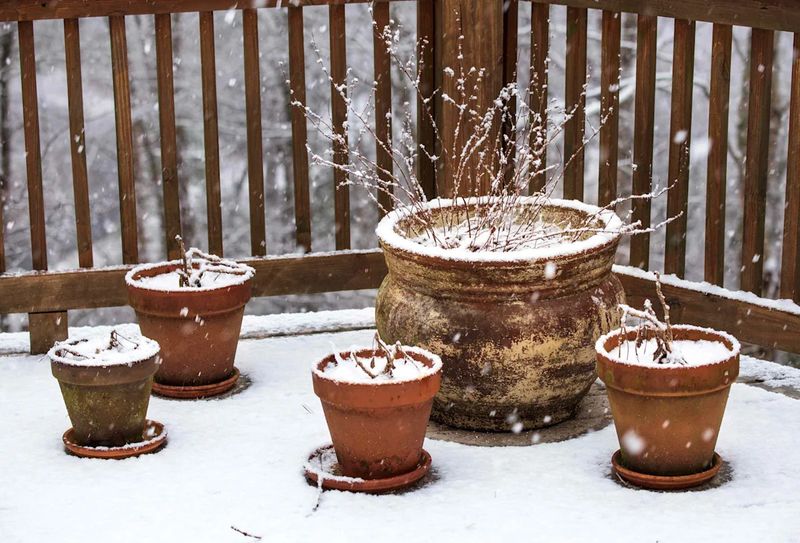
A plant in the ground has a huge blanket of soil around its roots. A pot has only its thin walls, so cold can reach the root ball from the sides, the top, and the bottom.
Roots are also often less cold-hardy than shoots. That means a shrub can look fine above the surface while its roots take a hit, which is why Illinois Extension advises extra protection for potted plants over winter.
Pots also swing between warm and cold more quickly than soil does, especially when sun hits them. Virginia Tech Extension notes that container plants are more vulnerable to temperature extremes than garden plants.
There is no single freezing temperature that dooms every pot. Results depend on the plant, the pot size and material, the site, and how harsh the winter turns out to be.
Group and insulate plants suited to outdoor wintering
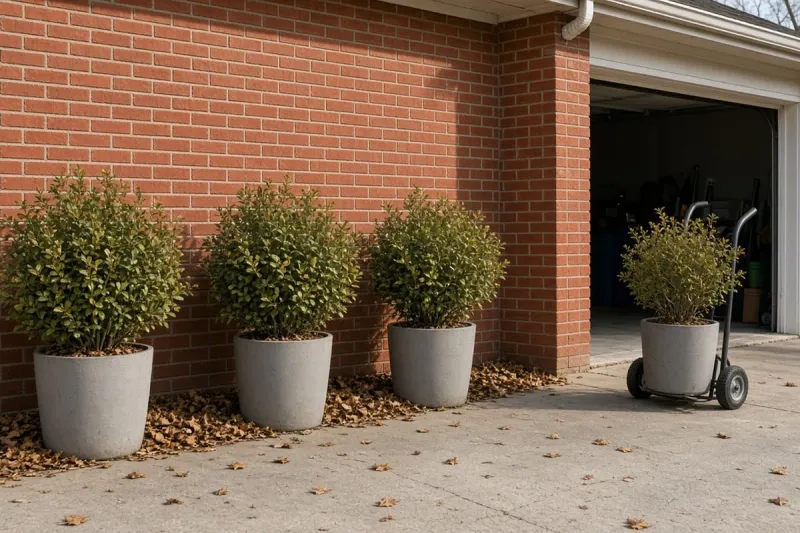
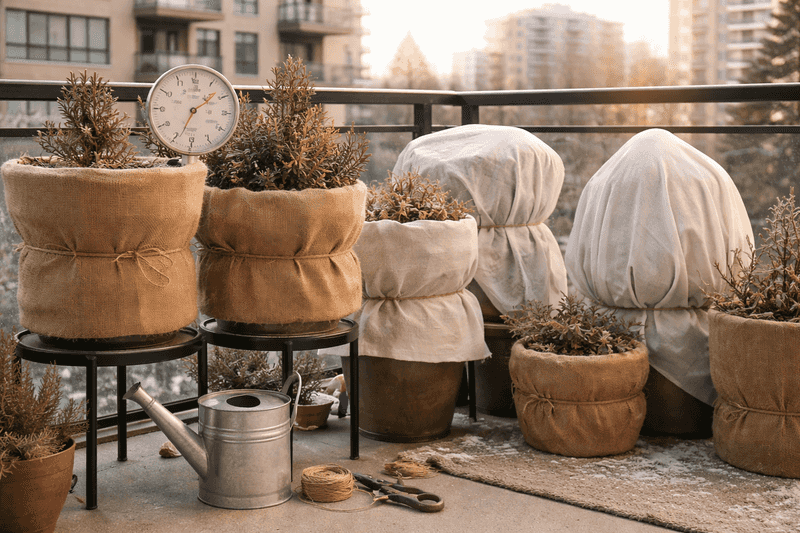
Here is the pot trick. For plants hardy enough to stay outside where you live, cluster the pots close together on the ground in a sheltered, less-windy spot.
Then surround or cover them with leaves, straw, or mulch.
Grouping means the outer pots shield the inner ones, and the insulation can reduce both cold exposure and temperature swings. Illinois Extension recommends heavy mulch around grouped pots.
For depth, Nebraska Extension describes covering containers with about 6 to 12 inches of mulch. Treat that as one example of guidance, not a rule for every climate or plant.
A house can break the wind, but do not count on a wall to keep pots warm. Pick the spot with the least wind and the fewest sudden swings, and remember this lowers risk without guaranteeing survival.
Choose between outdoor protection and storage
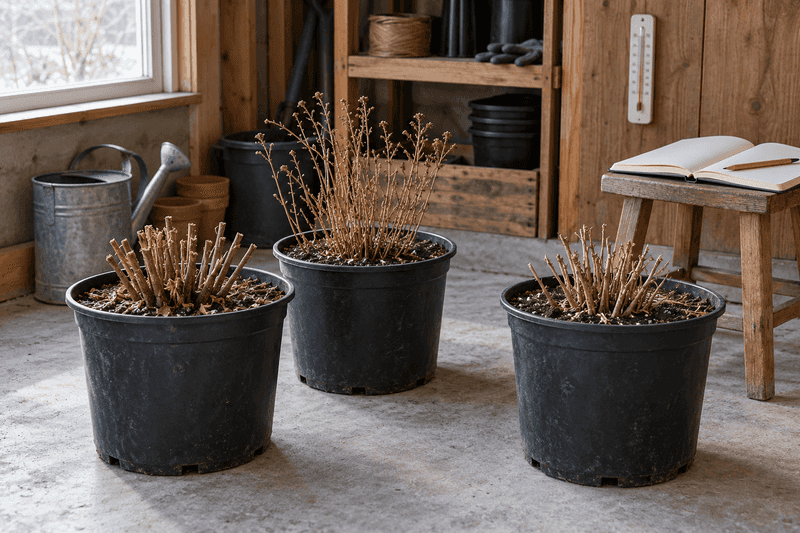
Not every container plant belongs outside. The first question is whether your plant can handle your local winter at all.
A rough selection aid is to choose plants hardy about two zones colder than your own. Extension advice includes this rule, but it is a guideline, not a promise, since the plant, pot, site, and winter all matter.
If burying is practical, sinking a pot into the ground lets the surrounding soil insulate it. Another option is a cool, unheated garage, shed, or similar protected structure, as covered in Illinois Extension’s patio container advice.
The UMass Amherst fact sheet on containerized perennials is a useful companion. Grouping and mulch suit plants that are hardy enough for your conditions, while tender ones are better off in storage.
Keep container figs cool and dormant

Figs are not ordinary hardy shrubs, so skip the one-size-fits-all mulch pile. Penn State Extension recommends moving container figs after a hard frost into an insulated, unheated, preferably dark space.
The goal is dormancy, not comfort. A warm living room can wake the tree at the wrong time, so a cool spot is the better choice.
Water sparingly. About once a month, and only as needed, is enough to keep the roots from drying out completely.
Leafless branches and a quiet, dark corner are a good sign. Outdoor mulching is not an equal substitute for container figs, and even in storage, cold snaps or dry roots can cause trouble, so check in now and then.
Time rose protection for dormancy
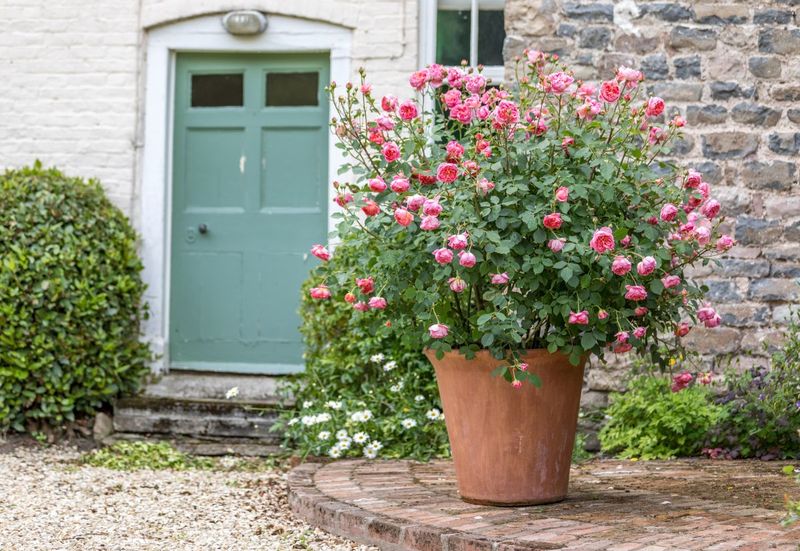
Roses follow their own rules, different from figs. For a potted rose you have two main choices: keep it outdoors in a protected spot, or move the pot to an unheated garage or shed.
If it stays outside, Penn State Extension suggests insulating around the container and protecting the base of the plant.
Timing matters. Penn State advises waiting until after several killing freezes before adding winter insulation, so the rose has reached dormancy first.
Wrapping too early can keep a plant from settling down for winter. Watch your forecast, let the cold do its work, then tuck the pot in.
Check pots for winter moisture
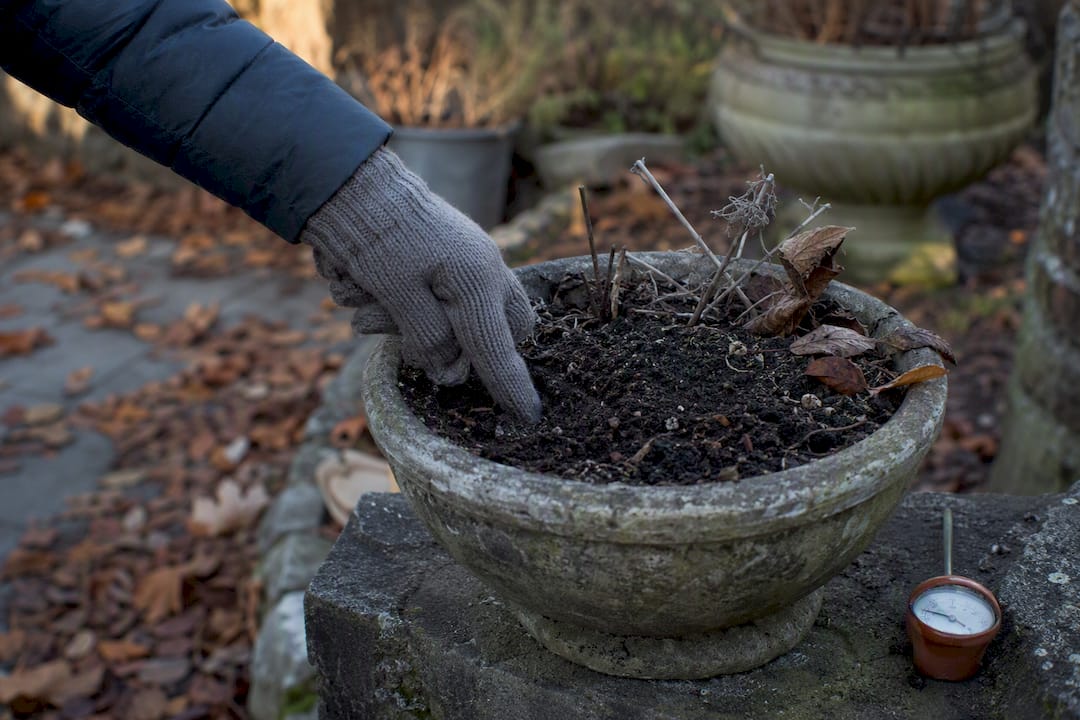
Tucked-in pots still need a look every few weeks. Nevada Extension advises checking containers during winter and watering when needed so the root ball does not dry out.
Pots under eaves may get little rain or snow, so they can dry out while the rest of the yard looks damp. Poke a finger into the soil, and water lightly on a milder day only if it is dry.
Avoid overwatering. Soggy soil is not the goal, and Illinois Extension’s overwintering guidance pairs protection with balanced care.
Match the plan to the problem. A cracked clay pot, split bark, and cold-stressed roots each need their own answer, and insulation lowers cold risk without promising to save every root or stop every crack.
Spring will tell the story, so keep the plan simple and keep checking.