
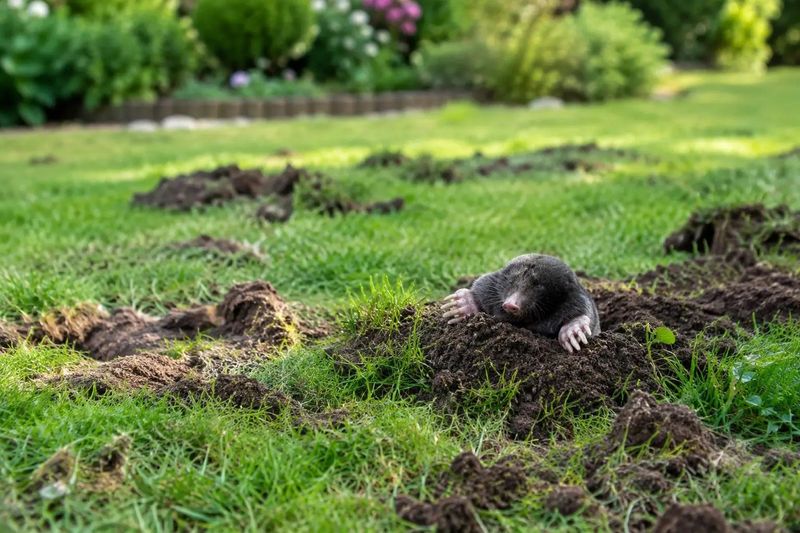
Fresh ridges snaking across your lawn can make you want to grab the first thing in the shed and fight back. Castor oil is the item many people have in mind, but the proof behind it is shakier than the rumors suggest.
Before you pour anything on your yard, it helps to know what the tests really found. A little checking now can save you time, money, and a lot of lawn frustration.
Castor oil is a possible shed remedy, not a proven DIY fix
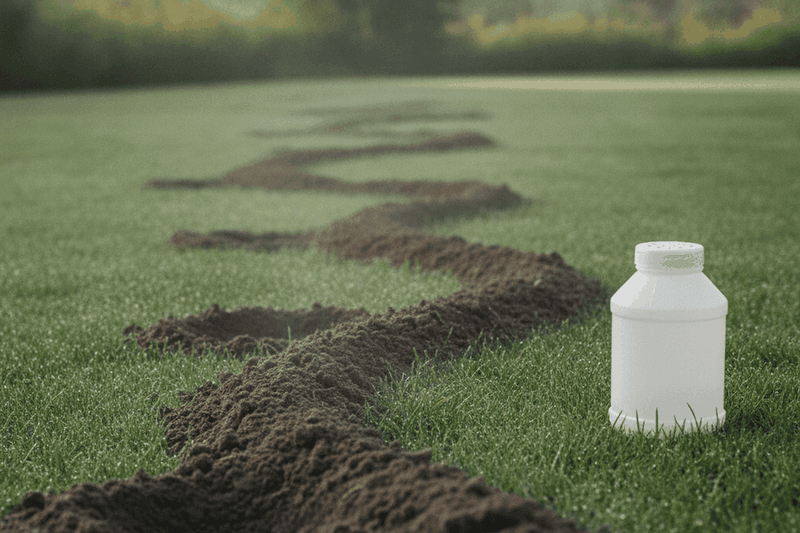
If a shed item is going to get the credit for chasing moles away, castor oil is the likely suspect. It shows up in many mole repellent products, so the idea spread that a bottle from the shelf could do the same job.
That jump is where the trouble starts.
A formulated commercial repellent is not the same thing as plain oil from a bottle. The best-known test looked at a specific product called Molexit, not a homemade mix, a dilution, or an application rate.
Even for the real product, results were mixed. Extension specialists at UC Agriculture and Natural Resources say castor-oil repellents have shown some repellency for eastern moles, while their effect on California moles is unknown.
So think of castor oil as a long shot, not a cure. The sections ahead cover what to try instead.
Castor-oil study results were mixed
The research behind the castor-oil claim is a study of Molexit on eastern moles in Kentucky. It ran two experiments, and they did not agree.
The first, a pilot, found no treatment effect at all.
The later experiment did report reduced mole activity at treated sites. But activity resumed in most plots by six weeks, so any quiet period did not last long.
The authors also noted limits in the study and variation in how the product was applied.
Here is what that means for you. At best, a formulated castor-oil product may reduce activity for a while in some situations.
That is a long way from clearing a yard.
It also does not show that oil from your shed works, and it does not cover every mole species or region. UC experts point out that results with eastern moles cannot simply be applied to California moles.
Check whether moles or voles made the marks
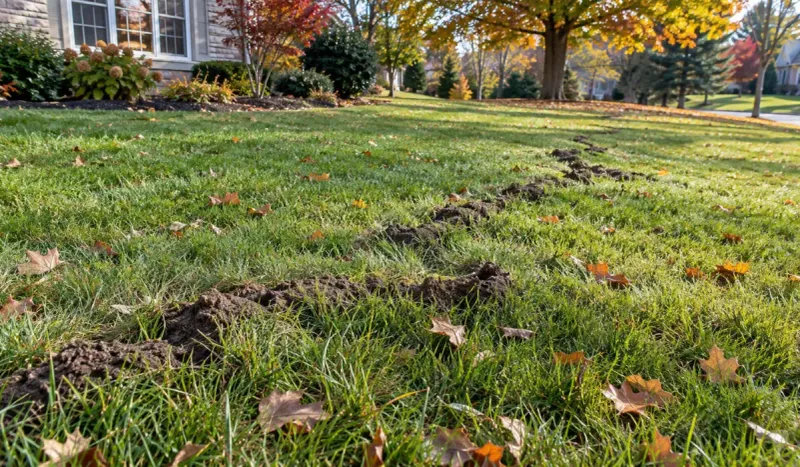
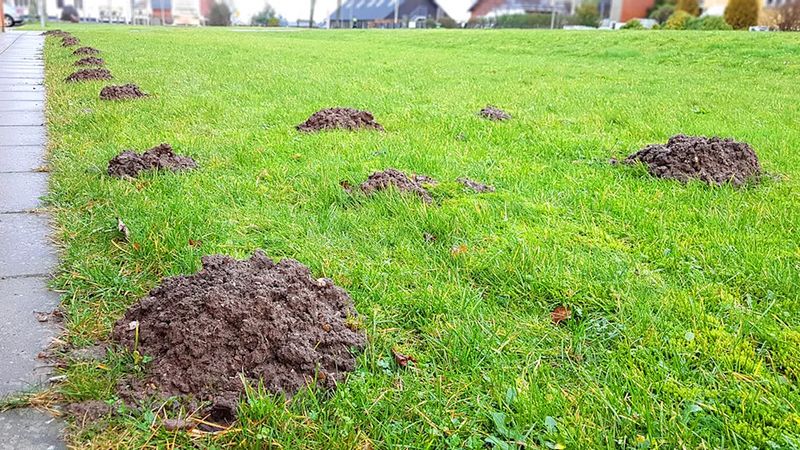
Before choosing any fix, make sure you know who made the mess. Moles push up raised, often wandering ridges and round or volcano-shaped mounds of soil.
Those marks come from tunneling under the turf.
Voles leave different clues. They make surface runways through the grass and chew on plants.
They also sometimes use mole tunnels, so a vole in a mole run does not mean you have a mole problem.
That mix-up matters. According to UC Agriculture and Natural Resources, voles and moles need different management.
Walk the yard and look closely. Raised ridges and mounds point to moles.
Gnawed stems and open surface trails point to voles. Treating the wrong animal wastes money and leaves the real damage going.
Minor mole damage may not need control
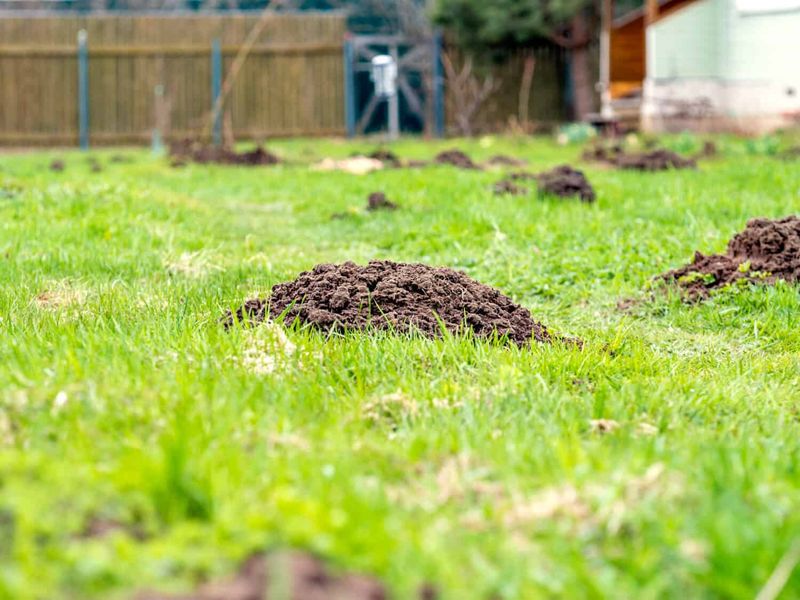
Some lawns can live with a little tunneling. If the ridges are few and the damage is mostly a bump in the grass, you may not need to do anything drastic.
Step on raised runs and press mounds back into place. Then keep an eye on the yard.
UF/IFAS Extension notes that mole activity and the visible damage may be temporary.
Moles also do some useful work. They eat earthworms and other soil invertebrates, including some lawn pests, and their tunnels move soil around.
Ask yourself a simple question. Is this a nuisance you can smooth out, or is it wrecking the lawn week after week?
If it is the first, tamping and watching is a low-cost, low-risk choice.
Treating grubs may not stop mole tunneling
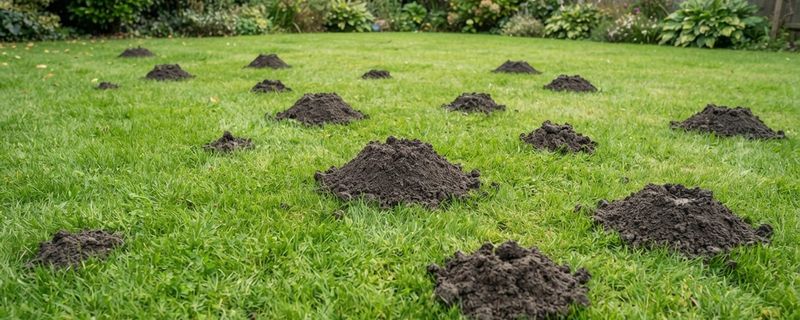
A common belief says moles show up only because grubs are feeding in your lawn. Kill the grubs, and the moles leave.
It sounds neat, but it is misleading.
Moles eat earthworms and many other soil animals, not just grubs. Iowa State University Extension notes that treating for grubs may not solve a mole problem.
So a lawn full of tunnels can still have plenty of food even after a grub treatment. Spraying may cost money and still leave the ridges.
Save insecticides for a confirmed insect problem, such as grubs you have actually found chewing the roots. Do not use them as a stand-in for mole control.
Confirm an active runway before trapping
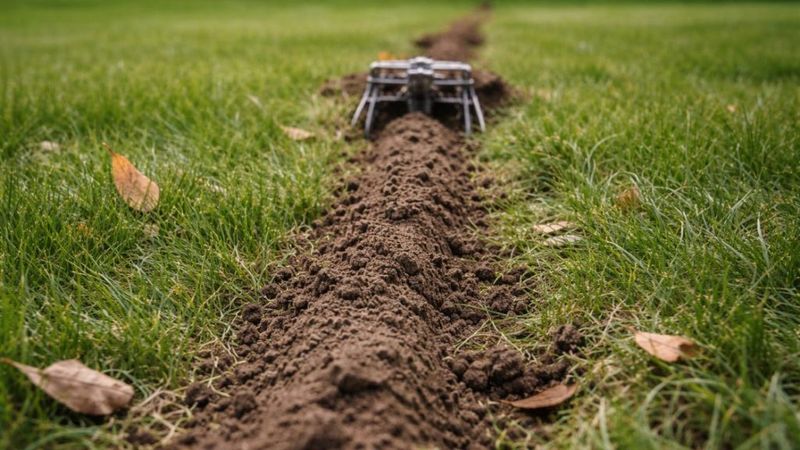
When damage keeps coming back, trapping is the more dependable route. Extension sources, including University of Missouri Extension, favor it over folk remedies for persistent problems.
Start by finding a runway that looks active. Tamp down a short section, then check back in a day or so.
If the mole has pushed it up again, that tunnel is in use.
Place a suitable trap in that active run and follow the instructions that come with it. Details matter, so read them before you set anything.
Safety counts here too. Keep traps inaccessible to children and pets, and check the site regularly.
A trap set in a dead tunnel catches nothing, which is why the tamp test comes first.
Keep mothballs and improvised treatments out of tunnels
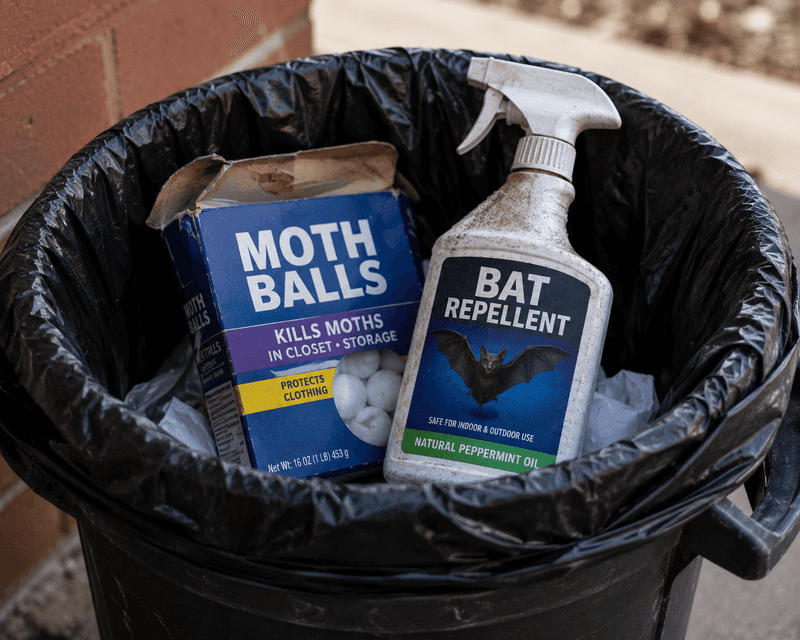
Mothballs are a popular tip, and a bad one. The National Pesticide Information Center says they are not meant to repel animals outdoors, have little or no effect for that purpose, and can expose people and pets to pesticide vapors.
The same goes for gasoline, bleach, ammonia, sharp objects, broken glass, or razor blades pushed into tunnels. These tricks are ineffective or hazardous, and they can harm soil, pets, and you.
Homemade pesticide recipes are no better. Nobody has tested the dose, and guessing is risky.
If you do consider a pesticide product, use it only when its label lists your pest, your site, and your type of use. Follow the label and local rules, since Virginia Cooperative Extension notes that product registrations can differ by state.
Match the response to the damage

Think of it as a short ladder. First, identify the animal, because moles and voles call for different moves.
Second, if the damage is light, tamp the ridges and mounds and watch what happens.
Third, if confirmed mole activity keeps tearing up the lawn, consider properly set traps, as laid out by University of Missouri Extension. Skip mothballs and homemade tunnel treatments.
As for castor oil, the one study of a formulated product found mixed results, and that research does not show that household oil is a reliable fix.
The best shed tool may turn out to be a sturdy boot for tamping.