
That patch of grass by the driveway asks for water, mowing, and another weekend of your time. Swap part of it for well-chosen plants, and the same space can feed butterflies, shelter birds, or bring color without constant clipping.
These seven plants offer useful jobs for Florida yards, with options for sunny sand, smaller beds, and open borders. The trick is matching each plant to your spot, not expecting every choice to act like a walkable lawn.
1. Sunshine Mimosa
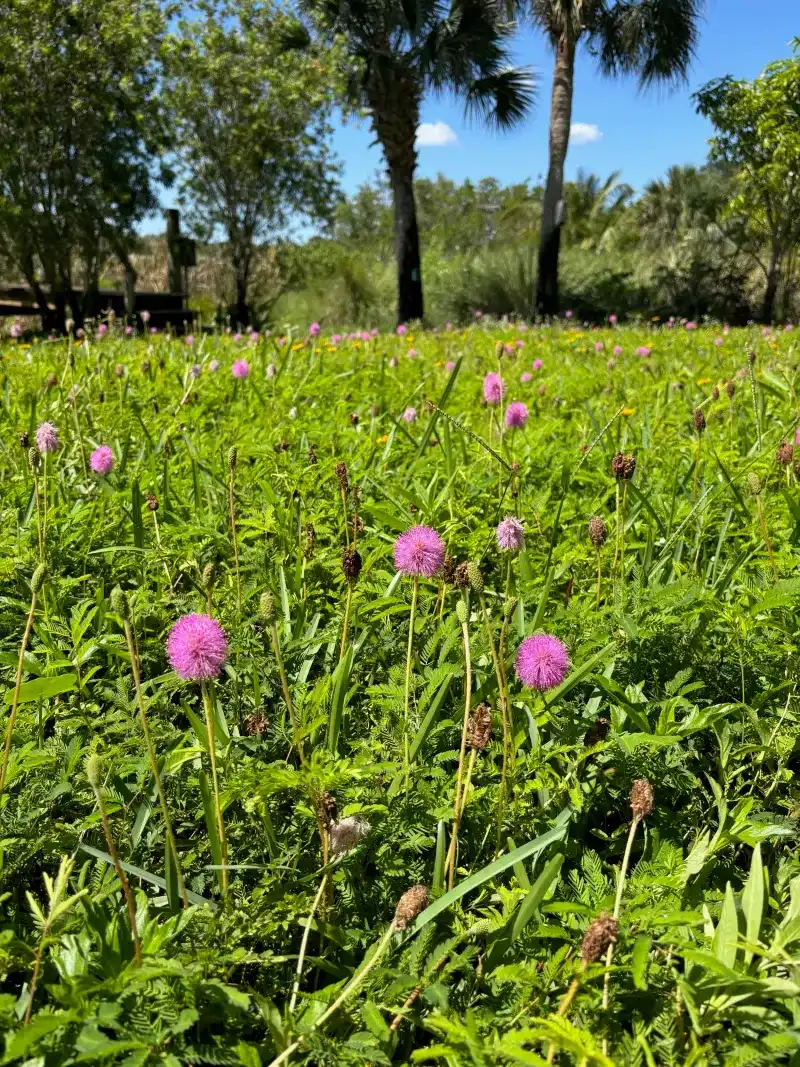
Pink powder-puff flowers are a pretty good reward for retiring a strip of thirsty turf. Sunshine mimosa, Mimosa strigillosa, spreads into a low mat of fine leaves and gives bees a reason to visit.
Use this Florida native in sunny, well-drained areas where you want living groundcover rather than a formal grass carpet. It handles light foot traffic once established, but it is not the right surface for daily soccer games or a busy dog run.
Plant nursery-grown plugs and keep their roots moist while they settle in. Once established, sunshine mimosa tolerates dry periods, though a long drought can leave it looking thin.
Its spreading stems help fill open soil, but they can also wander into neighboring beds. Give the patch a clear boundary and trim runners when needed rather than expecting it to stay inside an invisible line.
Start with a small area beside a path so you can watch its growth. Expect some winter browning in colder parts of Florida, and keep stepping stones where people walk most often.
2. Frogfruit
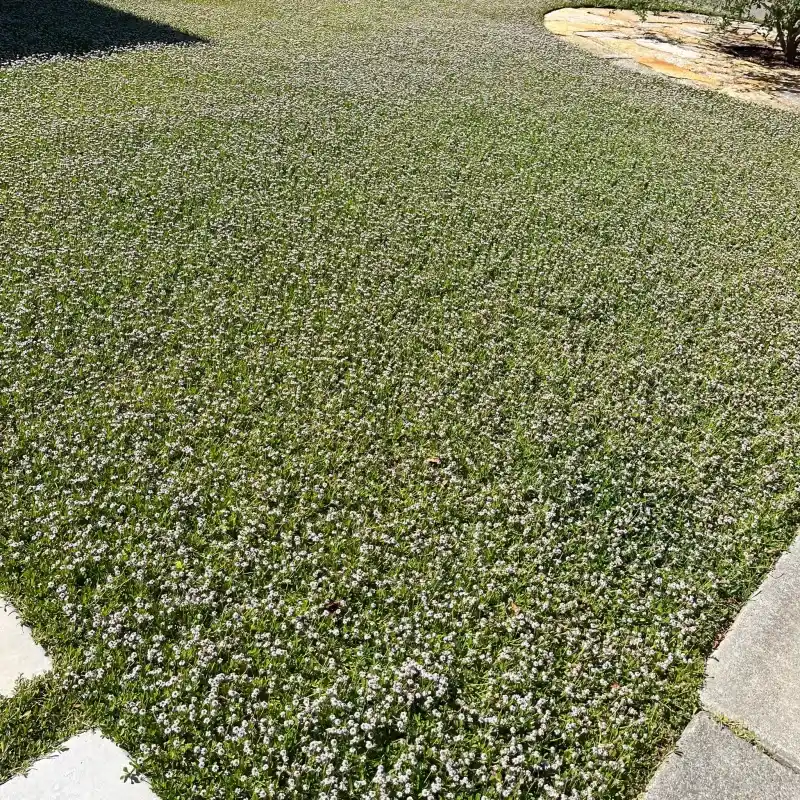
A butterfly garden does not have to stand waist-high. Frogfruit, Phyla nodiflora, keeps much of the action near your ankles, where tiny white flowers draw nectar visitors and its leaves feed the caterpillars of several butterfly species.
That makes it especially useful along the sunny edge of a patio or beneath an open planting of taller natives. It grows in sun to partial shade, with better flowering where sunlight is stronger.
Unlike plants that demand sharply drained sand, frogfruit can handle a wider range of moisture conditions, including occasional wet spells. Established plants also tolerate some drought, making it worth considering for a yard that alternates between rain and dry weather.
Give new plugs regular attention until their roots spread, and pull weeds before they become tangled in the mat. Occasional trimming can tidy a patch, but avoid mowing so often that you remove its flowers.
Expect an informal look rather than golf-course smoothness. Keep stepping stones through busy routes, and avoid placing a flower-filled patch where barefoot children regularly play because bees will visit.
3. Muhly Grass
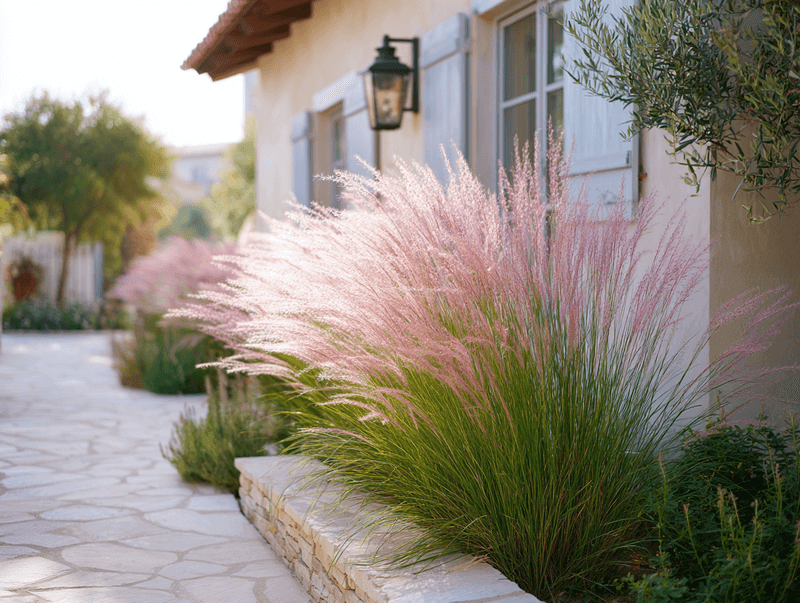
Come fall, a plain border can turn into a pink cloud. Muhly grass, Muhlenbergia capillaris, earns its space with airy flower plumes and a rounded shape that looks tidy even before blooming begins.
Use it to replace a sunny strip of lawn along a driveway, fence, or front walk. Most landscape plants reach roughly 2 to 4 feet tall and wide, so leave room for mature clumps instead of squeezing them tightly together.
Full sun brings the strongest flower display. Choose a site with good drainage, since a low pocket that stays soggy after storms is a poor match for this grass.
Water during establishment, then adjust irrigation to rainfall and plant condition rather than keeping the old turf schedule. Once rooted, muhly handles dry conditions well and usually needs little fertilizer in a suitable site.
Let the fall plumes stand while they still look good. If the clump needs refreshing, cut it back in late winter before new growth begins, rather than shearing it repeatedly throughout the year.
4. Coontie
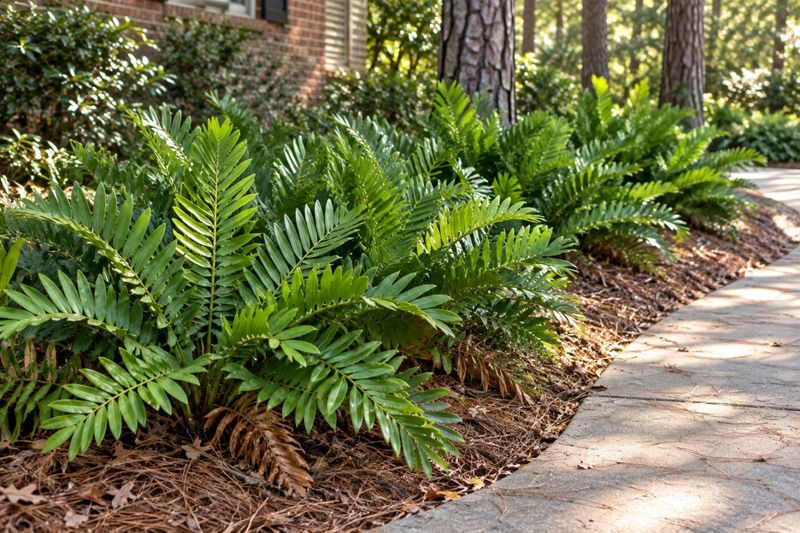
For the bed that needs structure instead of another round of seasonal flowers, coontie brings steady green shape. Zamia integrifolia is a native cycad, not a palm, although its arching leaves give it a similar tropical feel.
Its biggest homeowner benefit is patience in plant form: slow growth, little pruning, and a compact footprint that suits entry beds. Many plants mature around 2 to 3 feet tall, with a wider spread over time.
Coontie grows in sun or partial shade and needs well-drained soil. Once established, it tolerates drought, but it should not sit in a wet depression or receive lawn irrigation simply because a nearby sprinkler reaches it.
There is a wildlife bonus, too. Its foliage supports larvae of the rare Atala butterfly where that butterfly occurs, especially in parts of South Florida.
Buy nursery-propagated plants, never wild-collected specimens. All parts are poisonous if eaten, especially the seeds, so choose another plant where pets or children may chew them; also inspect foliage occasionally for scale insects.
5. American Beautyberry
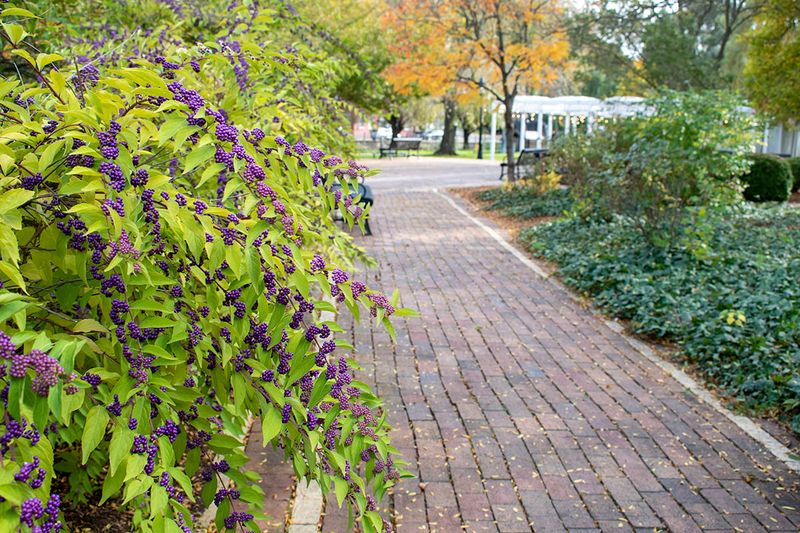
Those bright purple berries look almost too bold to be real. On American beautyberry, Callicarpa americana, they gather around the stems in clusters that turn an ordinary shrub border into a late-season highlight.
Birds eat the fruit, giving this Florida native a clear job beyond decoration. Place it where you can watch visitors from a window, or use several plants to replace a hard-to-mow stretch near a wooded edge.
Allow roughly 4 to 8 feet of height and width, depending on conditions and pruning. Sun to partial shade works, with more light generally helping the plant produce a fuller crop of berries.
Beautyberry adapts to many Florida soils and tolerates some dryness once established, although severe drought may cause wilting or leaf loss. Water young shrubs as needed and mulch around them without piling material against the stems.
Its loose shape belongs in a relaxed border, not a clipped hedge. Prune in late winter if size control is needed, and remember that this deciduous shrub can look bare during part of the year.
6. Firebush
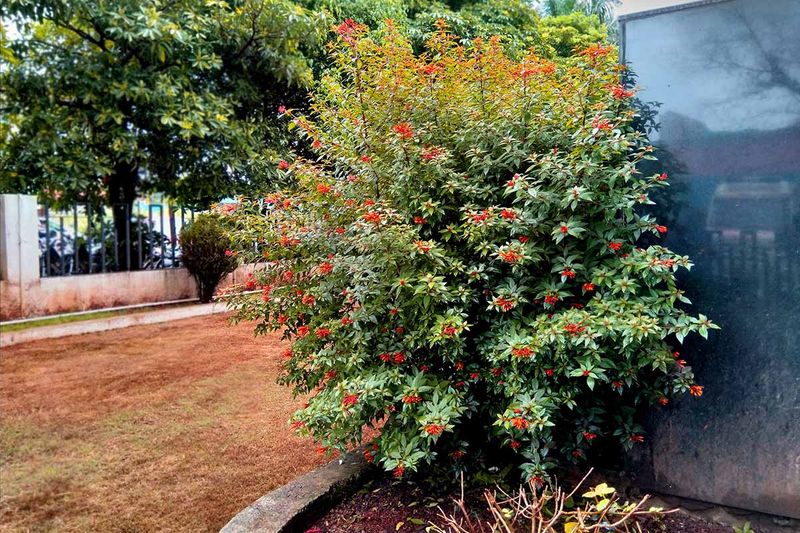
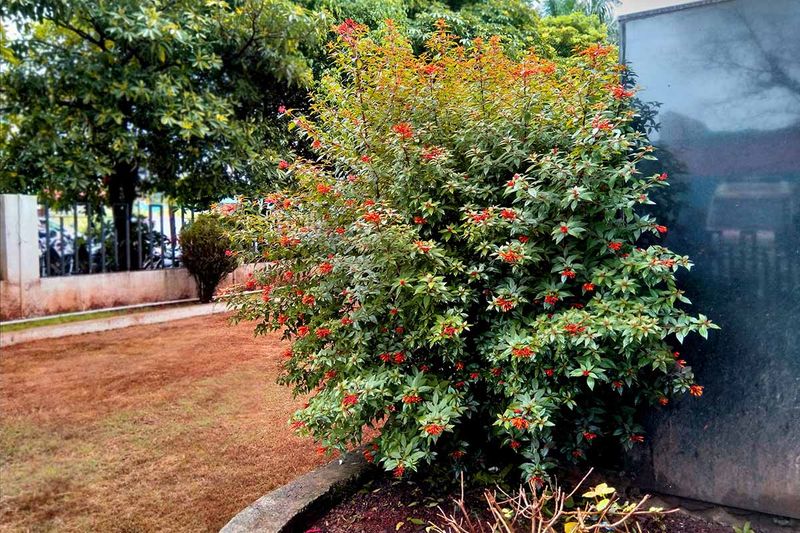
Orange-red flower tubes can turn an empty fence line into a busy feeding stop. Firebush offers nectar for butterflies and, where they occur, hummingbirds, while its leafy branches add cover and screening.
The native firebush, Hamelia patens var. patens, is best suited to Central and South Florida landscapes. In colder areas, freezes may kill it back or make it a less dependable choice, so ask your county Extension office about local performance.
Give it sun for heavier flowering or partial shade where conditions call for it. A mature shrub can grow well beyond 6 feet and may become much larger in frost-free areas, so keep it away from narrow foundation beds.
Check nursery labels carefully if native habitat value is your goal, since other forms and related plants are also sold as firebush. Buy from a seller who can identify the plant.
Water regularly while it establishes, then reduce irrigation as roots develop. Use selective pruning rather than frequent hedge shearing, which removes flowers and creates extra work.
7. Blanket Flower
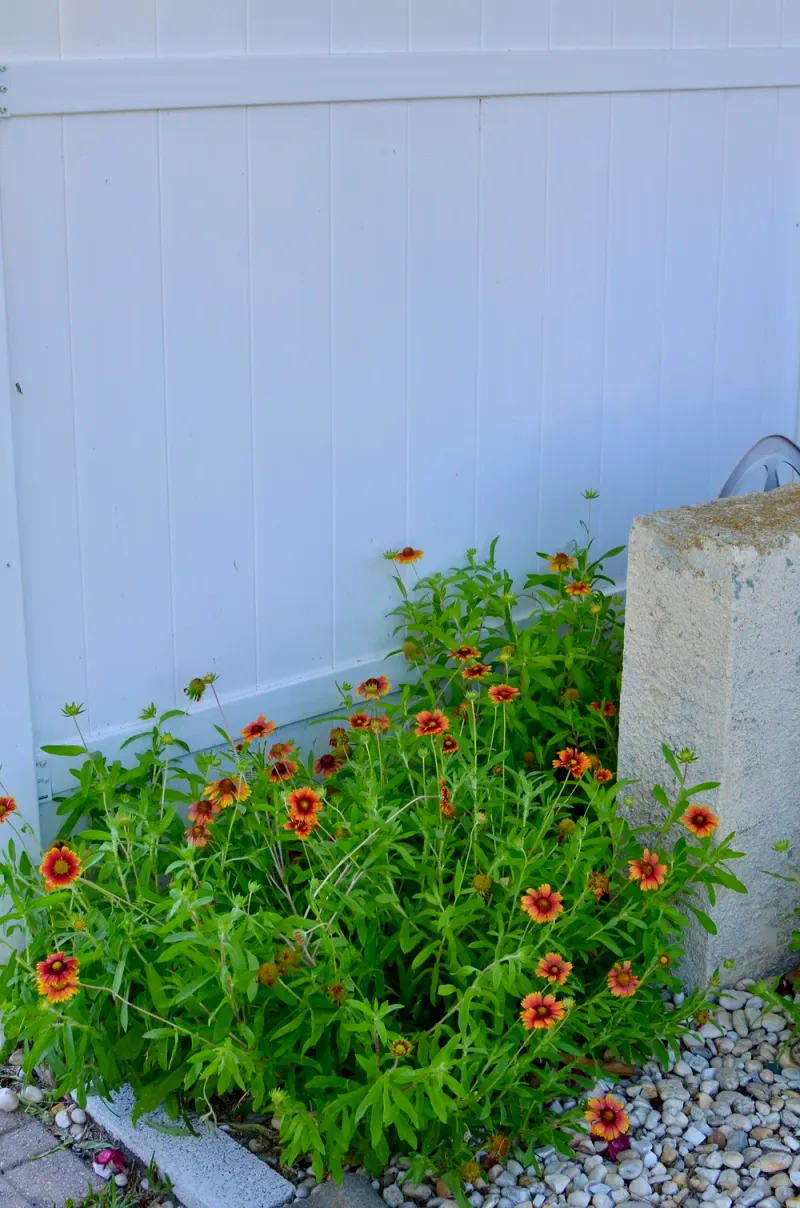
Hot sand beside the mailbox can be a miserable place to keep grass green. Blanket flower, Gaillardia pulchella, offers a colorful alternative for that sunny, fast-draining spot, with red-and-yellow blooms that attract bees and other flower visitors.
Think of it as a flowering bed plant rather than a walkable groundcover. It works especially well along paths and in small lawn-conversion patches where you can enjoy the blooms up close.
Give it full sun and avoid soggy soil. Water new plants until they establish, but do not assume more irrigation or richer soil will make them perform better; overly wet conditions can shorten their lives.
Plants often behave as annuals or short-lived perennials in Florida, so this is not a permanent shrub substitute. Leave some seed heads if you want seedlings, and remove unwanted volunteers while they are small.
Although often marketed as a Florida native, its native status in the state is disputed, so skip that claim when buying. For a strict native-only project, ask a local native nursery for a locally appropriate substitute.