
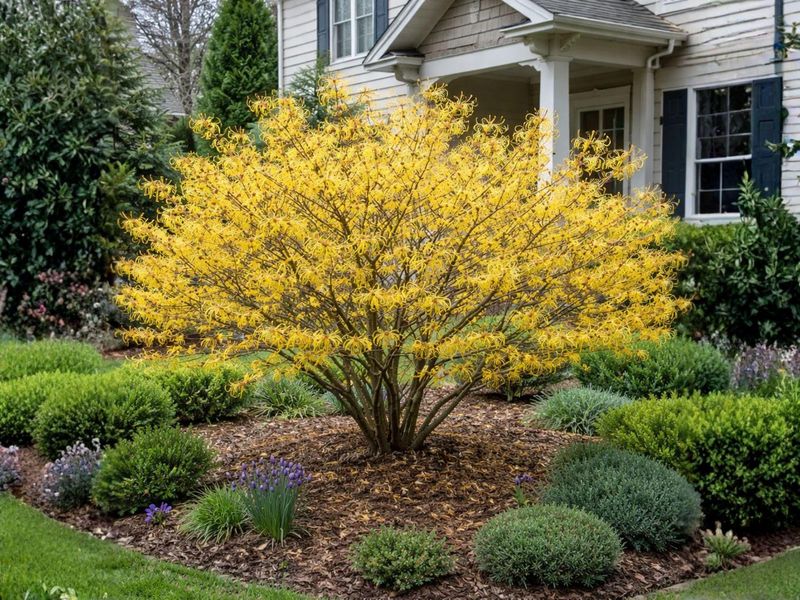
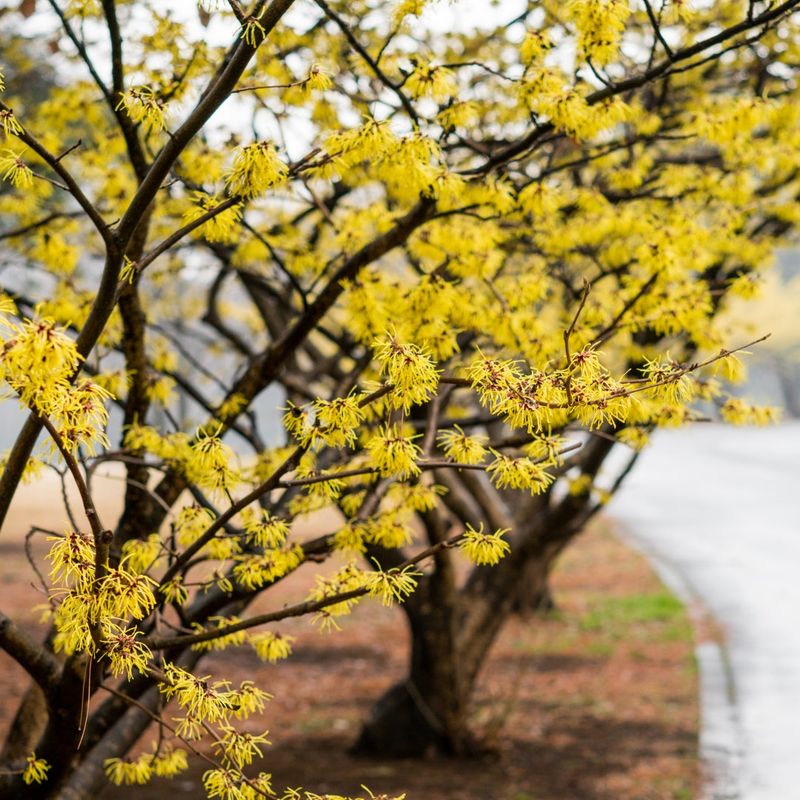
Most shrubs finish their show by summer, but American witch hazel is just getting started when the leaves turn. This North Carolina native sends out spidery yellow flowers from fall into early winter.
It is not a small plant, and it has some real site needs. Here is how to tell whether your yard has room for it.
A late-season flower, not a bloom that waits for bare branches
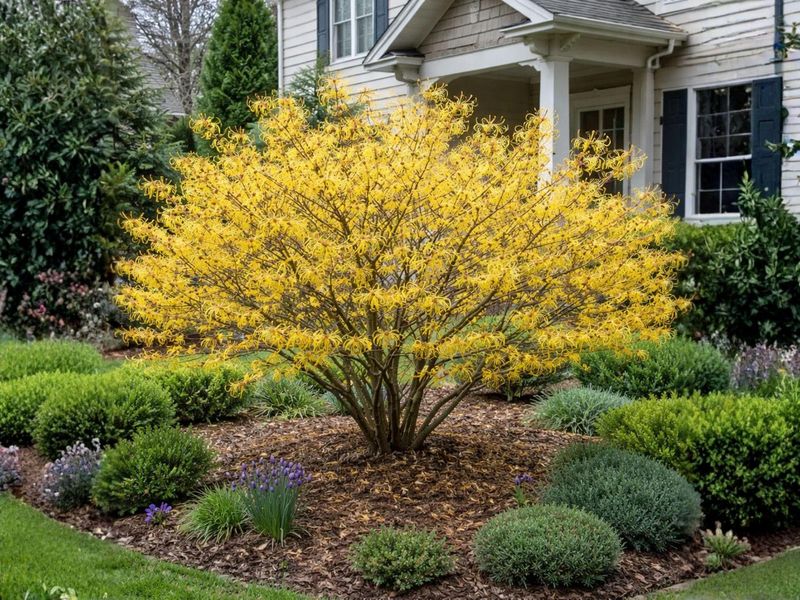
Late in the year, when many gardens have less color to offer, American witch hazel opens thin, ribbon-like yellow flowers. It is an unusual timing for a shrub, and that is the whole appeal.
Plenty of other plants can still be blooming in a North Carolina yard then, but few native shrubs flower this late.
The catch is that it does not always wait for the yard to go bare. N.C.
Cooperative Extension in Beaufort County notes that the blooms can open while leaves are still on the plant. Because the flowers are yellow, they can blend right in with yellow autumn foliage.
Once the leaves drop, the flowers become much easier to spot against bare branches.
Timing also varies. NC State Extension lists flowering from October through December, and other sources report anything from late September to December.
Where you live and how the season unfolds both matter, so do not plan around one specific week.
Cold weather adds one more quirk. When temperatures drop, the petals can curl inward, then reopen when it warms up again.
If your shrub looks closed up on a chilly morning, it has not failed. Check it again on a milder afternoon.
Choose the fall-blooming native by its botanical name
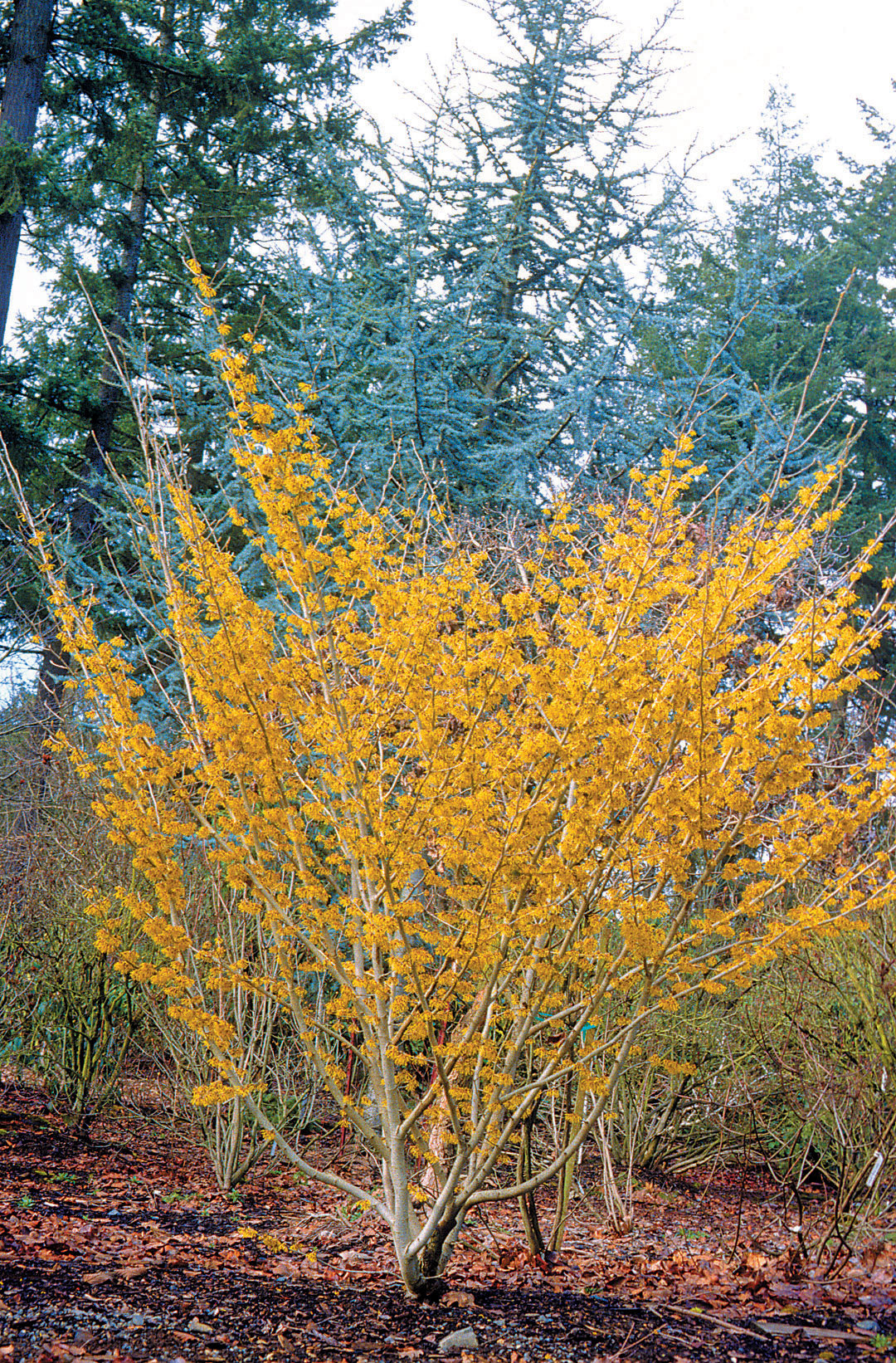
Shopping by common name can lead you to the wrong plant. Look for the botanical name Hamamelis virginiana on the tag.
That is the witch hazel native to eastern North America, including North Carolina, and it is the one that flowers in fall.
Other witch hazels bloom on a different schedule. Ozark witch hazel, H. vernalis, typically flowers in late winter or early spring.
Many showier nursery selections are hybrids with Asian parentage, as the Beaufort County Extension center points out. If you want fall flowers from a true native, the label matters.
Set your expectations to match the plant. The native species has relatively small, subtle flowers compared with some of those hybrids.
You will not get a dramatic burst of color from across the yard.
What you get instead is distinctive timing, native status, and a good fit for a naturalized planting. As NC State’s plant profile describes it, this is a shrub of woodland edges.
Think of it as a quiet performer that earns its place by blooming when little else around it looks the same.
Give this woodland-edge shrub room to grow
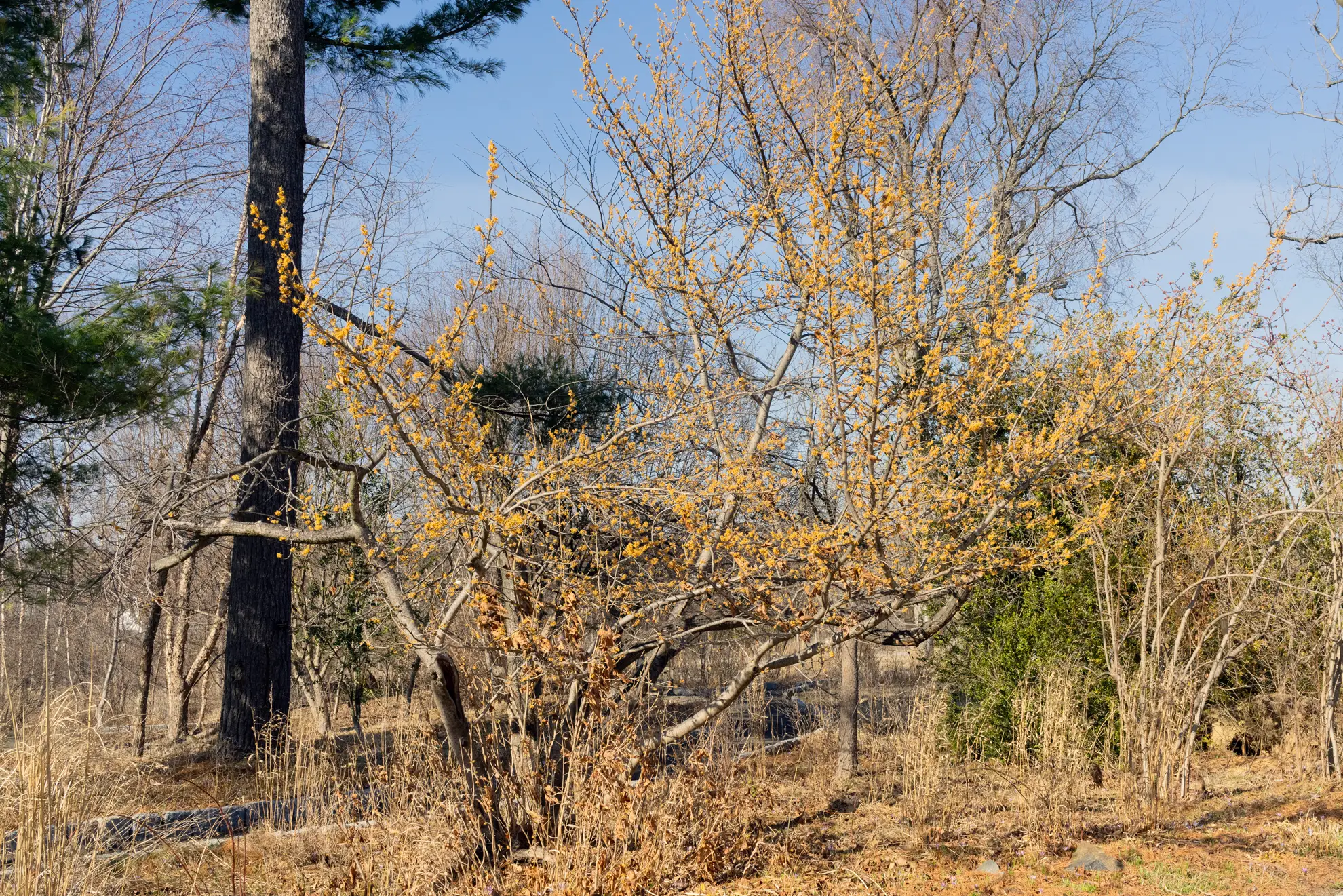
Out in the wild, witch hazel grows along woodland margins and stream banks. That tells you a lot about what it wants at home: light from the side or above, and soil that stays damp without turning soggy.
A bare strip next to the house is not that.
Plan for size before you plant. NC State lists mature height at about 15 to 30 feet, with a spread of 15 to 20 feet.
That makes it a substantial shrub or small tree, not a compact foundation plant. Measure the spot, then picture a canopy nearly as wide as it is tall.
For light, NC State Extension says full sun to partial shade works, though flowering is best in full sun. If your only option is a shadier corner, expect the shrub to grow but possibly bloom less.
Soil matters just as much. Aim for moist, well-drained ground with plenty of organic matter.
Clay is tolerated, but the plant is drought-intolerant, so clay tolerance does not make a dry, baked slope a good choice. A low spot near a downspout or the edge of a wooded area is a better bet than a sunny, dry hillside.
Across North Carolina, from mountain coves to Piedmont yards to coastal plain lots, the same test applies. Ask whether the spot is roomy and reliably moist.
Use the late-fall planting window when the site is ready
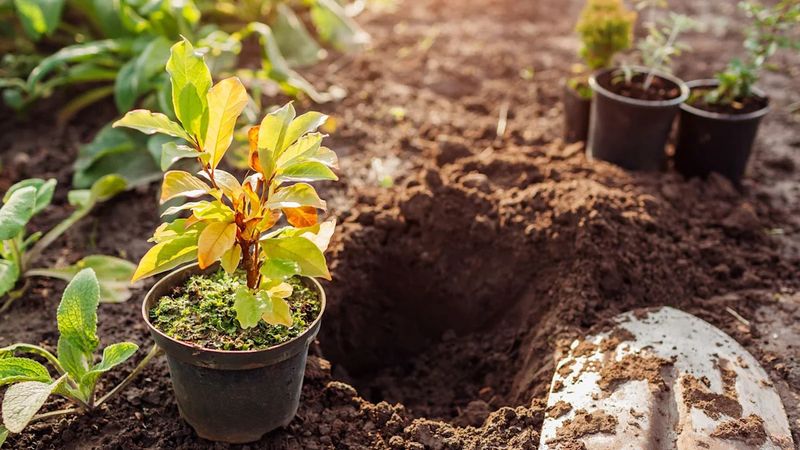
Planting season for woody plants is longer than many people think. NC State’s Extension Gardener Handbook says container-grown woody ornamentals generally do best in late fall or early spring.
Late-fall planting can also mean less watering attention than planting in warm weather.
That is useful guidance, not a promise. Your soil, rainfall, and the spot you choose still shape how quickly a new shrub settles in.
A late-fall planting in a bad location will not outperform an early-spring planting in a good one.
So let the site decide. Before you buy, confirm the space is big enough for a shrub that can reach 15 feet or more in width, and that the ground holds moisture while still draining.
Once those boxes are checked, late fall is a handy time to get the shrub in the ground.
There is a nice bonus to buying then. If you shop at a garden center in the fall, you may see witch hazel in flower, which helps you confirm you are bringing home the fall bloomer you want.
Check the botanical name on the tag anyway.
Plant at root-ball depth and make the hole wider
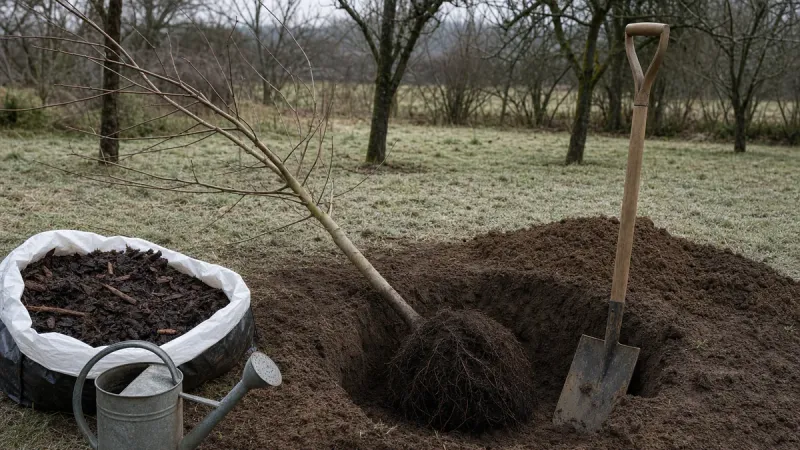
Digging the right hole is the main job. According to the NC State handbook, the hole should be no deeper than the root ball and two to three times wider.
A wide hole gives roots loose soil to spread into, while a shallow one keeps the top of the root ball from sinking below the surrounding ground.
Set the shrub in so the top of the root ball sits level with the soil around it. Fill in with the soil you dug out, and leave the rest of the planting bed undisturbed.
If you are working with heavy clay, the wide hole is especially helpful.
Now bring in the site rules from earlier. Choose a spot with full sun to partial shade and moist, well-drained soil that has organic matter.
Remember that NC State lists witch hazel as drought-intolerant.
That means a late-fall planting is not an excuse to forget about water. Check the soil by hand during dry stretches and make sure the root zone does not dry out.
Cooler weather may reduce how often you need to look, but it does not remove the need.
Treat its wildlife benefits as potential, not guaranteed
A shrub that flowers when most insects have slowed down sounds like a wildlife jackpot. There is some truth to it.
North Carolina sources list moths and other pollinators as visitors, and NC State’s plant profile notes that birds and small mammals may eat the seeds.
Still, keep your expectations modest. A study of more than 40,000 flowers found that insect visits were infrequent.
Flies and small bees looked like the likely pollinators. Fruit set was below 1 percent in the populations studied.
In practical terms, a single witch hazel in your yard may offer some late nectar and pollen, and it may produce a few seeds. It is unlikely to be a major food supply, and you should not count on steady bird or pollinator traffic.
That is fine. The strongest reasons to plant it are simpler: it is a North Carolina native, and it brings flowers to a part of the year when you may want more to look at.
If wildlife shows up, treat it as a bonus.
Choose it for space, site, and late-season interest
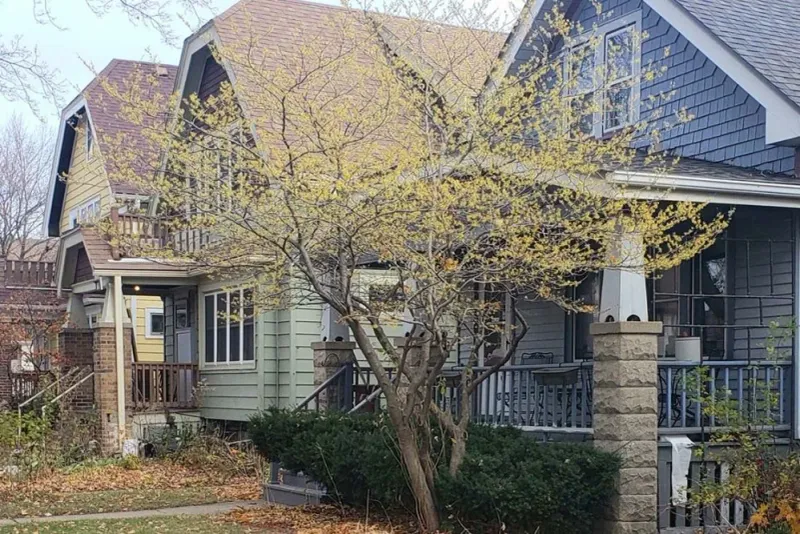
American witch hazel suits a yard with room for a big shrub, moist and well-drained soil, and an owner who likes a native plant with a late flowering season. It is a poor match for a tight foundation bed or a dry, sunbaked slope.
Go in knowing what you will see. As Beaufort County Extension explains, bloom may begin while leaves are still on, and the native’s flowers are subtle rather than dramatic.
Your next step is easy. Walk the yard and pick a roomy, moist spot, then check for Hamamelis virginiana on the tag.
Some of the best garden moments are small ones, like a thread of yellow on a gray November morning.