
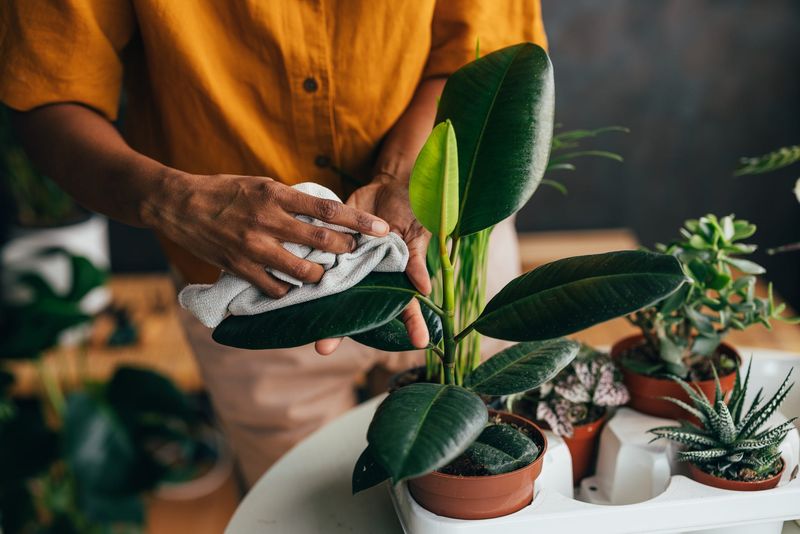
Rubber plant leaves are supposed to look glossy, so a dull, hazy plant can be worrying. Before you decide something is wrong, take a close look at the surface of the leaves.
A thin layer of dust or grime can hide the shine, especially on plants that sit indoors for months. A quick, careful cleaning is a safe first step and also shows you what the plant really looks like.
Is dust hiding the rubber plant’s natural shine?
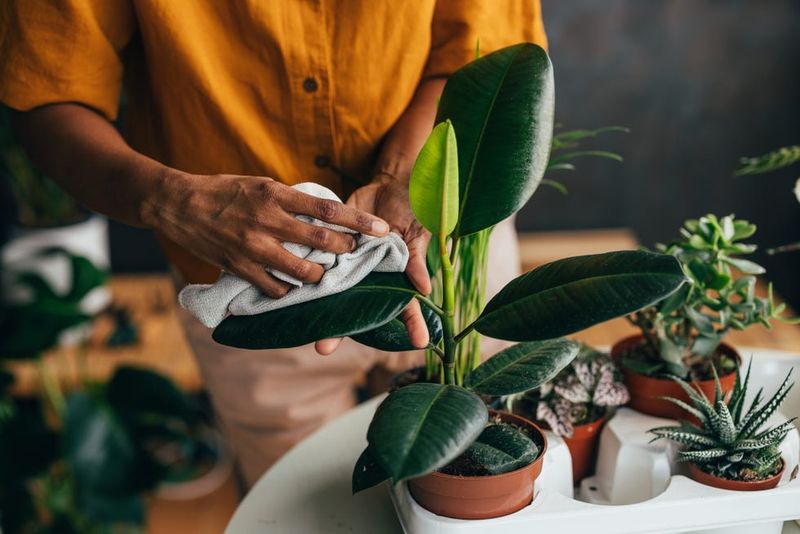
A healthy rubber plant wears big, thick leaves with a naturally glossy finish, as described in North Carolina State Extension’s plant profile. When that shine fades, the first thing to rule out is what is sitting on top of the leaf.
Dust and greasy films settle on indoor foliage over time. Clemson Extension guidance notes that this buildup can dull leaves and that cleaning improves how they look.
Here is the catch: dullness is a symptom, not a diagnosis. Many different things can leave a leaf looking flat, so a wipe is a reasonable first check only when you can see or feel a layer of surface buildup.
Run a finger across a leaf. If it comes away dusty, cleaning is a sensible place to start.
If the leaf looks fine after that, you have learned something useful without risking the plant.
Winter is a useful time to clear leaf dust
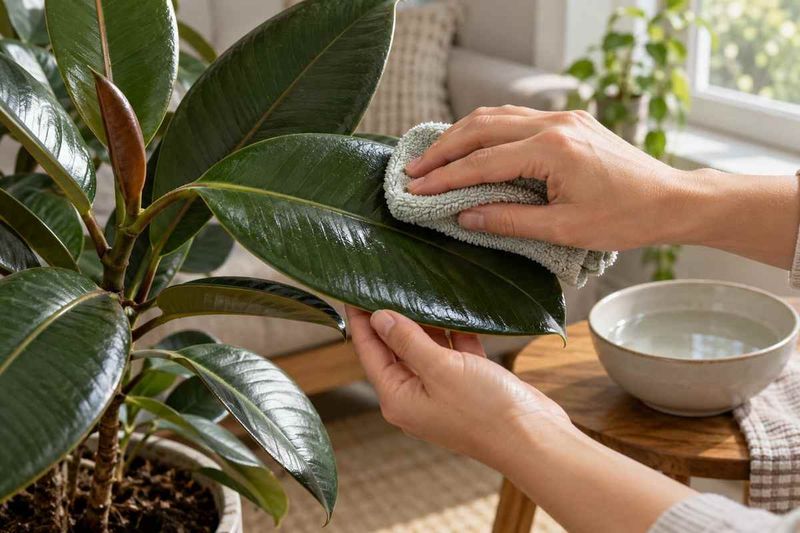
Short winter days mean indoor plants get fewer hours of sunlight, and the light that does arrive is weaker. University of Vermont Extension recommends wiping dust from leaves in winter to help them take in as much light as possible.
That makes the cold months a handy time for a cleanup. Heating season keeps windows closed, and dust tends to linger on leaves that nobody has touched in a while.
Winter does not automatically make leaves dull, and a wipe will not guarantee stronger growth. Think of it as a good moment to tidy up.
While you work, look over the leaves and stems for anything unusual, since a close inspection is easier when you are already handling each leaf.
How to wipe the leaves gently
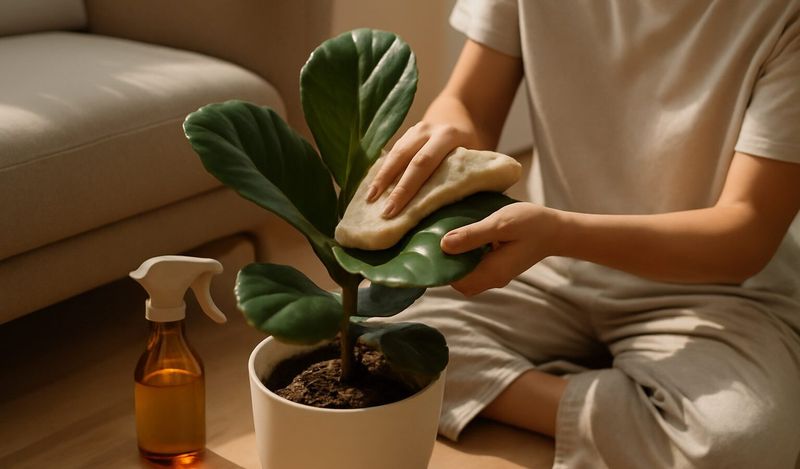
Grab a soft cloth and dampen it with plain water. Cup one hand under the leaf so it does not bend or tear, then wipe the top with the other hand using light, even strokes.
Flip to the underside and wipe that too. Clemson Extension recommends cleaning both surfaces of the leaf.
Rubber plant leaves are big, so a soft sponge can speed things up. Iowa State Extension suggests rinsing the sponge as it picks up dust so you are not just spreading grime around.
Aim to lift the buildup, not scrub it. If a spot does not come off with a light pass, leave it alone and check it again later instead of pressing harder.
Skip leaf shine and household detergent
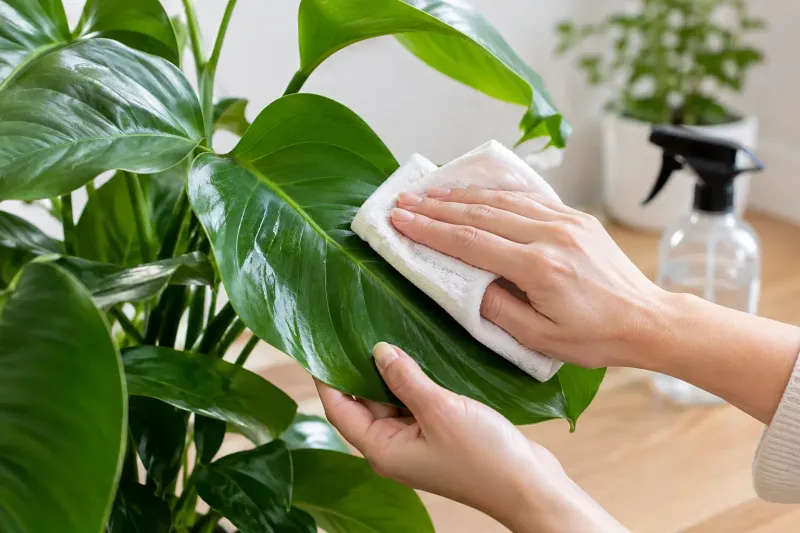
Plain water does the job in nearly all cases, according to Iowa State Extension. The same source warns that household detergents can damage the waxy outer coating of a leaf and lead to discoloration or browning.
Commercial leaf-shine sprays are tempting because they promise an instant glow. Clemson Extension generally advises against them, since the residue may interfere with air exchange through the leaf.
University of Arizona Extension also cautions against leaf-shine products. Sticking with water and a soft cloth keeps things simple and avoids adding anything the leaf has to cope with.
What if the leaves still look dull?
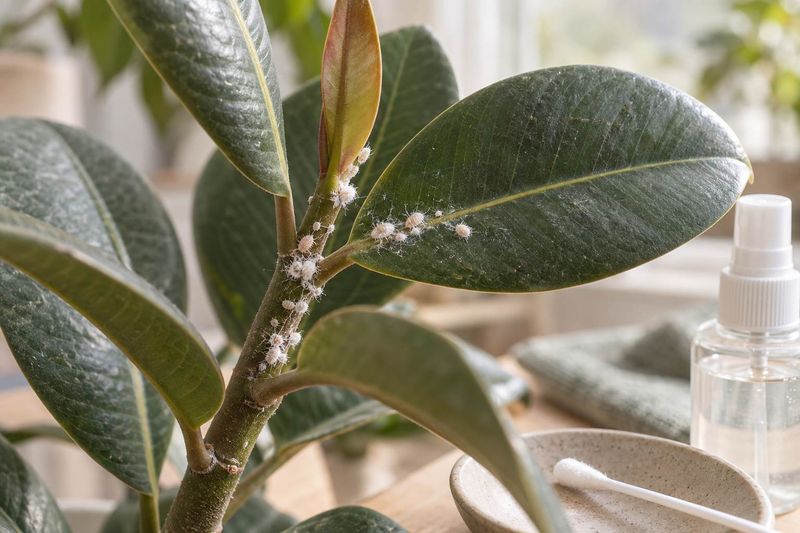
If the shine does not return, let the leaf itself point you to the next check. Sticky leaves can mean scale or other sap-feeding pests.
The UC Statewide IPM Program explains that soft scales produce honeydew, which makes leaves shiny and sticky before they discolor.
Fine stippling, which looks like tiny pale dots, or delicate webbing can indicate spider mites. Check the undersides of leaves and along the stems where pests like to hide.
A wipe will not reverse discoloration or damage, so repeated polishing will not help. Instead, review the plant’s setup.
Clemson Extension notes that rubber plants prefer bright, indirect light, need protection from cold drafts, and should not be overwatered.
Treat these as things to check, not a verdict. Dull leaves can have more than one cause, and sorting it out step by step is the safest approach.
Treat the wipe as a cleanup, not a cure
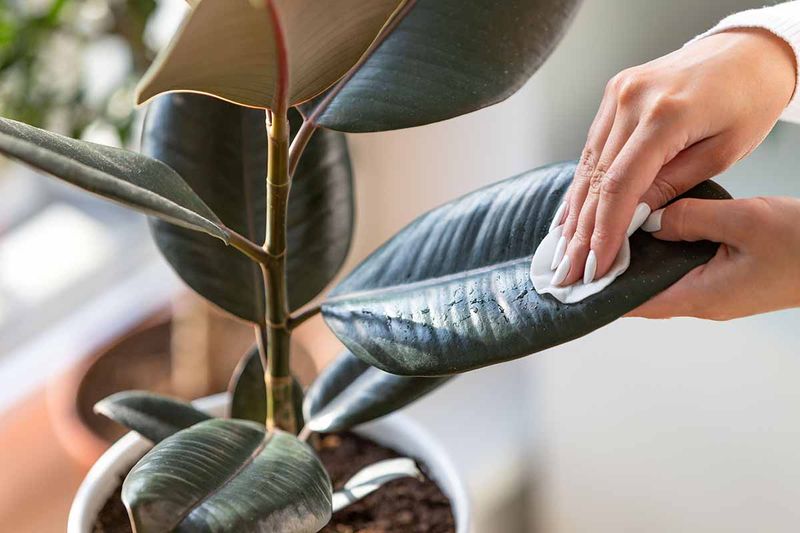
When dust or grime is visible, a damp cloth and plain water is a sensible, low-risk move, as Clemson Extension describes. If leaves stay dull or turn sticky, look for the pest signs UC IPM outlines.
A clean leaf is simply an honest starting point for figuring out what your plant needs.