
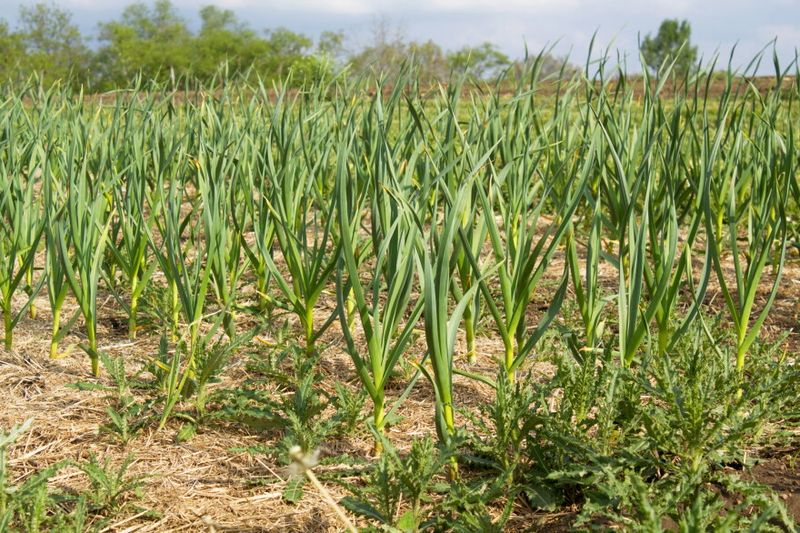
You tucked your garlic cloves into the ground a few weeks ago, and now green tips are poking up after a stretch of mild weather. It looks wrong, and plenty of gardeners reach for the shovel or the scissors.
Hold off for a moment. A little patience and one simple bed covering can help your garlic ride out the cold months ahead.
A few green shoots do not mean the garlic has failed
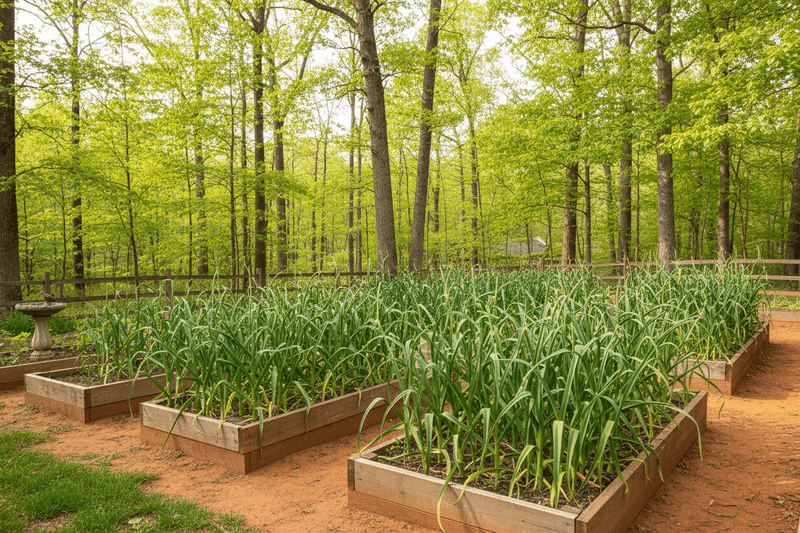
Seeing green on garlic in November feels alarming, but a few shoots during a warm spell are usually not a reason to dig up the cloves. Garlic puts down roots in fall and may send up some top growth too.
North Carolina Cooperative Extension treats winter green growth as normal, not as a ruined crop.
Timing depends on where you live and what the weather does. In Minnesota, University of Minnesota Extension says shoots usually do not emerge above ground until spring, so a November sprout there would stand out more.
In milder regions, fall or winter top growth is part of the normal pattern.
In New Hampshire, Extension guidance says fall shoots usually survive the winter. That is good news, though it is not a promise about harvest size.
Your next step is simple: leave the bed alone and plan to mulch it.
Leave young shoots in place
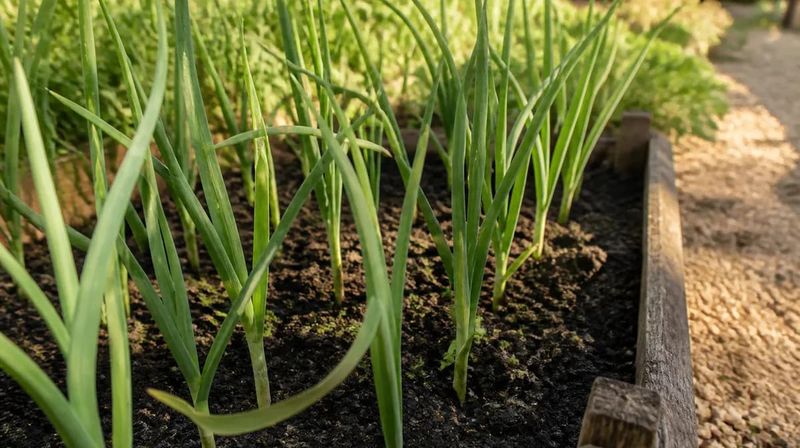
Put the scissors away. Home-garden guidance from Iowa State describes protecting the bed and letting garlic resume growth, not cutting off winter foliage.
The advice in this Iowa State answer on early garlic is to add mulch and let the plants carry on.
Trimming is not something these sources suggest, and they do not say it would harm the crop either. It just adds a step with no clear payoff.
Digging up cloves to check on them carries the same problem, since you risk disturbing roots that are busy settling in.
One mix-up is worth clearing up. Garlic scapes are the curly flower stalks that appear late in the season, and Iowa State’s home garden guide covers removing those later.
Short winter leaves are a different thing, so leave them standing.
Cold can damage foliage without ending the crop
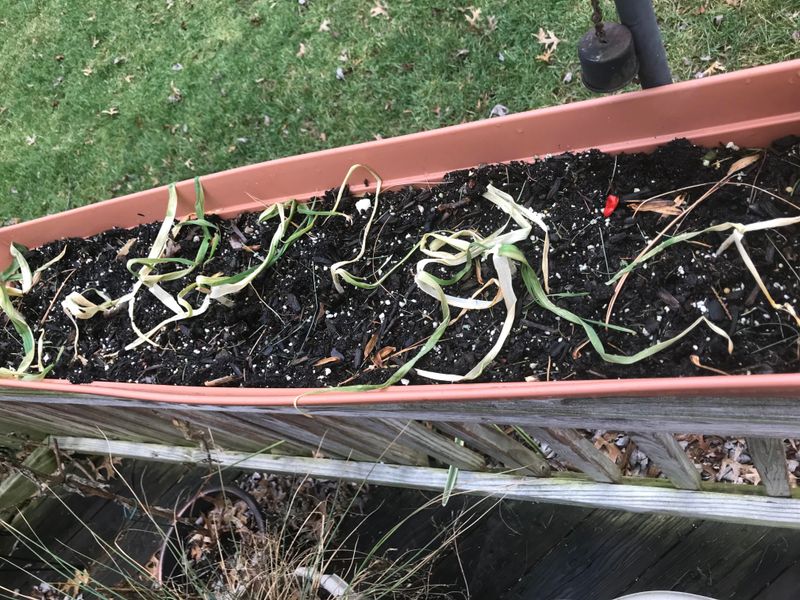
Cold can hurt exposed leaves, and it helps to know what that does and does not mean. Iowa State says garlic often regrows after cold damages or even kills the foliage.
Its guidance in this early garlic answer adds that the crop may end up smaller, because lost leaves can cost the plant energy.
So there are two separate questions. Will the plant survive?
Usually, yes. Will the bulb be as big as it might have been?
That is harder to promise, and early growth or winter injury can have some effect.
Not every freeze does damage. Foliage can tolerate temperatures into the 20s degrees Fahrenheit, and outcomes depend on the garden and the weather.
New Hampshire Extension reports that garlic with fall shoots will usually overwinter unscathed. If you spot brown tips after a hard night, wait and watch for new growth in spring.
Protect the bed with locally appropriate mulch
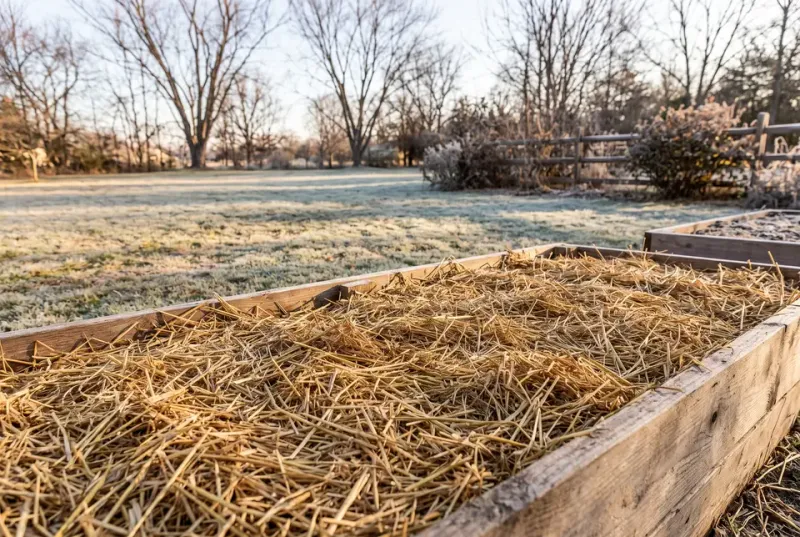
The one step that helps most is covering the bed with clean straw or leaves. Mulch moderates soil temperature and protects the planting through winter, though it will not stop every bit of cold injury.
Depth and timing change from place to place, so treat the numbers below as examples.
In New Hampshire, Extension advises about 4 inches once the ground has frozen. Minnesota Extension recommends 3 to 4 inches to moderate winter temperatures.
Iowa State suggests 4 to 6 inches of weed-seed-free straw in November.
Those differences are the point. Your climate, soil, and winter pattern shape the right choice.
Call or check your local Cooperative Extension office for the date and depth that fit your area, then mulch accordingly.
Add extra mulch only if conditions call for it
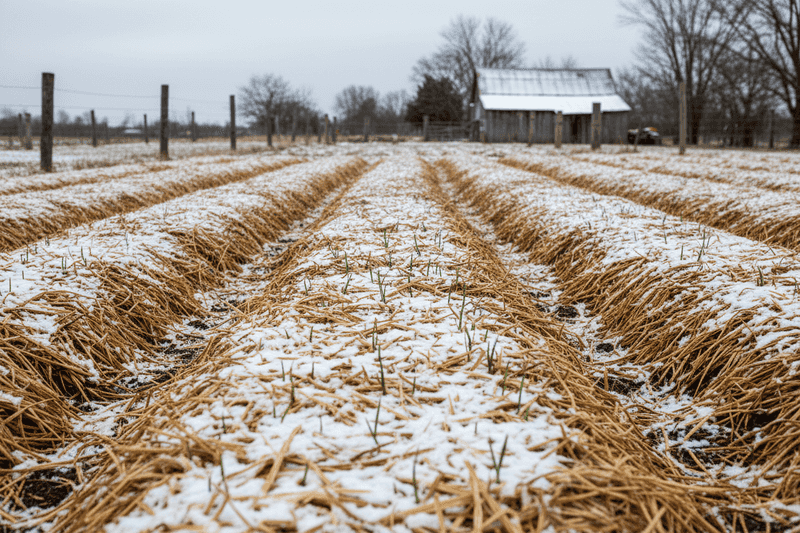
Sometimes the forecast calls for a hard cold snap with little or no snow on the ground. Snow acts like a blanket, so bare ground is more exposed.
In that case, Iowa State recommends adding extra mulch after normal winter temperatures return.
Iowa State’s guidance also says foliage is likely to be damaged below 20 degrees Fahrenheit, as explained in its answer on early garlic. That is a regional estimate, not a rule for every variety or garden.
Your own microclimate, soil, and wind exposure all matter.
Think of extra mulch as reducing exposure, not erasing it. Some leaf tips may still brown, and that does not automatically mean the plant is lost.
If your winters are mild and snow is reliable, the regular layer may be all you need.
Adjust the mulch as spring growth resumes
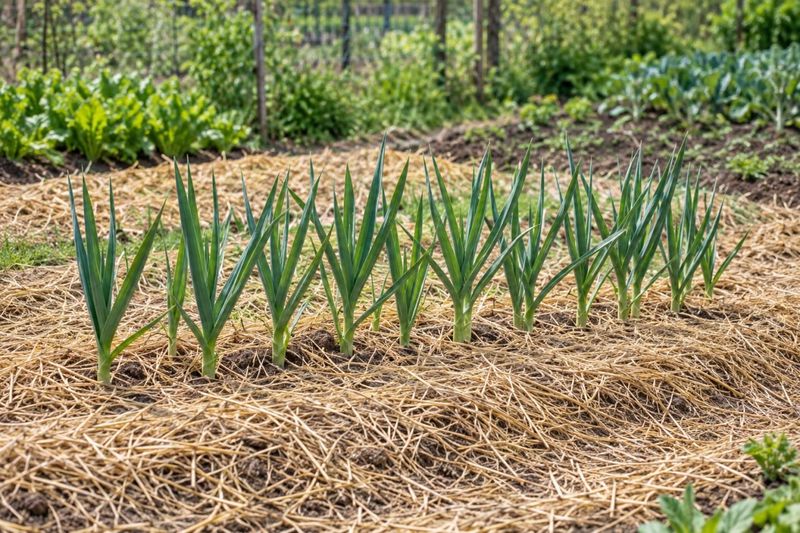
When spring warms up, you do not have to strip the bed bare in one go. Minnesota Extension advises removing mulch after the threat of hard freezes, which helps the soil warm up.
Iowa State takes a gentler approach. Its home garden guide says to move straw between the rows so the foliage can emerge, which keeps some cover in place.
If shoots look like they are struggling to push through a thick layer, New Hampshire Extension suggests loosening the mulch. Fluff it with your hands or a rake rather than pulling it off entirely.
Match your timing to your last hard freeze, and keep a little straw handy in case a late cold night shows up.
Garlic rewards a patient gardener, and a few early green tips are often just the start of a long, quiet winter job.