
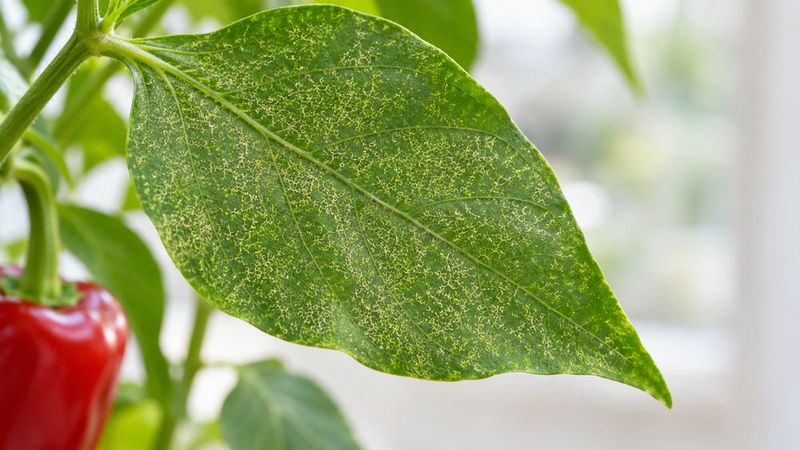
You carried your pepper plant inside to save it from frost, and now the leaves look pale, speckled, or oddly dusty. That change can be a sign of a tiny pest, but it can also be something else, so a quick check comes first.
A simple routine of looking closely, rinsing the plant, and watching for changes can help you get ahead of the problem. Here is how to sort it out without guessing.
Speckled leaves can point to spider mites
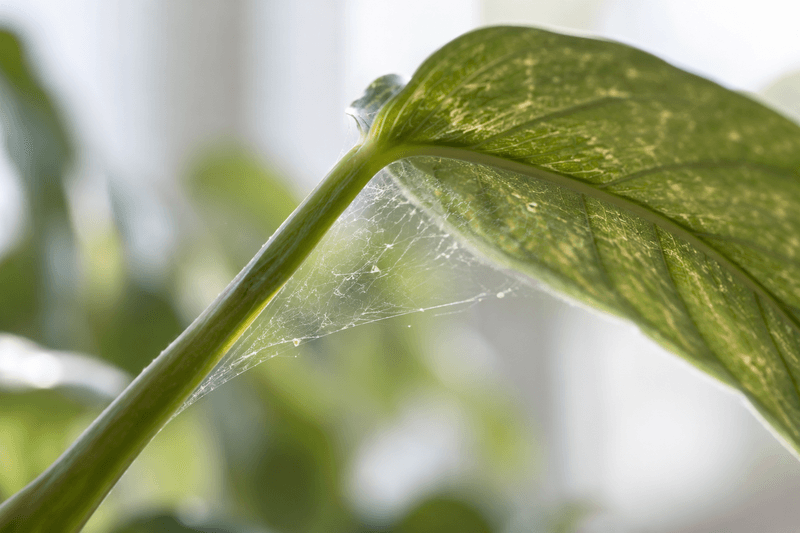
A pepper that looked fine in October and turns pale and freckled by January deserves a closer look. Spider mites feed on plant cells, and Utah State Extension’s pest guide describes pale stippling as an early sign of that feeding.
Peppers are among the plants these pests can use as hosts.
As damage builds, leaves can turn bronze or brown and may drop. Heavy infestations can leave foliage looking dusty or dirty, and fine webbing is more likely to be easy to see when mite numbers are high, according to Colorado State Extension.
Here is the catch. Stippling, bronzing, and webbing are consistent with spider mites, but they do not prove them.
Dry indoor air, low light, watering problems, and other pests can leave marks that look similar, so the next step is to confirm what is actually on the leaves before you treat anything.
Check the leaves before you treat
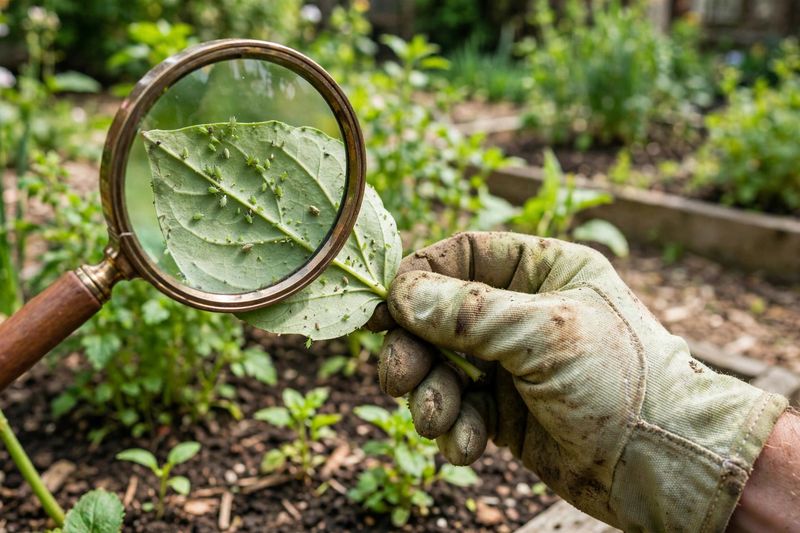
Grab a hand lens and turn over a few of the most discolored leaves. Look along the veins and near any webbing for tiny specks, some of which may be moving.
A phone camera with a zoom or macro setting can work if you do not own a magnifier.
The white-paper test is another easy option. Hold a sheet under a branch, give the foliage a few firm taps, and watch the paper for specks that crawl.
University of Minnesota Extension describes both checks for confirming spider mites.
If you find moving specks, spider mites become a sensible working identification. Spider mites are arachnids, related to spiders, not insects.
Still, stippling and a quick look cannot tell you the exact species, and you do not need that detail for the first steps. If nothing moves and you see no webbing, consider other causes before reaching for any treatment, and see Penn State Extension’s guide to indoor plant problems for other possibilities.
Rinse the plant thoroughly
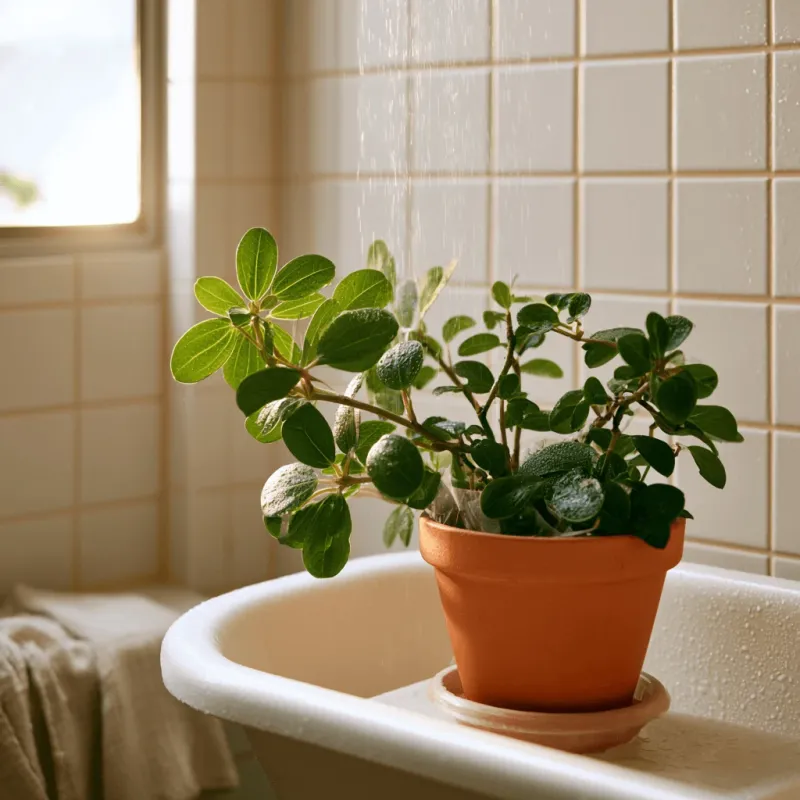
Once you have seen signs of mites, a sink, tub, or shower is a reasonable first response. Move the pot to the basin and use a forceful but plant-safe spray.
Lukewarm water is easier on the plant and on you than cold.
Aim upward at the undersides of leaves, where mites tend to gather, and work along the stems and the joints where branches meet. Utah State Extension lists a strong water spray among the ways to reduce mite numbers.
The goal is to dislodge mites and tangled webbing.
Keep the pressure firm without tearing leaves or blasting soil out of the pot. Lay a towel or tilt the pot if the soil is washing away.
Let the plant drain, then return it to a bright spot out of cold drafts.
Think of this as a physical-control step. It can reduce the population, but Colorado State Extension describes control as ongoing work, so one rinse is a start rather than a cure.
Keep monitoring and repeat washes while mites persist
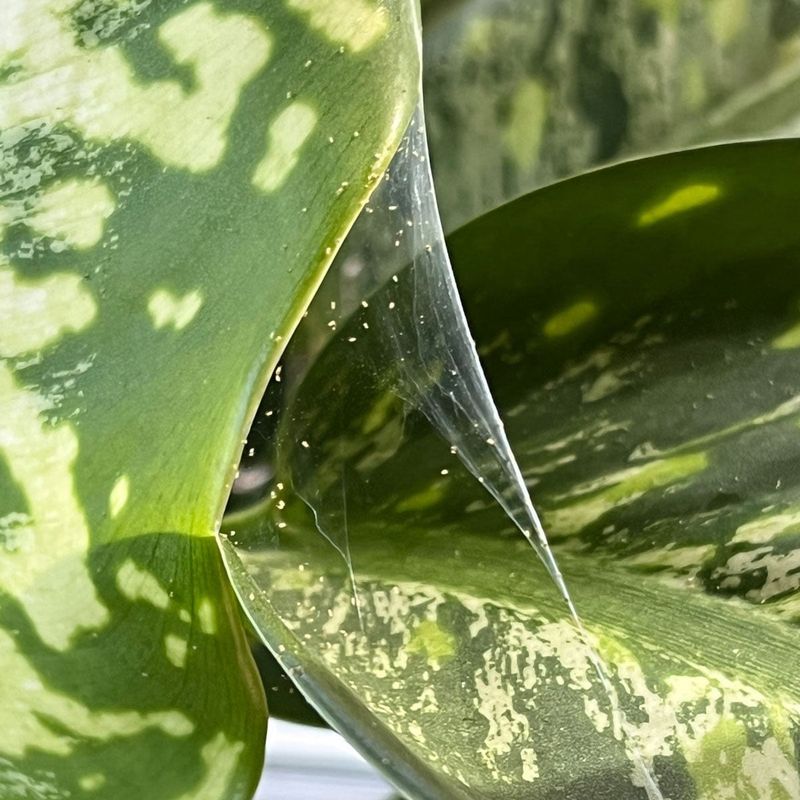
After the first rinse, check again in a few days. Look at the undersides of leaves, new growth, and any spots where webbing has returned.
Finding fewer specks is a good sign, and finding more tells you the plan needs to continue.
For persistent populations, Colorado State Extension recommends repeating washes at one- to two-week intervals. That interval is their guidance for mites that stick around, not a proven weekly schedule for every pepper plant.
Let what you find guide the timing. Wash again while mites are still showing up, and slow down once several checks turn up nothing.
A short note on your phone with dates and what you saw makes patterns easy to spot.
Expect some ups and downs. Colorado State’s houseplant pest guidance describes mite control as difficult and calls for continued management and monitoring.
Washing can keep numbers down, but it does not promise they will disappear.
Protect nearby plants and remove badly damaged leaves
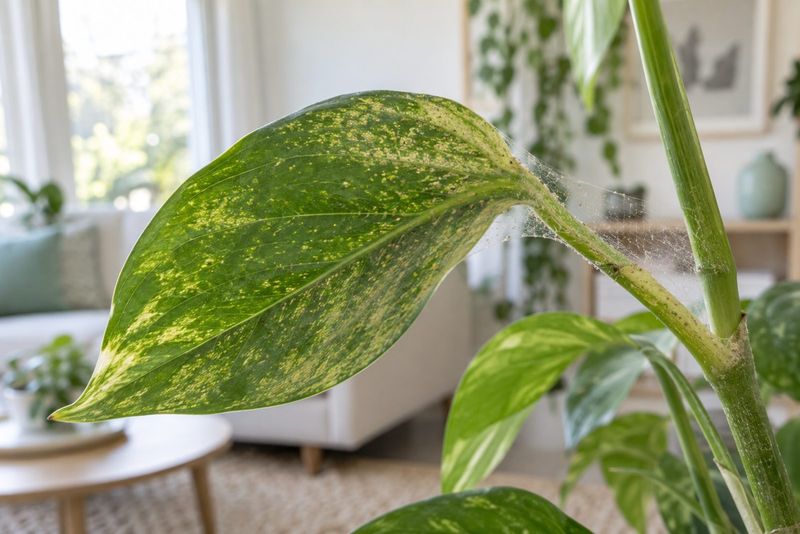
Plants sharing a windowsill can trade pests, so give the pepper its own space where you can. A spot a few feet from other plants is better than leaves touching.
Then look over your other houseplants, especially leafy ones that are easy targets.
University of Minnesota Extension notes that indoor plant pests can spread from plant to plant. Colorado State Extension also advises treating susceptible houseplants at the same time rather than waiting for each to show damage.
Badly infested leaves are worth pruning. Snip them off with clean scissors, seal them in a bag, and put them in the trash rather than the compost.
Wash your hands and tools afterward.
If a plant is covered in webbing and most of its foliage is bronzed or dropping, Colorado State Extension says discarding it may be the practical choice. That is a judgment call, and a peppers-only windowsill gives you more room to keep trying.
Consider labeled treatments if washing falls short
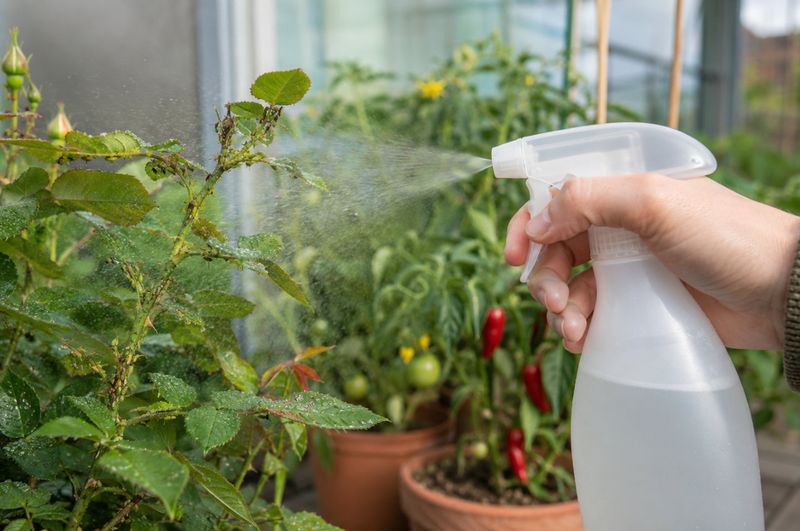
If repeated rinsing is not enough, insecticidal soap or horticultural oil may be options. The product label has to allow use on peppers and in your setting, which here means indoors.
Outdoor crop advice does not automatically carry over to a plant in your kitchen, as University of Minnesota Extension reminds gardeners who bring plants inside.
Coverage matters. These are contact products, so they work only where they touch the mites, which means soaking the undersides of leaves and the stems.
University of Minnesota Extension also warns that homemade soap solutions, including dish-soap mixtures, can burn or damage plants, so skip them.
They leave no lasting residual protection, so repeat applications may be needed. Follow the label for how often, how much, and how long to wait between sprays, as noted by Utah State Extension.
Treat all of this as management, not a promised cure. A pepper that stays clean through the winter usually got there through steady checking.