
Knock Out roses get planted in nearly every North Carolina subdivision, but they often sulk in dry, rocky, or sandy ground. Meanwhile, a handful of tough native shrubs have spent thousands of years blooming in exactly that kind of soil.
They feed bees, butterflies, and birds, and most never need spraying for black spot. Late September is a smart time to plant them, because cooling air and warm soil help roots settle in before winter.
1. New Jersey Tea (Ceanothus americanus)
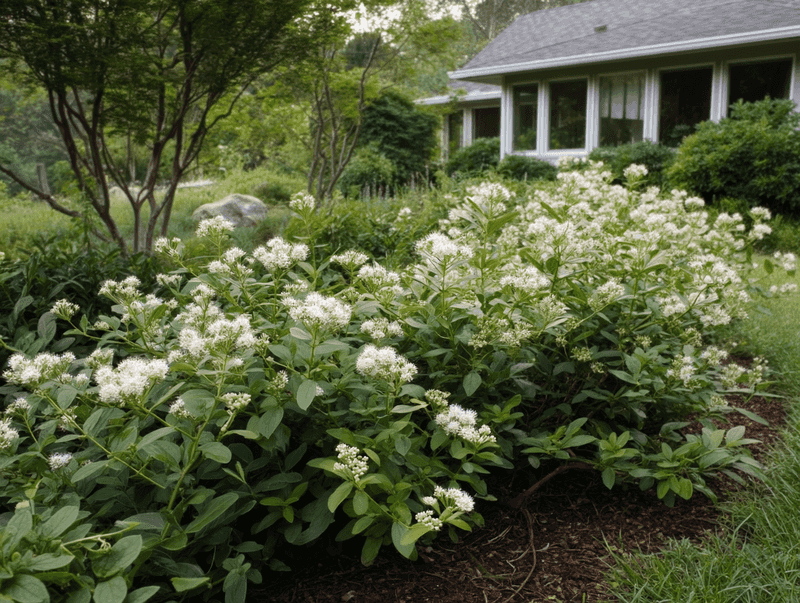
Colonial patriots brewed its leaves as a substitute for taxed British tea, and that scrappy spirit still shows up in the garden. New Jersey Tea grows wild on dry, rocky Piedmont ridges where little else wants to live.
In late spring it puffs out clouds of white flowers that pull in small native bees, wasps, and butterflies. A deep, woody root lets it shrug off summer drought once it is established, which can take a season or two.
Keep it to sunny, well-drained spots and skip the fertilizer. It stays about three feet tall, so it fits neatly along a driveway or in a hot front border where roses tend to struggle.
2. Virginia Sweetspire (Itea virginica)
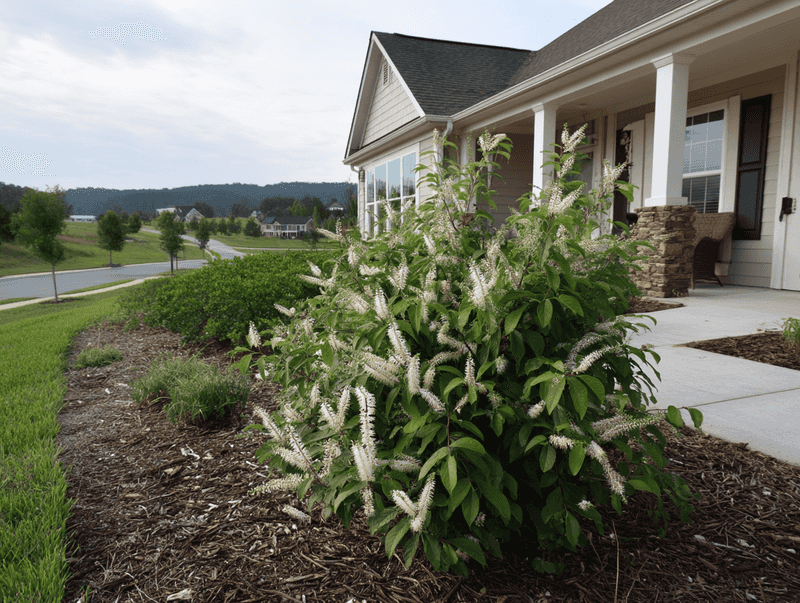
Picture a shrub dripping with white, honey-scented spikes in May, then turning wine red in November. That double act is Virginia Sweetspire, native across the coastal plain and Piedmont.
Many people think of it as a wet-soil plant, and it does love creek banks. The surprise is how well it handles average, droughty yard soil once roots are settled, especially with a little afternoon shade.
Compact selections like Little Henry stay around three feet. Plant a row along a foundation and you get spring flowers for pollinators plus fall color that a rose simply cannot offer.
3. Oakleaf Hydrangea (Hydrangea quercifolia)
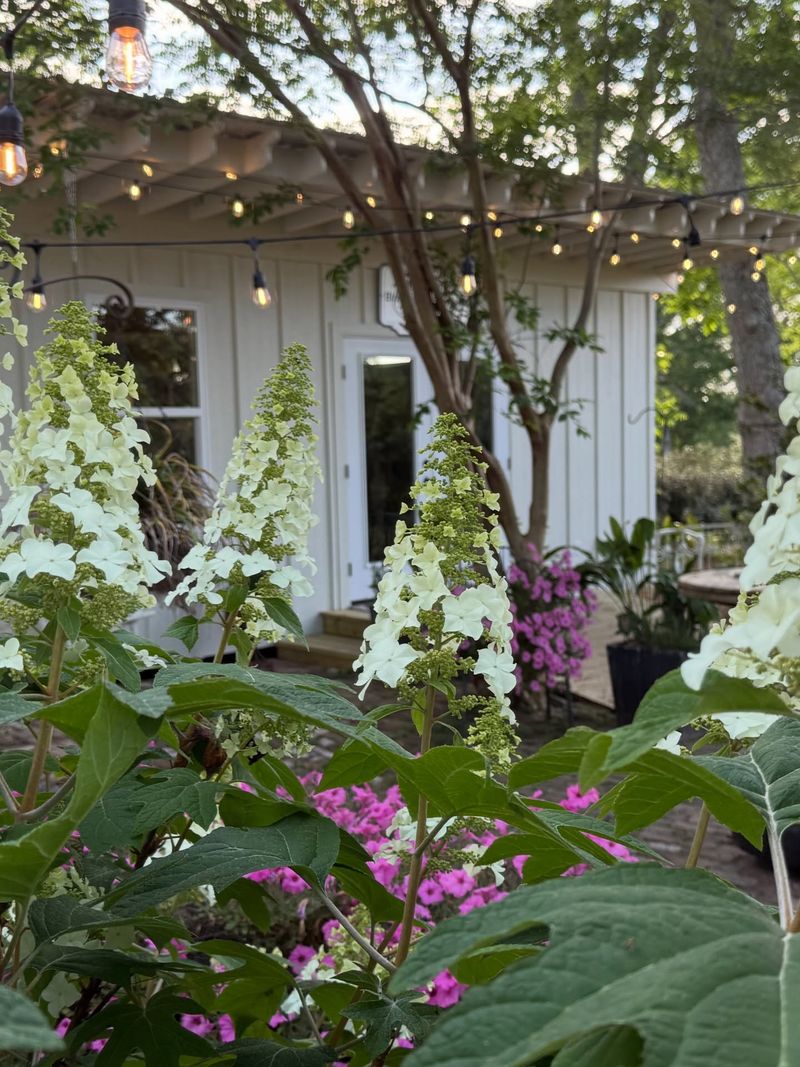
Here is the hydrangea for gardeners who have killed hydrangeas. Unlike the thirsty mopheads at the garden center, oakleaf hydrangea comes from Southeastern woodland slopes and copes with lean soil far better.
Big cone-shaped white flowers open in early summer and slowly fade to pink and tan. Then the oak-shaped leaves turn burgundy in fall, and peeling cinnamon bark carries interest through winter.
Give it morning sun and afternoon shade, like the edge of a pine stand. Water through the first summer, then it usually manages on rainfall in most NC years.
4. Southern Bush Honeysuckle (Diervilla sessilifolia)
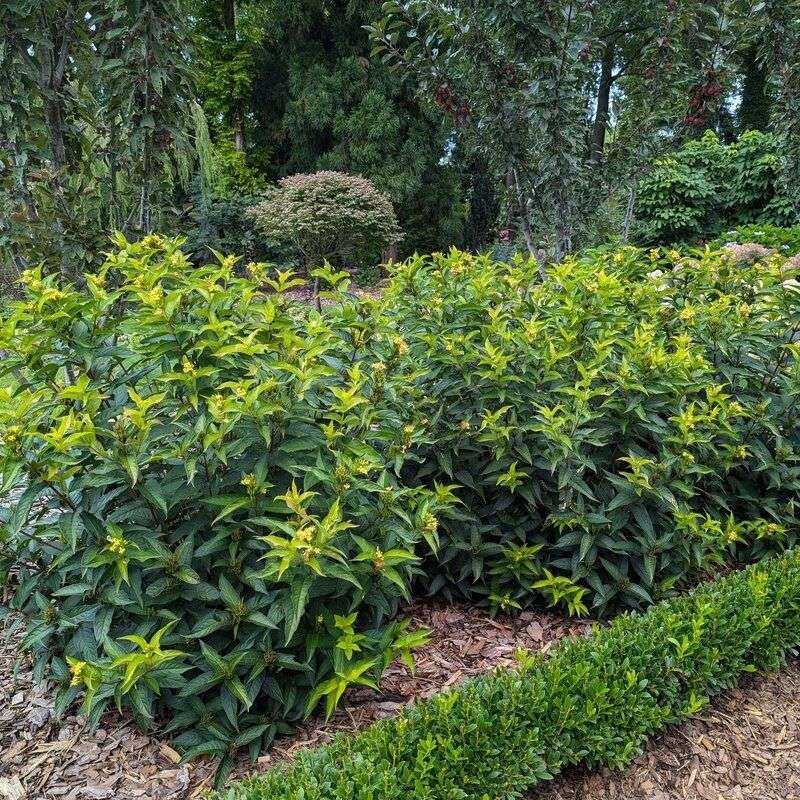
Not the invasive Japanese vine, and not the Asian bush honeysuckles either. Southern bush honeysuckle is a well-behaved native from the Southern Appalachians, and bumblebees go wild for it.
Small yellow tubular flowers show up in early summer and keep coming in flushes for weeks. It spreads slowly by roots, which makes it a handy pick for holding a dry, eroding bank.
Mountain gardeners can count on it, and it adapts well in the Piedmont too. Shear it lightly in late winter if it gets leggy and it bounces right back.
5. Buttonbush (Cephalanthus occidentalis)
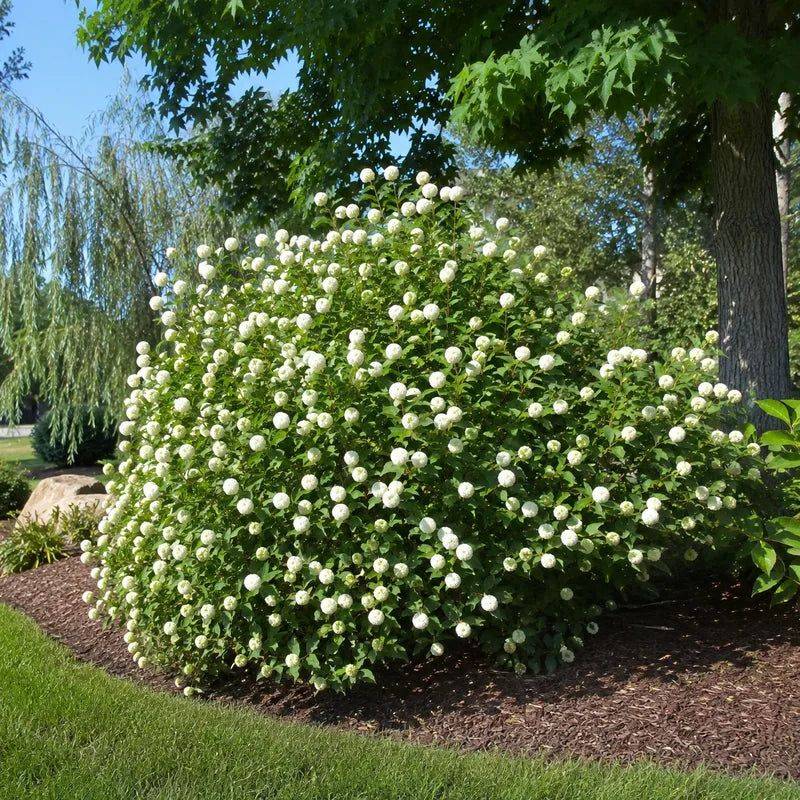
Ever seen a flower that looks like a tiny white pincushion? Buttonbush blooms in midsummer with round, spiky globes that swallowtails, hummingbirds, and bees crowd around.
It is famous for swamp edges, so its spot on a dry-soil list needs honesty. Buttonbush can handle drier yards once established, but blooms best near a downspout or low spot that catches occasional rain.
That makes it a clever fix for the one area that floods in storms and bakes in August. Seeds also feed ducks and songbirds into fall.
6. Sweetshrub (Calycanthus floridus)
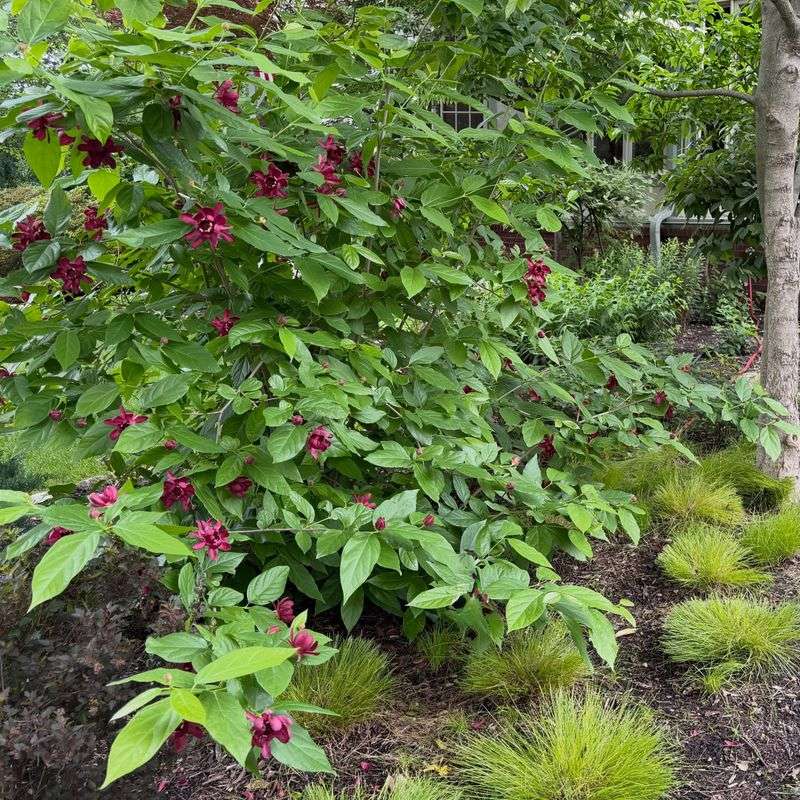
Grandmothers across the Carolinas used to tuck these blossoms in a pocket for the fruity, strawberry-like scent. Carolina allspice, or sweetshrub, earned a spot in old farmhouse yards for good reason.
Its maroon, strappy spring flowers are unusual and pleasantly fragrant, though scent varies from plant to plant, so smell before you buy if you can. Look for named varieties like Michael Lindsey if fragrance matters most.
Sweetshrub tolerates clay, thin soil, and partial shade, and deer often leave it alone. Plant it near a porch or path so you catch the perfume every spring.
7. Beautyberry (Callicarpa americana)
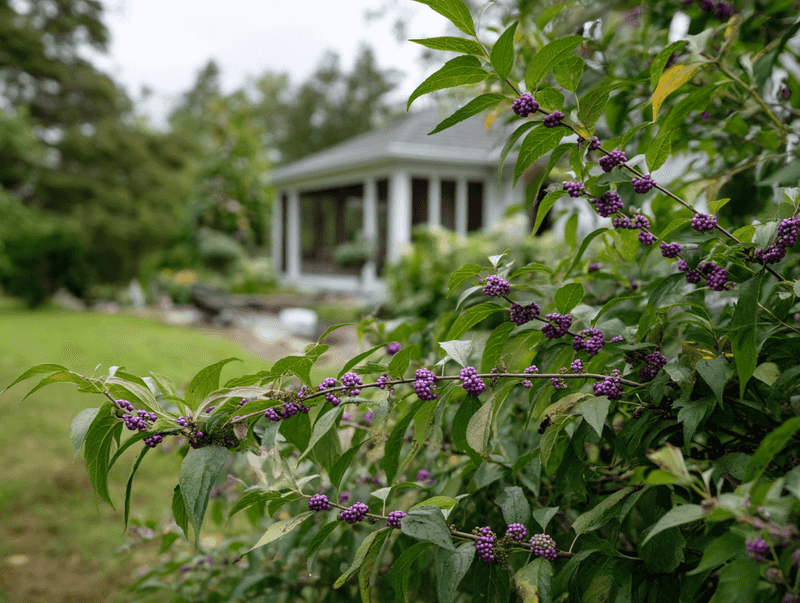
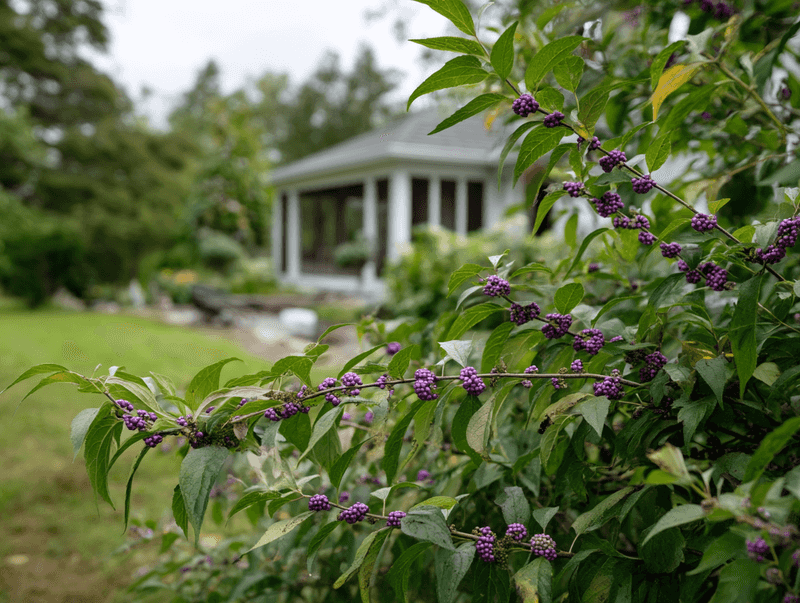
Right about now, in late September, beautyberry steals the show. Arching stems glow with clusters of electric purple berries that look almost fake.
The pale pink summer flowers are small, so the true payoff is fruit, which mockingbirds, catbirds, and brown thrashers may feast on into winter. It handles sandy coastal plain soil and dry Piedmont clay with little fuss.
Cut it back hard in late winter for a tidier shape and heavier berries. Folk tradition says crushed leaves may help repel mosquitoes, and early research suggests there may be something to it.
8. Dwarf Fothergilla (Fothergilla gardenii)
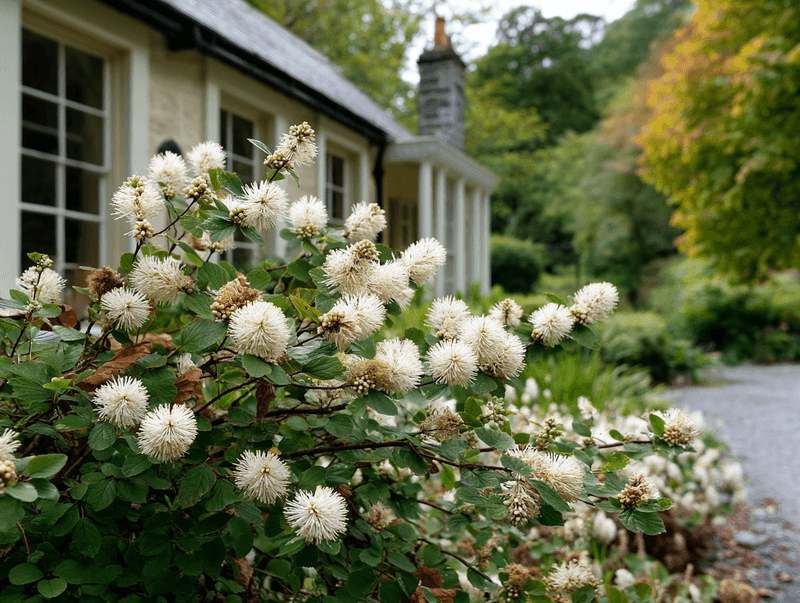
Fothergilla is a true Carolina local, native to the sandy coastal plain, and almost nobody plants it. That is a shame.
In early spring, before leaves appear, it covers itself in honey-scented white bottlebrushes that feed the first bees of the year. Come fall, the foliage blazes yellow, orange, and scarlet, often on the same branch.
It likes acidic, well-drained soil and stays two to three feet tall. Pair it with beautyberry for color from March to December, then plant both this fall while the soil is still warm.