
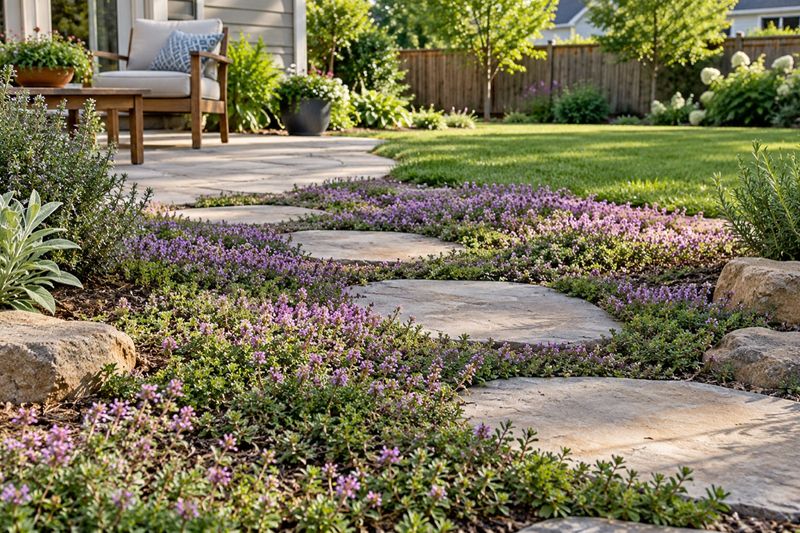
A strip of bare ground between a bed and a walkway can turn into a weed patch fast. Creeping thyme is a small, flowering herb that may fill that gap with a soft green mat.
It can feed bees and butterflies, but it also has real limits in North Carolina yards. Here is how to tell whether your sunny edge is a good match.
A low groundcover with specific strengths
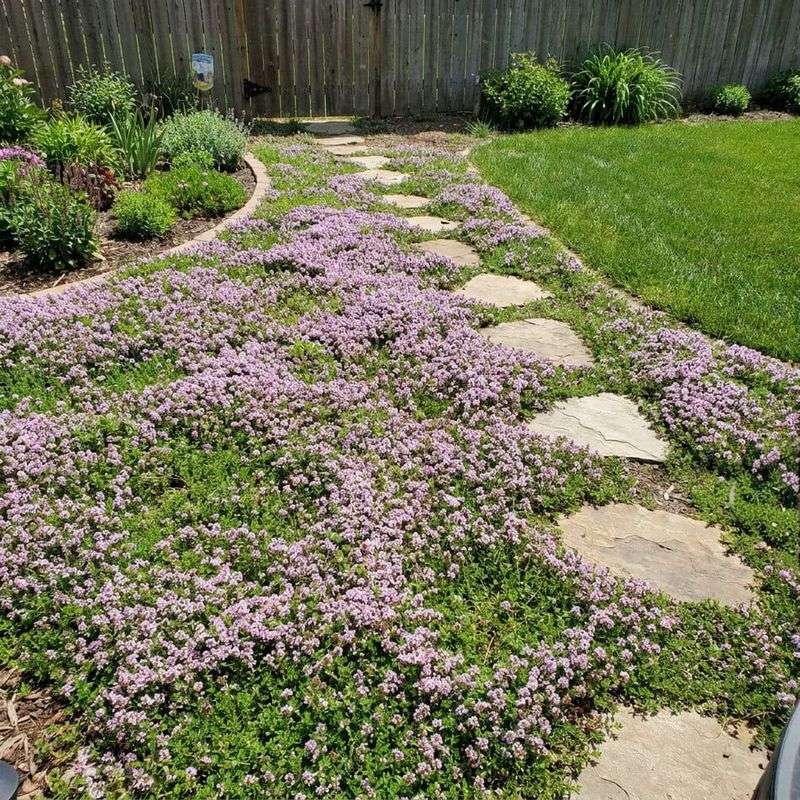
Picture the awkward strip where a garden bed meets a walkway. Grass creeps in, mulch washes out, and the line never looks quite finished.
Creeping thyme is one low-growing herb that can soften that kind of edge with a dense, fragrant mat.
The flowers are the other draw. NC State’s plant profile for Thymus serpyllum says bees and butterflies are attracted to the nectar in its blooms.
A University of Wisconsin Extension bee lawn guide also lists creeping thyme as a source of pollen and nectar, and notes that its small blooms suit smaller, short-tongued bees.
That said, thyme is not a must-have for every yard. Some gardens have the wrong light, the wrong soil, or a goal that points toward other plants.
A few flowers for passing bees are a nice bonus, but they do not add up to a full wildlife habitat on their own.
The rest of this article walks through the questions that decide whether it fits: how fast it fills in, what it needs from your site, how it looks in winter, and what it does and does not do for wildlife. Keep your own sunniest, driest edge in mind as you read, because that is where thyme has the best chance of earning its spot.
One note on names. NC State’s plant profile covers Thymus serpyllum, while some of its broader advice covers thymes in general.
Different species and cultivars can grow, bloom, and handle winter a little differently, so check the tag on the plant you buy.
Expect gradual weed suppression
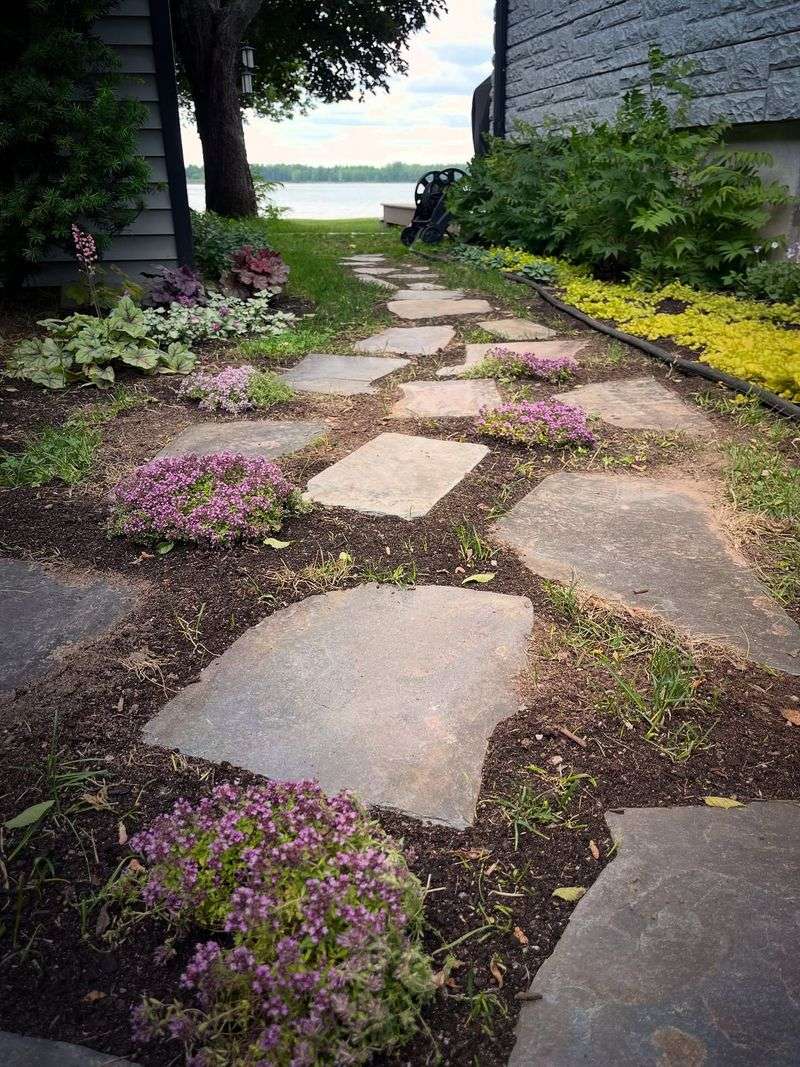
Thyme can help with weeds, but it works on a slow clock. A thick, established planting leaves less open soil for new weed seeds to sprout in.
That is very different from a plant that wipes weeds out the day it goes in the ground.
NC State Extension’s general guidance for Thymus spp. lays out the timeline. Thyme spreads slowly, at about 6 inches per plant per year, and it needs weeding during its first year.
It may begin outcompeting new weed seeds in year two, and full coverage can take three or four seasons.
That is general advice for thyme as a group, not a promise for every creeping-thyme cultivar. Some varieties may fill in faster or slower in your yard.
So plan on some early work. Pull weeds by hand while the young plants are small, and keep the gaps between them tidy.
A thin layer of mulch in the open spaces can make those first-year chores easier, as long as it does not smother the plants themselves.
A useful test is to look at the thyme in its second or third summer. If the mat has closed up and fewer weeds are poking through, it is doing its job.
Even then, expect to pull the odd stray weed that finds a gap.
Check the sun and drainage first
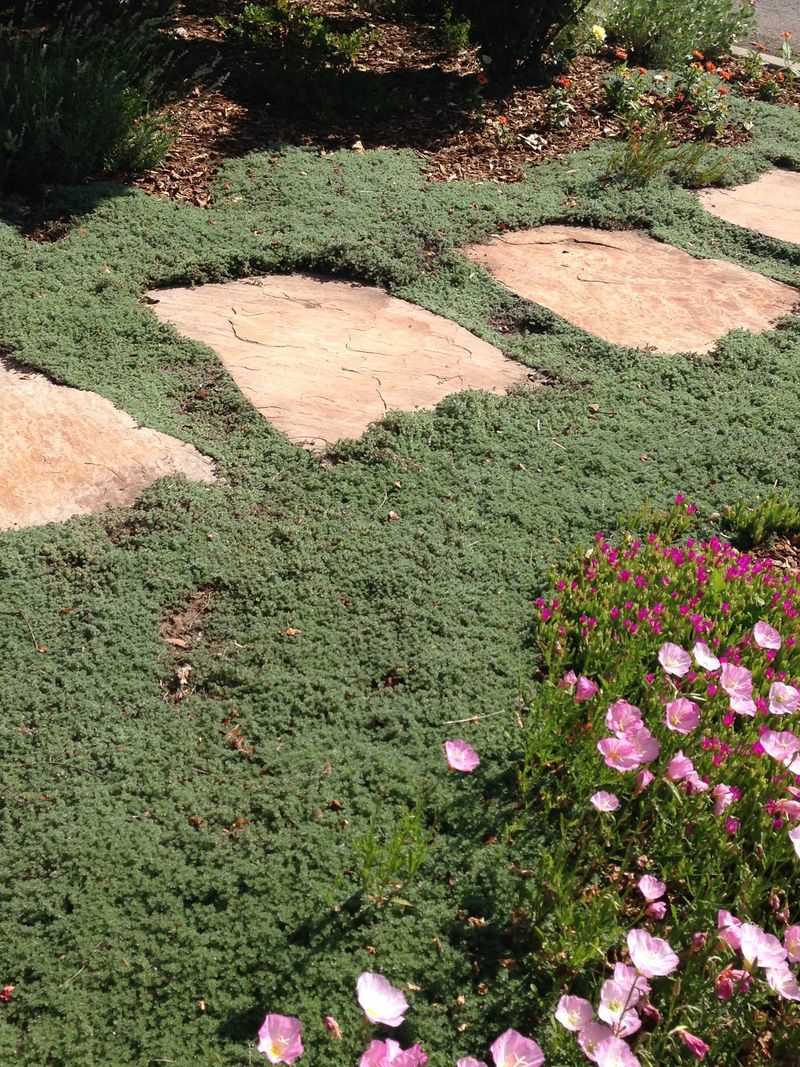
Before buying a single plant, spend a day watching the spot. Creeping thyme wants full sun, so a strip that gets shade from a house, tree, or fence for much of the day is a poor candidate.
Count the hours of direct light on a clear day and be honest about what you see.
Drainage matters just as much. NC State’s plant profile says creeping thyme prefers dry to average moisture and tolerates poor soil and drought.
It also warns that overwatering or poorly drained soil can cause rot.
Here is a simple drainage check. Dig a hole about a foot deep, fill it with water, and let it drain.
Then fill it again and watch. If water is still standing hours later, or the spot stays soggy after rain, thyme is likely to struggle there.
Good candidates are sunny, slightly gritty or sandy spots, raised edges, and areas near sun-baked pavement. Poor candidates include low corners where runoff collects, ground under a downspout, and any gap that stays damp between storms.
If your soil is heavy clay, you may still have options, such as a raised strip or a sunny slope that sheds water. Otherwise, it is kinder to your wallet and your plants to pick a different groundcover for the wet or shaded parts of the yard.
Place it along a sunny edge or path
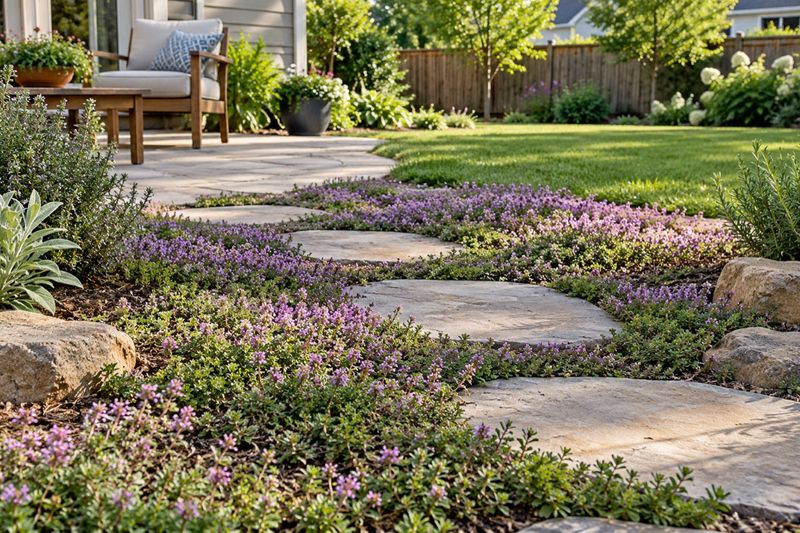
Once a site passes the sun and drainage checks, placement gets fun. NC State’s plant profile points to sunny borders, dry edges, rock gardens, and gaps between stepping stones as good uses for creeping thyme.
Each of these is a spot where a low, spreading plant can fill space without crowding taller neighbors.
Along a border, thyme can act like a soft ribbon between the bed and the lawn or path. In a rock garden, it can tuck into crevices and spill over stone.
Between stepping stones, it can fill the seams and add scent when a foot brushes the leaves.
Foot traffic needs a modest outlook. NC State’s lawn handbook says thyme can handle moderate foot traffic, but that is broad advice about Thymus spp.
It does not mean every creeping-thyme variety will hold up to heavy, daily use, so leave stepping room around the plants and avoid making them the main route to the mailbox.
Plan for work in the first year. Set young plants a few inches apart, water them in, and weed around them often while they fill out.
Thyme is not a plant-it-and-forget-it choice, especially early on.
Keep it out of shaded gaps and spots that stay wet. A small, sunny, well-drained patch done well will look better than a large area that never quite takes off.
Winter color varies with conditions
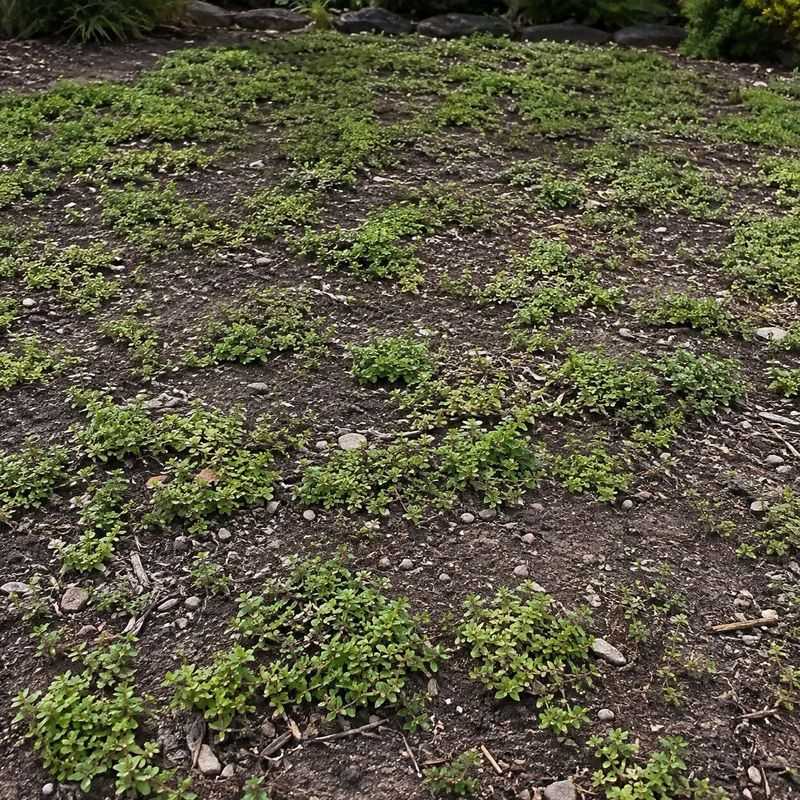
Anyone hoping for a bright green carpet in January should plan for some variety. NC State describes creeping thyme as evergreen in mild winters.
That wording matters, because North Carolina winters are not all mild, and they differ from the mountains to the Piedmont to the coast.
NC State Extension’s herb winterizing guidance adds that thyme may look brown after a severe winter. A hard freeze or a long cold stretch can leave the mat looking tired and patchy, even if the plant is still alive underneath.
Wet soil can make things worse. The same extension guidance cautions that soggy ground can reduce winter hardiness in thymes.
That is one more reason to pick a spot that drains well, since a plant sitting in cold, wet soil has a harder time bouncing back.
If your thyme browns, give it time. Wait until new growth shows in spring before deciding what to do.
Then trim away any dead, brown growth and see what greens up from the base.
Treat winter color as a bonus in mild years, not a guarantee. If year-round green is high on your list, think about pairing thyme with other plants that carry the border through the colder months.
Pollinator forage does not make it native habitat
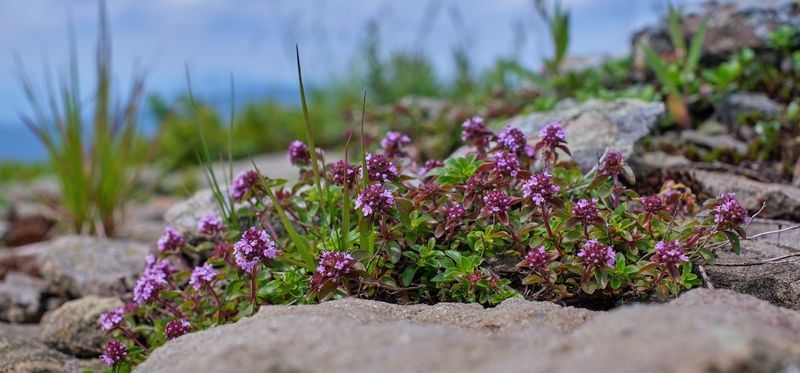
A flower that bees visit is useful, but it is not the same as native habitat. According to NC State’s plant profile, Thymus serpyllum comes from outside North America, so it is non-native to North Carolina.
Its flowers can still attract bees and butterflies, which makes it a decent small source of nectar.
For a fuller wildlife yard, variety is the key. NC State Extension’s pollinator team notes that more abundant and diverse pollinator communities are generally supported by including more plant species with varied characteristics.
Thyme alone will not do that.
If supporting local wildlife is your main goal, add native plants alongside it or use them instead. NC State’s guide to landscaping for wildlife with native plants is a good starting point, and the North Carolina Native Plant Society’s recommended species list can help you pick choices that suit your region.
One more rule if bees are visiting. Do not apply bee-toxic pesticides to blooming plants.
NC State’s insect control guidance advises against it, and that includes spraying near thyme while it is in flower.
Match the plant to your garden’s priorities
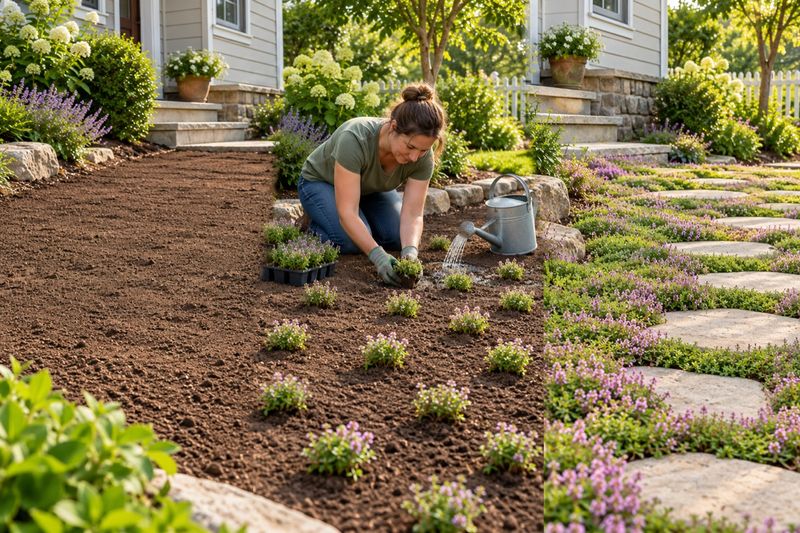
Try creeping thyme on a sunny, well-drained edge where a low flowering cover would help and slow, steady filling-in is fine with you. Expect several seasons of patience and some early weeding.
Shade, wet soil, or a native-only planting plan point toward other choices, such as those in NC State’s native wildlife planting guide.
For the right patch, thyme is a small plant that makes a tidy, fragrant difference.