
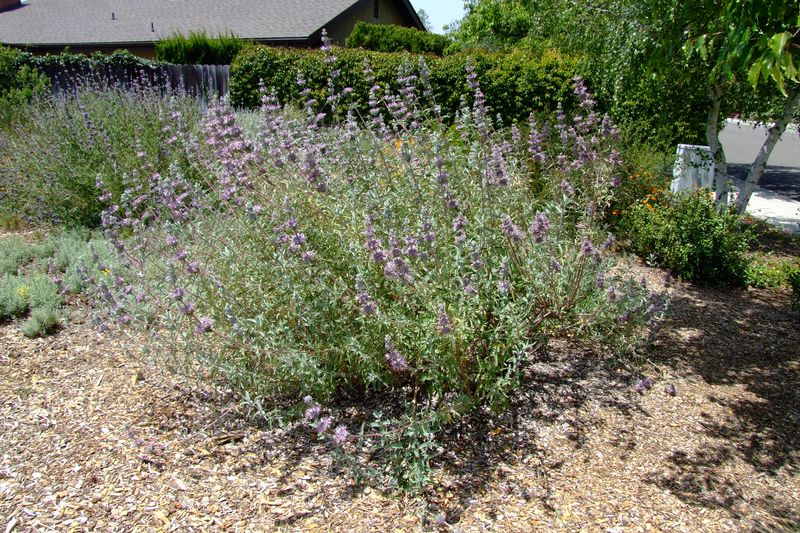
By late August, a lot of California gardens look tired, crispy, and quiet. That quiet is a problem, because native bees, hummingbirds, and butterflies still need food well into fall and even winter.
The good news is that a handful of tough, water-wise shrubs save their best show for exactly this stretch. Plant a few of them and your yard can stay colorful and busy while the neighbors’ flower beds call it quits.
1. California Fuchsia (Epilobium canum)
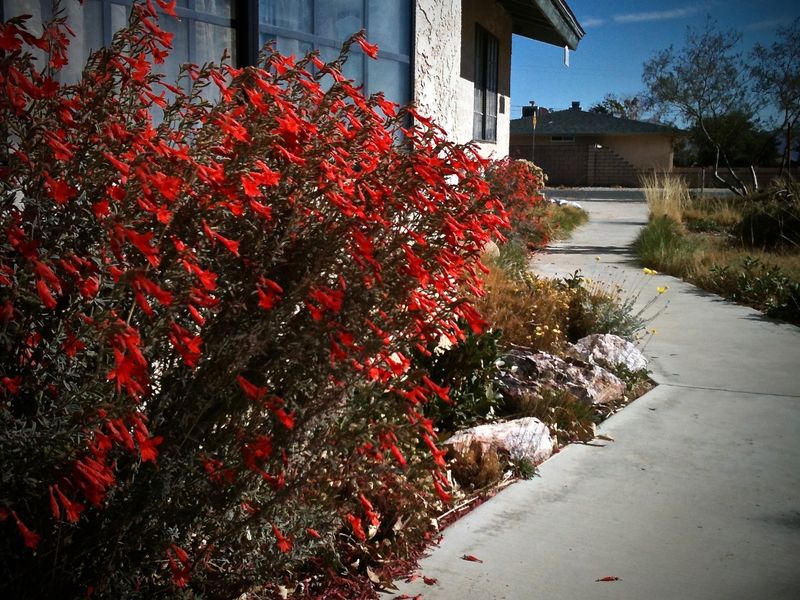
Hummingbird traffic jams are a real thing, and California fuchsia causes them every September. Just when most perennials and shrubs fade, this low, sprawling native explodes with fiery orange-red trumpets.
The flowers can keep coming from late summer into November in many areas. Migrating Anna’s and Allen’s hummingbirds rely on that late nectar, so a single patch may become a regular refueling stop.
Give it full sun and lean, fast-draining soil. Once established, it needs little summer water.
Cut it back hard in winter, and it returns fresh in spring.
2. Coyote Brush (Baccharis pilularis)
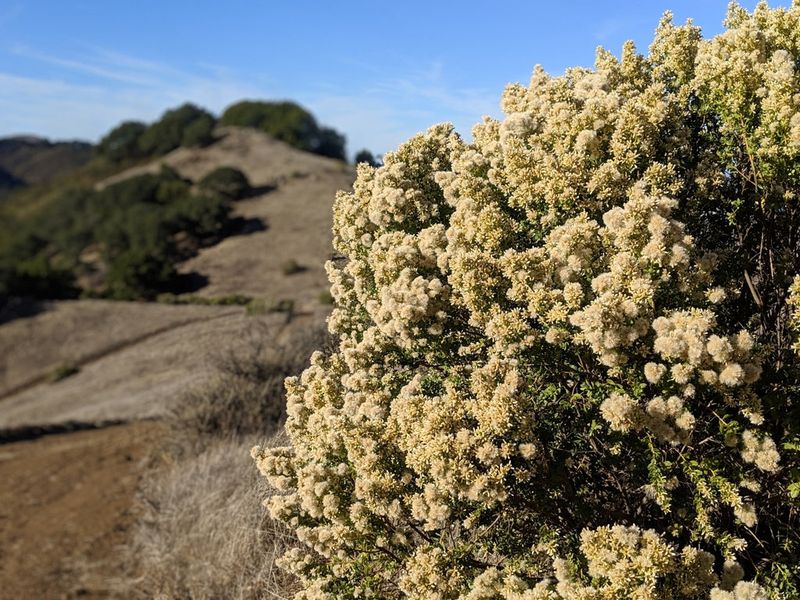
Nobody plants coyote brush for glamour. Plenty of gardeners plant it once, then watch it hum with insects in October and become converts for life.
Its small cream flowers open in fall, when food is scarce. Researchers and naturalists have counted many kinds of native bees, wasps, flies, and beetles visiting, which makes it one of the busier plants in a California yard that time of year.
Low-growing selections like ‘Pigeon Point’ work as a tidy, drought-tolerant groundcover on slopes. Keep it trimmed and free of dead wood if you live in a fire-prone area.
3. California Buckwheat (Eriogonum fasciculatum)
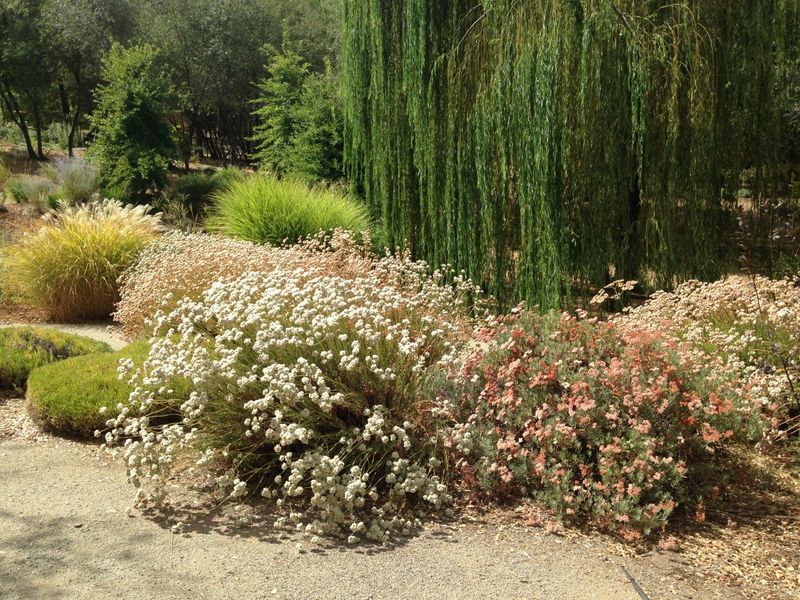
Here is a shrub that looks good even while it is technically finishing up. California buckwheat blooms from late spring through summer, then its flower heads slowly turn a warm rusty brown that lasts into fall.
Those lingering clusters still feed late visitors, and the seeds help sparrows and other small birds. It is also a host plant for several small butterflies, including some blues and hairstreaks.
Plant it in full sun with almost no summer water once it is established. Overwatering is the fastest way to lose it, so resist the hose.
4. Goldenbush (Isocoma menziesii)
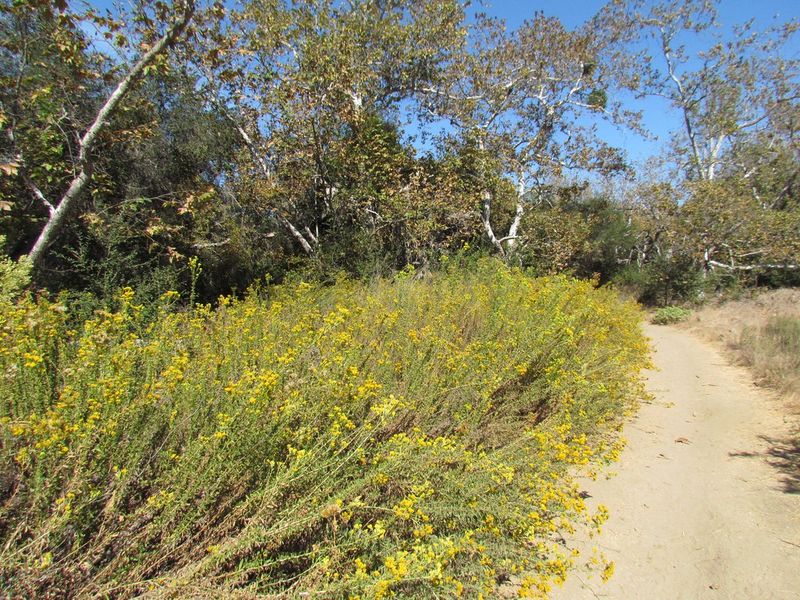
Think of goldenbush as the late-season sunshine button. It often bursts into yellow bloom from late summer into fall, right when much of Southern California looks beige.
Butterflies, native bees, and beneficial flies crowd the flat-topped clusters. It handles heat, wind, poor soil, and even some salt spray, so coastal homeowners can lean on it.
A light shearing after bloom keeps it compact. Water deeply now and then during its first summer, then step back and let it do its thing.
5. Rabbitbrush (Ericameria nauseosa)
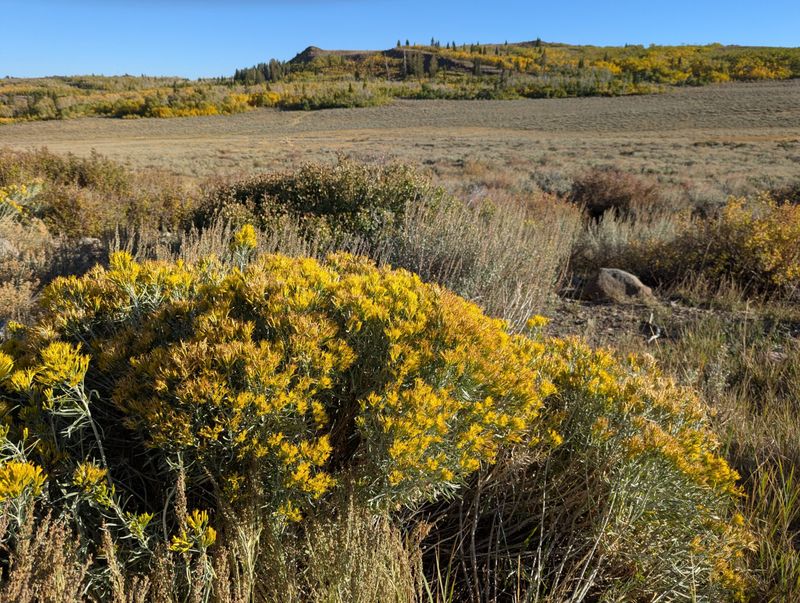
Drive through the Eastern Sierra in fall and you will see whole hillsides glowing gold. That is rabbitbrush, and it brings the same late show to home gardens in inland and high-elevation California.
Bloom usually peaks from September into October. Migrating butterflies, including monarchs in some areas, plus loads of native bees often stop to feed.
The silvery-green stems look sharp the rest of the year. It wants sun, sharp drainage, and very little water, making it a fit for hot inland yards.
6. Cleveland Sage (Salvia clevelandii)
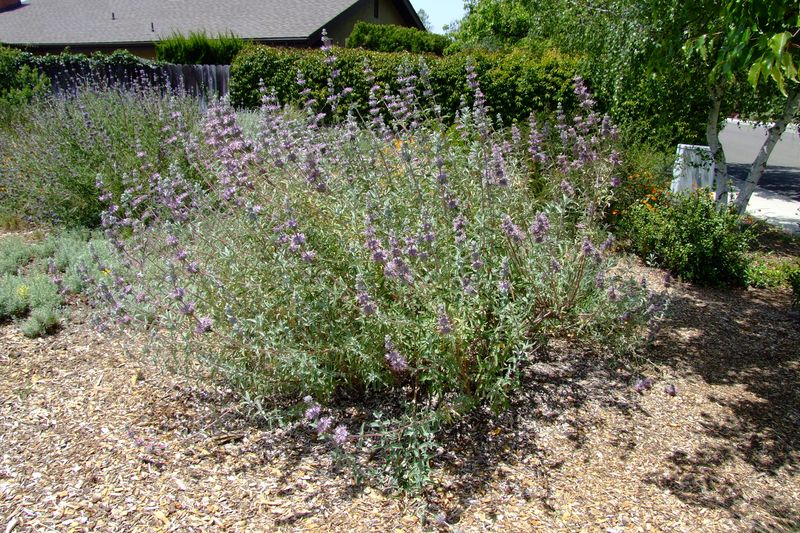
Brush past a Cleveland sage on a warm evening and the whole yard smells like the chaparral. That scent alone earns it a spot near a path or patio.
Its main bloom runs late spring into summer, and spent flower whorls stay attractive for months. A light trim after the first flush can sometimes encourage a smaller repeat bloom, and goldfinches like to pick at the seeds as fall arrives.
Hummingbirds and bumblebees love the lavender-blue flowers. Skip summer water once it is settled, since this sage prefers to stay dry.
7. Bush Mallow (Malacothamnus fasciculatus)
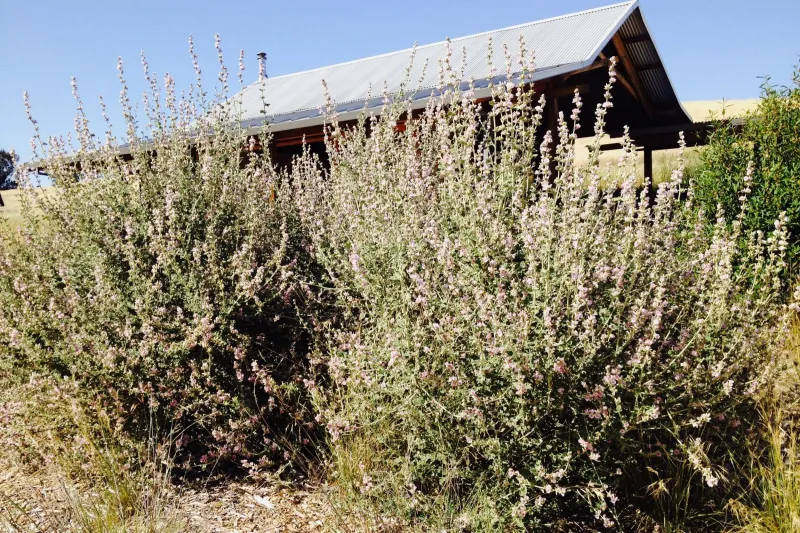
Soft pink cups on tall, wand-like stems give bush mallow an almost cottage-garden charm. Under that pretty face is a tough chaparral native that shrugs off heat.
It can bloom on and off from spring well into summer and early fall, especially with an occasional deep drink. Native bees often tuck right inside the flowers.
It grows fast, which is handy for filling a bare slope. Prune it in winter to keep it from getting lanky.
8. Toyon (Ceanothus Companion: Heteromeles arbutifolia)

Ever wonder where Hollywood got its name? One popular story says the hills were covered in toyon, also called California holly.
Small white flowers appear in early summer and feed bees. The real late-season payoff is the red berries, which ripen in fall and winter and draw robins, cedar waxwings, and mockingbirds.
Toyon handles drought and many soil types once established. It can grow into a large shrub or small tree, so give it room.
9. Bladderpod (Peritoma arborea)
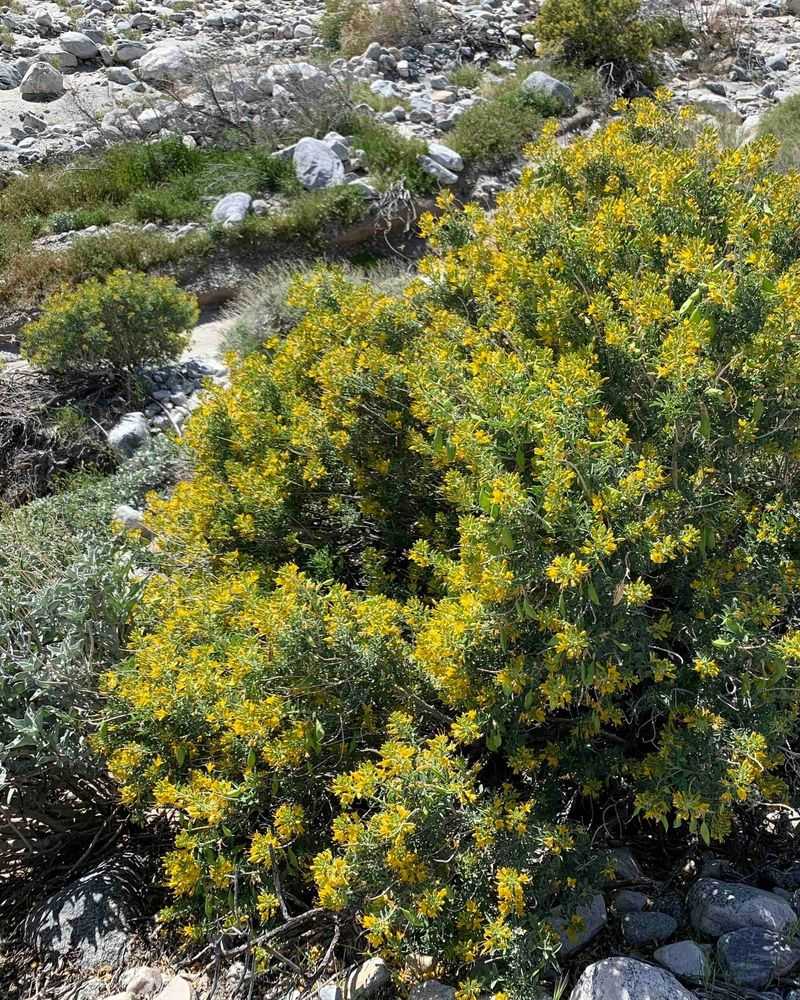
Few plants laugh at drought quite like bladderpod. This quirky shrub can flower in almost any month, including late fall and winter when little else is open.
Hummingbirds, bees, and butterflies visit the yellow blooms. Afterward, puffy pods that look like tiny balloons dangle from the branches, and kids tend to love them.
The leaves have a strong smell some people dislike, so plant it away from seating. It thrives in hot, dry, inland and desert-edge yards with little care.
10. Manzanita (Arctostaphylos)
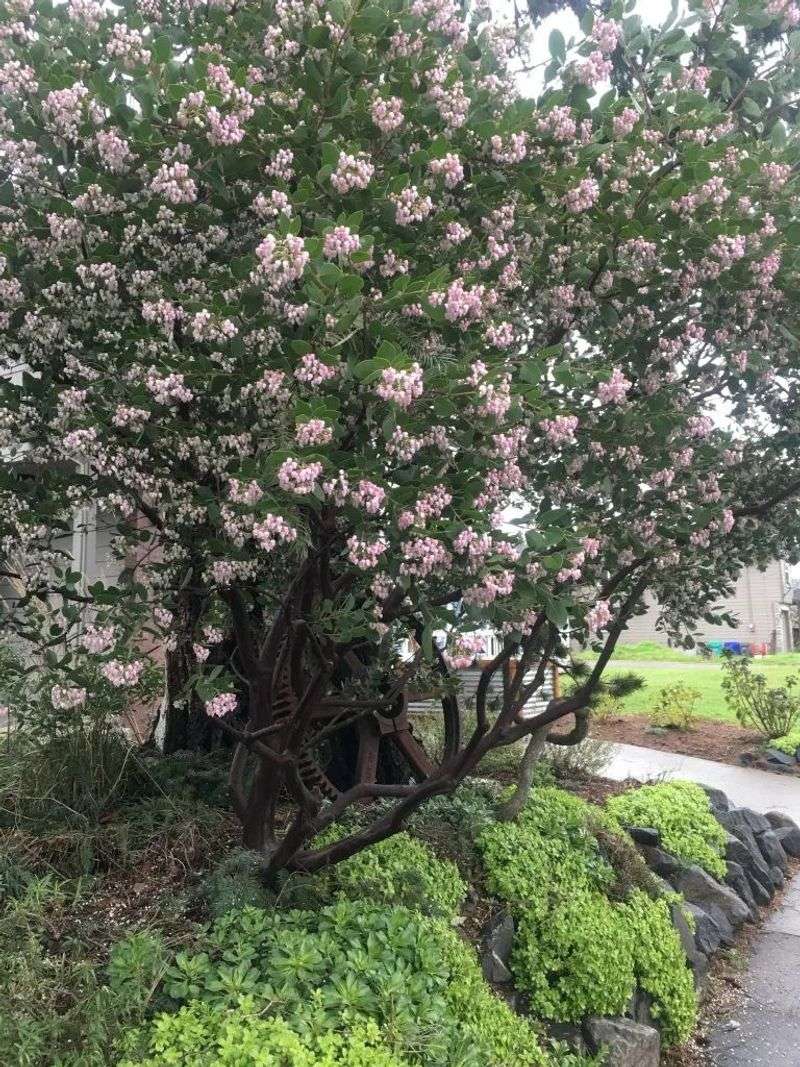
Most shrubs rest in winter. Many manzanitas do the opposite, opening clusters of tiny pink or white bell flowers between December and March.
That timing matters, because overwintering hummingbirds and early queen bumblebees need food before spring arrives. Manzanita bridges the gap after your fall bloomers finish, keeping the buzz going year-round.
The smooth, red bark looks like polished wood. Choose a variety suited to your area, such as ‘Howard McMinn’, and water sparingly in summer to avoid root rot.