
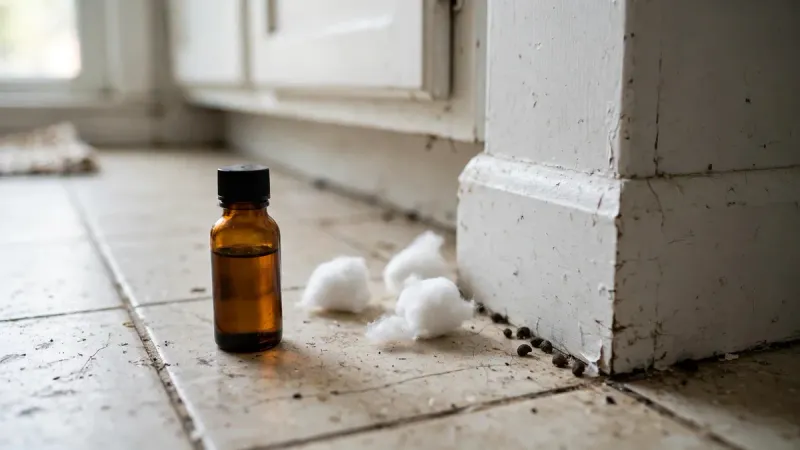
Finding droppings or chewed seed packets in the shed makes a quick scent fix sound pretty tempting. Peppermint oil on cotton balls is a popular idea, but the proof behind it is thin.
Cold weather pushes mice toward cozy buildings, so your stored seed, bulbs, and tools are at stake. Here is what the research shows and what steps work better.
Peppermint oil is not a dependable way to clear a shed
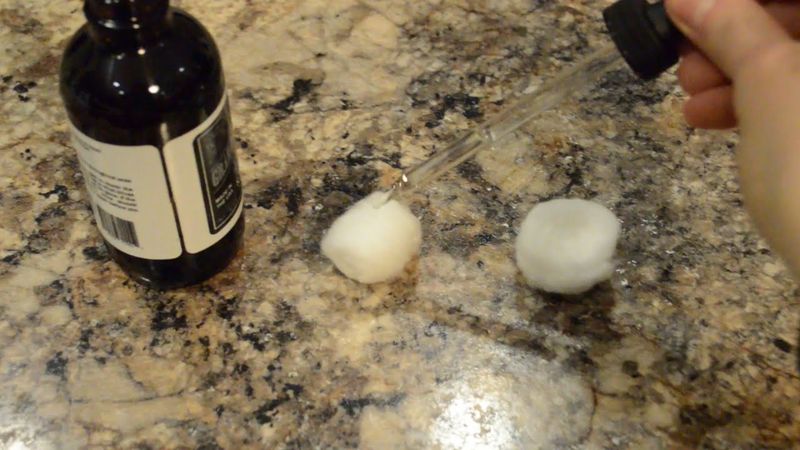
The idea is appealing: soak a few cotton balls, tuck them in corners, and wait. Sadly, the research does not back that plan.
A 2022 study tested herbal oils in behavioral tests with mice and found short-term avoidance. The repellent effect did not last after one week.
Those tests were done with laboratory mice, not in sheds, garages, or other real buildings. Nobody tested cotton balls in a real shed, so the study cannot show that this method clears out mice that have already moved in.
There is another catch. Avoiding one treated spot is not the same as leaving a building.
Penn State Extension cautions that mice may simply go around a peppermint-soaked cotton ball. A mouse that skips one corner can still reach your seed bin by another route.
So treat scent as, at best, a short-lived nudge. It should not be your plan for protecting stored supplies.
Use caution with concentrated peppermint oil
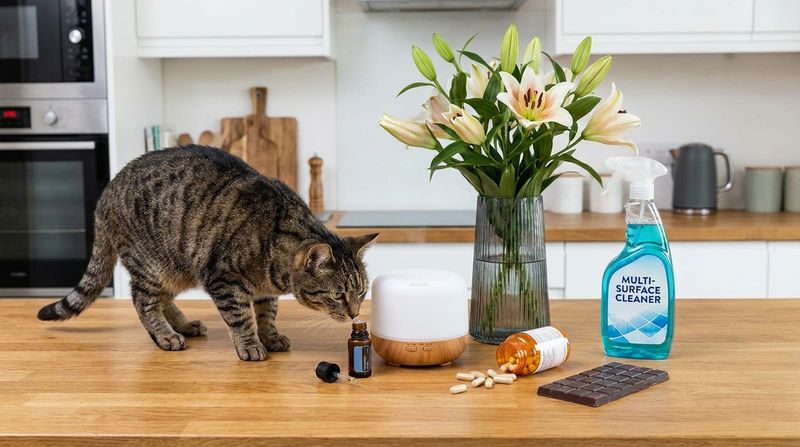
Concentrated essential oil is strong stuff, and a bottle labeled natural is not automatically harmless. The American College of Veterinary Pharmacists lists peppermint oil as toxic to cats if ingested or inhaled.
If a cat wanders through your garage or shed, that matters.
People can react too. Penn State Extension warns that essential oils may trigger asthma or allergies, and it advises against using them around children.
A shed that kids visit for garden chores is not the place for open oil-soaked cotton.
Since the oil is not a proven mouse fix, the risk is hard to justify. If you already have some on hand, keep it capped and stored well out of reach of pets and children.
The steps in the next sections carry less guesswork and do a better job of protecting your supplies.
Inspect and seal small entry points
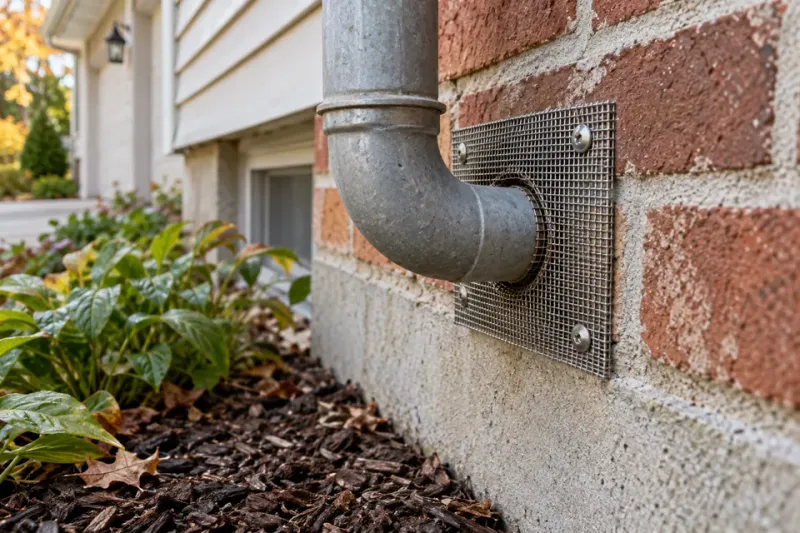
Mice often move into buildings in fall as temperatures drop, and they do not need much room. They can squeeze through an opening about 1/4 inch wide, roughly the width of a pencil.
Guidance from Utah State University Extension and the CDC points to sealing as a core step.
Walk the shed or garage slowly with a flashlight. Check door bottoms, the foundation line, vents, and gaps around pipes or wires.
Look for gnawed edges, grease smudges, and droppings, which hint at where mice travel.
Fill gaps with rodent-resistant materials such as metal mesh, sheet metal, or cement-based patching, rather than soft foam or paper that mice can chew through. A door sweep can close the gap under a door.
Sealing lowers the odds of mice getting in, but it cannot promise a mouse-free shed. Recheck every few weeks once cold weather arrives.
Secure food and reduce places mice can hide
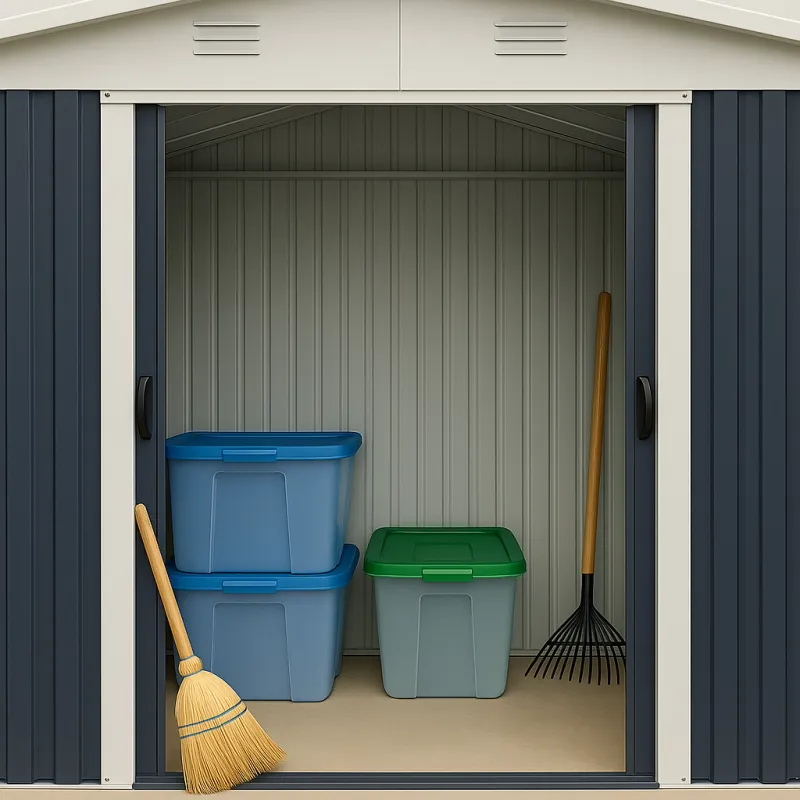
Seed packets are a snack bar to a hungry mouse. Move seed and any other attractants, such as pet food or bird seed, into sturdy containers with tight lids.
Metal bins and thick hard plastic tubs are better picks than paper bags or cardboard boxes.
Sweep up spilled seed and soil mix that contains grain or other food bits, using the cleaning steps in the last section if you see droppings. Mice that find no easy meal have less reason to stay.
Shelter matters too. Utah State University Extension advises cutting back clutter and debris that give mice cover.
Lift pots, tarps, and cardboard off the floor, and keep stacks away from the walls.
This guidance targets food and hiding spots in general. It does not prove protection for bulbs or tools specifically, but a cleaner shed gives mice fewer places to settle.
A scent cannot stand in for good storage.
Use snap traps when mice are already active
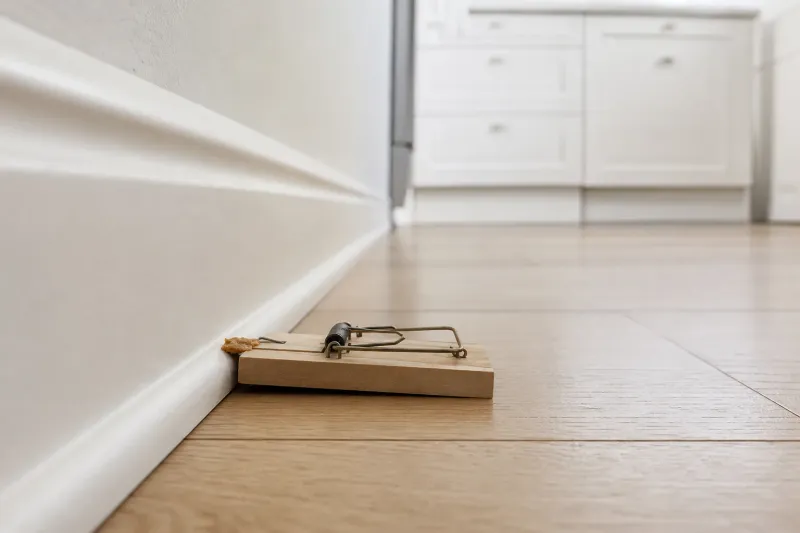
Fresh droppings, gnaw marks, or shredded paper mean mice are already around. At that point, sealing alone will not remove them.
CDC guidance recommends snap traps placed where rodents travel, and that includes outbuildings like sheds.
Look for runways along walls, behind containers, and near the spots where you found droppings. Set traps close to the wall, since mice tend to hug edges as they move.
Follow the instructions on the trap package. Keep traps and any bait well away from children and pets, and check them regularly so you can deal with catches promptly.
Think of trapping as cleanup for mice that are already inside. Once the numbers drop, close the gaps and secure the food so new ones do not take their place.
Clean droppings or nests without stirring them up
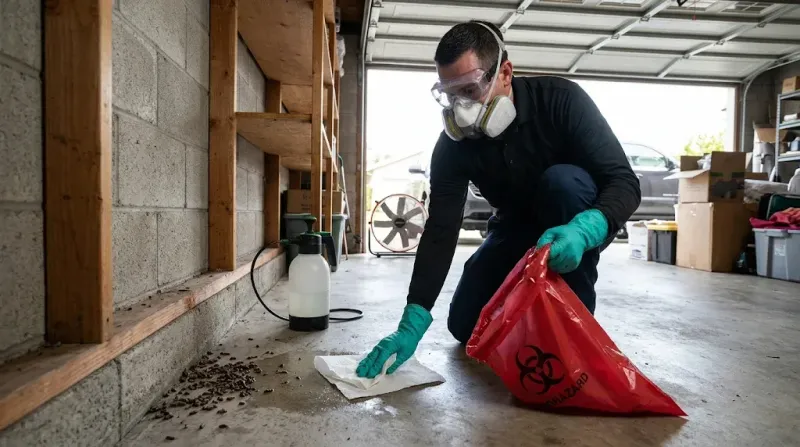
Dry droppings and nest material should never be swept up. Stirring them can put dust into the air.
CDC cleanup guidance lays out a clear sequence.
First, open the shed to ventilate it for 30 minutes, and leave during that time. Then put on rubber or plastic gloves before you touch anything.
Wet the droppings with disinfectant before wiping them up, so nothing gets kicked into the air. Do not sweep or vacuum them.
Wipe them up with paper towels and dispose of the waste as the CDC directs.
Work through the shed one area at a time, including shelves, floors, and the surfaces around your seed bins.
A shed is only as clean as its dirtiest corner, so finish the job before restocking.