
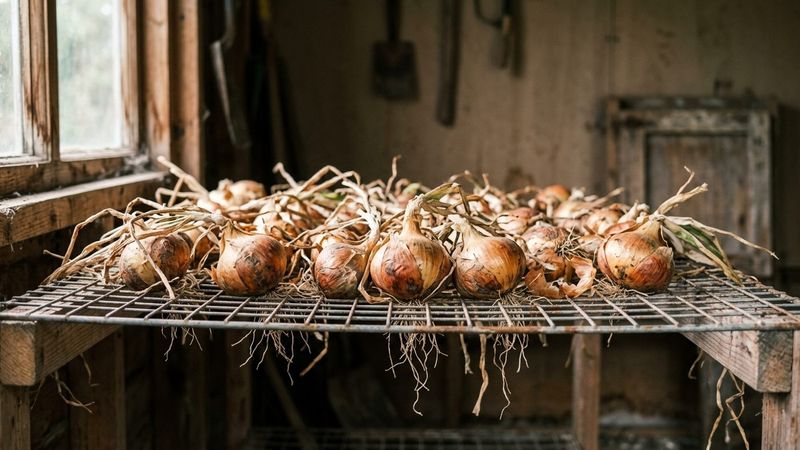
You reach into the pantry basket and find green shoots poking out of the onions, and one bulb feels mushy near the neck. It is a frustrating way to lose part of a harvest you worked hard to grow.
The good news is that sprouting and softness are not always the same problem, and each one calls for a different response. Here is how to tell them apart, sort what you have, and set up better storage for the next batch.
Warm storage encourages sprouting, but not every soft bulb
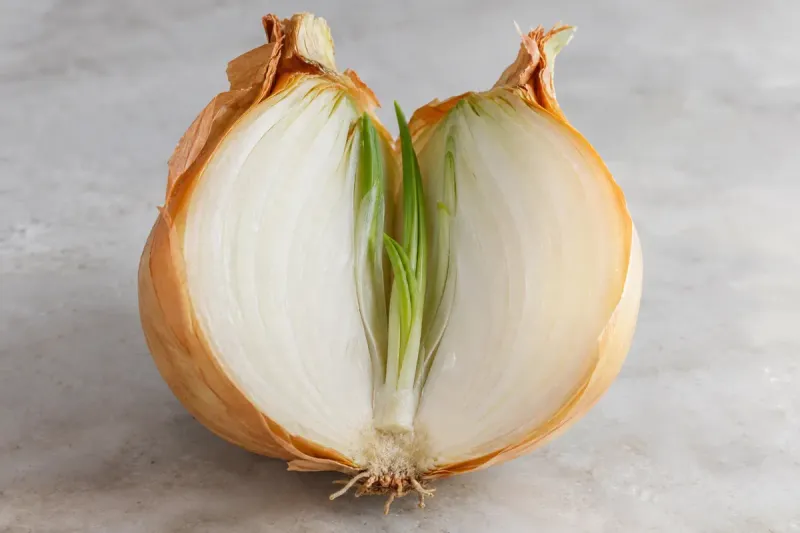
Walk into a typical pantry and you will often find temperatures that onions do not love. UC Davis reports that storage between 41 and 77°F favors sprouting, so a warm shelf is handy for cooking but not ideal for holding a harvest for months.
Softness is a different story. A bulb can go soft for reasons that have nothing to do with a green shoot, and warmth alone does not explain it.
Too much moisture, poor curing, wounds, immature or thick-necked bulbs, and infection can all contribute to storage losses, as Utah State harvest guidance points out.
So try not to blame the pantry for everything. Treat sprouting and softness as two separate clues, and look closely at each bulb before deciding what went wrong.
Tell sprouting from signs of rot
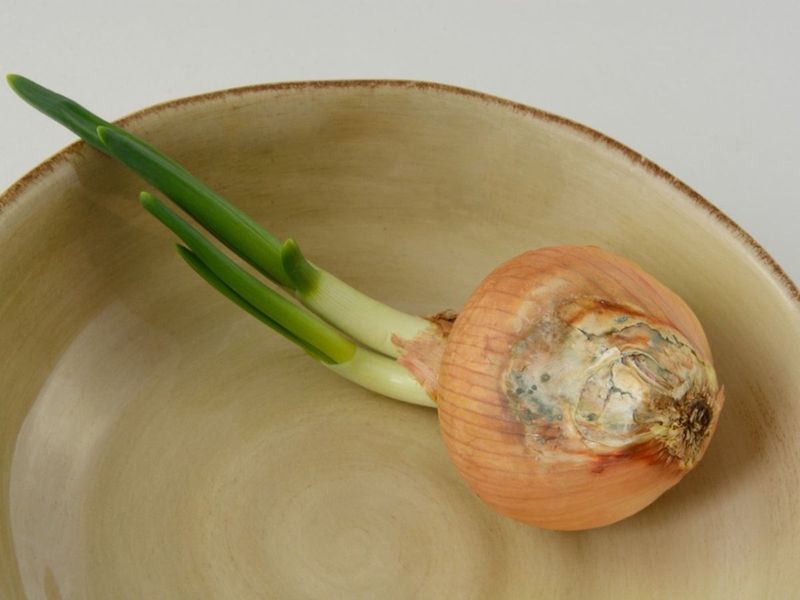
A green shoot coming out of the top is one thing. A bulb that is breaking down inside is another.
Bacterial soft rot shows up as water-soaked tissue that turns to pulp, often with a foul-smelling liquid, according to Utah State Extension. It can spread from the neck down into the bulb, so a mushy neck deserves a careful look.
Squeeze gently and check the neck, then cut a questionable bulb open if needed. Firm, dry layers with a green center shoot are a sign of sprouting.
Slimy, watery layers and a sour smell point toward rot.
A sprout by itself does not mean an onion is rotten or unsafe. Not every soft spot is soft rot either, so avoid guessing from one symptom.
Utah State suggests using softening or sprouting bulbs first, as long as they show no decay.
Use vulnerable bulbs before sound ones
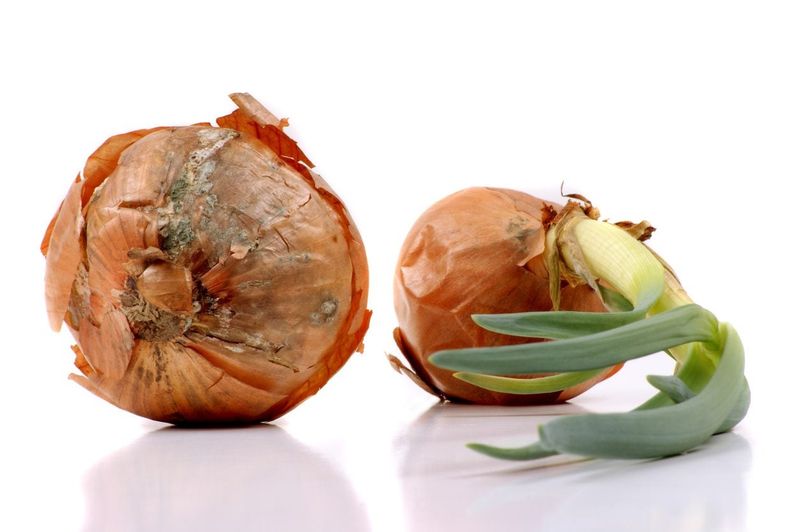
Sorting takes about ten minutes and can save the rest of the stash. Go through the whole batch and pull out any bulb that has a thick neck, visible damage, a sprout, or a softening spot.
Those bulbs will not keep as long, so move them to the front of your cooking line. Thick necks in particular do not store well, and Iowa State suggests using these bulbs first, along with those that are starting to soften or sprout.
The exception is decay. If a bulb is watery, pulpy, or smells foul, remove it and throw it away instead of keeping it near sound onions.
Sorting out decay is also recommended by Utah State.
Check again every week or two. Softness can start in one bulb, so a quick look helps you catch the next problem early.
Cure healthy onions before long-term storage
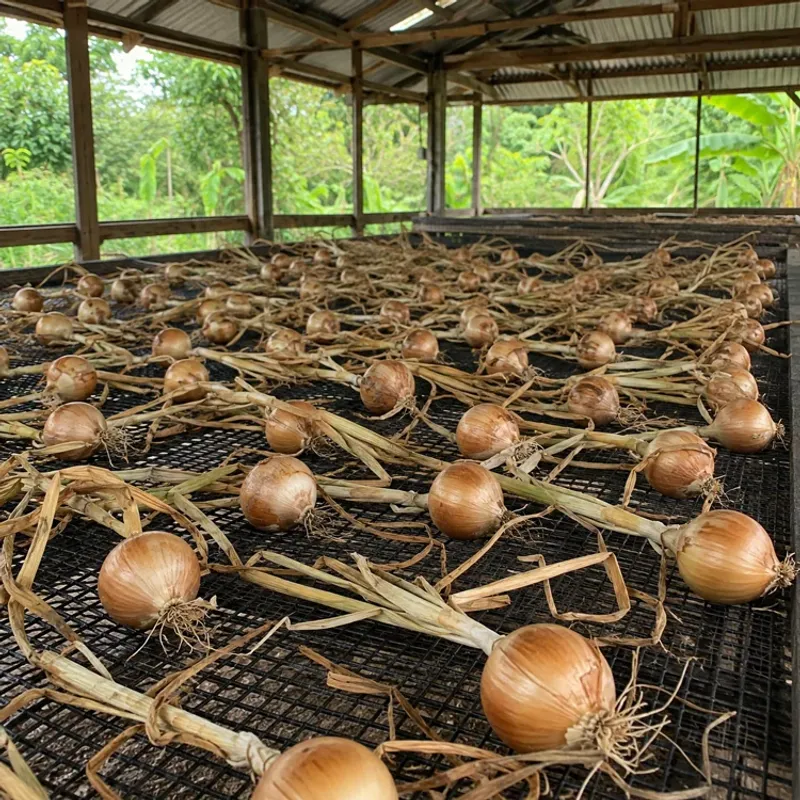
Curing is the step that gets onions ready for the long haul. Iowa State recommends two to three weeks in a warm, dry, well-ventilated spot, until the tops and necks are thoroughly dry and the outer scales rustle when you touch them.
Spread the bulbs in a single layer on screens, racks, or crates so air can move around each one. Skip any spot that gets rain or heavy dew.
Do not pack onions away while the necks are still damp. A wet neck is an open door for trouble, and the extra moisture can work against you for months.
Keep one thing separate in your mind: curing is for healthy onions. Warming bulbs that are already soft or possibly infected is not a home fix.
Cornell Extension notes that warm-air curing is meant for healthy onions, and heat may help bacteria move into an infected bulb.
Choose a cool place that stays above freezing

Look for the coolest spot in your home that reliably stays above freezing. For home storage, Iowa State gives a target of 32 to 40°F with 65 to 70 percent relative humidity.
Commercial storage is a bit different. UC Davis puts the ideal long-term target near 32°F, but that is not a reason to let home bulbs freeze.
Good candidates include an unheated basement, a cool closet, or a root cellar corner. A cheap thermometer can tell you if the spot fits.
If you cannot measure humidity, do not worry. Aim for a place that feels dry, not damp or musty.
An unheated garage can work in mild weather, but move the onions before temperatures drop below 32°F, since frozen bulbs turn mushy once they thaw.
Keep bulbs dry and give them airflow
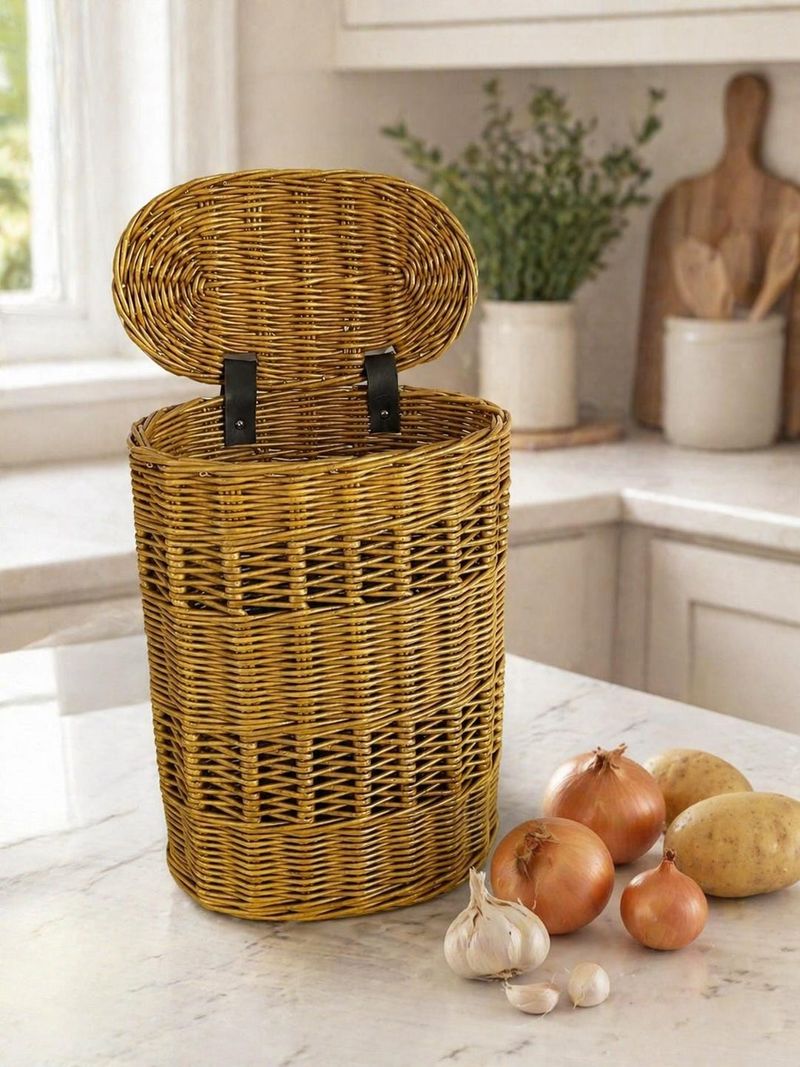
Airflow keeps moisture from building up around the bulbs. Mesh bags, wire baskets, and slatted crates all let air circulate, while a sealed plastic tub can trap dampness.
Iowa State’s storage guidance also stresses keeping onions dry and checking them from time to time.
Try not to pile onions deep. A shallow layer in a crate or a hanging bag gives you a better chance of spotting a problem before it spreads.
Keep the containers off damp floors and away from pipes or walls that sweat. Condensation can wet the bulbs even when the room looks dry.
These habits are simple storage management. They can lower the odds of sprouting and decay, but they cannot rule either one out.
Set expectations for how long onions will keep
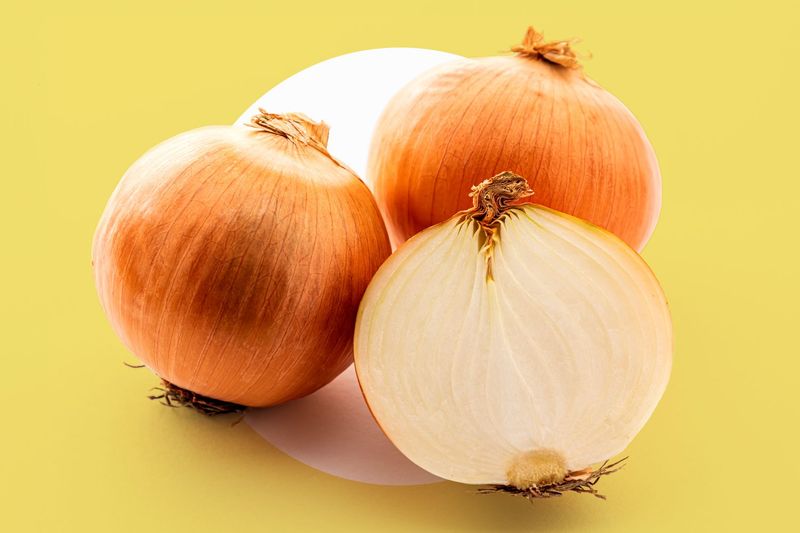
Under good conditions, Iowa State gives an average of five to eight months for well-stored onions. That is a range, not a promise, and a home harvest can land on either side of it.
Variety plays a big role. Oregon State Extension notes that pungent yellow onions generally keep better than red and white types, while sweet onions store poorly.
If you grew sweet onions, plan to eat them first.
Maturity, curing, damage, and storage conditions all shape the result too. So cure sound bulbs, keep them cool, dry, and ventilated, and use vulnerable ones first.
Think of storage as a way to stretch the harvest, not freeze time. Even the best basket gives out eventually, and a few good meals from the last bulbs beat a perfect record.