
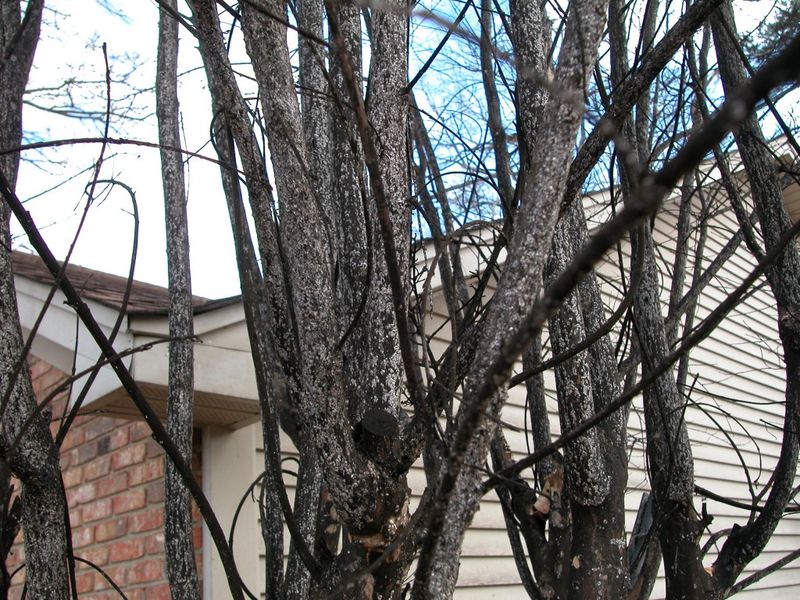
Next summer’s crape myrtle show can suffer from well-meant yard work done in November. Florida’s warm fall days make it tempting to prune, feed, and water as if spring has already arrived.
But a few wrong moves can weaken roots, push tender growth, or leave problems waiting for next year. Here are eight mistakes to avoid and the simple fixes that give your tree a better chance to bloom.
1. Cutting Back Branches Before Winter
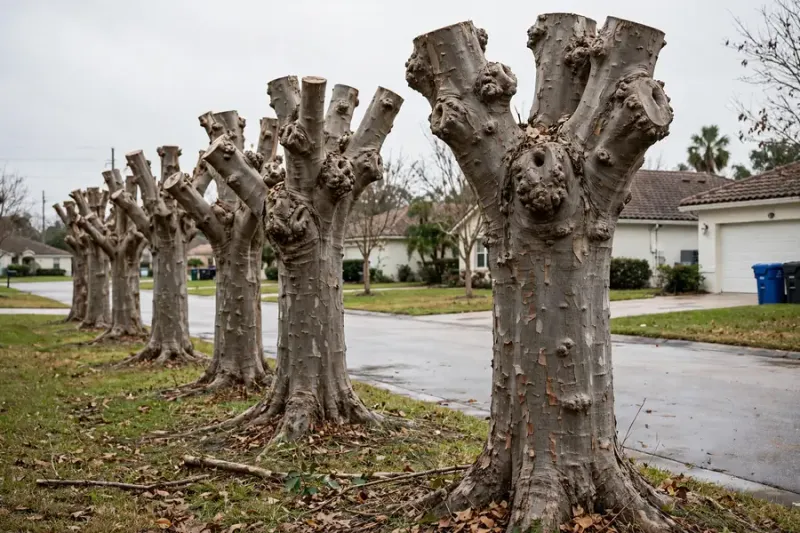
A tidy row of blunt branch stubs may look ready for winter, but it is not a shortcut to more flowers. Heavy pruning ruins a crape myrtle’s natural shape and can lead to crowded, weakly attached shoots when growth resumes.
Timing adds another risk in Florida. Cutting during a warm late-fall spell may encourage tender shoots that a later cold snap can damage, especially in North and Central Florida.
Crape myrtles bloom on new growth, not on flower buds stored through winter. The concern is not cutting away next summer’s ready-made blooms; it is creating stress and poor branch structure that can affect future flowering.
Put major shaping on hold until late winter, before spring growth begins, with timing adjusted to your county’s weather. Many trees need little pruning beyond removing crossing branches, unwanted suckers, and damaged wood.
Remove hazardous broken limbs promptly, but skip routine topping. If a tree constantly outgrows its space, a smaller cultivar is a better long-term answer than yearly cutting.
2. Giving the Tree a Late Nitrogen Boost
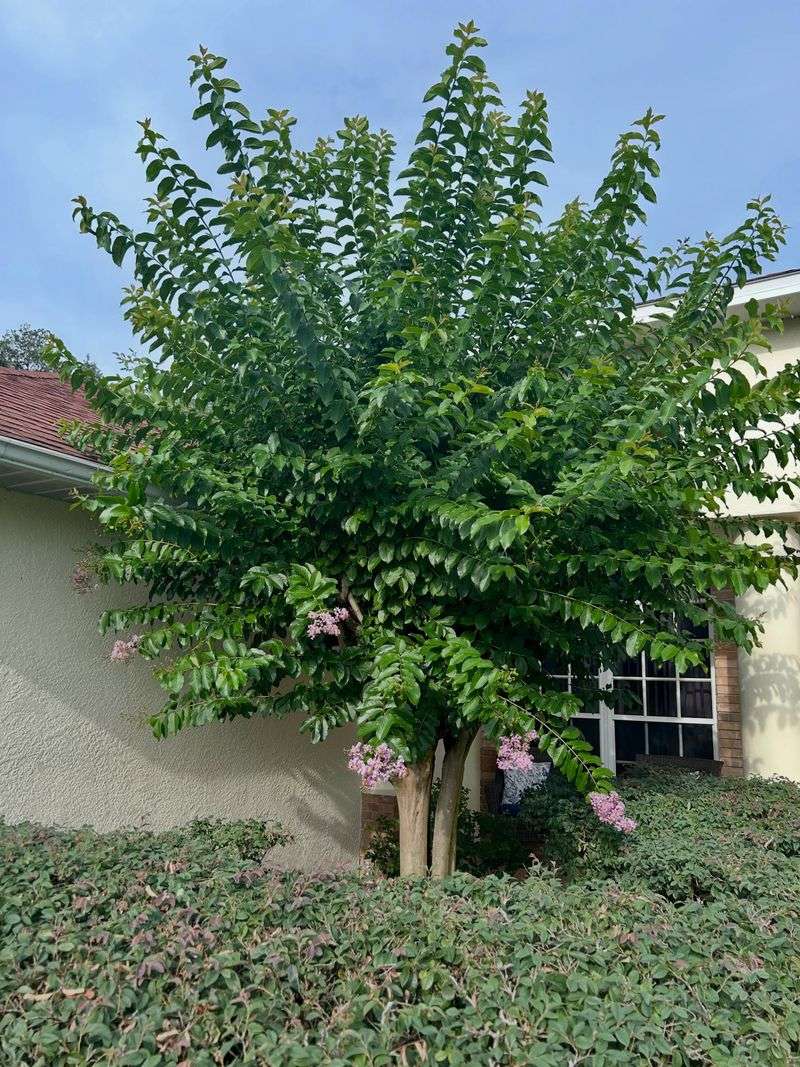
That last lawn feeding can reach farther than the grass. Crape myrtle roots often extend into nearby turf, where they can pick up fertilizer even when you never feed the tree directly.
Too much nitrogen favors leafy growth rather than a strong flower display. In late fall, it can also push soft growth during warm weather, leaving the tree more exposed if temperatures suddenly drop.
Skip the idea of a November meal to build summer blooms. An established crape myrtle growing well in a fertilized landscape may need no extra fertilizer at all.
Check what has already been applied around the tree, including lawn products and weed-and-feed blends. Follow local fertilizer rules, which vary across Florida, and keep applications away from pavement and waterways.
If growth was weak this year, investigate sunlight, drainage, roots, and pests before buying plant food. Your county UF/IFAS Extension office can help you decide whether a soil test or a carefully timed spring application makes sense.
3. Leaving Irrigation on Its Summer Schedule
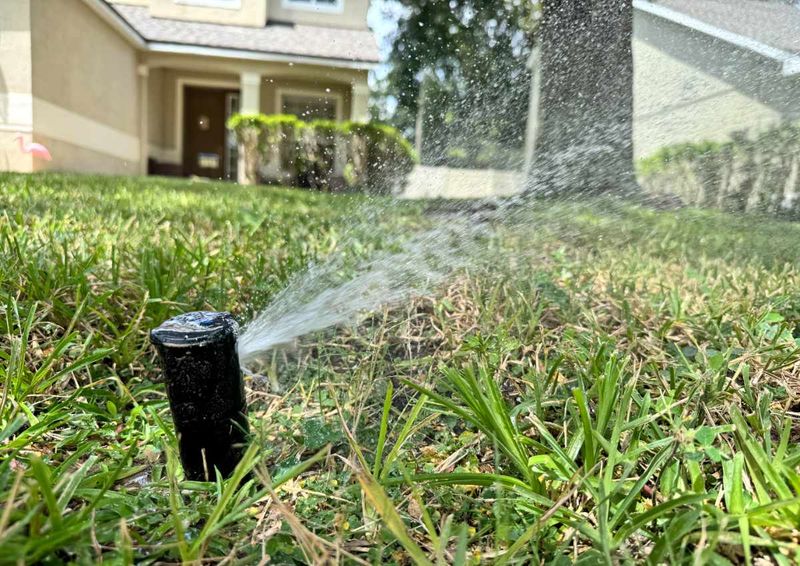
The sprinkler timer does not know that shorter days have arrived. A schedule that helped during summer can leave a crape myrtle’s root zone too wet once growth slows and water use drops.
Florida’s late fall is not the same everywhere, though. South Florida often moves into its dry season, while rainfall and cold fronts create different conditions farther north, so shutting off irrigation without checking the soil can also cause trouble.
For established trees, check moisture several inches below the surface before watering. Dry-looking sand on top does not always mean the entire root zone is dry, and a damp surface does not prove deeper roots received enough water.
Water when needed rather than by habit, and follow local watering restrictions. Newly planted trees need closer attention and a separate establishment schedule based on root-ball size, weather, and soil.
Keep sprinkler spray off trunks and foliage when possible. Healthy roots need both moisture and air, and avoiding long periods of soggy soil helps protect the growth that will support future flowers.
4. Piling Mulch Against the Trunk

A fresh mulch ring can make the whole front yard look finished. Trouble starts when that neat ring becomes a mound pressed against the crape myrtle’s bark.
Constant moisture against the trunk can encourage decay and hide developing problems. Deep mulch may also encourage roots to grow into the mulch layer instead of the soil, adding stress rather than helping the tree.
Spread organic mulch about 2 to 3 inches deep over the surrounding bed, while leaving several inches of open space around the trunk. The base should widen naturally where the trunk meets the roots, not disappear into a cone.
Before adding more in late fall, check what is already there. Florida mulch can look faded long before it has broken down enough to need another full layer.
A broad, properly mulched area also reduces competition from turf and keeps string trimmers away from tender bark. Mulch will not produce flowers by itself, but protecting roots and trunks removes avoidable barriers to healthy summer growth.
5. Overlooking the Shade That Limited Flowering
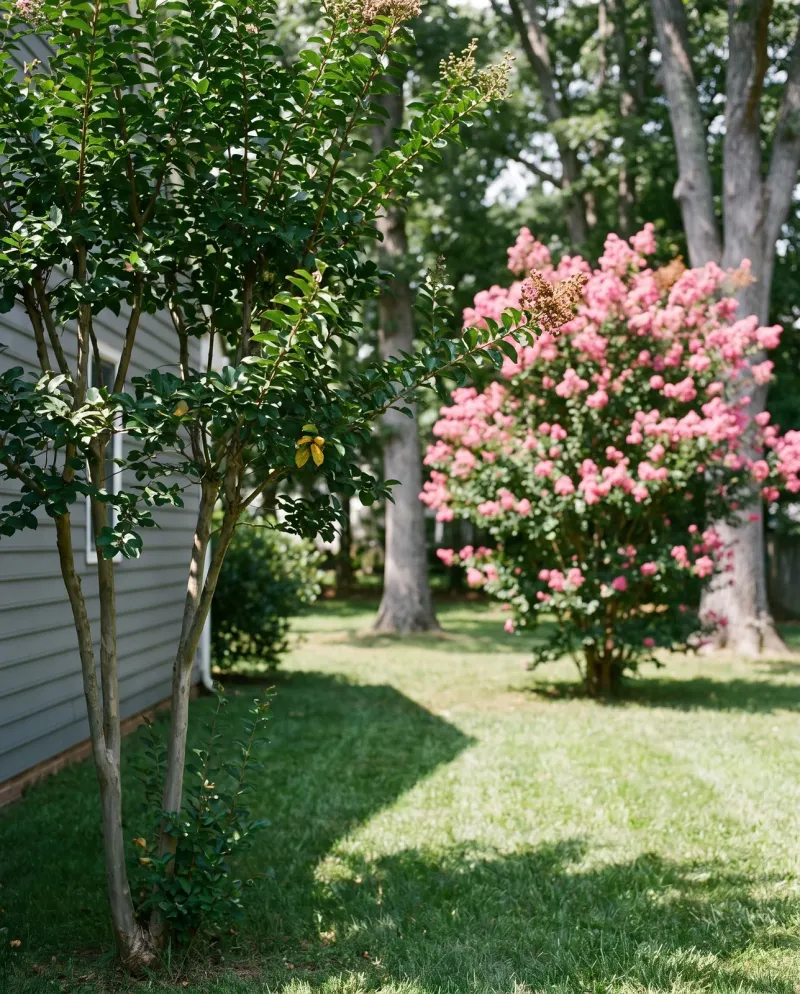
Sometimes the missing flowers have nothing to do with fertilizer. A crape myrtle squeezed beneath a spreading live oak or beside a tall house may simply lack enough direct sun.
These trees flower best in full sun, generally at least six hours of direct sunlight daily. A partly shaded tree may survive and produce leaves while offering a much smaller summer show.
Use late fall to review what happened during the growing season. Photos from June or July can reveal shade patterns better than a November visit, because sun angles and nearby tree cover change through the year.
Avoid stripping major limbs from a healthy shade tree just to help the crape myrtle. For a young, manageable plant, relocation to a sunnier site may be more sensible, with timing and watering planned for local conditions.
Large trees need professional assessment before moving. If relocation is not practical, accept lighter flowering or plan a better-suited replacement rather than trying to fix a light shortage with extra feeding.
6. Ignoring Sticky Leaves and Bark Pests
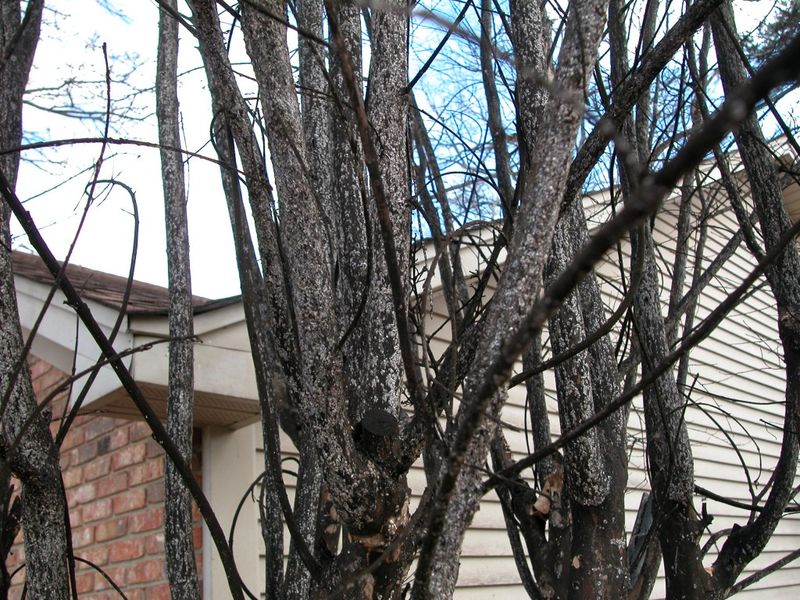
Black, dusty-looking leaves are often a clue, not the main problem. Sooty mold grows on sticky honeydew left by sap-feeding insects such as aphids and certain scales.
Before the canopy becomes bare, look under remaining leaves and along branches. Crape myrtle bark scale, where present, can appear as small white or gray feltlike bumps, often clustered in protected spots on the bark.
Heavy infestations can reduce vigor and flowering, so do not assume every dark patch is harmless dirt. Photograph suspicious insects and ask your county Extension office to identify them before choosing a treatment.
Skip broad insecticide sprays aimed at an unknown pest. They can kill lady beetles and other useful predators, and some products pose risks to bees when applied to flowering plants or used at the wrong time.
A pest-specific plan may involve monitoring, a properly timed horticultural oil, or another labeled treatment. Follow label limits for temperature and plant condition, and remember that old sooty mold can remain after the insects are controlled.
7. Treating Early Leaf Loss as Normal Fall Color
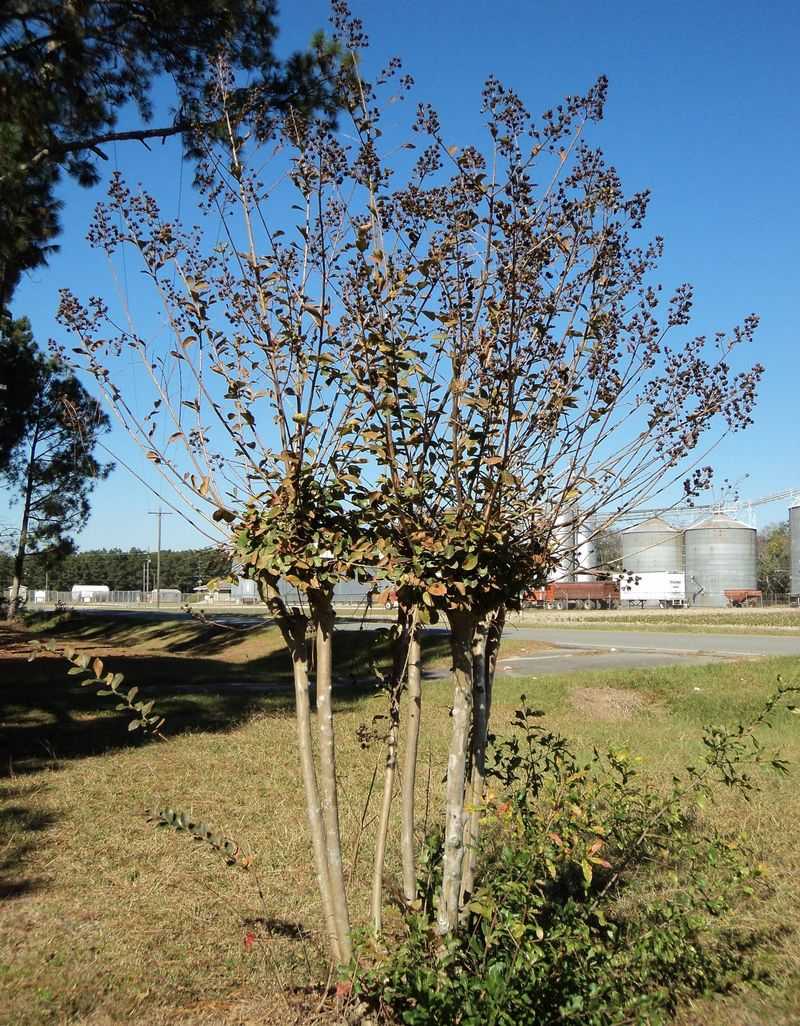
One bare tree in November may be perfectly normal; a tree that started dropping spotted leaves in August deserves a closer look. The timing helps separate seasonal leaf fall from a growing-season disease problem.
Cercospora leaf spot can cause dark spots, yellowing or reddish foliage, and early leaf drop in Florida’s humid weather. Repeated, severe leaf loss can weaken a tree and reduce its overall performance, although a few spotted leaves rarely threaten an established plant.
During fall cleanup, collect heavily diseased fallen leaves and avoid leaving them piled beneath the canopy. Keep irrigation aimed at the soil rather than the foliage, and address crowding that limits air movement without topping the tree.
A late-fall fungicide spray will not restore lost leaves or guarantee summer flowers. Diagnosis and preventive timing matter more than spraying after the damage is done.
Save photos and note when symptoms first appeared. If the same problem returns each summer, ask Extension about management and consider disease resistance when selecting any replacement cultivar.
8. Planting Too Deep in a Poorly Drained Spot

A planting hole can become a hidden bathtub, even in a state known for sandy soil. Compacted fill, a high water table, or a low spot near a downspout can keep roots wet long after the surface dries.
Late fall can be a useful planting season in much of Florida, but the site matters more than the calendar. A deeply buried root flare and poor drainage can leave a new crape myrtle struggling instead of building the roots needed for future growth and blooms.
Locate the topmost major roots before planting, since they may already be buried inside the nursery pot. Set the tree so those roots sit at or slightly above surrounding grade, following UF/IFAS planting guidance for your soil and drainage conditions.
Dig a wide hole and backfill mainly with the existing soil. Do not add gravel underneath as a drainage fix, and choose another location if water regularly stands there.
Keep lawn equipment away from the trunk and monitor root-ball moisture during establishment. A well-chosen site now prevents years of trying to fertilize away a root problem.