
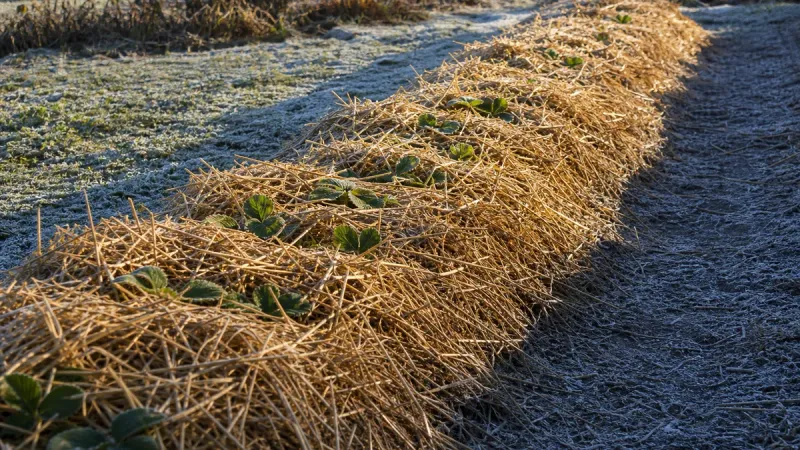
You tucked your strawberry pots onto the patio in fall, and by spring they looked brown and dead. Cold alone is not always the villain, because a sleeping strawberry plant can handle more frost than most people expect.
The real trouble is often wind, drying, and soil that freezes and thaws again and again. Here is how shelter, straw, and a little pot insulation can improve your plants’ chances.
Why exposed pots put strawberries at greater risk
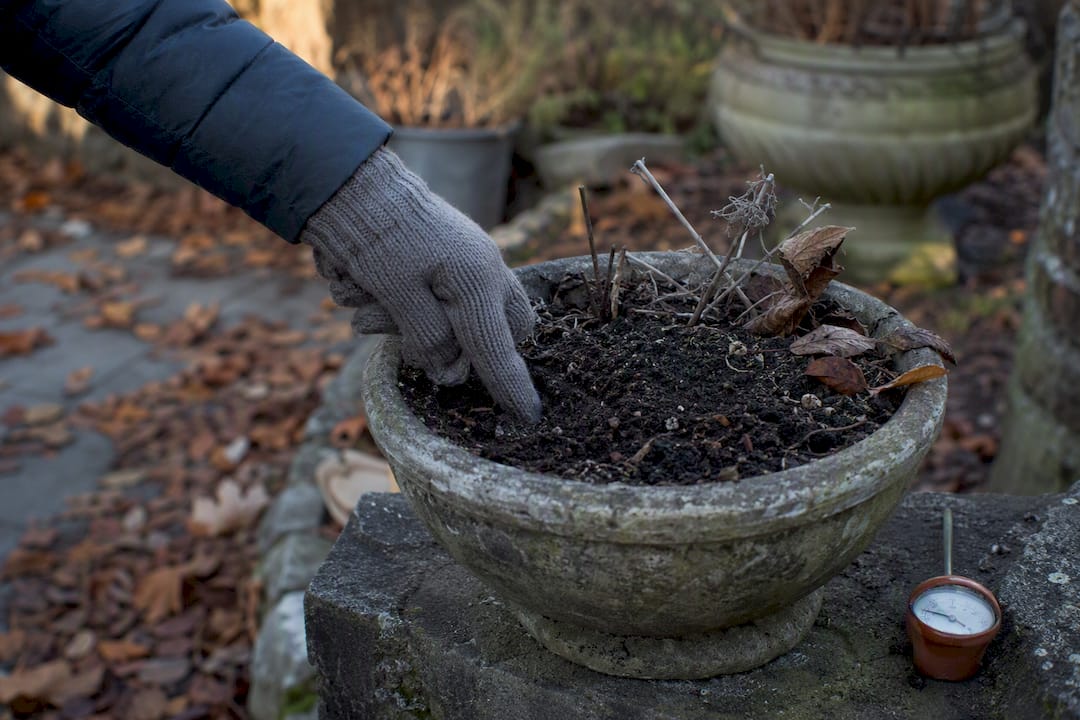
A frozen pot does not prove the plant inside is dead. Dormant strawberry crowns can handle a lot of cold, and Virginia Cooperative Extension puts their tolerance in the low teens in degrees Fahrenheit.
That tolerance depends on the plant being fully dormant, and it drops once growth resumes.
The bigger problem is the setting. A strawberry in the ground is surrounded by soil that holds steady temperatures.
A plant in a pot has roots exposed to cold air on every side, so the rootball can chill faster and deeper than the crown itself.
Wind adds another hazard. Cold, dry gusts pull moisture from leaves and crowns while frozen soil cannot send water back up, so plants can dry out even in a damp pot.
Repeated freezing and thawing can also heave and stress the potting mix and roots.
So when your patio berries fail but the garden bed plants survive, the cause is usually exposure and drying, not just a pot that turned to ice. Survival also varies by cultivar, so some losses happen even with good care.
A wall can shelter pots, but it cannot promise warmth
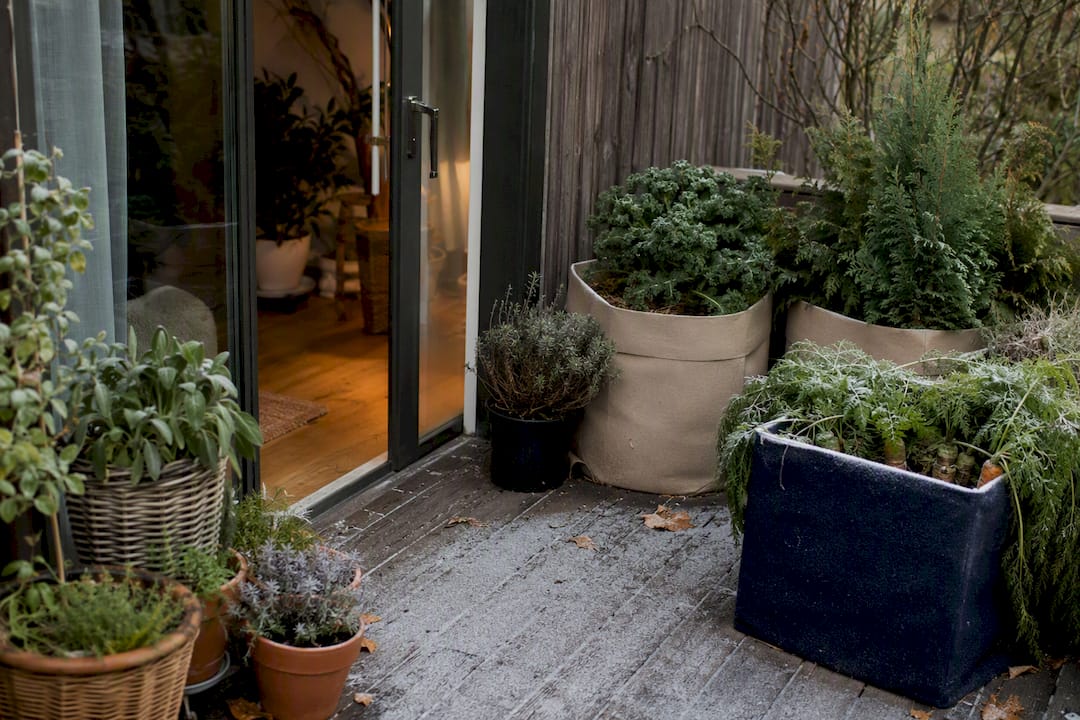
Picture a cluster of pots pushed together in a corner of the patio, with a wall behind them. That is the basic setup, and its main job is to cut down wind exposure.
Grouping pots also means the outer ones shield the inner ones, so fewer pot sides face the cold air.
Extension guidance, such as this University of New Hampshire Extension advice on overwintering container plants, recommends grouping containers in a protected spot out of strong winds and intense sun, then surrounding them with insulating material.
Notice what the wall is doing here. It is a possible windbreak, not a heater.
Some walls funnel gusts along their edge, and the sources do not show that every wall or direction helps, so watch where wind actually hits your patio.
Think of this as a sensible way to lower risk, not a tested cure for patio strawberries. It works best alongside the other steps below.
Wait until the plants are dormant before adding straw
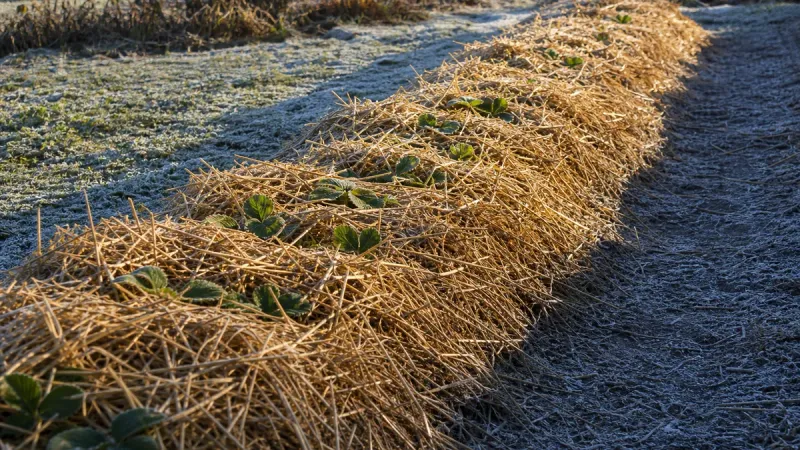
Straw applied too early can do harm. Plants need time to harden off in the cool days of fall, and a blanket added at the first chilly night may keep them growing and soft when a hard freeze arrives.
Damp, matted material can also sit against crowns and invite problems.
Timing follows local conditions, not a date on the calendar. Minnesota Extension uses soil temperatures staying at or below 40 degrees Fahrenheit for several days as its field cue, which fits a cold northern climate.
Iowa State Extension likewise advises waiting for plants to harden rather than mulching early.
Gardeners farther south will reach that point later. A simple clue is slowed growth, older leaves darkening or fading, and several nights of frost behind you.
Check your local extension office for your area’s usual timing, and keep the straw ready in a dry spot until then.
Protect the crown and insulate the container
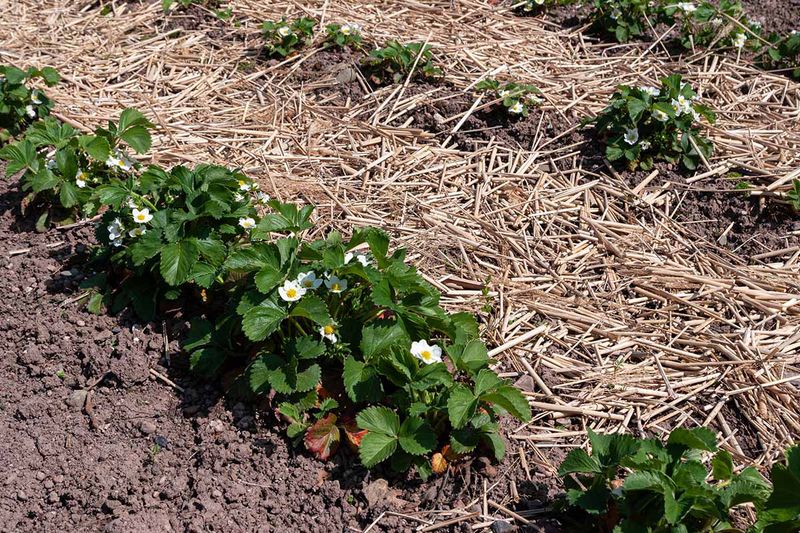
Start with clean, dry, loose straw. Once the plants are dormant, tuck a light layer over the crowns so it cushions them without packing down into a wet mat.
Field guidance gives some numbers. Purdue suggests a loose layer at least 2 inches deep over in-ground rows, and ideally 4 to 6 inches before settling.
Treat that as a row recommendation, not a tested depth for every pot.
Pots are different because their sides are exposed. Straw over the soil alone can leave much of the rootball uninsulated, and Iowa State’s container advice is more cautious than its advice for beds.
So wrap or surround the pot itself. Stack bags of leaves or bales of straw around grouped pots, or wrap each container in burlap or bubble wrap over a layer of straw.
The shelter reduces wind, and the container insulation slows chilling of the roots. Together they can improve the odds, though neither guarantees survival.
When patio protection may not be enough
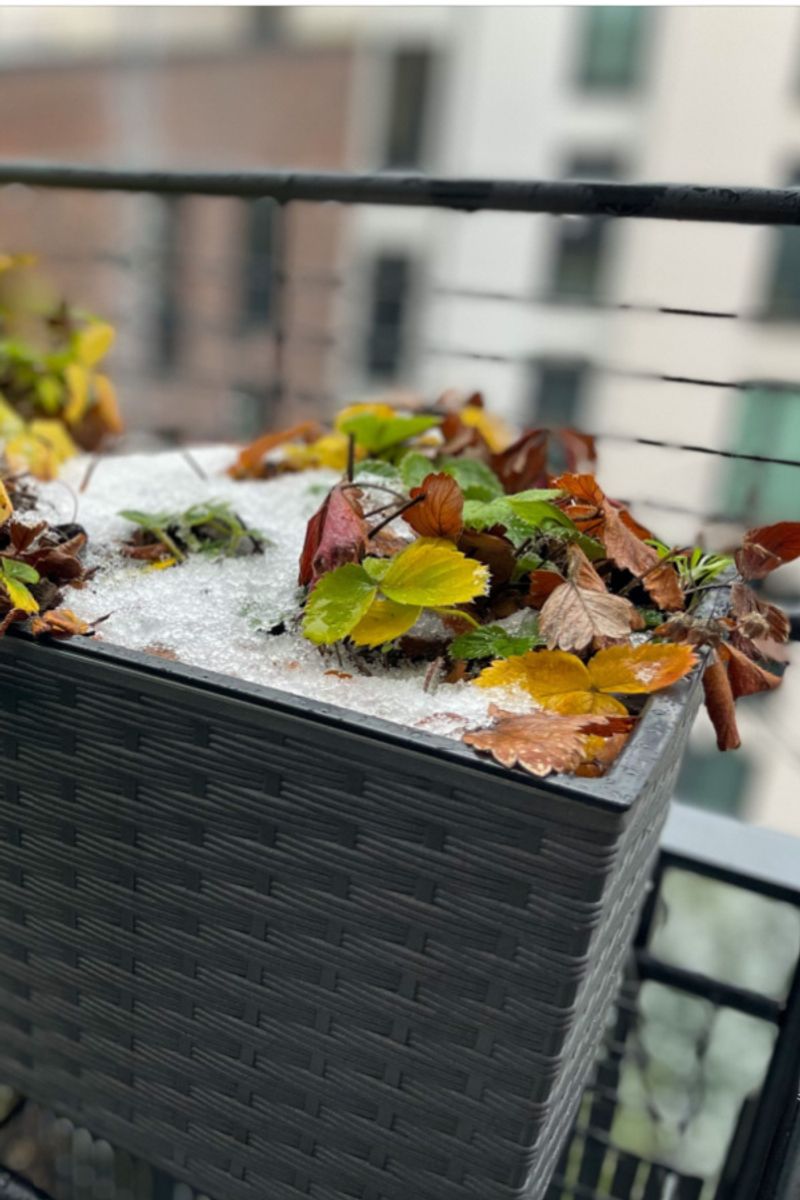
In very cold winters, a sheltered patio may fall short. Iowa State Extension warns that container-grown strawberries left outdoors in winter may be seriously damaged or destroyed.
You have two main options. Smaller pots can be buried in a garden bed up to the rim, then mulched, so the surrounding soil does the insulating.
Pots too large to move can have their sides insulated in place.
Another choice is a protected, unheated garage or shed. A Vermont Extension answer gives 20 to 40 degrees Fahrenheit as a target range for its garage approach.
Treat that as regional guidance, since your garage may run colder or warmer.
These steps are not required everywhere. If your winters are mild, shelter and insulation on the patio may be plenty.
Dormant plants in a garage still need an occasional check so the soil does not dry out completely.
Ease the mulch back as spring growth begins
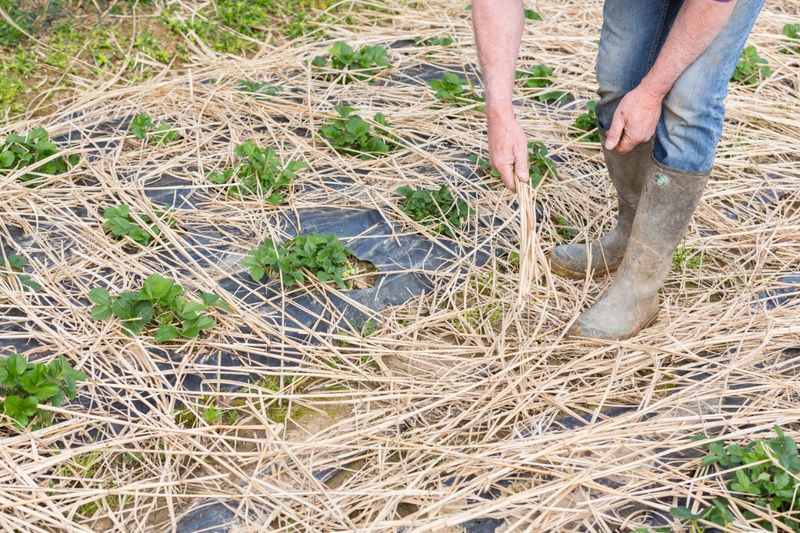
Spring brings a second timing puzzle. Pull the straw off too late, and growth can be delayed or the harvest pushed back.
Pull it off too early, and tender new leaves may meet a hard frost.
According to Minnesota Extension, mulch should be raked back or removed as new growth begins, based on how the plants look and what local weather is doing. A fixed date does not work.
Check your pots every few days once temperatures start to warm. Lift a little straw and look at the crowns.
Pale yellow new leaves are a sign it is time to start pulling the mulch back.
Rake the straw off the crowns but keep it nearby, perhaps at the pot’s edge, so you can pull it back over on a frosty night. Move pots out of any garage gradually, and bring them in or cover them if a late freeze is forecast.
Remove the side insulation last.
Protection improves the odds, not the promise of berries
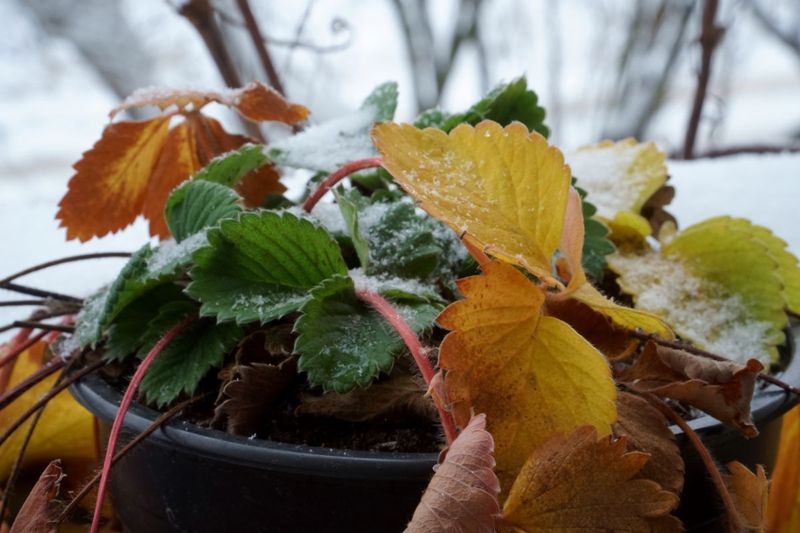
Even careful protection cannot guarantee that a plant lives or fruits. Shelter and insulation aim to give crowns a better chance, but cold snaps, wet soil, and plant variety all play a part.
Cultivar matters too. Penn State Extension reports that day-neutral types vary in winter survival and second-year performance, and commercial growers often treat them as annuals.
If a pot does fail, treat it as useful information. Note where wind hit hardest, whether the soil stayed soggy, and how cold your area got, then adjust next winter.
Match the method to your climate, from simple grouping and straw in milder areas to burying or garage storage where winters bite.
A strawberry that sleeps through winter well is never a sure thing, but it is a bet you can tilt in your favor.