
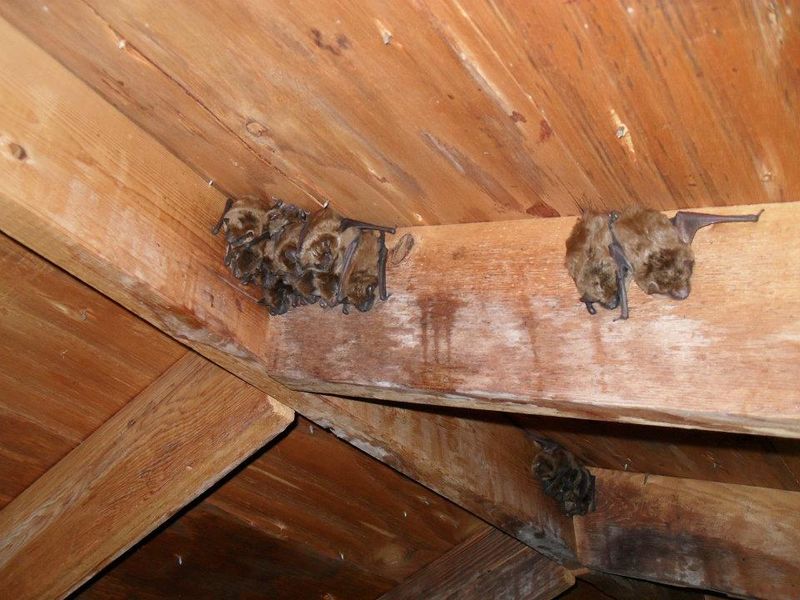
Those small, flickering shapes at dusk near your roofline are probably bats heading out to hunt. Most California bats eat insects, so they can be helpful neighbors in a yard.
But they are not a mosquito-control service, and a wrong move at the wrong time can hurt both bats and your home. Here is how to tell when to leave them alone and when to act carefully.
Bats eat night-flying insects, but they are not mosquito control

Picture the usual bat payoff: a quiet night shift of insect hunting. UC IPM says almost all California bats eat insects and can provide some control of landscape insect pests.
That is a real benefit, though a modest one.
Diets are not identical across species. Caltrans’ bat guide says 23 of California’s 25 species are mostly insect eaters, and that they take varied prey, often whatever insects are plentiful nearby.
Moths are a common target for many bats, along with beetles and other night fliers.
Do bats eat mosquitoes? Sometimes, yes.
A southeastern U.S. study found mosquito DNA in bat guano, but the researchers said more work is needed to show any effect on mosquito numbers or public health.
A study of five Australian bat species, published in a peer-reviewed journal, found moths dominated the diets sampled, and mosquitoes were generally a small part of bat diets in the research it reviewed. That work was not done in California, so it does not tell us what your local bats eat.
It does show why big promises about mosquito-free yards do not hold up.
The practical takeaway: think of bats as part of a healthy night ecosystem, not a replacement for dumping standing water or using screens.
What does a bat beneath the eaves tell you?
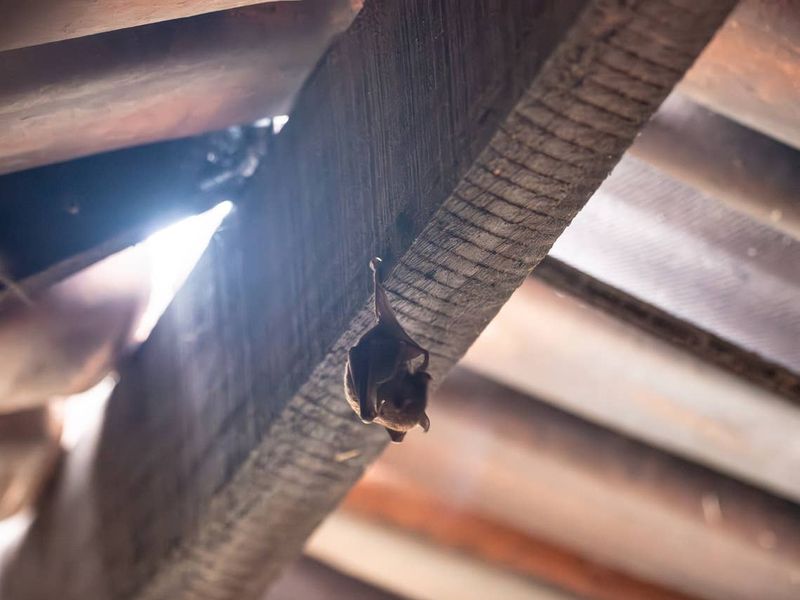
Spotting a bat under your eave raises a fair question: is it just resting there, or living in your house? The sighting alone cannot answer that.
Where the bat is and what it is doing matter far more than the fact that it showed up.
Caltrans separates two kinds of roosts. Concealed daytime roosts are tucked into tight spaces and often used for sleeping and raising young.
More open night roosts are places where bats rest, digest, and socialize between foraging trips.
Bats you can see hanging beneath an exterior eave may be using an exposed night roost. Bats slipping into a gap or crack at dusk or dawn may be using a hidden roost inside the structure.
Those two situations call for different responses.
Clues can help. Watch the spot for a few evenings.
Do bats drop out from a visible perch, or do they vanish into a narrow opening? Notice droppings below, any odor, and any scratching or squeaking from walls or attic.
Resist assumptions. An eave roost is not automatically harmless, and it is not automatically a nursery.
Roost use varies by species and season, and UC IPM notes that colonies can cause noise, droppings, and odor problems when they settle into buildings.
When an outdoor roost can stay
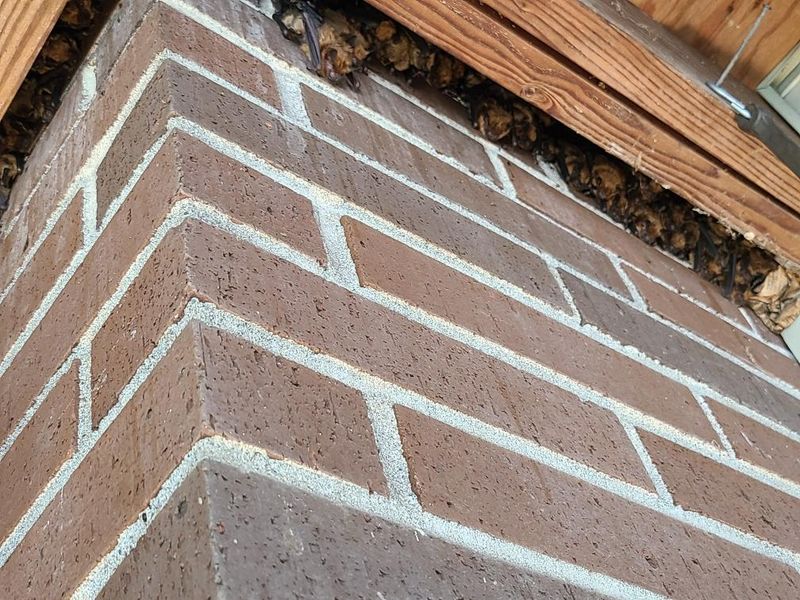
Plenty of homeowners ask whether they have to do anything at all. If bats are roosting on the outside of the house and leaving you alone, often the answer is no. CDFW says an outdoor bat roosting on a structure does not pose a safety risk if left undisturbed.
Leaving them be works best when you can keep a simple routine. Keep kids and pets away from the spot, skip poking or spraying at the roost, and avoid putting lights or noise right on it.
Sweep or hose up any droppings on a patio or walkway only with care, as covered later.
Coexistence stops making sense when the colony becomes a problem. Noise, odor, a steady buildup of droppings, or bats getting into walls, the attic, or living space are all good reasons to act.
Bats inside the home are not something to tolerate.
What about bat houses? They can be a nice habitat addition, but UC IPM says they are unlikely to keep bats from roosting in nearby buildings.
There is also no clear evidence they significantly reduce garden insect problems.
So treat a bat house as an extra, not a fix. If your real goal is to move bats out of the eaves, you need a plan for the eaves themselves, and timing matters a great deal.
Spring is a risky time to seal an occupied opening
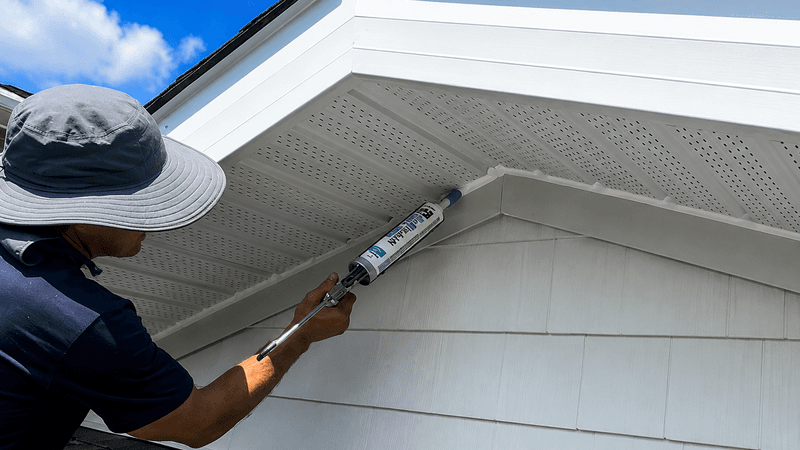
Spring tempts people to patch every crack, especially after noticing bats. Sealing a gap while bats are inside is one of the worst things you can do.
Bats can be trapped, and they may die in walls or try to find their way into living spaces.
There is another risk. Young bats cannot fly at first, so closing an opening can separate pups from their mothers.
The adults leave to feed, and the babies are left behind with no way to be reached.
For that reason, UC IPM advises avoiding exclusion of colonies when flightless young may be present, which in California is usually May through September. It names late fall or winter as an ideal exclusion period in most areas.
Treat those dates as general guidance, not a promise for every site. Species, local climate, and the particular colony can shift when young are present or when bats are active.
A mild coastal winter may look different from a cold foothill one.
If you are unsure what is living in the opening or what time of year is safe, wait. A temporary gap is easier to live with than a failed seal, and a professional can help you read the situation.
A safe exclusion lets bats leave before you close the gap
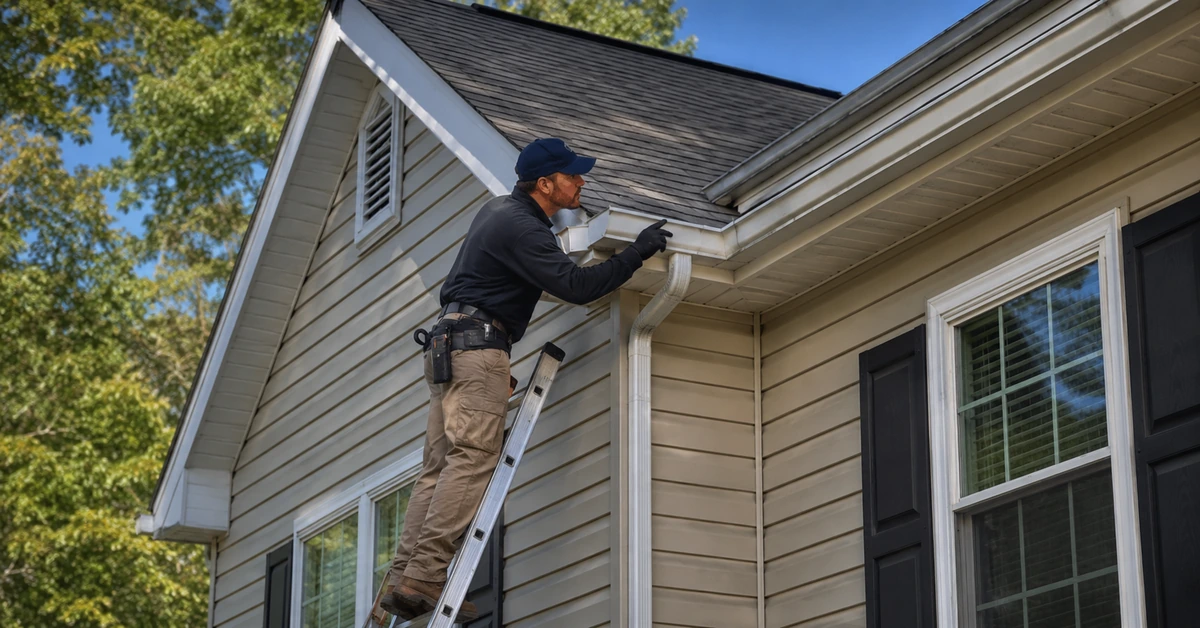
When bats have moved into the structure or created a nuisance, exclusion is the practical answer. The goal is simple: let bats out, keep them from coming back, and only then close the opening.
The details are where homeowners can go wrong.
The broad sequence from UC IPM starts with watching at dusk to see where bats leave. Next comes a one-way device that lets them exit but not re-enter.
Devices stay in place for about seven days, and entry points get sealed only after you have confirmed the bats are out.
That last step is the one to respect. Never seal an opening just because you have not seen bats for a night or two.
Because mistakes can trap bats or bring people into contact with them, an experienced wildlife professional is the smart choice when a colony is inside the structure or you are unsure about timing. CDC guidance also points out that bats should not be handled and that some bats may need special care.
Rules can depend on species, location, and circumstances, so check with CDFW or your local authorities before starting. Ask any contractor how they confirm bats have left and what timing they plan to use.
Keep your distance and treat guano carefully
Bats are best admired from across the yard. If one is roosting outdoors, keep people and pets away and do not touch it.
CDFW says not to handle live bats, even with gloves, and that includes one found on the ground.
A bat simply roosting outside is not the same as contact. If a bat bites or scratches someone, or may have had direct contact with a person or pet, call your local health department promptly.
CDC guidance recommends getting medical or public health advice when contact may have occurred, because rabies is a serious concern.
A bat flying past you at dusk is not an exposure by itself. Sleeping people, young children, and pets are the situations to take seriously if a bat was in the same room.
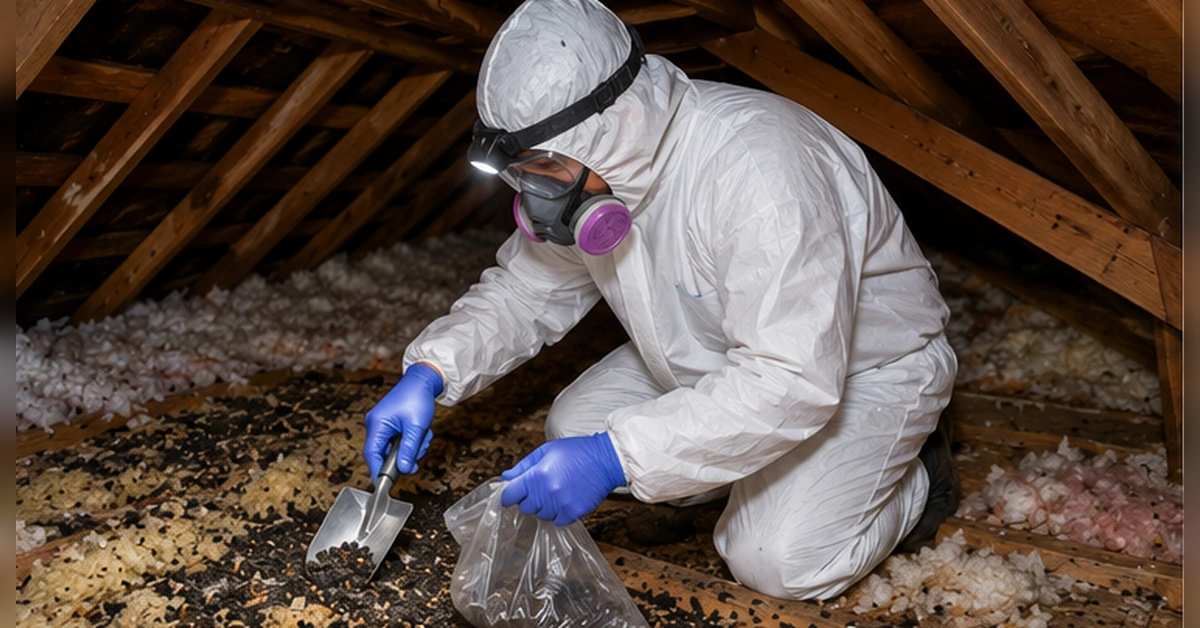
Droppings need care too. Never dry-sweep or shovel dusty guano, since that can send fine particles into the air.
CDC and NIOSH guidance for potentially contaminated material suggests dampening it to limit dust or using appropriate high-efficiency vacuum equipment.
A few pellets on a walkway are one thing. A substantial pile in an attic or wall space is better left to qualified professionals.
Choose coexistence when it works; act carefully when it does not
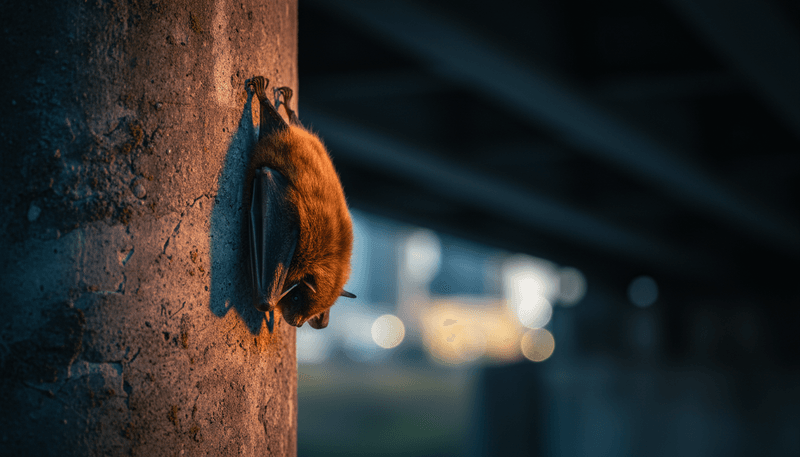
Here is the simple rule. If bats roost outside, cause no trouble, and stay undisturbed, CDFW says they pose no safety risk.
If they enter the structure or become a nuisance, get properly timed help, and follow UC IPM timing and exit steps.
Never seal an occupied opening, and never handle a bat; call the health department if contact may have happened. The best bat plan is a patient one.