
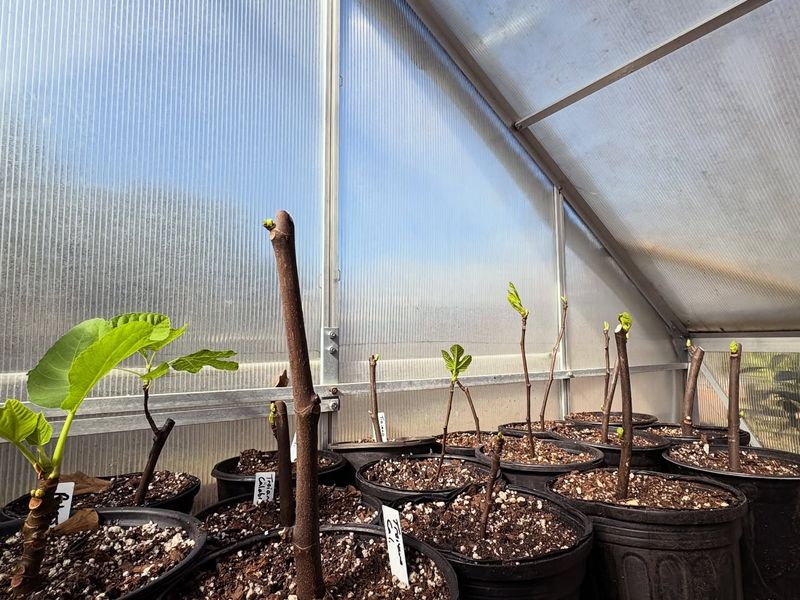
A bare fig tree in winter looks finished, but its sleeping branches can become brand new trees. Many gardeners hear that a jar of water on a windowsill is all it takes.
The real story is a little more detailed, and knowing it can save you a lot of disappointment. Here is how to start fig cuttings the way extension experts describe, and what to expect along the way.
Take dormant cuttings when the tree is actually dormant
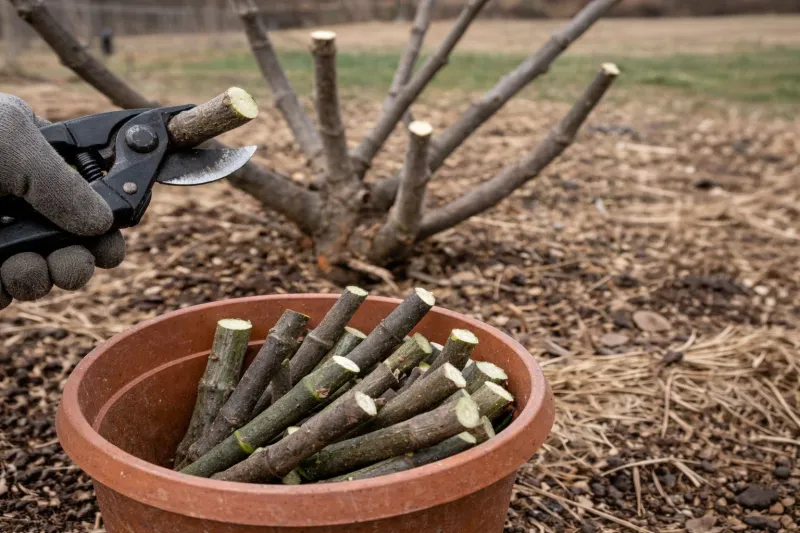
This guide is about dormant hardwood, meaning leafless wood from a fig that has stopped growing for winter. It is not about the green-tip method that comes up in the next section.
Dormancy arrives at different times across the country, so follow your local timing and cut only when your donor tree is truly asleep.
Guides give different sizes, so treat them as examples. Rutgers Cooperative Extension suggests straight, vigorous dormant or semi-dormant wood about 9 inches long and no thicker than three-quarters of an inch.
Alabama Extension describes leafless cuttings in a shorter 3 to 6 inch range, usually taken in late winter or early spring.
Rutgers also advises making the bottom cut just below a node, the bump where a bud sits. Pick healthy, pencil-sized wood, and label each cutting with the variety so you remember what you have.
A jar of water does not guarantee roots by February
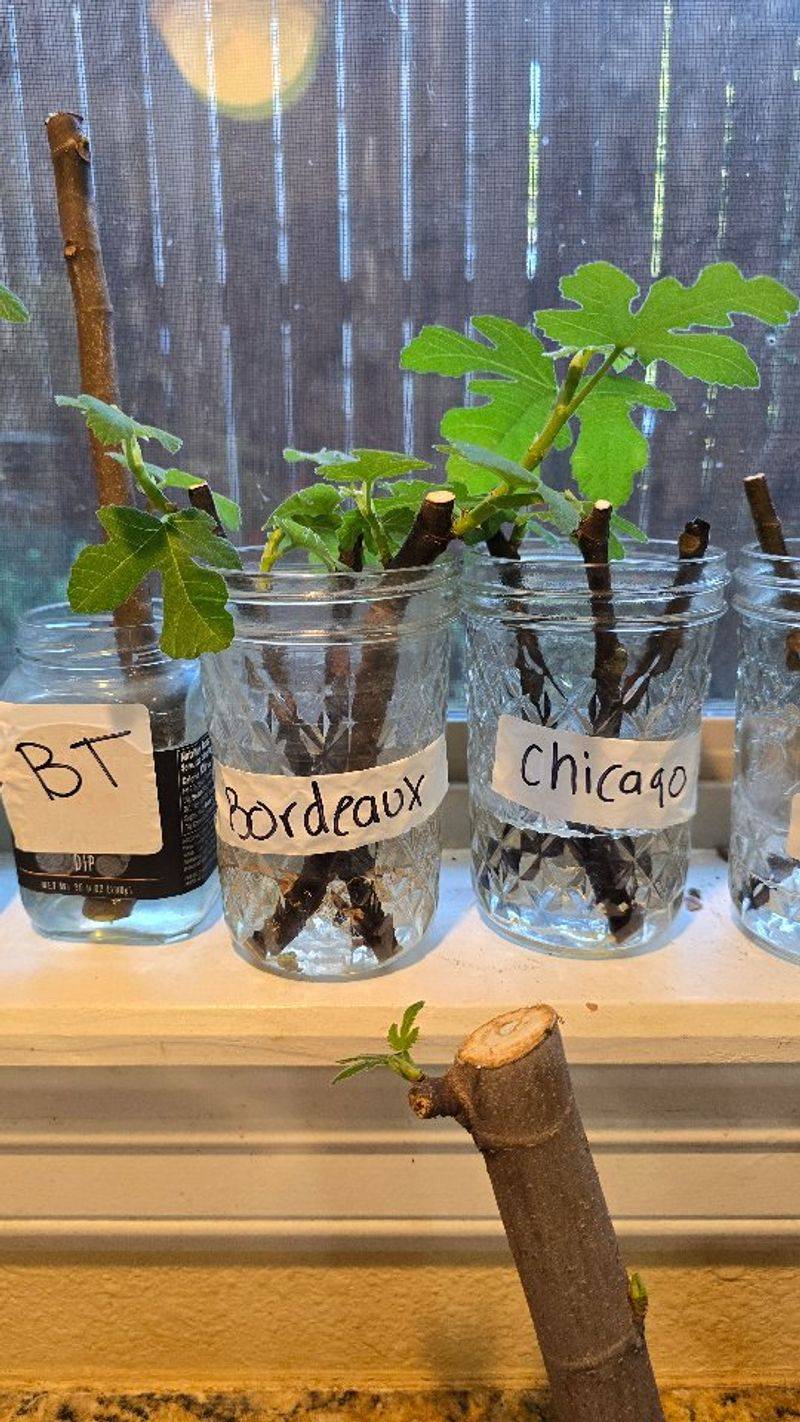
Here is the catch in the title: none of the sources we reviewed shows that dormant fig wood in a jar will root by February. The water method that does have written guidance is for green-tip cuttings, which are soft, leafy new growth.
University of Kentucky Extension says to put those cuttings in water, change the water weekly, and expect roots in roughly four to six weeks.
That estimate belongs to that method. Dormant cuttings follow different, more variable timelines.
Rutgers says dormant cuttings should root in a few months, while an Ask Extension answer describes roots forming in two to four weeks in warm, moist wood shavings.
If you want to try a jar anyway, treat it as an experiment. Set a few cuttings aside in water, and root others in a medium as a backup.
Root dormant hardwood in a moist, well-drained medium
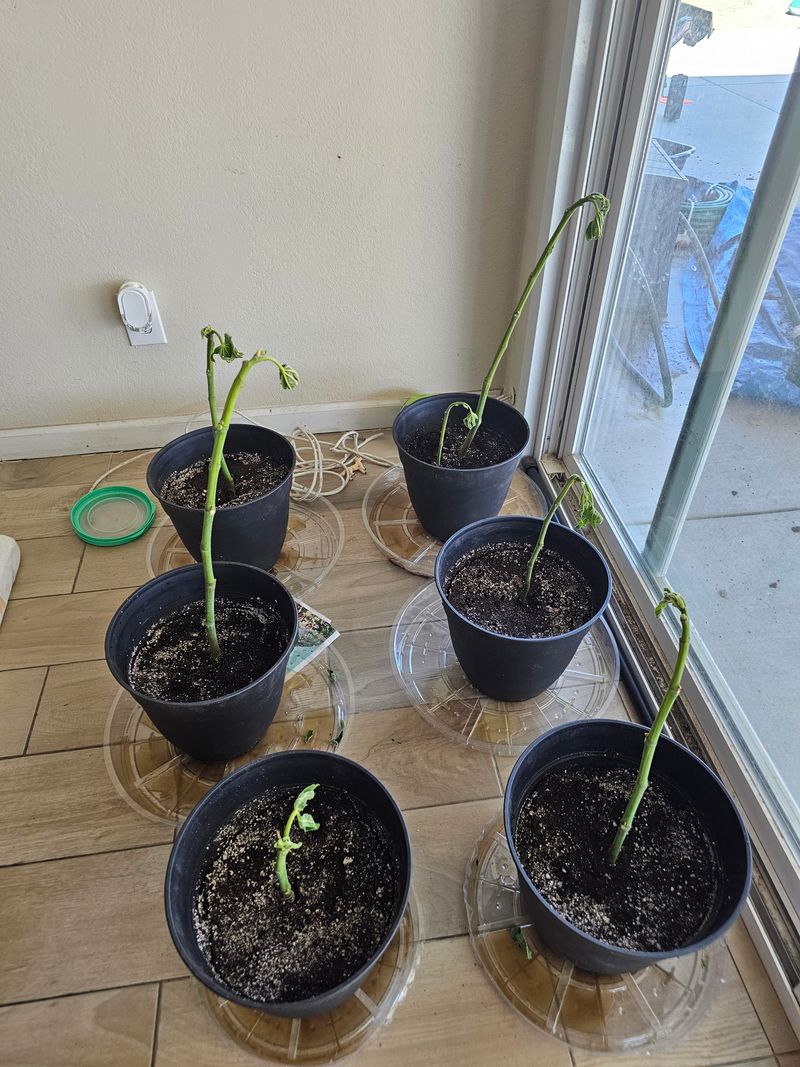
For dormant wood, extension guidance leans toward a medium that holds moisture but lets extra water drain and air reach the wood. Rutgers recommends soil or another well-drained medium and says to keep cuttings moist without letting them sit soggy.
Think of a damp wrung-out sponge, not a puddle.
Push each cutting in so only a bud or two stays above the surface, and keep the pot somewhere protected from cold. Check moisture every few days by touching the surface.
One experiment gives a useful clue but not a rule. A study in southwestern Brazil used one fig cultivar, Roxo de Valinhos, in one location and recommended a protected setup with sand.
It did not test water rooting, so it cannot show that sand is best everywhere or compare it with a jar.
Leaves alone do not show that a cutting has rooted
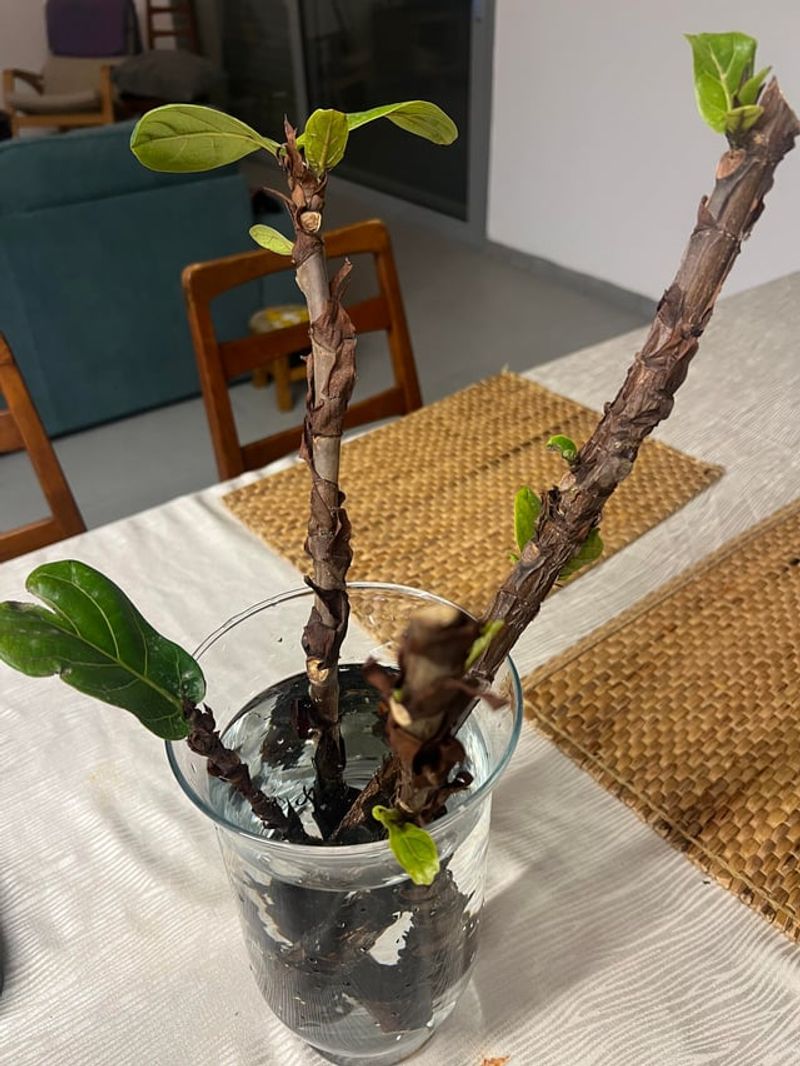
A fig cutting can leaf out using energy stored in the wood, which makes it look healthy while the bottom has barely changed. Alabama Extension warns that cuttings may grow several leaves yet have few or no roots.
Its advice is to wait for vigorous growth before potting up. A tiny cutting with weak, small leaves may be running out of stored fuel, so keep it protected and be patient.
Good clues to watch for include steady new growth over several weeks and leaves that stay firm instead of wilting. In a clear container, you may also spot roots against the side.
Leaves by themselves are never enough to say a cutting is ready to go outside.
Harden rooted cuttings before moving them outdoors
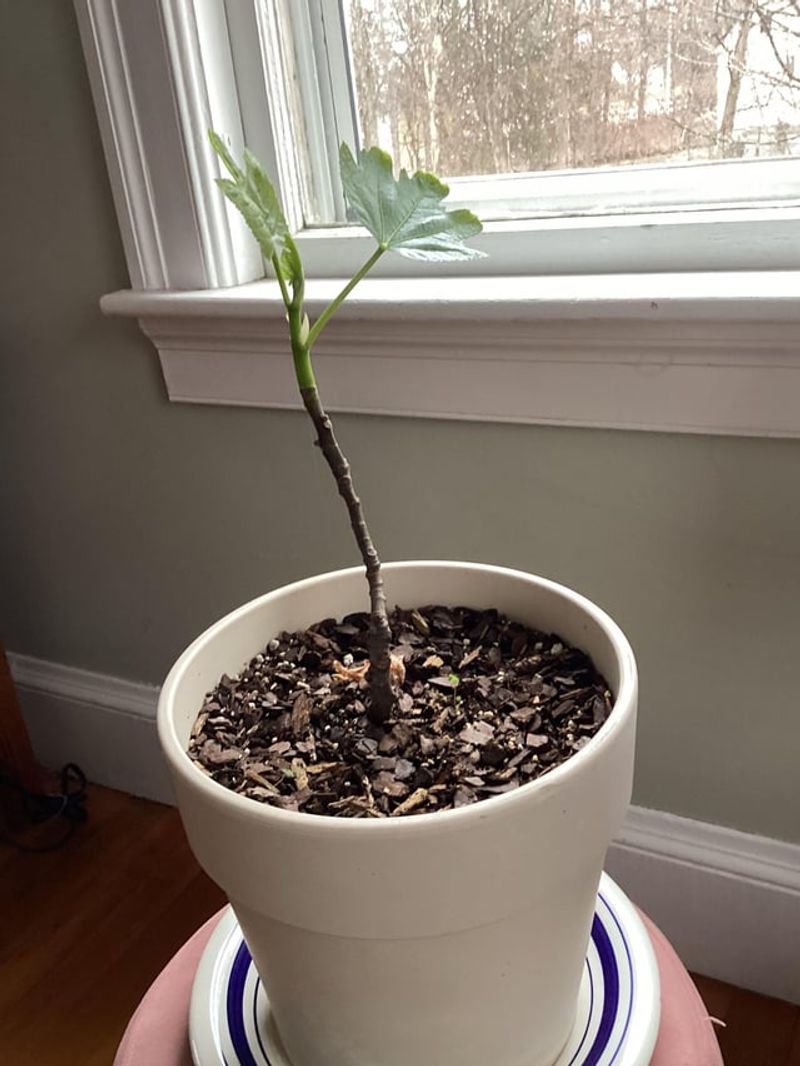
Moving a pampered indoor plant straight into wind, sun, and chilly nights can shock it. Iowa State Extension notes that hardwood cuttings can take longer to root than non-dormant ones and recommends hardening rooted plants before transplanting.
In practice, that means a slow introduction. Start with an hour or two in shade on a mild day, then add more time and light over a week or two.
Cold is the other risk. Rutgers says to protect young plants from low-temperature injury, so keep a cover handy and bring pots in when a freeze threatens.
Planting in spring depends on three things: enough roots, a successful hardening period, and suitable local weather. Some cuttings may not be ready, and holding them in a pot another season is fine.
A new fig tree takes more than one season to pay off
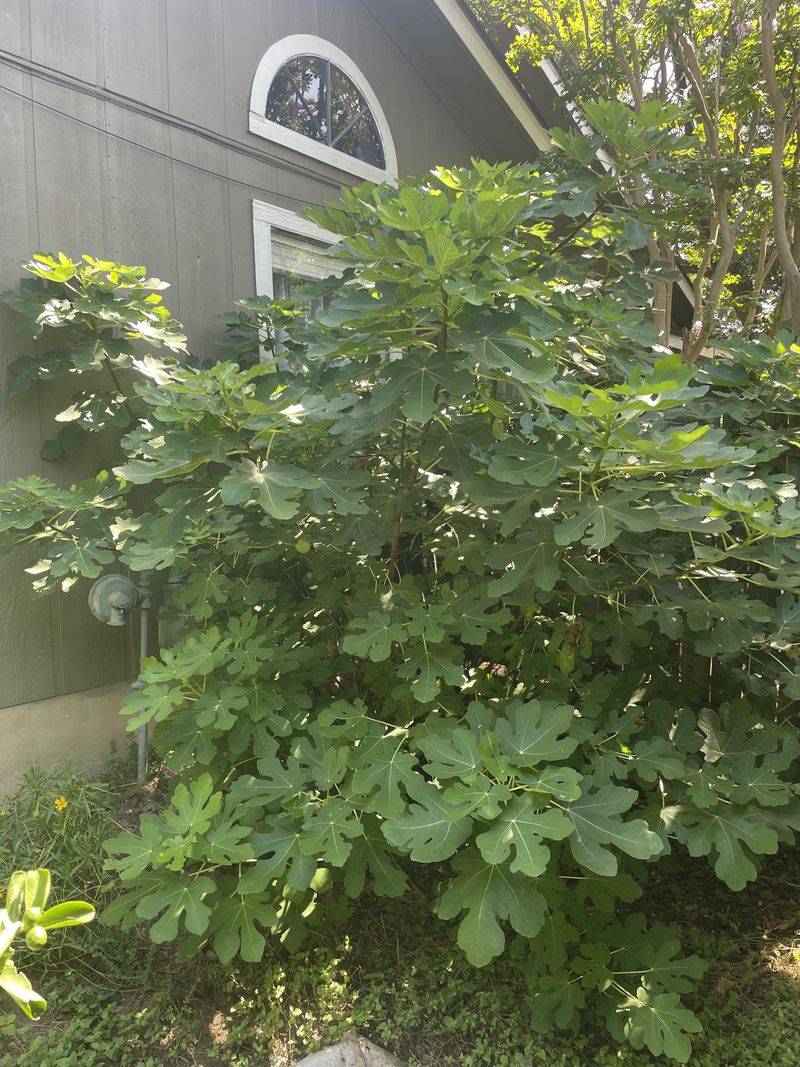
Rooting a cutting, getting it established, and harvesting figs are three separate stages. A rooted cutting is a baby, and babies spend their first years building roots and branches.
Do not expect fruit the season after you plant it.
The sources give differing estimates. Rutgers says figs on their own roots begin bearing at about three to four years.
An Ask Extension response gives a crop estimate of two to three years with good care. Climate, variety, and care can all shift the timing.
In the meantime, water through dry spells, protect the young tree through its first winters, and enjoy watching it grow.
A fig cutting is a slow gift, and the patient gardener gets the sweetest return.