
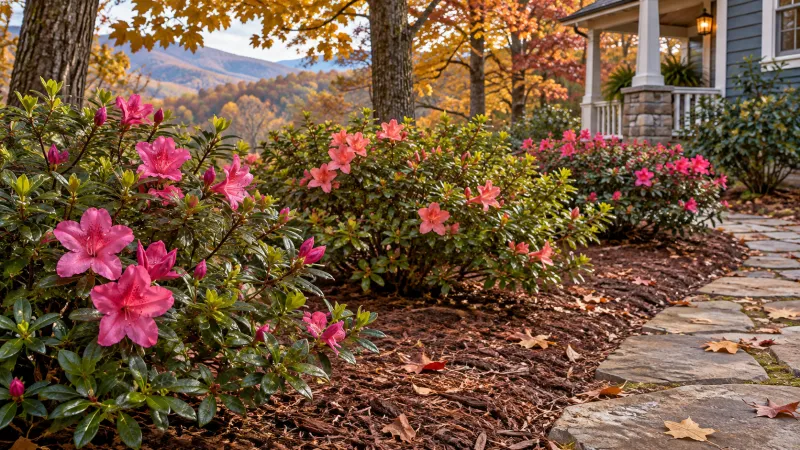
A front entry needs a plant that earns its spot, and spring-flowering azaleas can do that when the site fits. They offer bold color and can handle the filtered light found near many porches and under trees.
Still, a shrub that thrives in one North Carolina yard can struggle in another. Here is how to judge your own entry before you buy.
Why azaleas can suit an entryway

Few shrubs announce spring as loudly as an azalea in full flower. That color is the main reason homeowners consider them for an entry, where a rounded, blooming shrub can soften hard corners and draw the eye toward the door.
According to NC State Extension’s plant profile, azaleas are rounded shrubs that prefer dappled shade and protection from afternoon sun. April is listed as a typical bloom month, but timing shifts with the variety, so one plant may flower earlier or later than its neighbor’s.
That mix of showy flowers and tolerance for filtered light is what makes them a plausible fit near foundations and under trees. Plenty of entries get shade from a roofline, an oak, or a pine canopy, and azaleas can work in that kind of light when other flowering shrubs sulk.
Azaleas are not a universal answer, though. Whether one suits your door depends on light, soil, drainage, and room to grow, which the next sections walk through.
Choosing a named variety, rather than just buying whatever is labeled azalea, lets you check its mature size, leaf habit, and bloom period ahead of time.
Wilmington’s North Carolina Azalea Festival, first held in 1948, shows the plant has a long public following in the state. It tells us about celebration, not about how many homeowners plant them by their doors, so judge your own site rather than following a trend.
For general growing guidance, University of Georgia Extension’s azalea guide is a helpful companion read.
Filtered light favors flowering
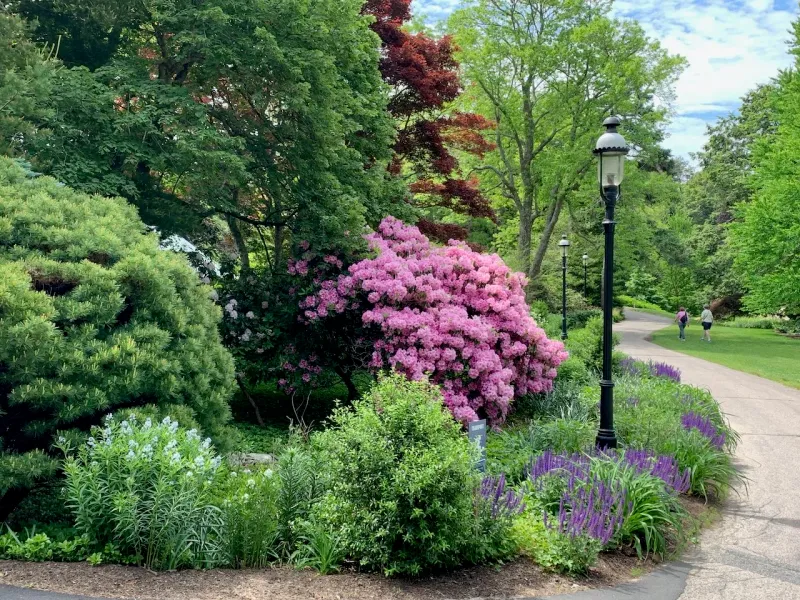
Stand at your entry at a few points during a sunny day and watch where the light lands. Azaleas generally do best with filtered or dappled light, ideally morning sun followed by afternoon shade.
A spot under high tree branches or on the east side of a house often fits that pattern.
Both extremes cause trouble. Too little light can limit flower-bud formation, so a plant tucked into deep shade may grow leaves but give you few blooms.
Harsh afternoon sun, on the other hand, can scorch foliage, which is a real risk on a west-facing wall or beside a driveway that reflects heat.
Shade tolerance is not the same as deep-shade proof. As NC State Extension’s plant profile describes, the plant prefers dappled conditions, which means some light still has to reach it.
Here is a quick diagnostic. If you can read a book comfortably in the spot at midday without squinting, but you see patches of sun moving across the ground, the light may be close to right.
If the ground stays gloomy all day or bakes after lunch, consider another location or a different plant.
Not every foundation bed will suit an azalea, and that is fine. Tree cover also changes over the years as canopies fill in or limbs come down, so recheck the spot each season.
Ongoing seasonal care advice, such as the N.C. Cooperative Extension fall landscape tips, notes that spring-blooming azaleas set next year’s buds during the growing season, which is another reason steady light matters.
Test soil acidity and assess drainage
Acidity and clay are two different things, and mixing them up leads to dead shrubs. Acidity is a pH measure.
Clay describes soil texture, and it affects how well water drains. An azalea needs the right pH and good drainage together.
The North Carolina Department of Agriculture lists pH 5.0 to 5.5 as the optimum for azaleas in its soil report guide. NC State Extension notes that North Carolina soils tend to be acidic, but that does not mean your planting bed is.
Test the specific spot before you add anything, and do not adjust pH or apply fertilizer by guesswork.
Drainage is the other half. Azaleas have shallow roots and are vulnerable to wet soil and root rot, as described in the NC State plant profile.
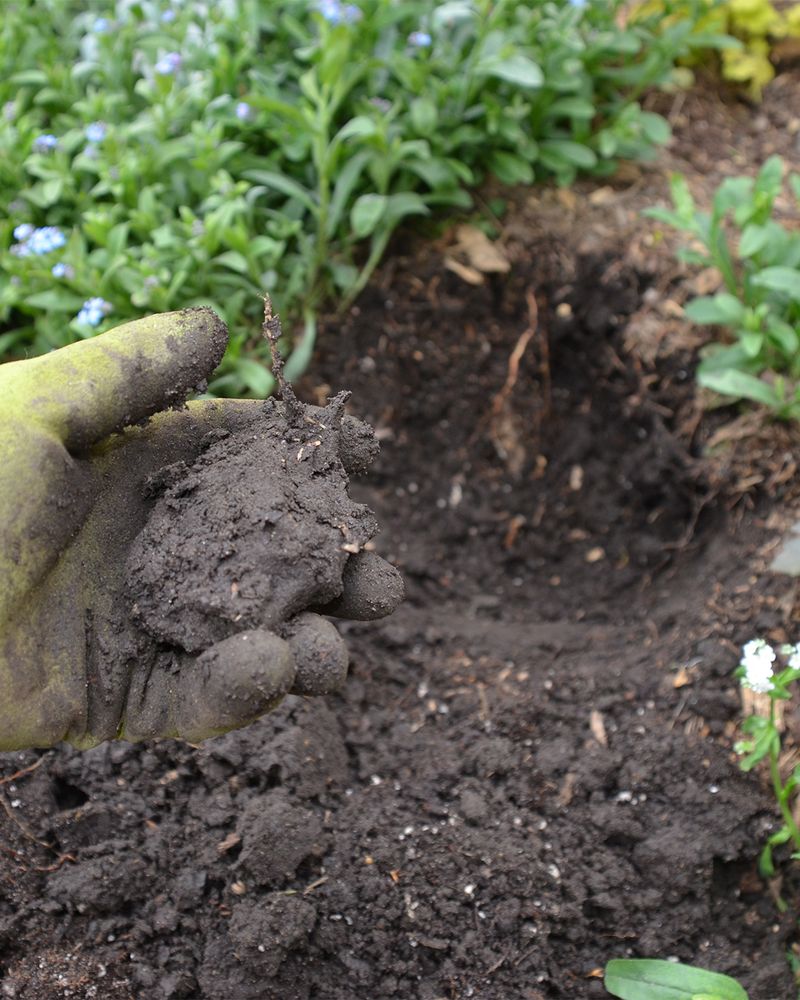
Dense, poorly drained clay can be a poor site even when the pH is right. Try this check: dig a hole, fill it with water, and see whether it empties within a reasonable time.
If water lingers, the bed needs work.
For heavy or poorly drained ground, improve drainage across the whole bed or build the planting area up higher. Set the root ball level with or slightly above grade, rather than burying it.
Avoid digging a deep hole and filling it with rich amended soil, because that isolated pocket can hold water like a bowl, a point echoed in Clemson Extension’s azalea guidance.
Leave room for mature growth and consider pets
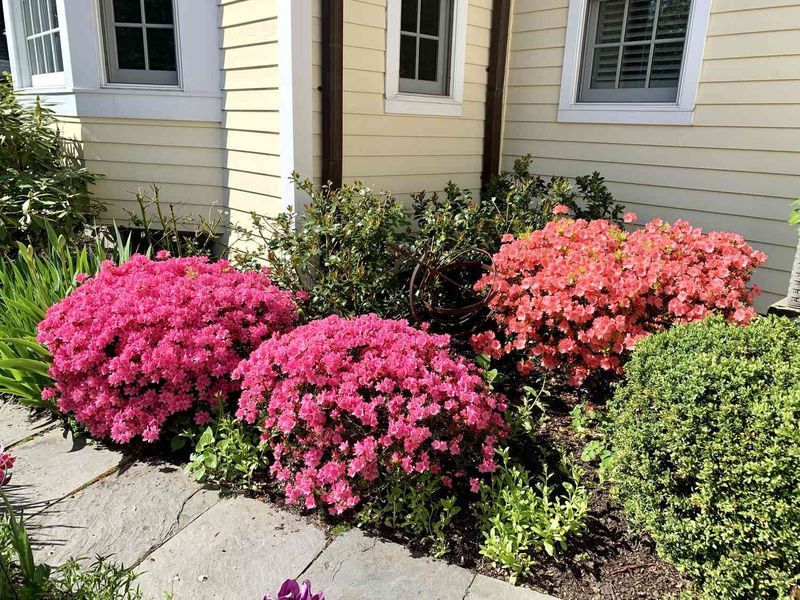
A one-gallon azalea at the nursery looks nothing like the shrub it becomes. Sizes vary a lot among azaleas and rhododendrons, as NC State Extension points out, and evergreen or deciduous habit differs too.
Read the tag or grower information for the exact variety and plan around its mature height and spread.
Clemson’s Extension guidance advises spacing based on mature spread. In practice, that means keeping the plant off the walkway edge, below window sills, and away from pressing against siding, where air flow drops and branches rub.
Mark the future outline with a hose or stakes before you dig.
Pets deserve a place in the plan. The ASPCA lists azaleas as toxic to dogs, cats, and horses.
If animals use your yard, think about whether they can reach the shrub, and talk to your veterinarian if you have concerns.
Some gardeners prefer a North Carolina native. The North Carolina Native Plant Society lists several native azaleas, including pinxter, sweet, flame, and pinkshell.
Treat them as options. Many common landscape azaleas are not native, and each native species suits different parts of the state, so check which one fits your region and site.
Protect the buds that can produce next spring’s flowers
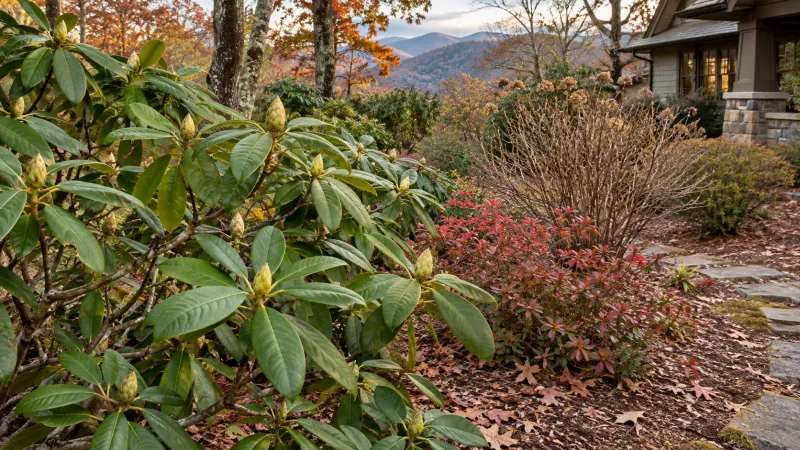
By now, any azalea you own has probably tucked away its flower buds for spring. Spring-blooming azaleas form next season’s buds during the growing season, so the show you hope for in April is already sitting on the branches in November.
That is why a fall or winter haircut can backfire. Cutting back an established shrub now can remove those buds and shrink or erase the next display.
The N.C. Cooperative Extension fall tips point to the same timing: if shaping is needed, prune after the plant has flowered.
Look closely at the branch tips. Buds are usually plumper and rounder than the slim leaf buds, and you may see them clustered at the ends of stems.
If you spot them, leave the shears in the shed. A stray branch blocking the door can be handled with a small, careful cut, but resist the urge to tidy the whole shrub.
Remember that a bud on a branch is not a guarantee. Weather, plant health, light, and the variety all influence what opens, as noted in the NC State plant profile.
Your job is simply to avoid removing what the plant has already made.
After bloom fades next spring, you can shape the plant lightly. Cutting then gives it a full growing season to set new buds.
Plant for establishment, not a guaranteed display
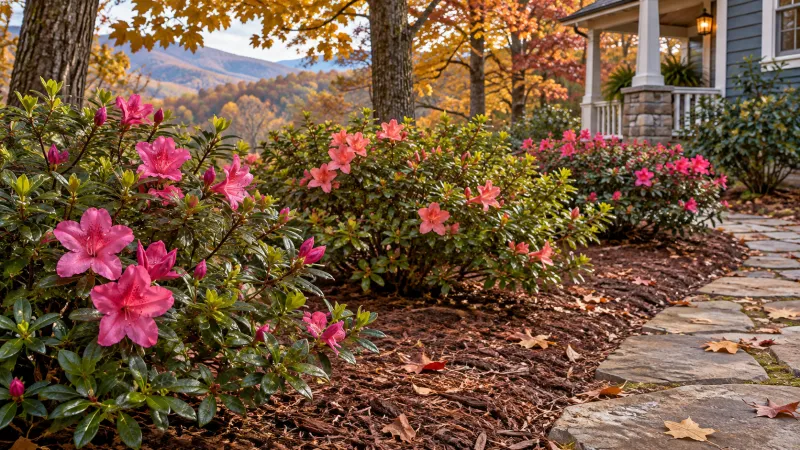
If you are thinking about adding an azalea now, the calendar is on your side. The N.C.
Cooperative Extension identifies fall as a good time to plant trees and shrubs, and fall and winter planting can be appropriate when the ground is workable. Coastal and Piedmont yards often have more mild planting days than mountain sites, so watch your local weather.
New shrubs need water while their roots get established. Check the soil moisture regularly, especially during dry spells, and aim for damp but not soggy ground.
Because azalea roots are shallow, as NC State Extension describes, a light layer of mulch can help, as long as it does not pile against the stem.
Good siting improves the odds of flowers, but it cannot set a bloom date or promise a heavy show. Variety, weather, plant health, and bud survival all play a part.
A first spring may be modest while the plant settles in.
Before planting, run through a short list. Confirm filtered light, get a soil test and follow the NCDA&CS pH target of 5.0 to 5.5, check drainage, leave room for mature size, and decide where pets will roam.
Remember that the ASPCA warns azaleas are toxic to dogs, cats, and horses.
An azalea rewards patience more than speed.