
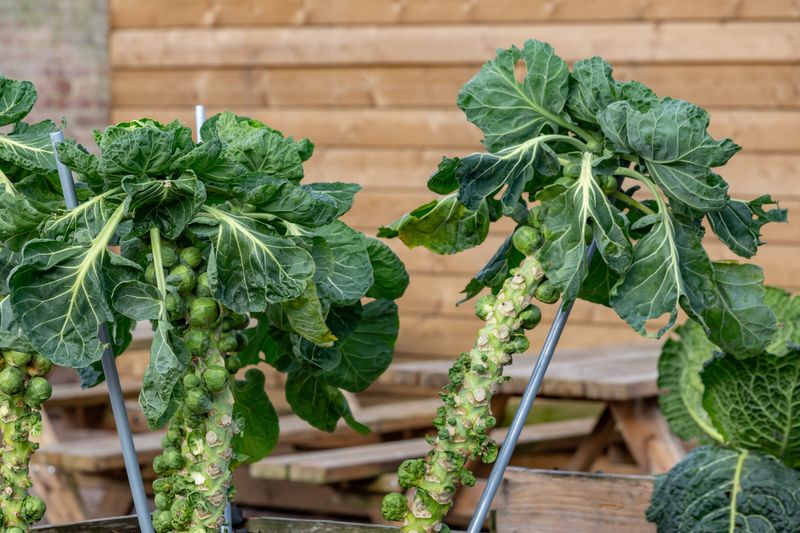
Few things frustrate a vegetable gardener like a Brussels sprout stalk covered in floppy, leafy buds instead of firm little cabbages. Pinching off the top of the plant is a popular fix, but it only helps in certain situations.
Whether it makes sense for your plants depends on what the sprouts look like, how big they are, and when you plan to pick. A few quick checks in the garden can tell you where you stand.
Loose-looking sprouts can have different causes
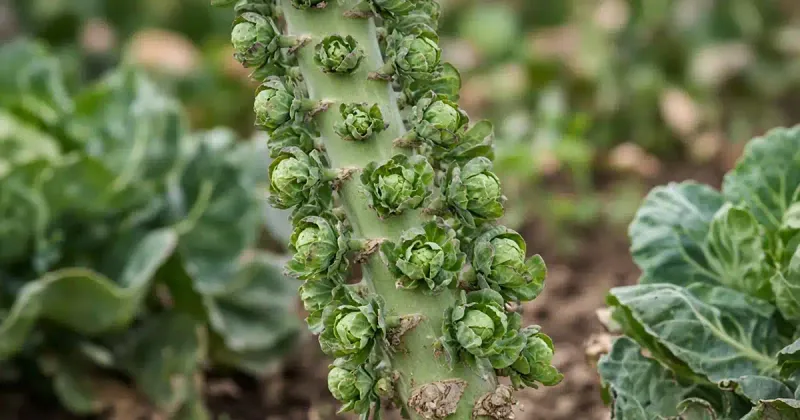
Two sprouts can look equally floppy and still have very different stories. One may be a bud that never wrapped tightly or stayed small and underdeveloped.
Another may have been firm once, then opened up or split because it sat on the stalk too long and became overmature.
Look closely before you decide anything. Squeeze a few sprouts at different heights on the stalk.
Note whether the loose ones are small and leafy throughout, or large with outer leaves peeling away. UC Davis postharvest guidance lists splitting outer leaves as a sign of overmaturity.
Appearance alone will not point to one cause. Maryland Extension links poor compactness to hot, dry conditions while sprouts mature, and moisture, variety, and growing conditions can all play a part.
Topping is not a proven way to reverse sprouts that are already open or damaged, so think of this article as a decision guide rather than a guaranteed rescue.
What topping may—and may not—do
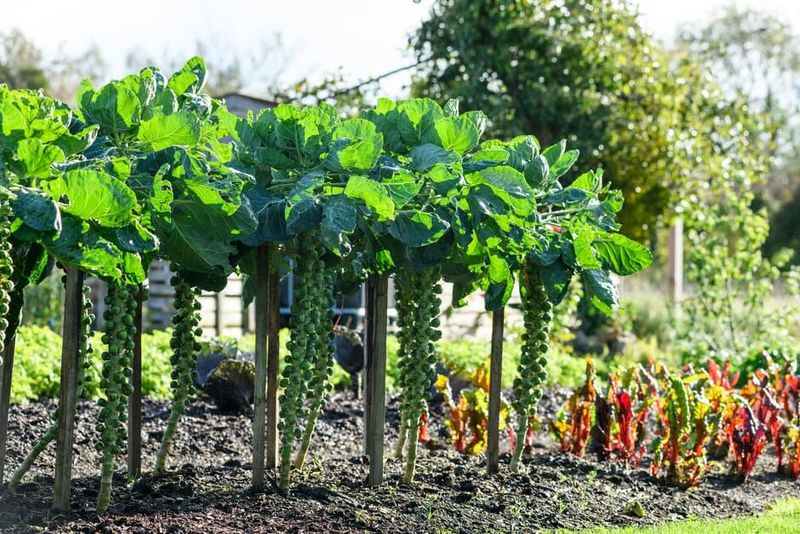
Topping means removing the plant’s growing point, the tip at the very top of the stalk. With that tip gone, the plant may put more energy into the sprouts still forming below it.
The hoped-for result is that upper sprouts enlarge and the whole stalk develops more evenly.
A University of New Hampshire topping study looked at this idea and found it may improve marketable yield when a crop is harvested all at once. Results can differ by variety, so your own cultivar may respond more or less than others.
That once-over harvest point matters. If you plan to pick a few sprouts at a time from the bottom up over many weeks, the case for topping is weaker.
Iowa State Extension describes topping as a way to make whole-stalk harvest more uniform.
What topping does not do is tighten sprouts that are already loose or open. Treat it as a tool for later development, not a repair.
Use sprout size and harvest plans to judge timing
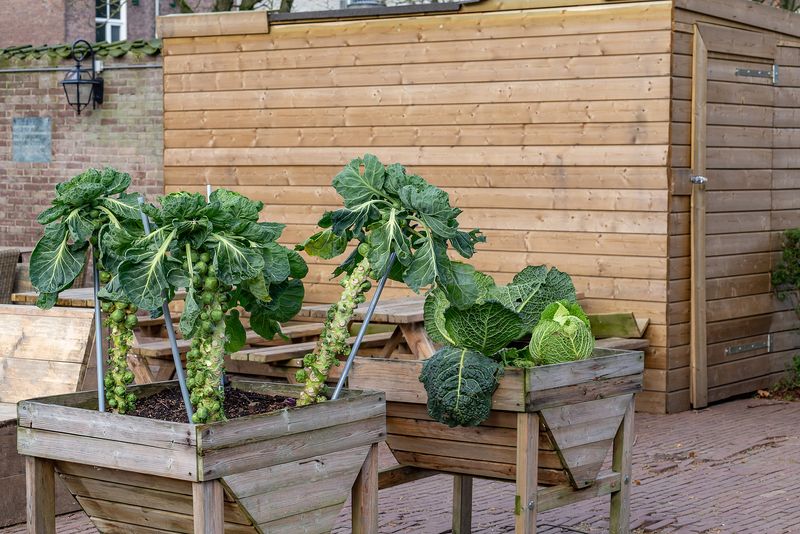
Forget the calendar and check the stalk. Start at the bottom, where sprouts form first.
Maryland guidance suggests considering topping when lower sprouts reach about half an inch across.
Iowa State gives a range of about one-half to three-quarters of an inch, and places topping roughly 30 to 60 days before you intend to harvest. Its example falls in mid-September, while Minnesota Extension describes a later regional harvest window.
These are regional recommendations that vary, not one universal deadline.
Going too early has a cost. The UNH report warns that early topping can reduce yield.
If a hard freeze is close, count the days to your planned harvest and look at the lower sprouts. If the window has already passed, topping now may do little, so skip it rather than doing it automatically.
Remove the growing point at the top of the stalk
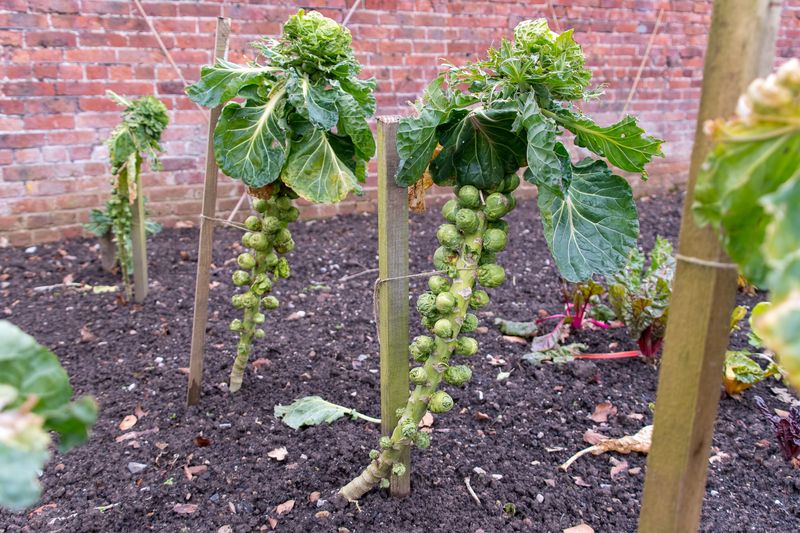
When your plants meet the size and timing checks, the job itself is quick. Find the growing point at the top of the stalk, where the newest leaves cluster.
Remove it with your fingers or a clean pair of pruners.
Minnesota Extension specifies taking off about 1 to 2 inches of the top. Leave the lower leaves and the sprouts alone.
Keep the goal in mind. The cut is meant to encourage upper sprouts to size up later and to even out development across the stalk.
It will not firm up buds that are already formed, so do not expect last week’s loose sprouts to tighten.
If lower sprouts are still tiny, or your harvest is many weeks beyond the usual window, hold off. Topping makes sense only when crop development and your harvest plan both support it.
Keep soil consistently moist as sprouts develop
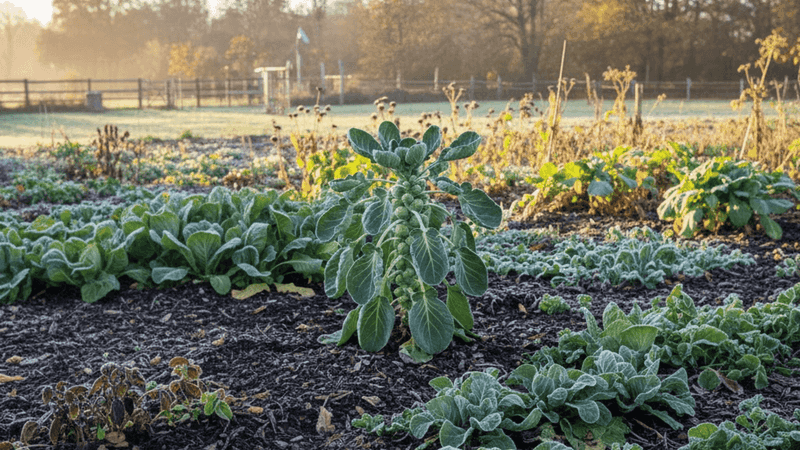
Dry soil is an easy factor to overlook and an easy one to check. Push a finger a few inches into the ground near your plants.
If it is dusty and dry at that depth, water may be part of the story.
Minnesota Extension notes that inadequate water can lead to loose, poorly developed sprouts. Maryland Extension also points to hot, dry conditions during maturation as a cause of poor compactness.
Aim for soil that stays evenly moist while sprouts are developing.
A layer of mulch and slow, deep watering can help hold moisture through warm spells. A look at Maryland’s Ask Extension timing answer is also useful if you are unsure where your crop stands.
Treat moisture as one thing to check, not a full diagnosis. Watering will not undo damage already done, and it does not replace a well-timed decision about topping.
Harvest compact sprouts and assess freeze risk separately
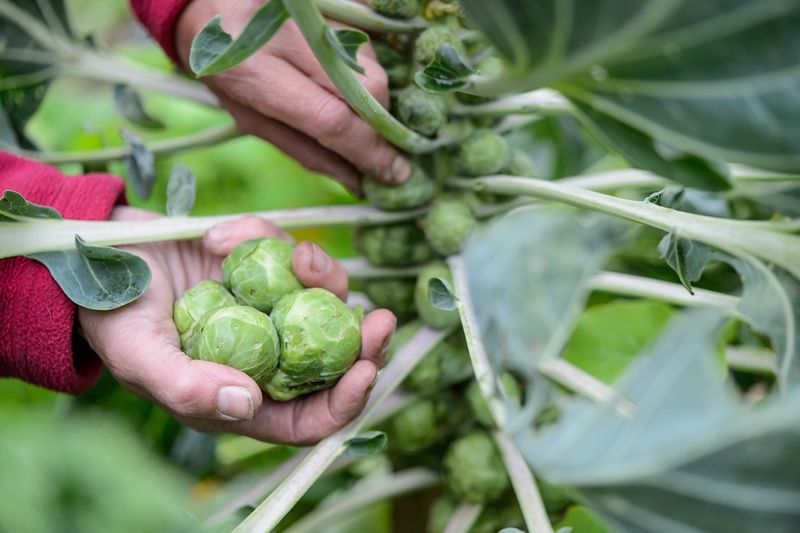
Pick sprouts while they are firm and compact. Waiting too long invites trouble, since UC Davis identifies splitting outer leaves as a sign of overmaturity.
A sprout that is starting to open is past its best.
Cold weather is a separate question. Brussels sprouts handle cool conditions, and light frosts may improve flavor.
That is not the same as protection from a hard freeze. UC Davis reports freezing injury to sprouts at about 30.9 degrees F.
Regional advice is a different thing again. Minnesota Extension suggests leaving plants outdoors while temperatures stay above 20 degrees F, but that applies to plants under its own regional conditions.
It should not be mixed up with the temperature at which harvested sprouts freeze.
So check sprout firmness, your harvest date, and your local forecast. Topping will not save a crop that is out of its window; a timely harvest might.