
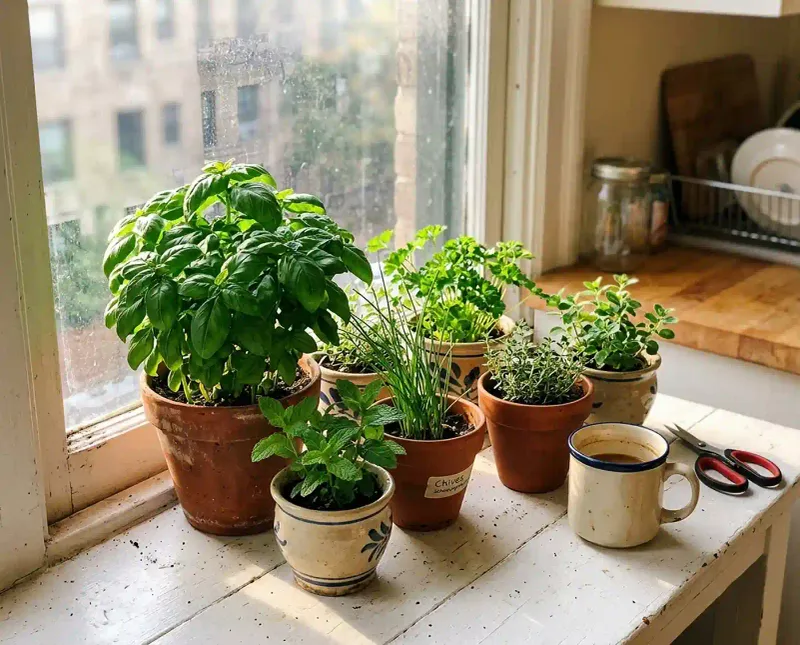
Your basil, parsley, or thyme looked fine in fall, and now the stems are long and thin and some leaves are turning yellow. Short December days give indoor plants far less light than they got in summer.
Light is a smart first thing to check, but yellow leaves can come from other problems too. Here is how to sort out what your herbs are telling you and what you can do tonight.
Winter light can make herbs stretch
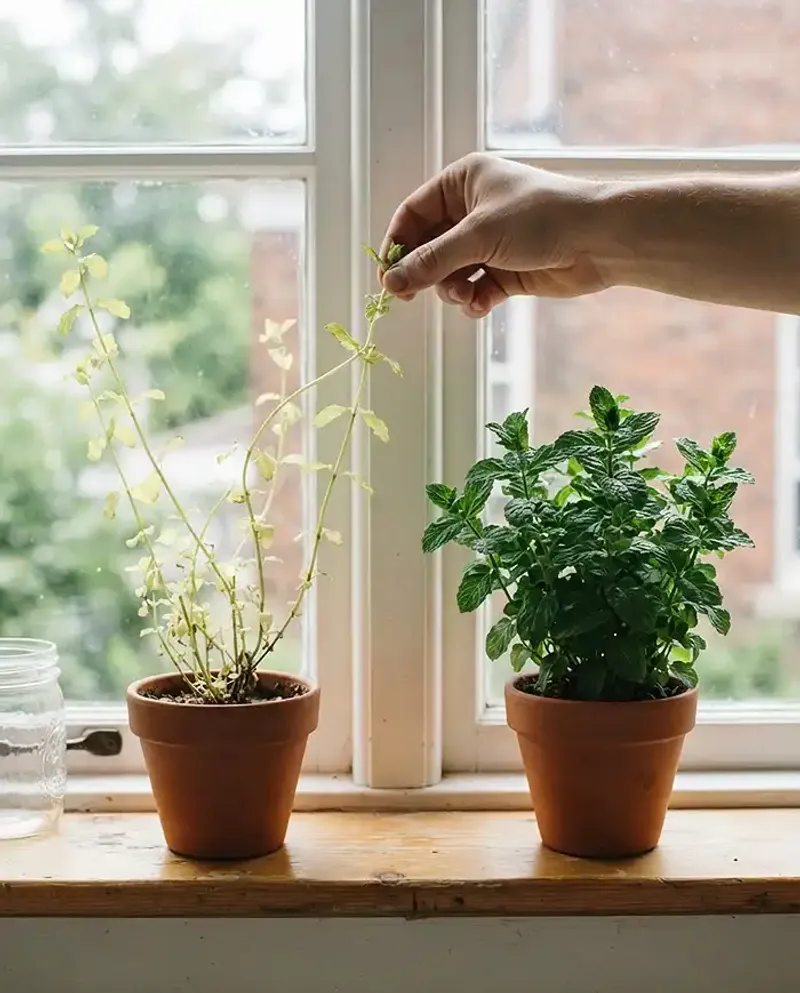
Stems that grow long, thin, and spindly with wide gaps between leaves are a classic sign that a plant is reaching for more light. Winter days are short and the sun sits low, so a windowsill that worked in September may fall short by December.
Basil makes a good example. University of Minnesota Extension says basil needs six to eight hours of bright light and may need artificial lighting for 10 to 12 hours a day during the darker winter months.
Penn State Extension also recommends a sunny spot, such as a south-facing window, for indoor herbs in its indoor herb guide.
Herbs do differ, so basil’s numbers are a starting point, not a rule for every pot. Thin growth is well explained by too little light, but it does not prove that light is the only issue.
Treat it as the first factor to check, then look at the other clues your plant is giving you.
Investigate yellow leaves separately
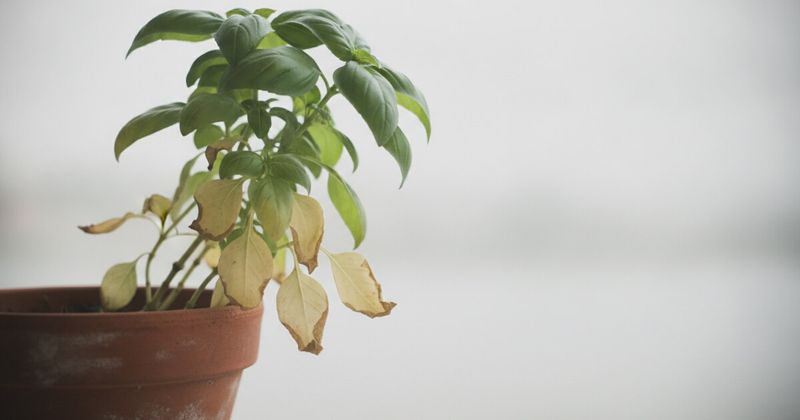
Yellow leaves are a different puzzle from leggy stems. Penn State’s plant health diagnostic guide lists several possible causes, including overwatering, root rot, nutrient problems, too much or too little light, and natural aging.
So a yellow leaf alone does not tell you the pot is in the wrong place.
Take a few minutes to inspect the plant. Look at which leaves are yellow, since older lower leaves behave differently from new growth.
Feel the potting mix, check the drainage hole, and flip leaves over to look for pests.
With basil, also look for downy mildew. University of Minnesota Extension describes yellow areas bounded by the major veins, especially on lower leaves, along with gray fuzz on the leaf undersides.
Plants brought in from outdoors can also show some yellowing or leaf drop while they adjust, as Penn State Extension notes. That will not explain every plant, so keep checking.
Choose the brightest suitable location
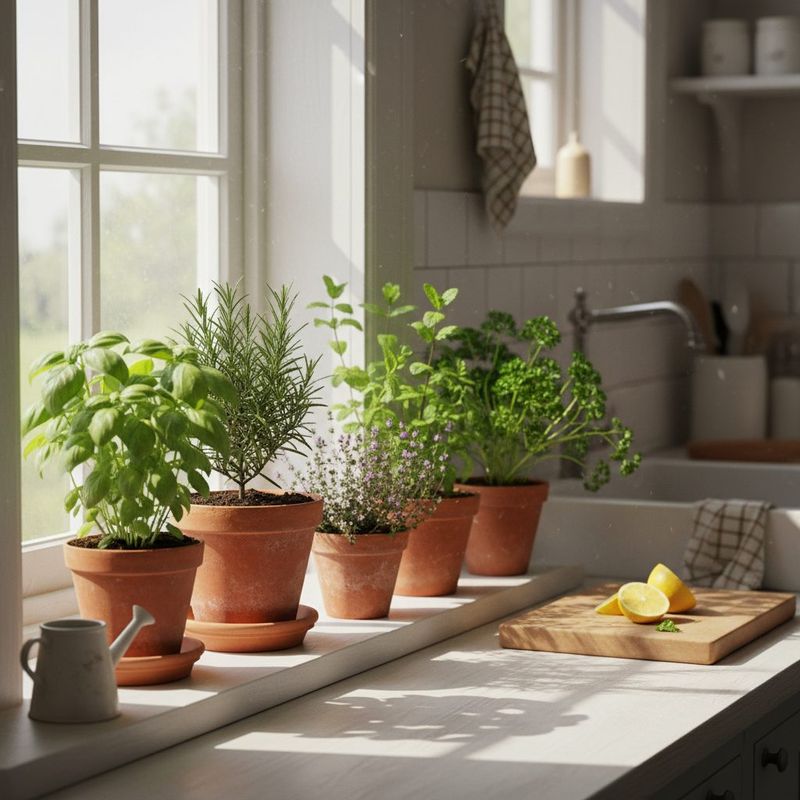
Start by finding the brightest spot you have. A south-facing window is the usual choice, and the Penn State guidance points herbs toward a sunny location like that.
Not every windowsill delivers the same light, though. Exposure matters, and so do things in the way, such as a porch roof, a tree, a neighbor’s wall, or a sheer curtain.
Stand at the window midday and notice how much direct light actually lands on the pot.
Watch the cold, too. A sill can be chilly on winter nights, and basil is sensitive.
Penn State says basil cannot survive below 50°F and recommends 65 to 70°F by day and 55 to 60°F at night. If the glass feels cold, pull the pot back or move it to a warmer bright spot.
Basil, parsley, and thyme will not all love the same corner of the house. Try a spot for a week or two and see how new growth responds.
Also note that basil’s light needs are high, so it may need the best spot.
Add supplemental light when a window is not enough
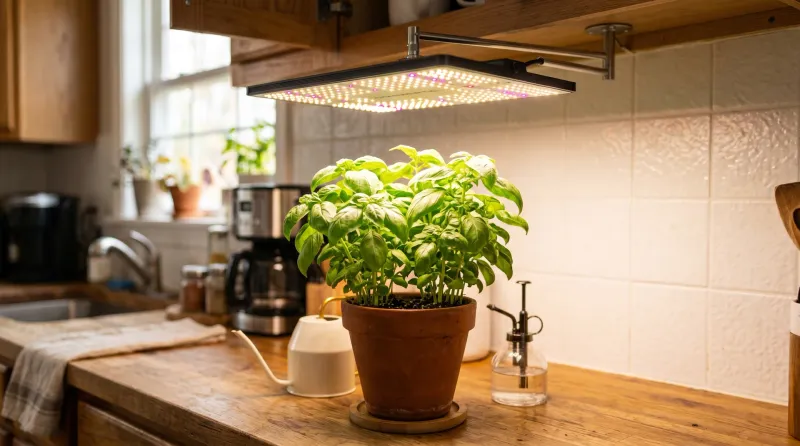
If your brightest window still leaves herbs stretching, a light made for growing plants is a practical fix you can set up tonight. University of Minnesota Extension says white or balanced lights suit most plants.
A random household lamp is not the same thing, so choose a fixture sold for plants and follow its directions for how far above the leaves to place it.
How long to run it depends on the plant and the setup. Minnesota suggests 10 to 12 hours of artificial light for basil in dark winter months, and 12 to 14 hours for hydroponic herbs.
Penn State gives 14 to 16 hours for herbs under a specified fluorescent setup in its indoor herb guide.
Those numbers come from different setups, so treat them as examples, not one timer setting for everything. An outlet timer keeps the schedule steady, which the University of Illinois Extension also covers in its indoor herb advice.
Adjust based on how new growth looks.
Adjust watering and rotate pots
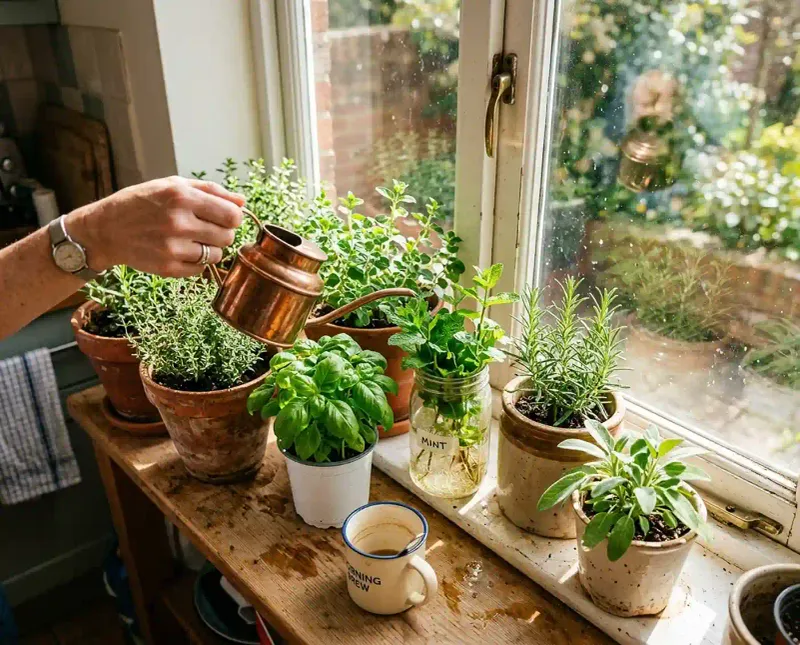
When herbs look unhappy, it is tempting to reach for the watering can or fertilizer. In winter that can backfire.
Slower growth in low light usually means the plant uses less water, and wet mix can lead to the root trouble that Penn State’s diagnostic guide lists among causes of yellow leaves.
Push a finger into the potting mix first. Penn State advises watering as the mix starts to dry, and says thyme should dry slightly between waterings.
Empty saucers so pots do not sit in water.
Skip the extra fertilizer too. Too much can harm the flavor and aroma of herbs, according to University of Illinois Extension.
Finally, turn each pot a quarter turn every week or so. Plants lean toward the light, and rotating helps growth come in more evenly instead of lopsided.
Watch for healthier new growth, not an instant reversal
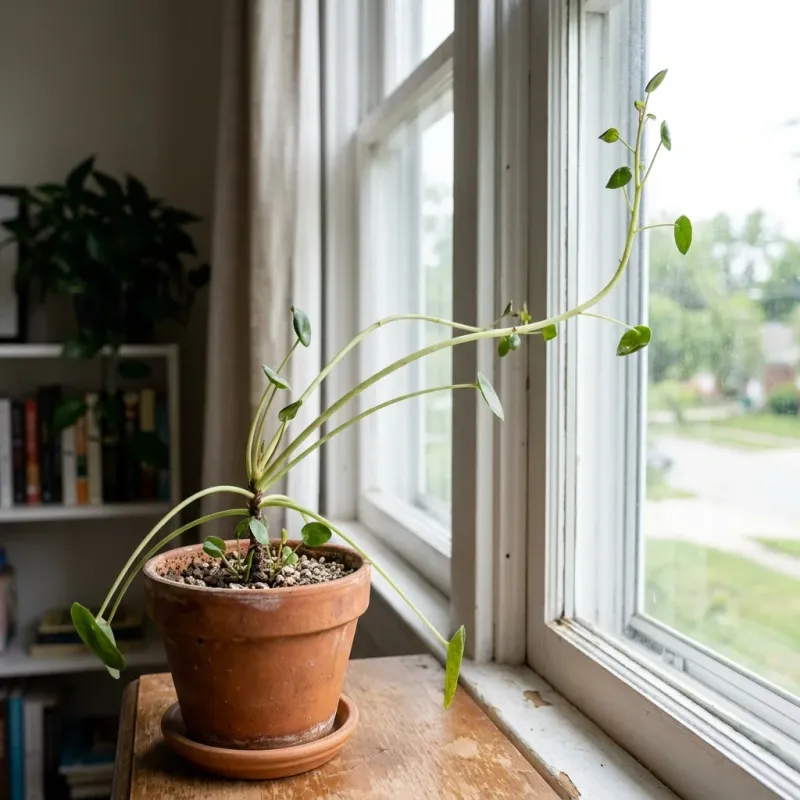
Better light helps most with what comes next. Stems that have already stretched will not shrink back, so look at the tips for shorter gaps between leaves and sturdier new leaves over the coming weeks.
Pinching leggy tips for cooking can also encourage bushier growth.
Existing yellow leaves may stay yellow, and the sources do not promise a quick recovery. Keep investigating if yellowing continues, using the diagnostic checklist of watering, roots, nutrients, light, pests, and age.
Remember that a plant moved indoors can drop some leaves while adjusting, as Penn State Extension explains. Make one change at a time so you can tell what helps.
Herbs rarely bounce back overnight, but they reward steady care. Give them light, a careful hand with the watering can, and a little patience.