
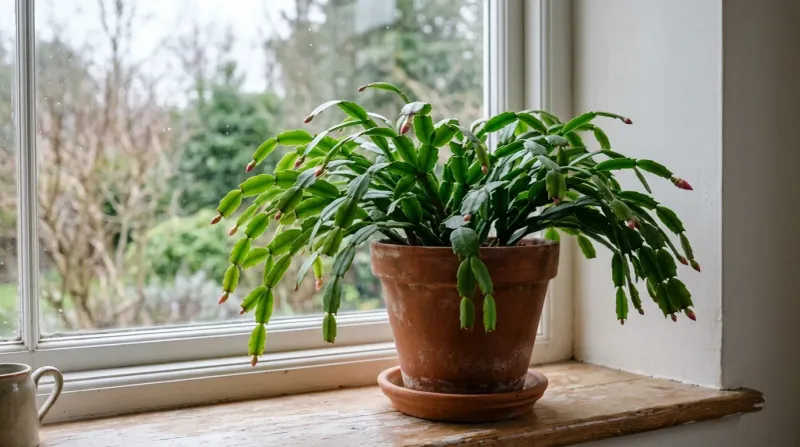
A holiday cactus with plump green stems and no buds is usually missing a cue, and that cue is a long, uninterrupted night. Many plants need several weeks of darkness and moderately cool conditions before they start making buds.
Some plants can get by on cool nights alone, so the exact recipe varies. Here is how to figure out what yours needs and what to expect for bloom timing.
Healthy green stems do not prove bloom readiness
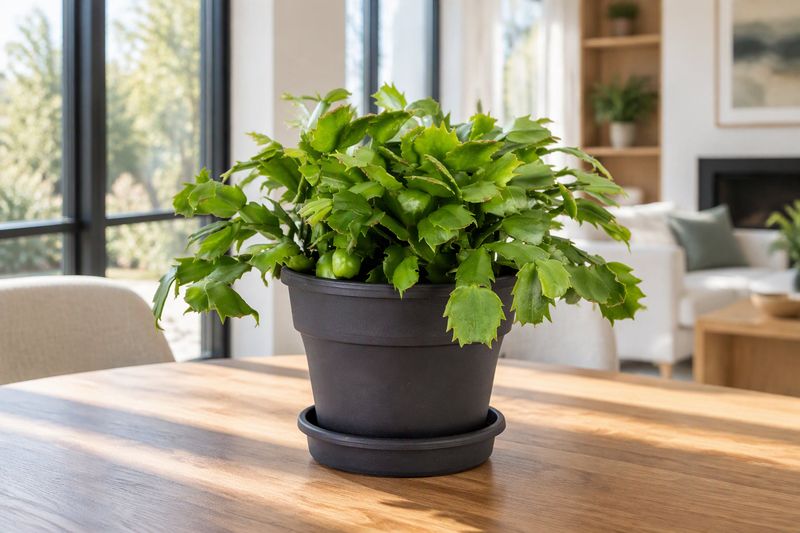
A glossy, full holiday cactus can still be budless. Green foliage alone does not show whether the plant has received the flowering cues it needs.
Leaves tell you the plant is growing well, not that it has been triggered to bloom.
What matters is the light and temperature the plant experienced this fall. South Dakota State Extension explains that these plants respond to day length and temperature, and Iowa State points to long, uninterrupted nights as a key signal for most cultivars.
Plant type plays a part too. University of Minnesota Extension notes that some plants kept cool may set buds even without a strict day length.
So a healthy plant may simply be waiting on a cue that your home never quite delivered.
Nighttime light can interrupt the flowering signal
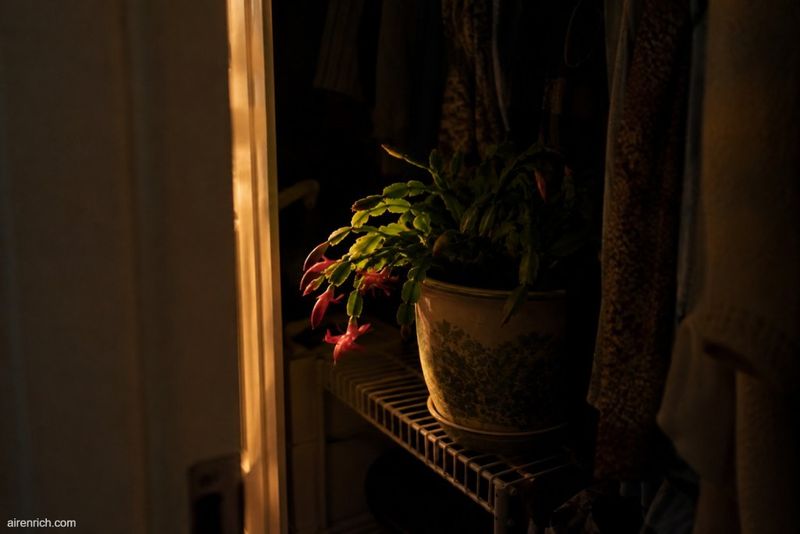
Picture a living room at 9 p.m. with a lamp on, a television glowing, and a porch light shining through the window. To a holiday cactus, that can look like a short night.
Artificial light at night can interfere with bud initiation, even when it seems dim to you.
Guidance on how much darkness is needed varies. Extension sources commonly suggest roughly 12 to 14 hours of uninterrupted darkness, as described by South Dakota State Extension, while Iowa State gives 14 to 16 hours for most cultivars.
Treat those numbers as a range, since cultivars differ.
If lights are the problem, move the plant to a spare room that stays dark at night, or cover it with a box or cloth from evening until morning. Clemson Extension also stresses consistent darkness.
A closet is not required for every plant, though. If your cactus already sits in a naturally dark room, leave it be.
Cool nights help, but the recipe varies
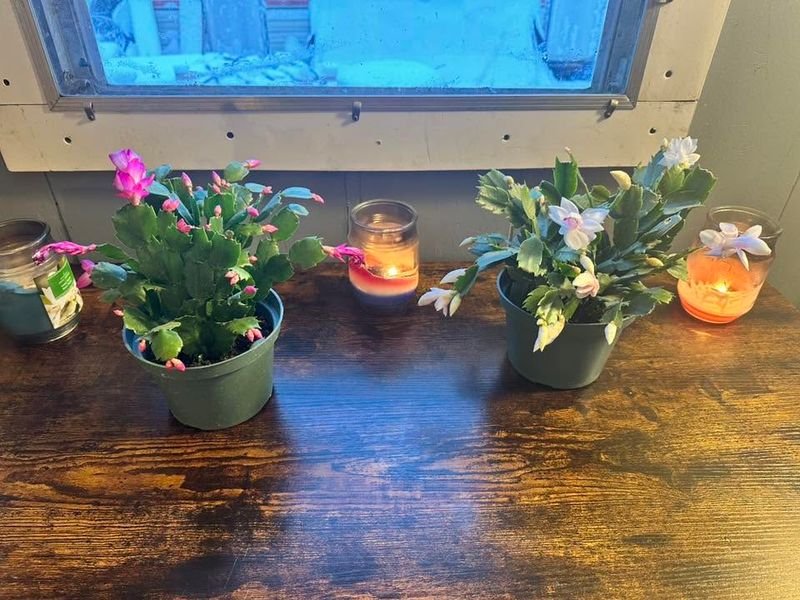
Moderately cool conditions help many holiday cacti form buds. A practical home range is about 65 to 70°F by day and 55 to 65°F at night, a pattern described by University of Minnesota Extension and South Dakota State Extension.
Here is the twist. Some plants kept around 55°F may flower regardless of day length, according to Iowa State.
That means cool nights can stand in for a strict dark treatment on certain plants, while others need both cues. Your cactus may respond differently from a friend’s.
Cool does not mean cold. Skip frost and do not chill the plant on purpose near 50°F.
Clemson Extension warns that bud drop may occur around that temperature, so bring outdoor plants in before nights fall below it.
Which holiday cactus do you have?
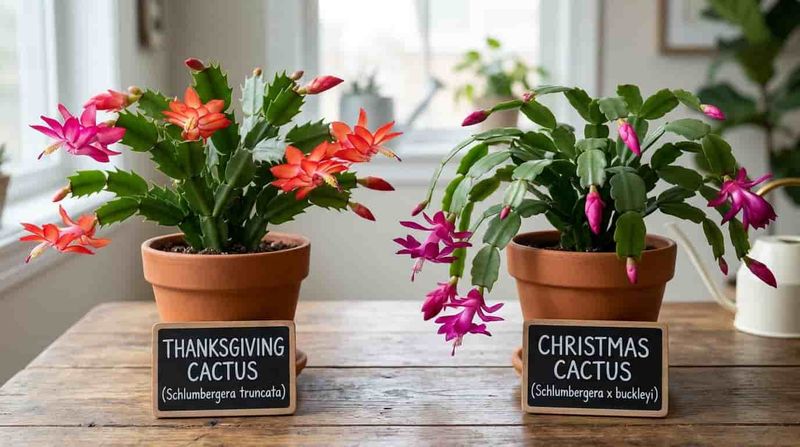
The plant tagged as a Christmas cactus at the store may be something else. Many sold in the holiday season are Thanksgiving cacti, and those normally bloom earlier than true Christmas cacti.
That means a plant with no buds in late November might be on a different schedule than you assumed.
Check the stem segments. South Dakota State Extension and Clemson Extension describe Thanksgiving cactus segments as having pointed, toothed edges, while true Christmas cactus segments are more rounded or scalloped.
If you cannot tell, simply call it a holiday cactus. The common name is not a promise of a particular bloom date, so let the plant’s own response guide your expectations.
Set the conditions without stressing the plant
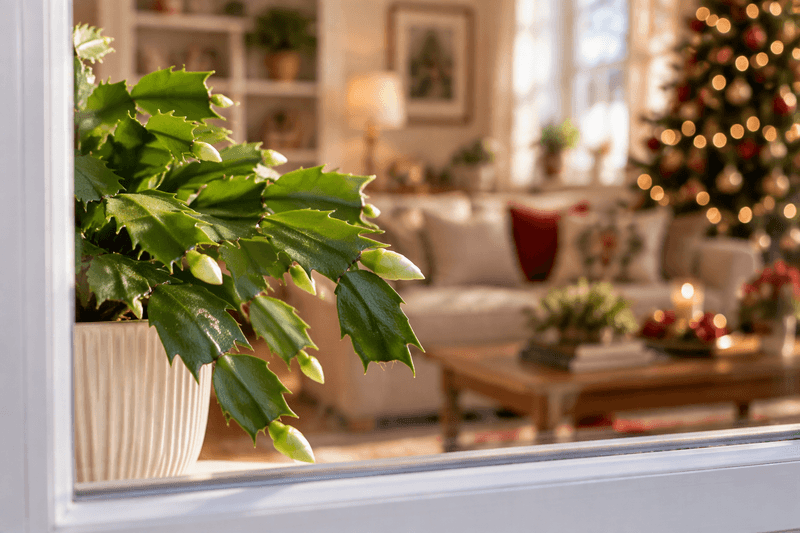
Think of this as a simple routine rather than a strict program. By day, give the plant bright light, since University of Minnesota Extension recommends bright, indirect conditions with moderate temperatures.
At night, make sure the plant gets long, uninterrupted darkness. Turn off nearby lamps, or cover the plant if you can’t control the room.
Iowa State suggests this for several weeks.
Pick a moderately cool spot, such as a bright spare room or a cooler windowsill, and keep it away from drafts and heating vents. South Dakota State Extension also warns against sudden changes.
Keep in mind that this routine encourages flowering but cannot guarantee it, because plants vary.
Steady care helps developing buds stay on the plant
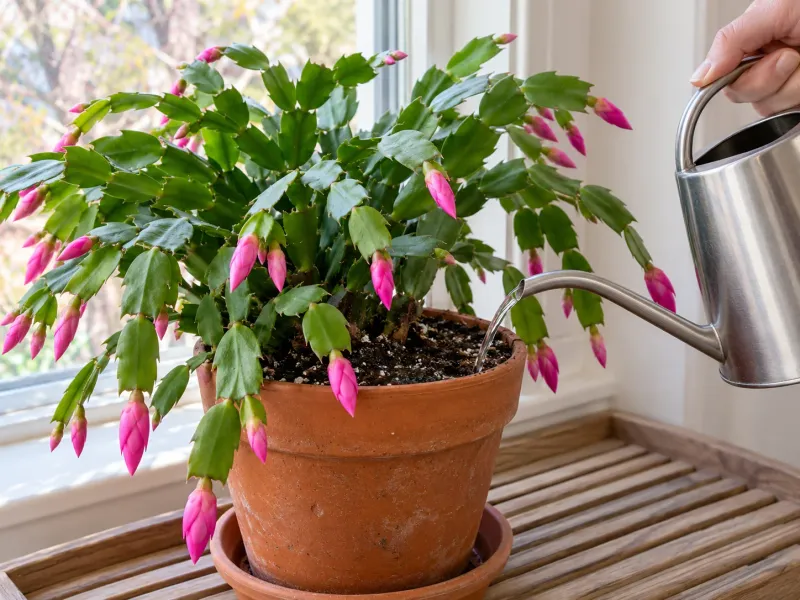
Once buds start to form, consistency matters most. Holiday cacti are rainforest plants, not desert cacti, so they like a well-drained mix and moisture that stays fairly even.
Water when the top of the mix starts to dry, then let excess drain away.
Skip the old advice to stop watering until bloom. South Dakota State Extension and Iowa State both caution against letting the plant dry out too much, which can contribute to bud drop.
A pot sitting in water is just as risky.
Sudden changes in light, temperature, location, or watering can also make buds fall. UF/IFAS Extension offers similar care advice.
Keep the plant away from drafts and heating vents, and once buds appear, resist moving it around.
A budless plant may not bloom by Christmas this year
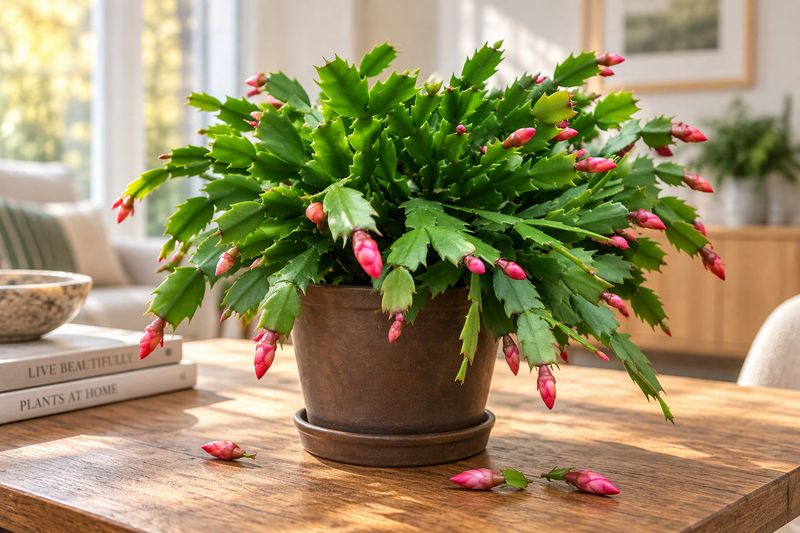
If your plant has no buds on November 23, 2026, treatment started now cannot reliably produce flowers by December 25. Bud formation and flower opening are separate stages, and each takes time.
Clemson Extension says buds may become visible within three to four weeks under its described conditions. Then K-State Extension says another nine to ten weeks may pass before full flowering.
Iowa State also describes weeks of darkness first.
Plants that already have buds may still open this season, so keep their care steady. For a budless plant, think of the routine as setting up later blooms, perhaps in midwinter.
Timing varies by plant and cultivar, and a late bloom is still a win.