
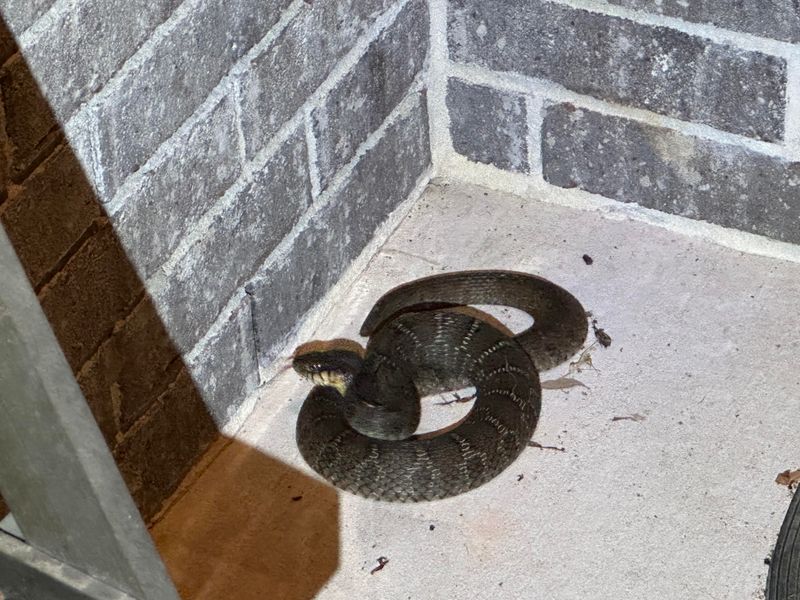
The habit is simple: stacking brush, wood, and rocks near the house and leaving them there. Piles like these can give snakes a cozy place to hide, and they may also draw the mice and insects that snakes eat.
Most snakes in Texas are not venomous, and many do helpful work in a yard. Knowing where hiding spots form helps you cut down on surprise meetings without treating every snake like a threat.
Piles near the house can provide shelter
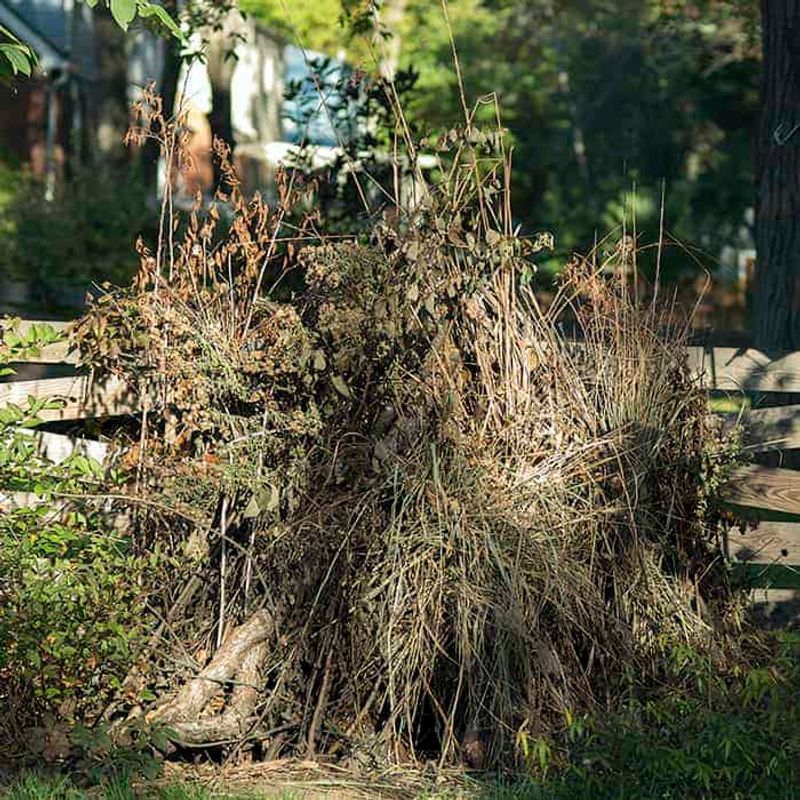
Brush, wood, rocks, and other debris stacked close to a house can give snakes a place to tuck away. Texas Parks and Wildlife Department guidance names three features that can attract snakes: loose rock piles, large brush piles, and hollow dead logs with leaf litter built up around them.
Notice that last example. The concern is leaf litter packed around a hollow dead log, not every pile of fallen leaves in your yard.
Ordinary leaves on their own are not a reliable snake magnet.
Piles can also hold food. Mice, rats, and insects like cover too, and a snake that hunts them may find the same spot useful.
So a messy corner can work as both a hiding place and a pantry.
Still, a pile is potential shelter, not a guarantee. Plenty of yards with stacked wood never see a snake, and a tidy yard can still get a visitor passing through.
Nobody can say a certain pile will bring a snake to your porch.
Keep the bigger picture in mind, too. TPWD notes that most Texas snakes are not venomous, and snakes help by eating rodents.
The goal here is fewer unwanted run-ins, not a war on snakes.
Think of your yard like a neighborhood map. Anything that offers cover close to the house deserves a second look, especially the stuff that has sat untouched for months.
Cold weather does not predict where snakes will go
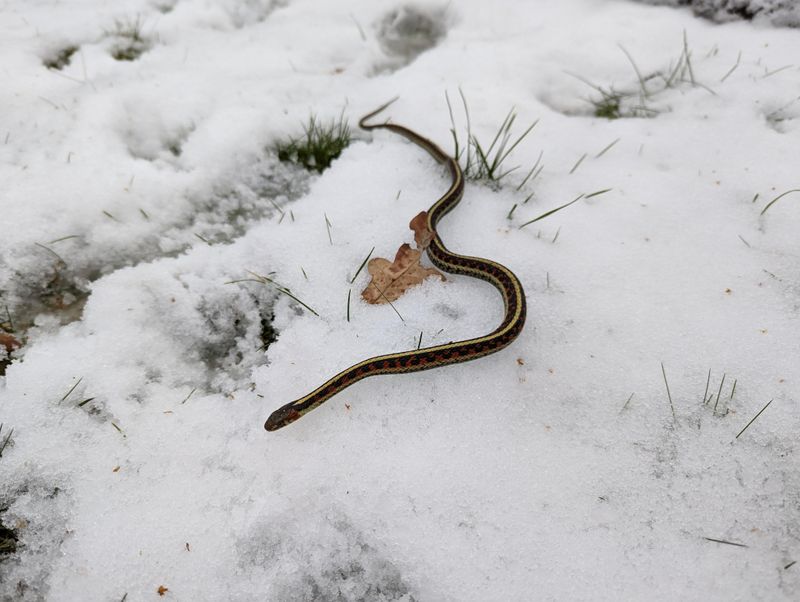
Fall cleanup season makes people picture snakes marching toward warm houses. The real story is calmer than that.
TPWD says snakes look for shelter in cold conditions, but they may come out to bask or hunt on warm winter days.
Texas winters are fairly mild, so cold snaps often come with sunny, warm stretches. A snake sunning on a January afternoon is not unusual and does not mean it is aiming for your door.
Nor do all snakes hibernate in the way people imagine. TPWD’s overview of sleep and hibernation helps explain how animals handle cold in different ways.
Falling temperatures do not send snakes in a straight line toward homes.
So why talk about late fall at all? Because it is a handy time for chores.
The yard is slowing down, the heat is gone, and you can finally look at that heap of branches or the lumber leaning against the shed.
Treat the season as a calendar reminder rather than a warning sign. A quick walk around the property now can show you which spots offer cover, and that is useful in any month.
Store wood and brush away from the residence
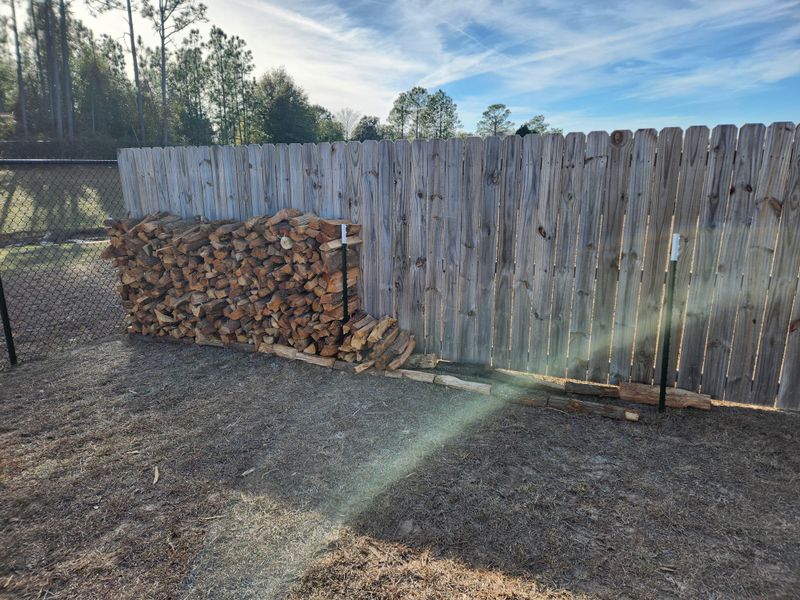
Start with the simplest move: keep wood and brush piles as far from the house as you can. TPWD recommends this distance approach, though it does not set an exact number of feet from a porch, so use your lot and common sense.
Next, lift lumber and similar materials at least 18 inches off the ground. A rack, pallets on blocks, or sturdy shelving all work.
Open space underneath means fewer dark, tight spots to hide in, and it makes the area easier to check by eye.
Food matters as well. TPWD advises managing insect and rodent populations, since those animals can bring in the snakes that eat them.
Keep pet food and birdseed in sealed containers, and cut back thick tangles near the foundation.
Then look at the house itself. TPWD also suggests sealing entry points.
Check for gaps around pipes, cracks in the foundation, loose door sweeps, and torn vent screens.
Be honest about what this does. These steps remove cover and make your home less inviting, but they cannot promise that snakes will stay away.
Snakes cross yards all the time, and a clean property may still get an occasional visitor.
Move debris without reaching into hidden spaces
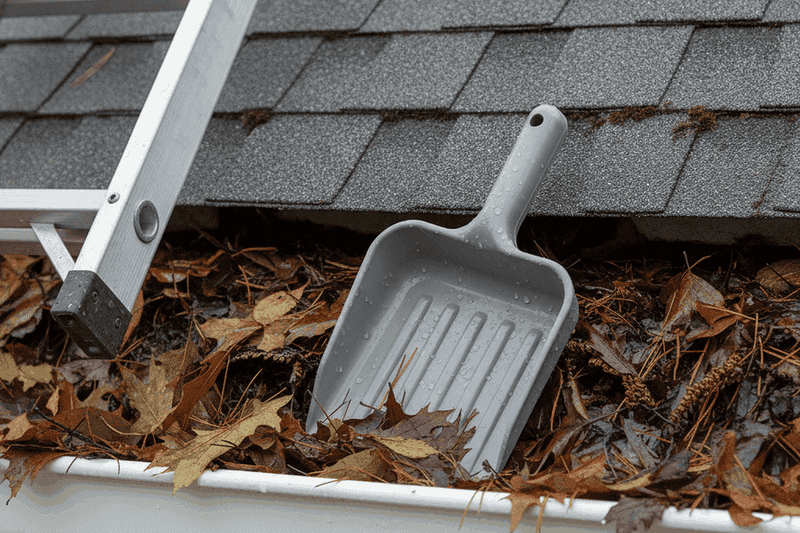
Cleanup day calls for the right gear. CDC and NIOSH advice for outdoor work includes wearing protective clothing and gloves, and using tools to move leaves, brush, wood, or debris.
Long pants, sturdy boots, and heavy gloves are a good starting kit.
Let a rake, shovel, or pitchfork do the first touch. Pull material toward you instead of bending down and grabbing it.
That keeps your hands a safe distance from anything that might be tucked inside.
The golden rule is to keep hands and feet out of places you cannot see. Skip the blind reach under a board, into a woodpile, or beneath a stack of rocks.
Look first, and use a light if the spot is dim.
For heavier items, TPWD suggests using a long stick or garden tool to move a log if needed. Roll it away from you and step back.
If a snake shows up, stop what you are doing. The CDC says not to try to capture or kill it.
Back away slowly, keep kids and pets inside, and let the snake move on while you finish the job later.
Repellents are not a dependable shortcut
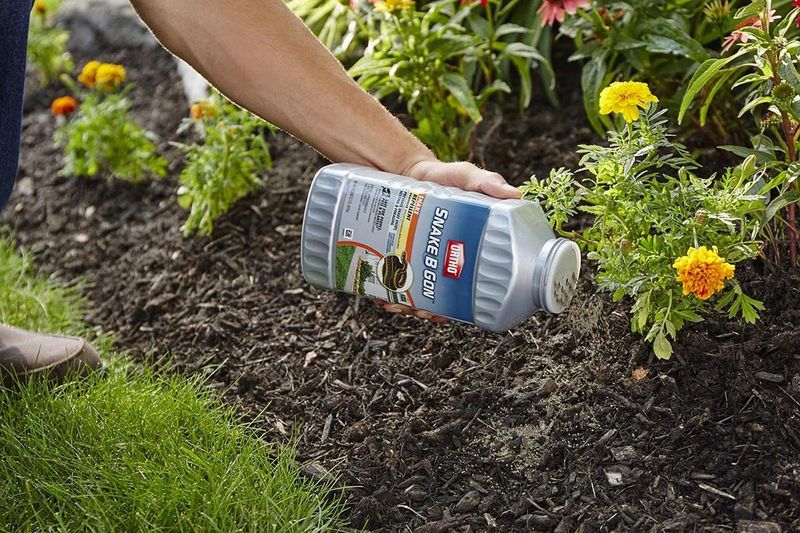
A bottle or a box that promises to keep snakes away sounds a lot easier than hauling brush. Sadly, shortcuts like this let you down.
An Extension expert answering a homeowner question notes that repellents have not been shown to consistently repel snakes.
That covers the usual suspects. Sulfur, sonic devices, and commercial products should not be counted on as reliable fixes, and spending money on them can give a false sense of safety.
Mothballs deserve a special warning. The same Extension answer points out that naphthalene mothballs are toxic to people and pets.
Scattering them around a yard or porch can put children, dogs, and cats at risk, and the snake problem may still be there.
So where should your effort go? Back to the habitat.
A yard with less cover and fewer rodents is simply less useful to a snake, and that approach has no poisonous side effects.
Try a quick test. Walk the edge of your house and ask what a snake could hide under, behind, or inside.
Whatever you find, whether it is a rock stack, a woodpile, or a heap of old boards, is a better target than any product on a shelf.
Give a snake space and get help when needed
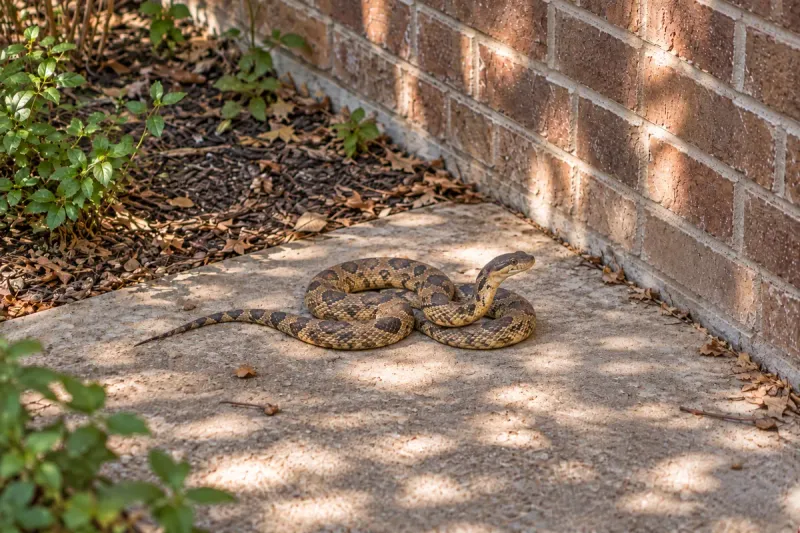
Seeing a snake outside can make your heart jump, but the best move is usually the quietest one. CDC guidance says to leave it alone and not try to capture or kill it.
Most bites happen when people try to handle or harm a snake.
Step back, bring pets and children inside, and give it room to leave. Many sightings end with the snake simply sliding off into the grass.
If a snake gets inside the house, the advice changes a little. Call animal control instead of trying to trap or remove it yourself.
Keep everyone away from the room, and close the door if you can do so safely.
A snakebite is an emergency. Seek immediate medical attention right away, even if you are not sure the snake was venomous.
Do not wait to see how you feel.
Keep expectations realistic as well. As TPWD’s snake FAQ explains, removing shelter and sealing entry points helps make a home less inviting, but it cannot promise a snake-free yard.
A tidy yard stacks the odds in your favor, and calm habits take care of the rest.