
Most people think fall color belongs to New England, not a California yard that sees no rain from May to October. The truth is that a handful of tough trees can turn your street red, orange, and gold while asking for very little water once they settle in.
Picking the right one saves money on your water bill and gives you a show that big-box maples just cannot match in our dry summers. Here are eight smart choices, each with its own reason to earn a spot in your yard.
1. Western Redbud
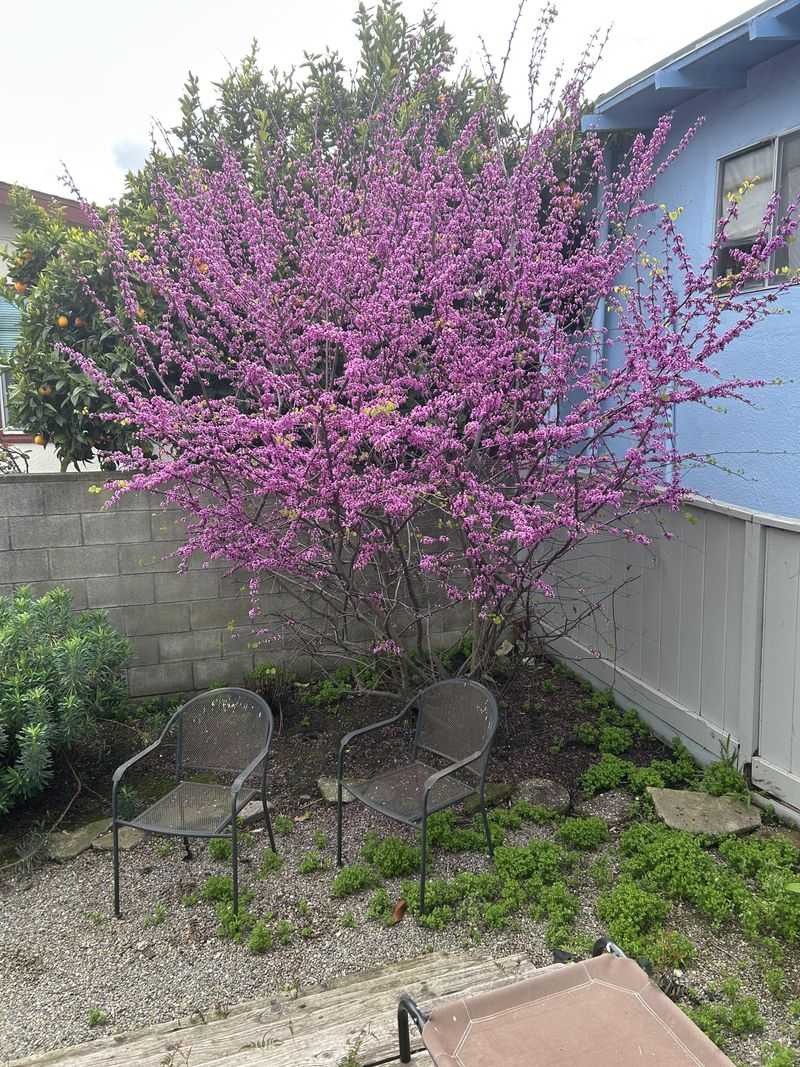
Few trees pack four seasons of interest into such a small frame. Western redbud (Cercis occidentalis) bursts into magenta blooms in spring, hangs on to purple seed pods in summer, and then turns its heart-shaped leaves yellow and reddish in fall.
Native to the foothills of California, it shrugs off heat and needs only a deep soak once a month after its first two summers. Most plants stay 10 to 15 feet tall, which makes them ideal near patios or along a fence line.
Fun fact: Indigenous basket weavers prized the red-barked young stems for patterns in their baskets. Plant one in full sun with good drainage and skip the summer sprinkler once it’s established.
2. Chinese Pistache
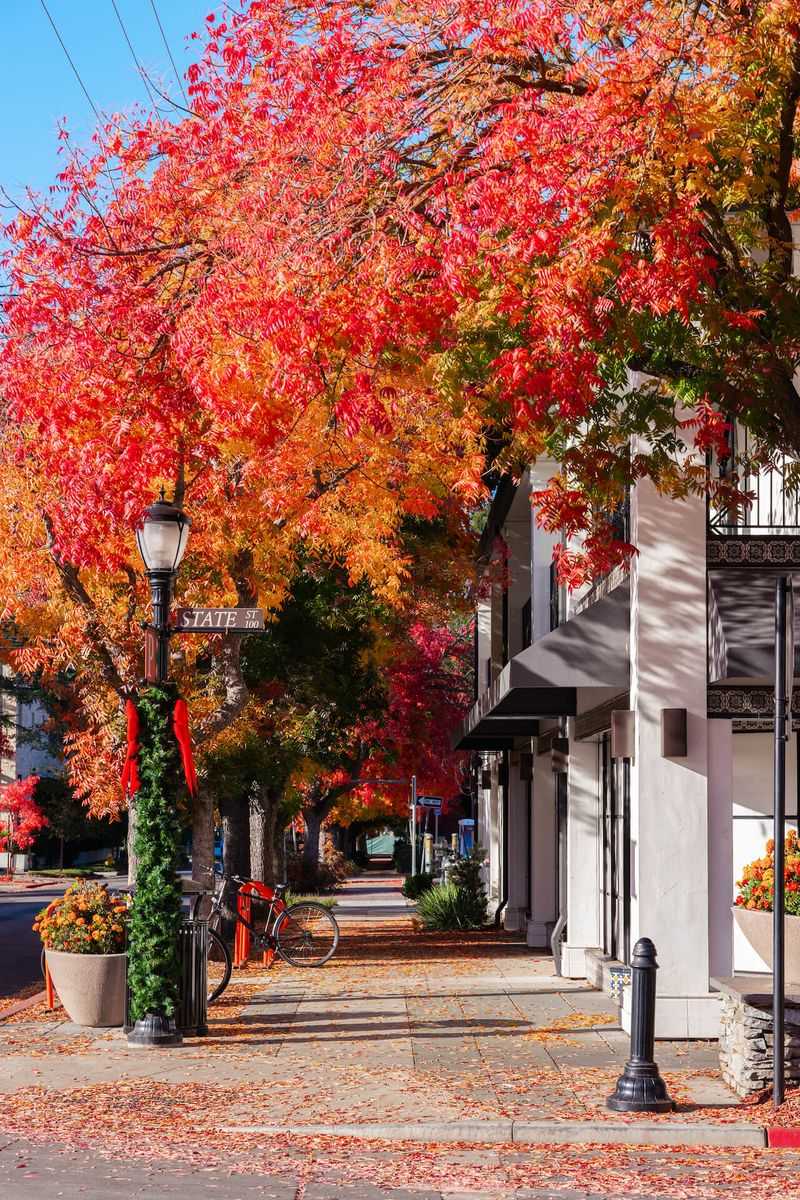
Drive through Sacramento or Fresno in November and you’ll see blazing orange domes lining the streets. Those are Chinese pistache trees, and they might be the most reliable fall color you can grow in hot inland California.
Once rooted, they handle triple-digit summers on surprisingly little water. Their roots run deep rather than wide, so they’re far less likely to buckle sidewalks than ash or liquidambar.
Look for male, seedless varieties like ‘Keith Davey’ to avoid messy berries. Expect a 25 to 35 foot shade tree that cools your house in July and lights it up in fall.
3. Valley Oak
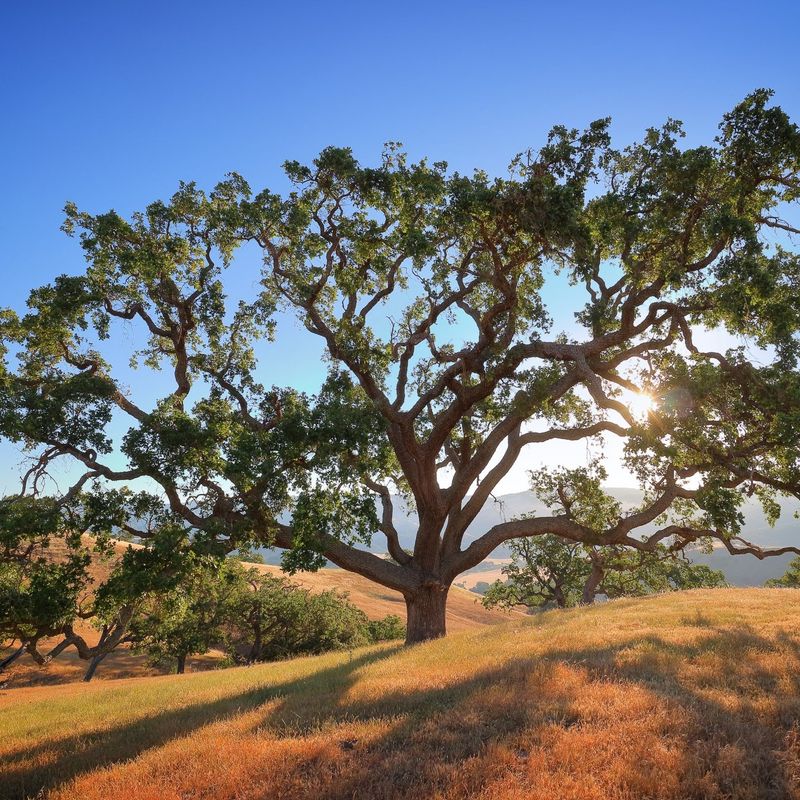
Some trees are planted for you, and some are planted for your grandkids. Valley oak (Quercus lobata) falls in the second group, a giant that can live for centuries and stretch past 70 feet.
Its fall color leans toward warm gold and russet rather than fiery red, but the sheer size makes the effect stunning. Best of all, it hates summer water once established, since wet soil around the trunk invites root rot.
Give it plenty of room, at least 30 feet from the house. Birds, squirrels, and hundreds of insect species will thank you for decades.
4. Ginkgo
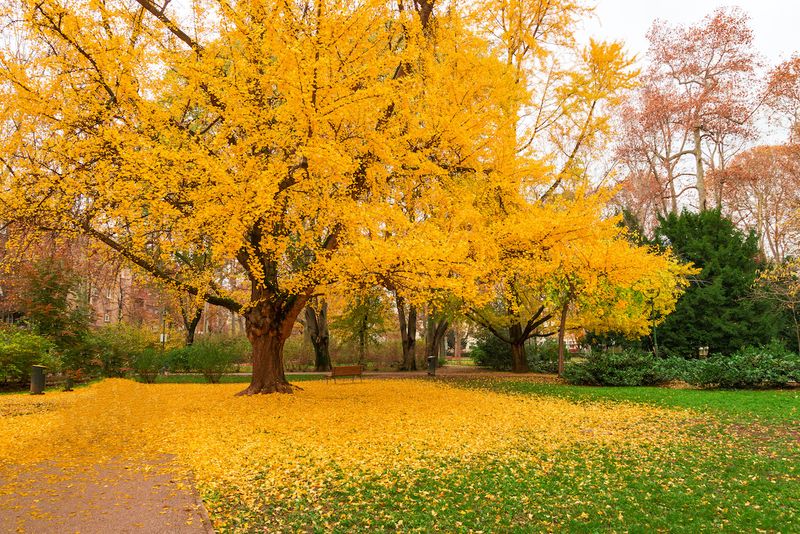
Imagine a tree that drops nearly all its leaves in one day, leaving a perfect golden carpet below. That’s the ginkgo’s party trick, and it never gets old.
This living fossil has been around for over 200 million years, which explains how tough it is. After a few years of regular watering, ginkgo copes well with dry California summers and smoggy urban air.
Always buy a male, grafted variety like ‘Autumn Gold’ since female trees produce smelly fruit. Growth is slow at first, so be patient and enjoy the buttery show each November.
5. Bigleaf Maple
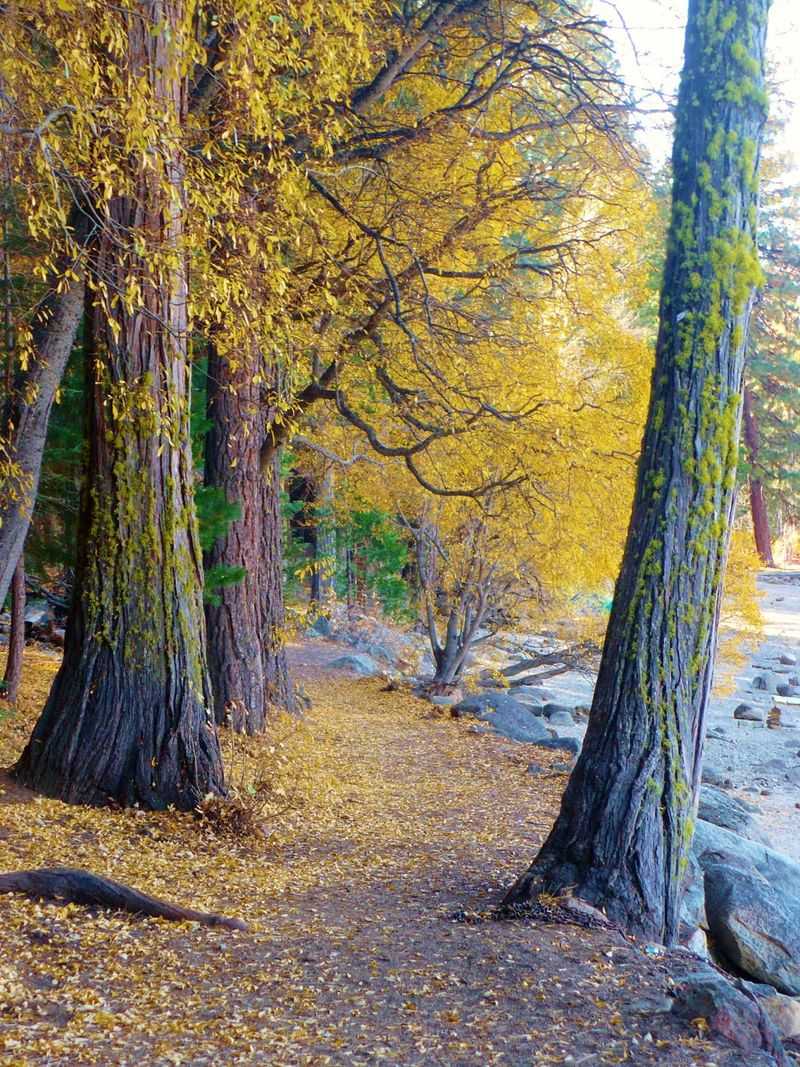
Hikers know this one well. Along creeks in the Coast Ranges and Sierra foothills, bigleaf maple (Acer macrophyllum) flashes leaves as wide as dinner plates in shades of bright gold.
It’s the only true California native maple that suits larger yards, and it’s a far better choice than thirsty Japanese maples for our climate. It does appreciate a little more moisture than the others here, so place it in a low spot or a north-facing area where soil stays cooler.
A deep monthly soak in summer is usually enough. It grows fast, so give it space for a 40 to 60 foot canopy.
6. Crape Myrtle
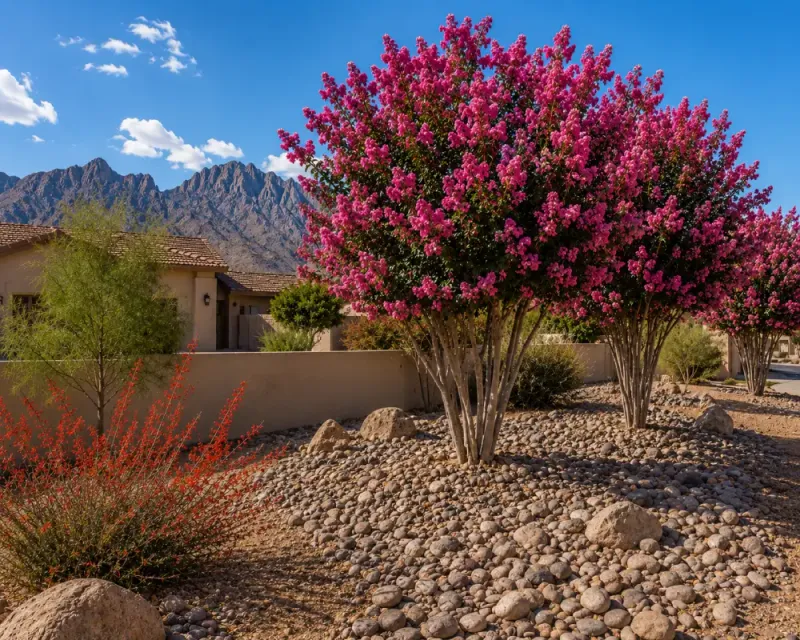
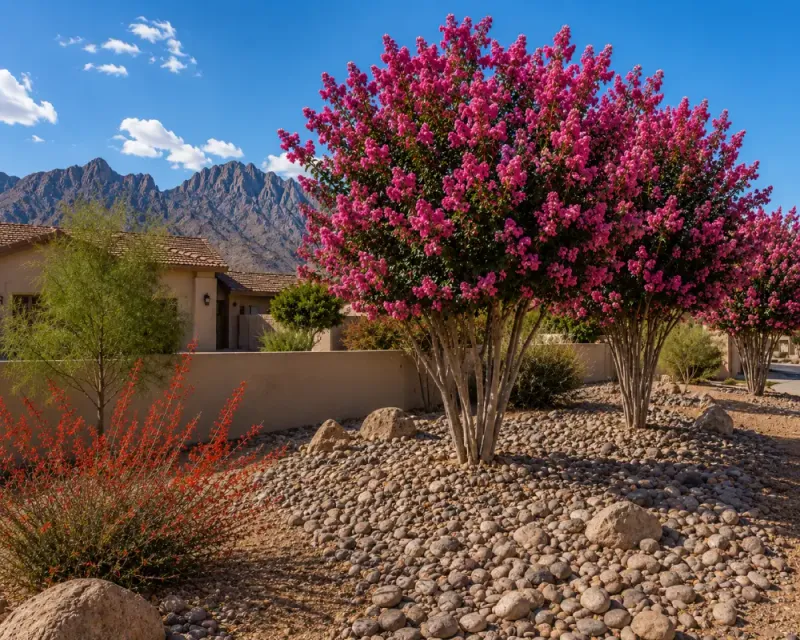
Okay, it’s not a native. But crape myrtle earns its spot by doing double duty: summer flowers in pink, red, or white, then a fall leaf show of orange and crimson.
It thrives in hot, dry inland valleys and needs only occasional deep watering once established. Peeling bark in cinnamon and gray adds winter interest when the branches go bare.
Choose mildew-resistant varieties with Native American tribe names, like ‘Tuscarora’ or ‘Natchez.’ Please skip the harsh topping some landscapers call pruning, since it ruins the graceful shape.
7. Blue Oak
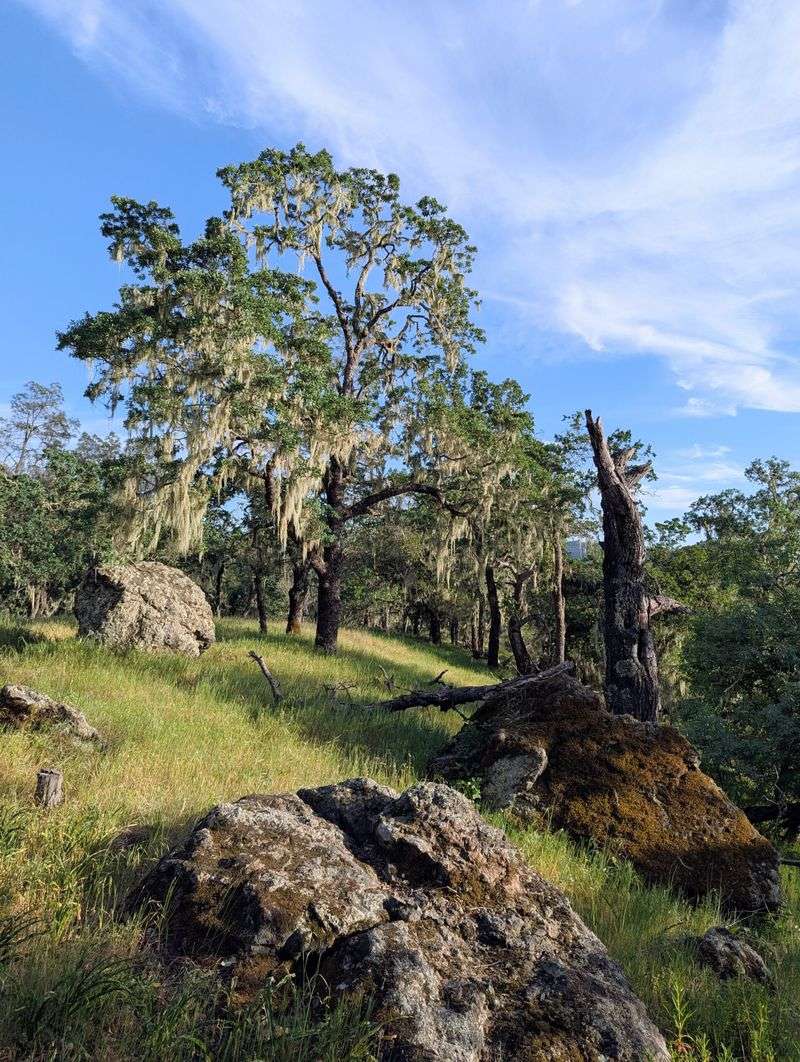
Talk about tough. Blue oak (Quercus douglasii) can drop its leaves early during extreme drought just to survive, then bounce right back the next spring.
Its powdery blue-green summer foliage turns soft gold and tan in autumn. At 20 to 40 feet, it fits medium yards better than its massive cousin, the valley oak.
No summer water is needed after the first couple of years, making it one of the most water-wise trees in the state. Plant it on slopes where its roots help hold soil before winter storms.
8. Pomegranate Tree
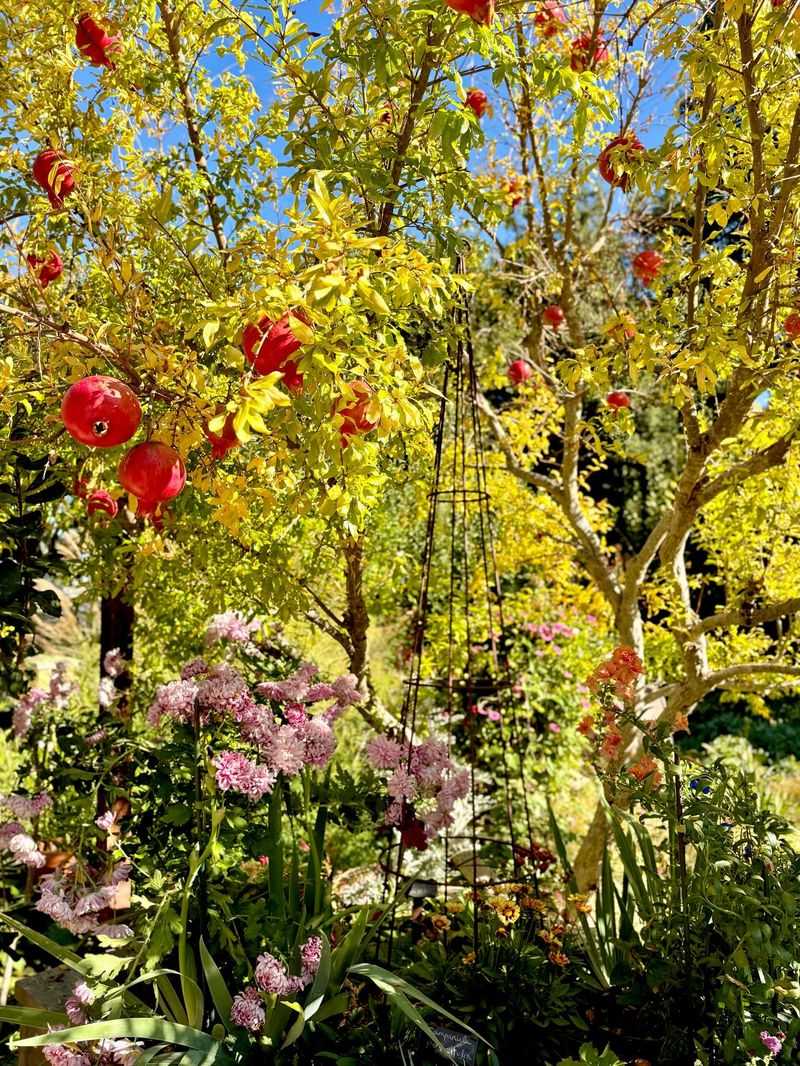
Here’s a bonus most people never notice. Before winter, pomegranate leaves turn a vivid buttery yellow that glows against the red fruit still clinging to the branches.
Originally from Iran and the Mediterranean, pomegranates feel right at home in California’s dry summers. Mature trees survive on very little water, though a few deep soaks help fruit stay juicy.
Keep it pruned as a small tree of 12 to 15 feet, or let it grow as a bushy screen. You get spring flowers, fall color, and a snack all from one plant.