
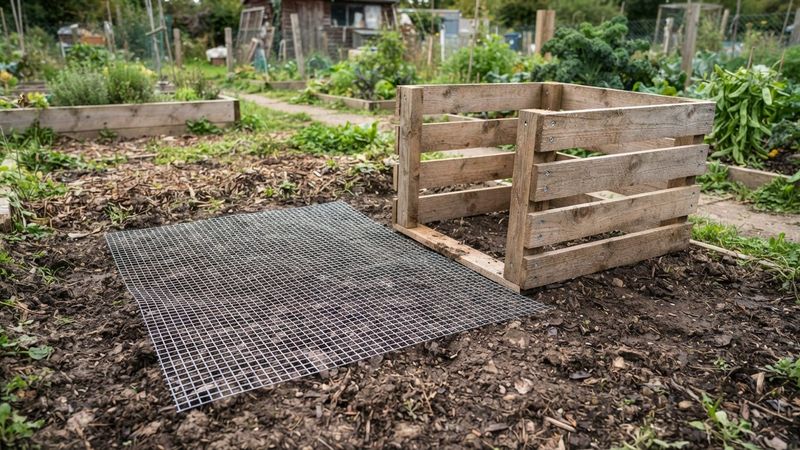
If rats are moving into your compost pile, the cause is usually food scraps you keep tossing in, and a sturdy wire base can keep them from digging underneath. Compost gives rats a warm, sheltered place with plenty to eat, and that can matter in any season.
Several kinds of scraps can draw them, not just one. A few cheap habits and a piece of hardware cloth can make your bin far less inviting.
Rats can stay active through winter
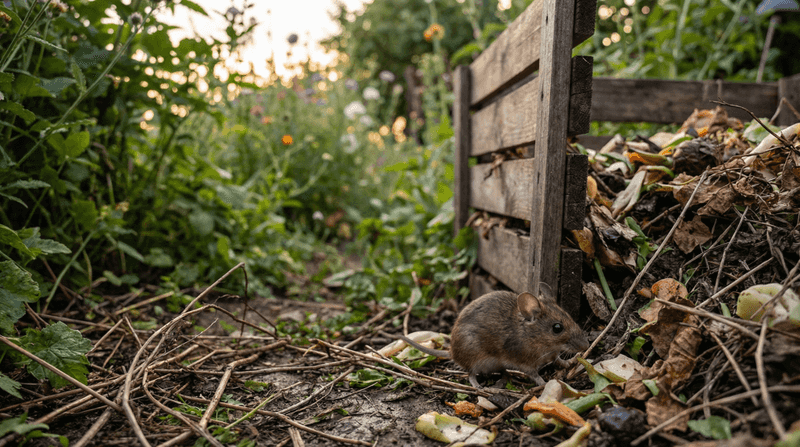
Rats do not take the winter off. University of Nevada, Reno Extension says rats can remain active year-round, and a compost pile can give them both food and a warm place to hide.
The same Extension source notes that milder winters may help rats survive in Northern Nevada. That is local context.
It does not mean cold weather causes compost bin problems everywhere, and many gardeners never see a rat near their bin.
Still, a bin that is full of food scraps and has gaps at the bottom is an easy target in any season. Cold months can make it more tempting, since shelter and a steady meal are harder to find elsewhere.
The good news is that you can cut down the risk with a few simple steps. You can limit what rats can eat, cover what you add, and block the route under the bin.
The next sections walk through each one and what it can and cannot do.
Several scraps can attract animals
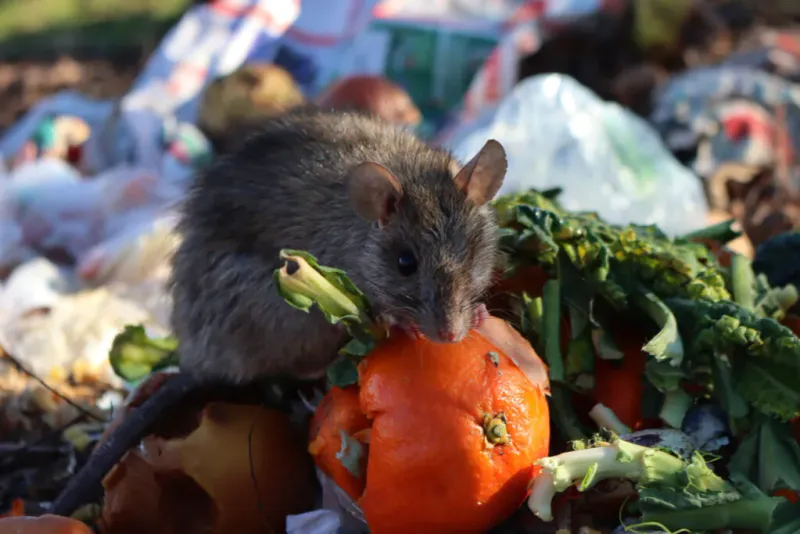
Ask what draws rats to a pile and you will get a list, not a single culprit. Oregon State University names meat, fish, dairy, fats, oils, and grease as materials to keep out of a typical backyard pile.
It also lists bread, grains, and bones among items that can invite rodents and other animals.
These are possible attractants. They do not prove that any one item caused a particular visit to your bin.
If rats show up, the smell of a mix of scraps may be the reason.
Think of this group as the higher-risk pile of food. A leftover chicken carcass or a bowl of greasy pasta sends a stronger signal than a banana peel does.
Keeping these items in the trash or a municipal food program is a simple way to lower the odds.
Fruit and vegetable scraps are a different case, and they need a more careful look. That is the topic of the next section.
Bury scraps and cover them with dry material
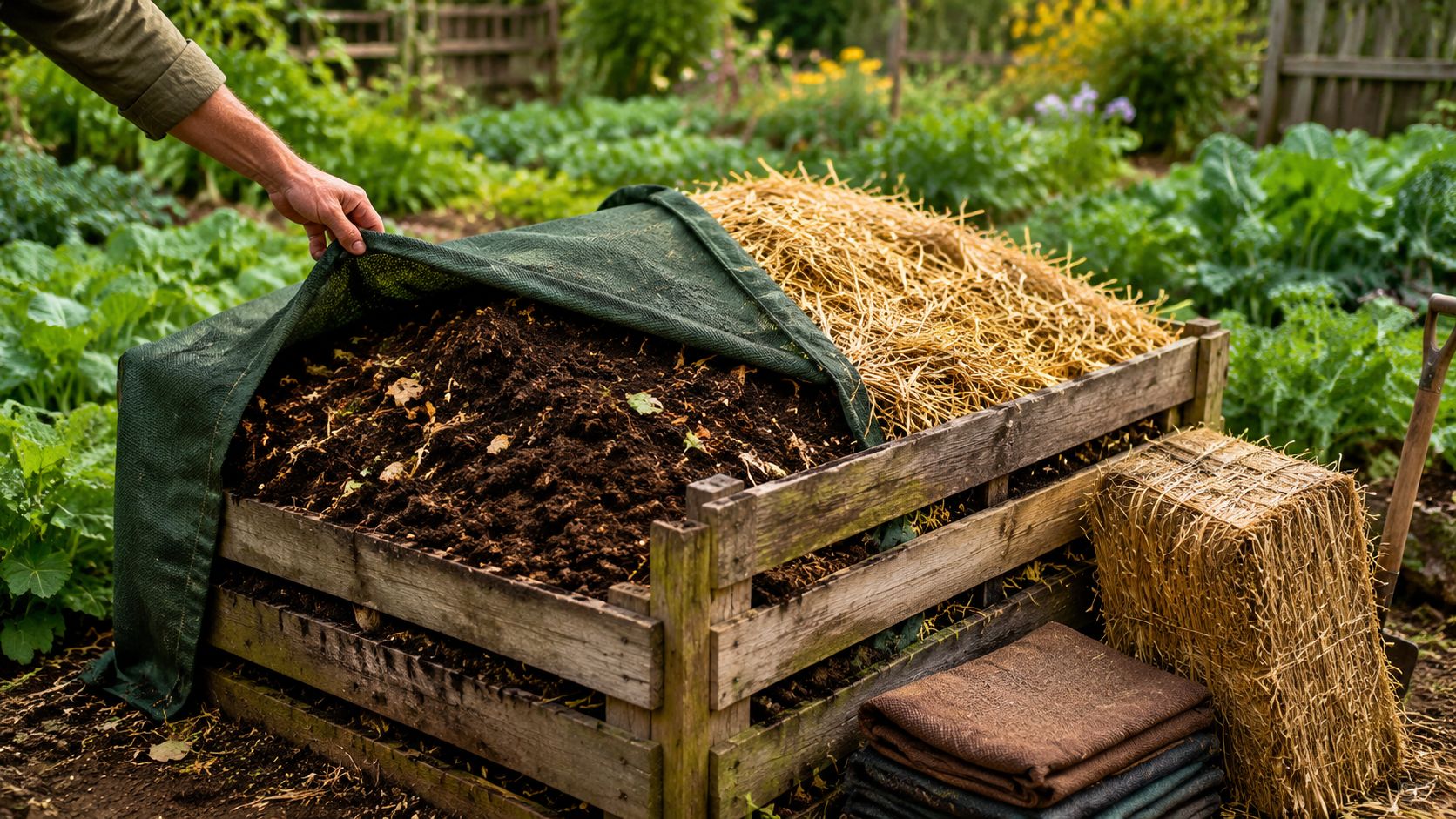
A simple routine does a lot of the work. Dig a hole in the center of the pile, drop in your food scraps, and cover them with a layer of browns.
Dry leaves, straw, and shredded paper all work well.
Cornell Composting says fruit and vegetable scraps are lower risk when they are buried and break down quickly in a hot system. NC State Extension also advises burying food scraps rather than leaving them on top.
Covering matters because scraps left on the surface send out smells and are easy to spot. A thick layer of browns hides them and also keeps the pile balanced.
This habit lowers the risk, but it is not a promise. A hot pile that is turned and managed well is less appealing than a cool, soggy one.
Animals can still visit, so watch for digging or holes near the bin and be ready to take stronger steps.
Use mesh beneath a bin rats are digging under
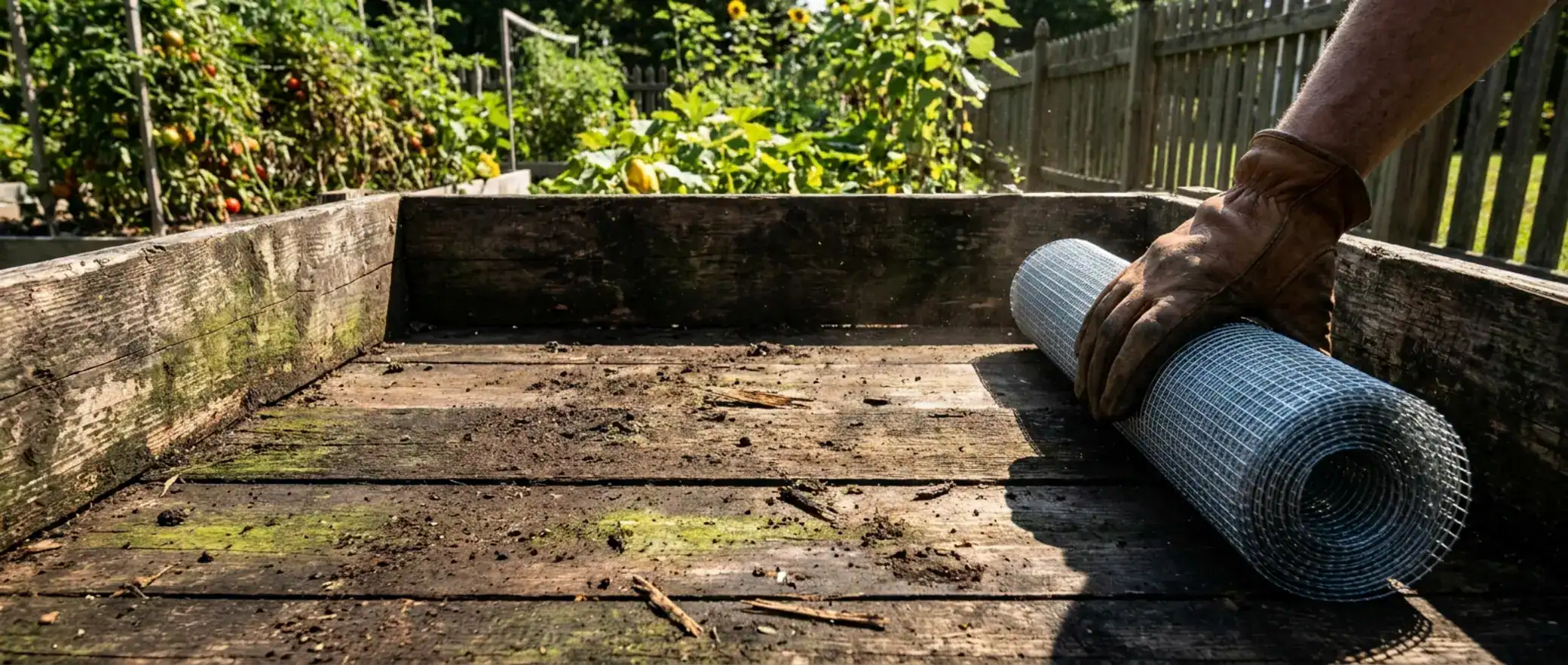
If you can see burrows or loose soil under your bin, the bottom is the first place to fix. Washington State University Extension recommends strong quarter-inch hardware cloth beneath a bin that rats are burrowing under.
Choose galvanized metal mesh, not flimsy chicken wire, because rats can chew or squeeze through weak material. Cut it larger than the bin footprint, lay it flat, and fasten or weigh down the edges so there are no curled gaps.
Mesh is a good fit for compost because it does not shut the pile off from the ground. A UCSB compost design guide notes that it can stop digging animals while still letting water, worms, and microbes pass through.
Think of it as a deterrent for one route. It makes tunneling up from below much harder, but it does not guarantee that rats cannot get in.
Other openings still need a look.
Check the lid, sides, and top
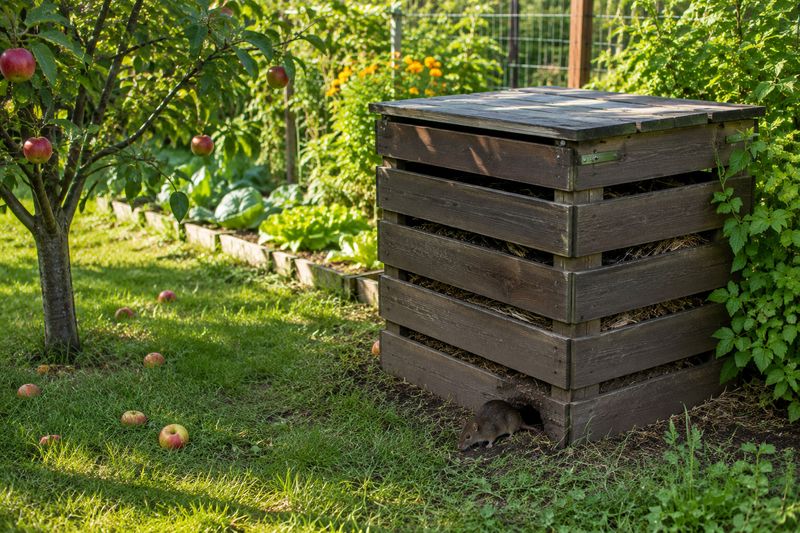
A mesh base covers the bottom and nothing else. Rats that come in from above or through a gap in the wall will walk right past it.
Start with the lid. Make sure it fits tightly and stays closed, and add a weight or clip if wind or animals can knock it loose.
Then walk around the bin and look closely at the sides, corners, and vents.
Fresh gnaw marks on plastic are a clear sign. Washington State University Extension says a gnawed plastic bin may need mesh reinforcement on the sides and top as well as the bottom.
It also warns that complete rat-proofing is difficult.
That means checking is an ongoing job. Look over the bin every few weeks, especially after storms, and patch small holes before they grow.
Droppings, tunnels, or chewed edges tell you where to focus next.
Stop adding food scraps if visits continue
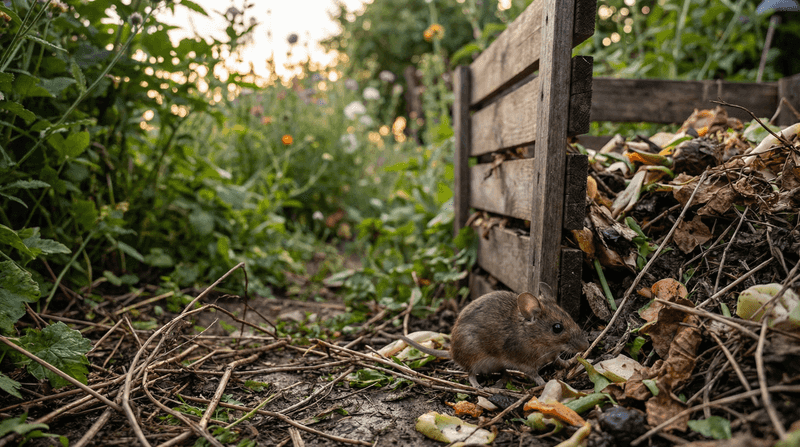
When animals keep coming back despite your efforts, change what goes into that pile. Stop adding food-based scraps for a while and feed it yard waste such as leaves and clippings instead.
University of Nevada, Reno Extension notes that nuisance animals can also be drawn to fruit and vegetable scraps. So in this situation, produce goes on the pause list too.
This is a step for problem piles, not a rule for every bin. A well-managed hot pile with buried scraps may never see a visitor, and you can keep using it that way.
Where do the kitchen scraps go meanwhile? Use the trash, a city food scrap program, or a second, better-sealed bin.
Once the visits stop, you can try adding buried scraps again.
Keep the bigger picture in mind. Mesh under the bin stops digging, but the lid, sides, and top matter just as much, so check them again.
A bin that offers no meal and has no easy door gives rats little reason to stay.