
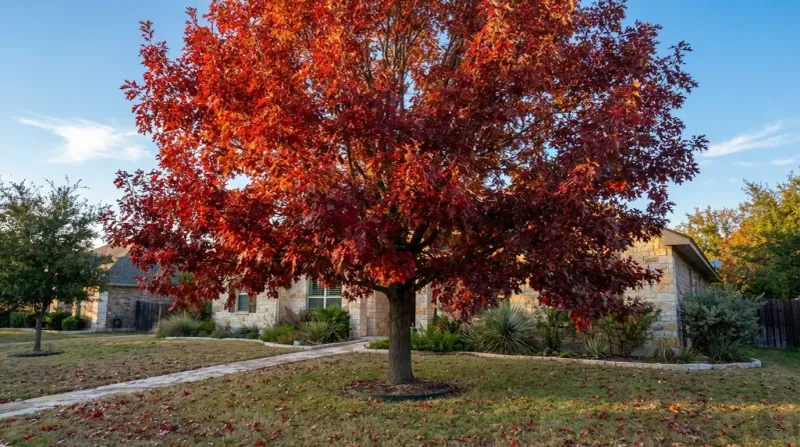
The tree behind those glowing red yards in Central Texas is the Texas red oak, a native oak known for brilliant red fall leaves. It shows up when many summer gardens look worn out and ready for a rest.
Color timing and strength change with the weather, so each year looks a little different. Here is what to expect, how to plant one, and how to keep it healthy.
Meet the Texas red oak
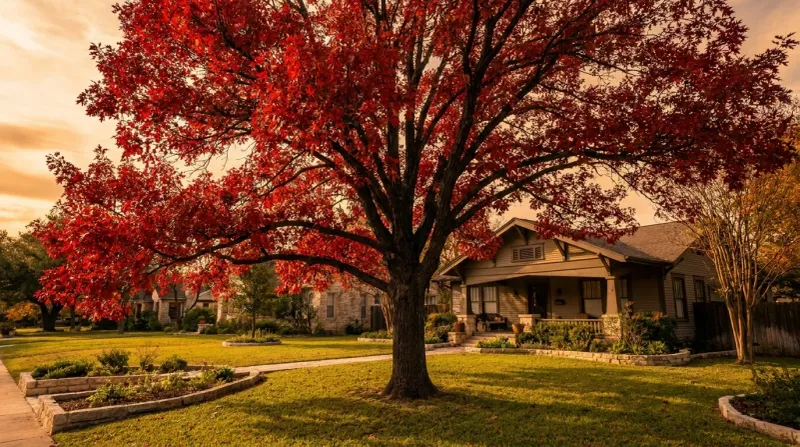
The star of this story is the Texas red oak, known to botanists as Quercus buckleyi. You may also hear it called Texas oak, Buckley oak, or Spanish oak.
It is a Central Texas native, and Texas A&M’s tree selector lists it with brilliant red fall color.
Texas A&M Forest Service backs that up, noting that its leaves turn deep red in fall. In plain terms, this is a tree known for red autumn foliage, which makes it a favorite for homeowners who want native color without leaning on imports.
A quick naming warning will save you some confusion at the nursery. You may see the name Quercus texana attached to older plant tags or books.
According to Texas A&M Forest Service, Quercus texana is now the name for Nuttall oak, a different species.
The Central Texas tree you want is Quercus buckleyi. When you shop, ask for it by both the common and the Latin name, and check the tag before you buy.
That small step makes sure the tree you plant is the one adapted to local limestone soils and summer heat.
When Central Texas trees change color
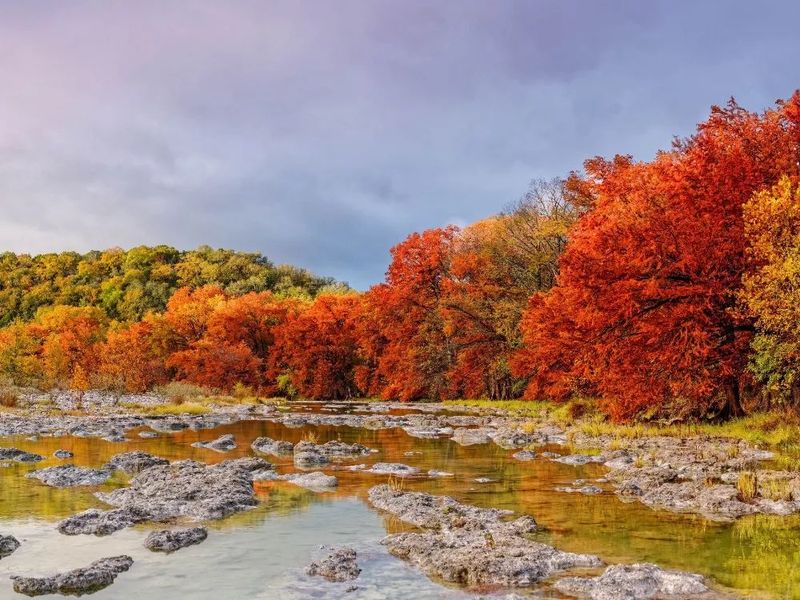
Fall color in Central Texas arrives on its own schedule. The Lady Bird Johnson Wildflower Center says color in East and Central Texas may begin anywhere from mid-October to mid-November, with peak color sometimes stretching into December.
Some oaks even hold brown leaves into late winter.
Weather plays a big part in the show. Moisture, temperature, and light all shape when leaves change and how strong the color gets, as Texas A&M Forest Service explains.
Sunny days with cool nights tend to help, while drought can bring early leaf drop and duller color.
Where does the Texas red oak fit? Texas A&M calls its color reliable, and it can be a good late-season red choice.
Still, no source promises a set peak date or that it will be the last tree to turn.
Think of it as a seasonal gift rather than a calendar appointment. Some years the red is deep and dramatic, and other years it is more subdued.
Site conditions, including soil depth and sun, add their own twist from one yard to the next.
Check whether your yard has room for an oak
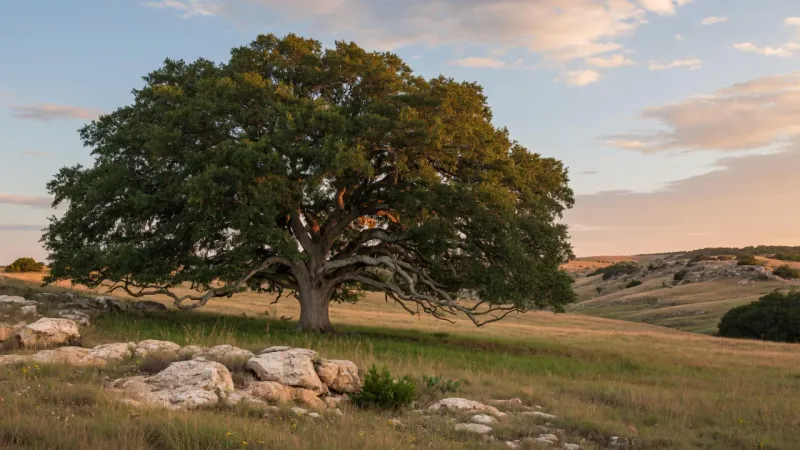
Before you fall for the red leaves, measure your space. Texas red oak is deciduous, meaning it drops its leaves each year, and it commonly reaches about 35 feet.
According to Texas A&M Forest Service, on fertile sites it can climb to 70 feet.
That makes it a substantial shade tree, not a small accent for a narrow side yard. Give it room overhead, away from power lines and roofs, and plenty of space for roots to spread without bumping into foundations or driveways.
Its natural home offers more clues. The tree grows on dry limestone hills and ridges in Central Texas and west onto the Edwards Plateau.
If your yard has thin, rocky, alkaline soil, you may be close to what this oak already likes.
Texas A&M’s tree selector also lists it as native, drought tolerant, and tolerant of alkaline soil. Walk your property and picture the tree at full size before you buy one.
Give a new tree a sound start
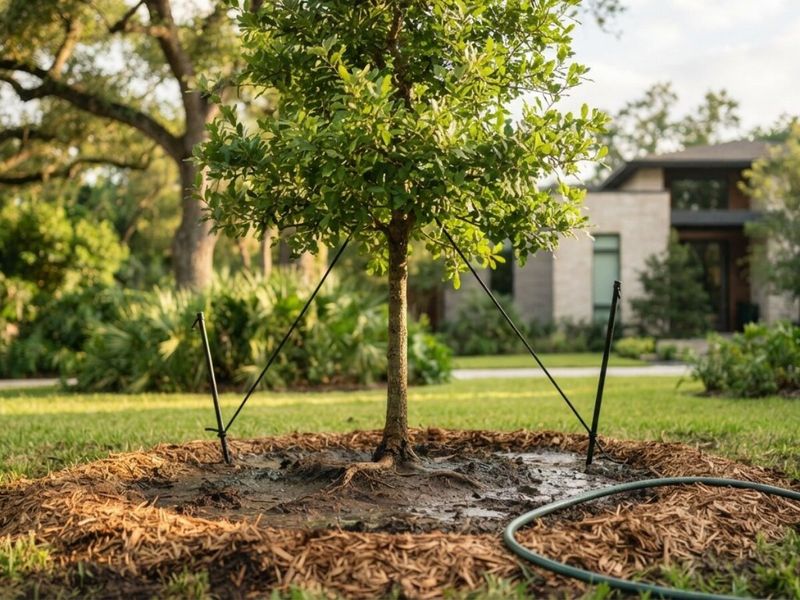
Drought tolerance is a trait of mature trees. A young oak with a small root system still needs steady care, so do not skip watering just because the species handles dry spells later.
Texas A&M lists its water needs as dry, but that describes an established tree.
For planting, Texas A&M AgriLife Extension recommends a wide, shallow hole. Leave the root flare, the flared base where trunk meets roots, visible at the surface.
Backfill with the original soil rather than a fancy mix.
Finish with a layer of organic mulch, keeping it pulled back from the trunk so bark stays dry. Mulch helps hold moisture and cools the soil, but piled against the trunk it invites trouble.
Next, check soil moisture before you water. Clay can stay saturated, and soggy roots are unhappy roots.
Poke a finger or trowel into the soil and water only when it feels dry a few inches down.
During the first seasons, give the tree consistent moisture, and follow any local water restrictions. A slow, deep soak beats frequent sprinkles.
Protect oaks from avoidable wounds
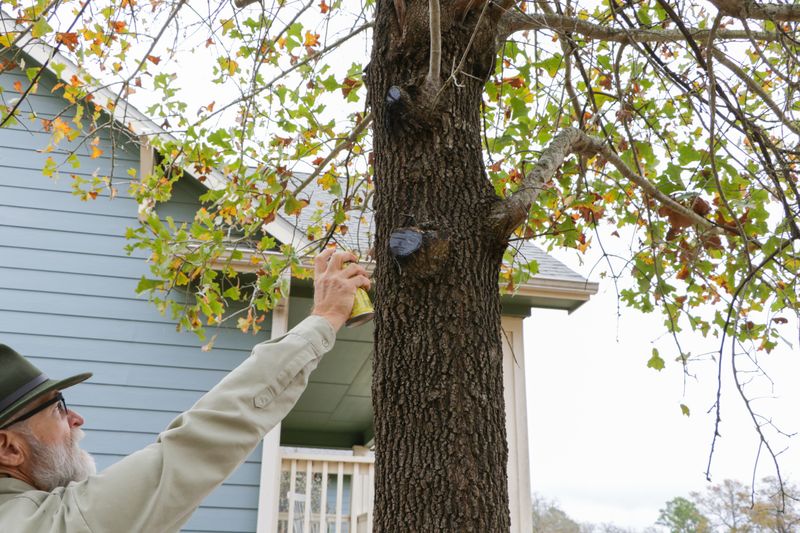
Oak wilt is a serious disease in Central Texas, and every red oak planting plan should account for it. The fungus can enter through fresh wounds, so prevention is mostly about timing and quick action.
The Texas Oak Wilt guidance is simple. Avoid pruning or wounding oaks from February through June when possible.
If a wound happens, paint it immediately, and that applies in any season.
Wounds are not only pruning cuts. A lawn mower nick on the trunk, a branch torn in a storm, or a stake driven into a root can all open the bark.
Plan ahead by keeping equipment away from the trunk and by scheduling any needed pruning outside the spring window.
Keep a small can of wound paint in the garage so you are not hunting for one when a limb breaks. Paint the cut surface right away, rather than waiting for the afternoon or the weekend.
This advice is about prevention, not a diagnosis of any one property. A little care around cuts is a low-cost habit that protects a tree you may enjoy for decades.
Know when early color may mean stress
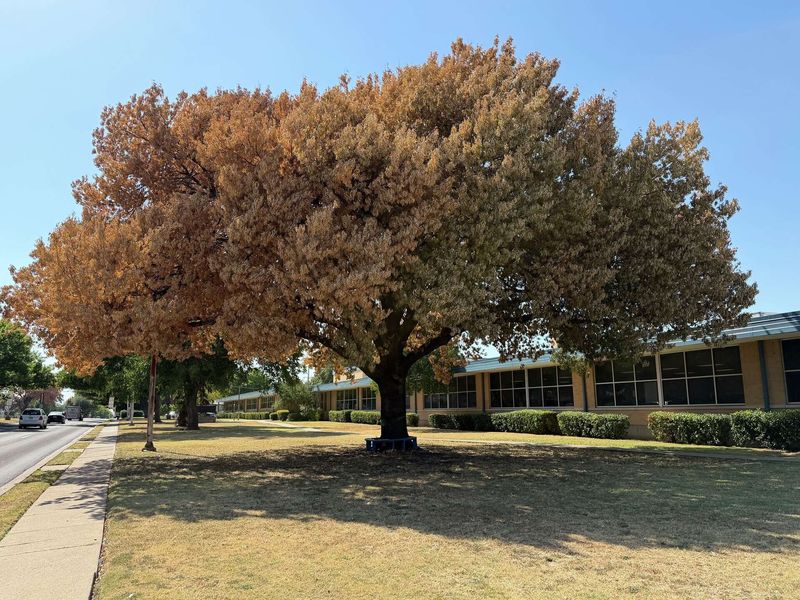
Not every color change is a good one. In the current 2026 season, Texas A&M Forest Service warned that drought and extreme heat across East and Central Texas can cause early yellowing, browning, scorch, and leaf drop.
That is different from a healthy seasonal display. A normal autumn change comes at the end of the growing season, as Texas A&M Forest Service autumn color guidance describes, and it follows cooling weather.
Stress color shows up early, often looks patchy or crispy, and may come with dropping leaves in warm weather.
Here is the tricky part. Appearance alone may not tell normal dormancy from damage.
A tree that looks fall-ready in September could simply be struggling.
So treat premature color as a signal to check on the tree, not as a successful fall show. Look at soil moisture, give a deep drink if conditions allow and local rules permit, and watch for dieback in the following season.
Match the tree to the space
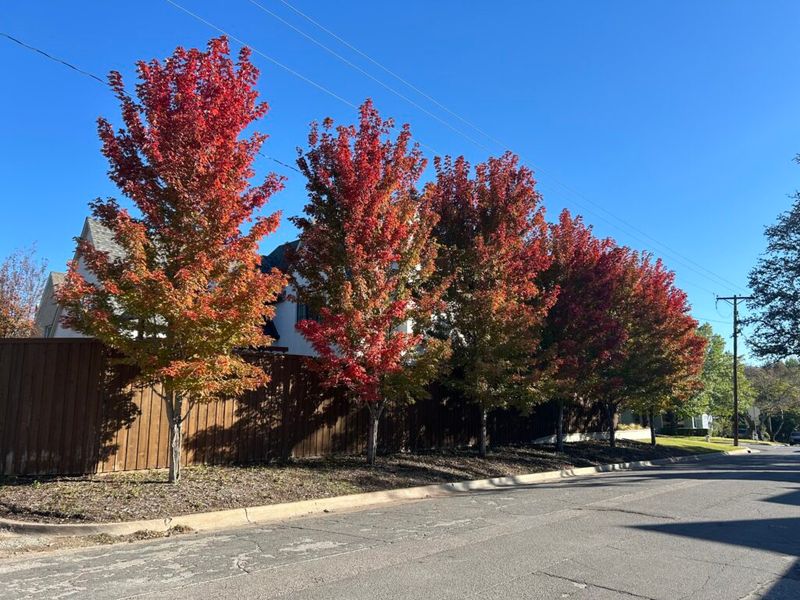
If your yard has the room, Texas red oak is a strong pick. It is a substantial native, about 35 feet on typical sites according to Texas A&M Forest Service, and it comes with an oak-care routine to follow.
Smaller lot? Flameleaf sumac is a compact native with vivid red or orange foliage.
It can sucker and form a colony, though the Wildflower Center says it is less likely to colonize aggressively than shining sumac. Give it a spot where spreading is welcome.
Shumard oak is another native with orange-to-deep-red color, listed in Texas A&M’s tree selector. Consider it a second red-color option, not an interchangeable guarantee.
Choose by space and shape: a broad shade tree, a thicket-forming accent, or a different oak. Color will vary by year in all three cases.
Plant for the tree you can host for decades, and the red will take care of itself.