
When the leaves drop and the garden goes quiet, a handful of tough little birds stay right in your yard all winter long. They need extra fuel to survive freezing nights, and the food you put out can make a real difference.
The trick is that each bird has a favorite, and a lot of popular seed mixes go mostly to waste. Here are seven year-round neighbors and the single feeder food that keeps each one coming back.
1. Black-capped Chickadee
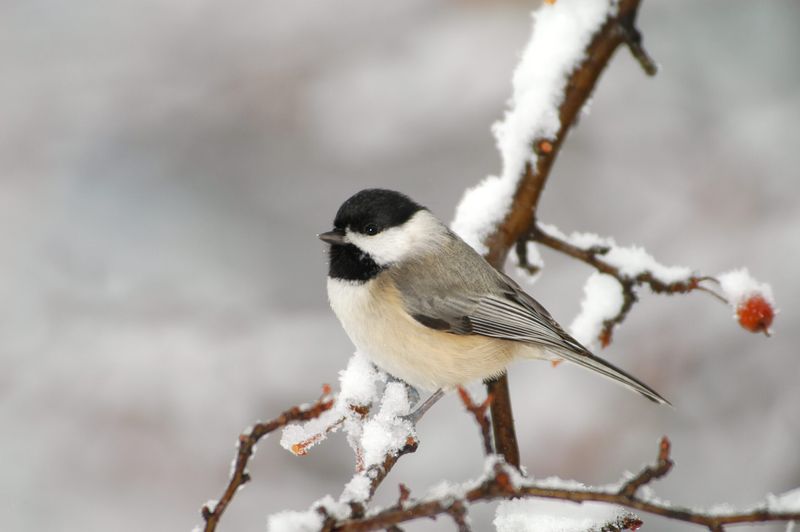
Picture a bird that weighs about as much as two quarters, yet survives nights well below zero. Chickadees pull this off by dropping their body temperature at night and burning through fat stored during the day.
That means every daytime meal really counts.
Their top pick is black oil sunflower seed. The thin shells crack open easily, and the seeds inside are packed with oil, which is exactly the high-calorie fuel a tiny body needs.
Striped sunflower works too, but the black oil kind gives more energy per bite.
Watch a chickadee for a minute and you will notice something funny. It grabs one seed, flies off to a branch, hammers it open, then comes right back for another.
Some of those seeds get tucked into bark crevices for later, and chickadees can remember thousands of hiding spots.
A simple tube or hopper feeder works fine, since these birds are bold and not picky about perches. Keep the feeder near shrubs or small trees so they have a quick place to dart for cover.
Fill it before a cold snap, and you will likely see a steady stream of black-and-white visitors all morning long.
2. Northern Cardinal
Nothing brightens a gray February morning like a flash of red against fresh snow. Northern cardinals do not migrate, so the same pair you saw nesting in summer is often the pair hanging around your yard in January.
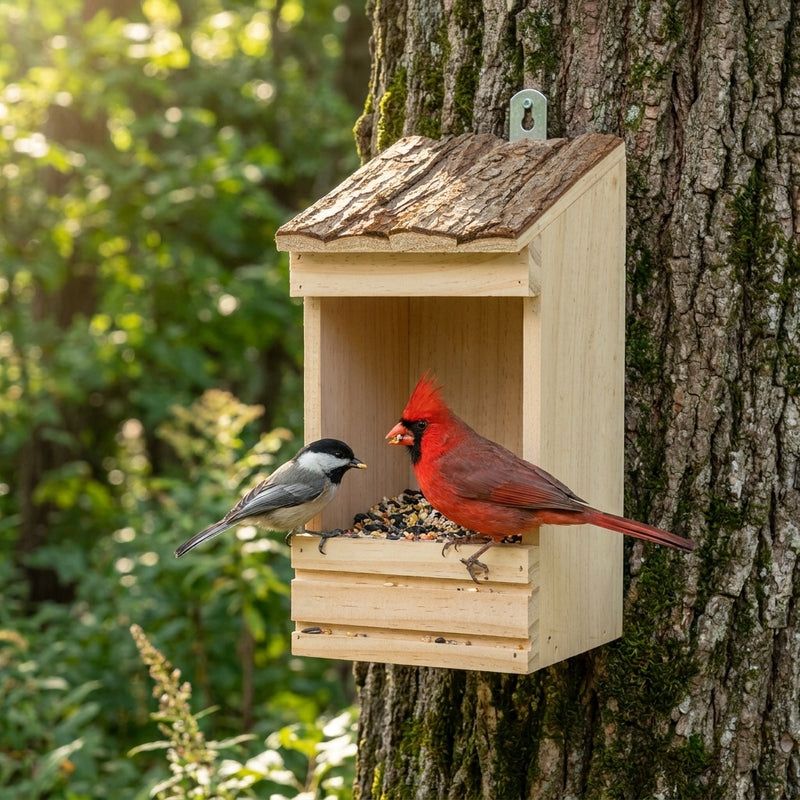
Here is the food that wins them over: safflower seed. Cardinals have thick, cone-shaped beaks built for crushing hard shells, and safflower is right in their wheelhouse.
Even better, squirrels and grackles usually turn their noses up at it, so more of it stays for the birds you actually want.
Feeder style matters with this species. Cardinals are a bit heavy and do not love clinging to skinny perches, so they prefer a platform feeder or a hopper with a wide ledge.
They also tend to show up early at dawn and again near dusk, when the light is low.
A small tip from many longtime bird watchers is to place the feeder close to dense shrubs like holly or juniper. Cardinals feel safer with a hiding spot nearby.
Over time you may notice the male feeding seeds to the female, a sweet courtship habit that often starts in late winter, well before spring arrives.
3. Downy Woodpecker
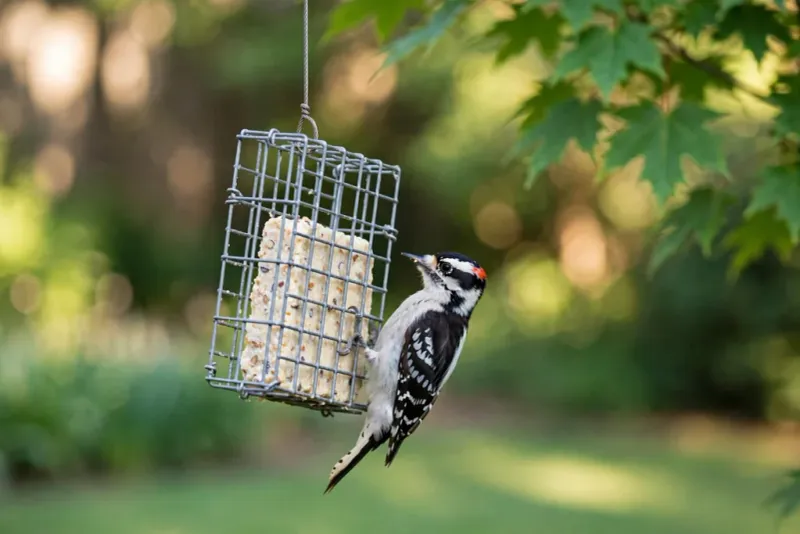
Ever heard a soft tapping in the dead of winter and wondered who was knocking? Odds are good it was a downy woodpecker, the smallest woodpecker in North America and one of the most common feeder guests.
Suet is the answer for this little drummer. In warmer months, downies dig insects out of tree bark, but those bugs are tough to find once the cold sets in.
A block of suet, which is rendered beef fat often mixed with seeds or peanuts, gives them that same rich, fatty energy.
Hang the suet in a wire cage feeder, ideally against a tree trunk or on a post. Downies love to cling and brace with their stiff tail feathers, just like they would on bark.
A cage with a tail prop at the bottom makes them even more comfortable.
Plain or no-melt suet doughs hold up well, though true suet is best when temperatures stay below freezing. If you spot a red patch on the back of the head, you are looking at a male.
Downies are also friendly with chickadees and nuthatches, so you might see them traveling together in small mixed flocks.
4. White-breasted Nuthatch
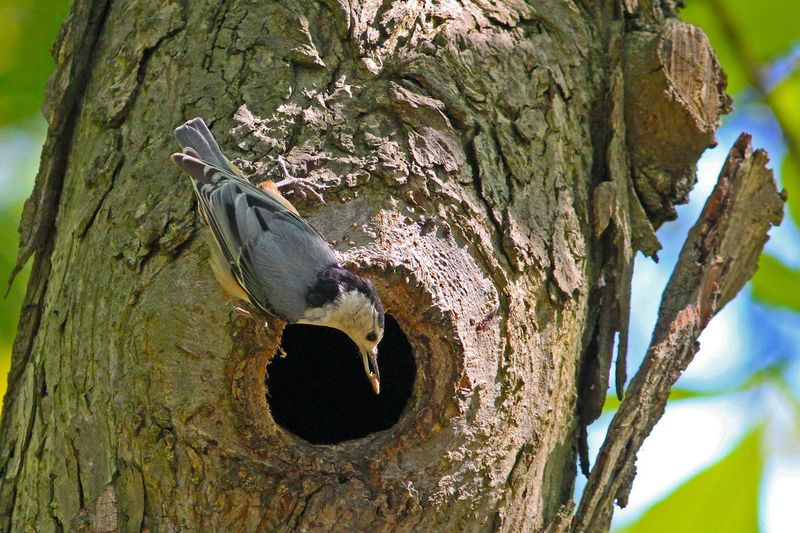
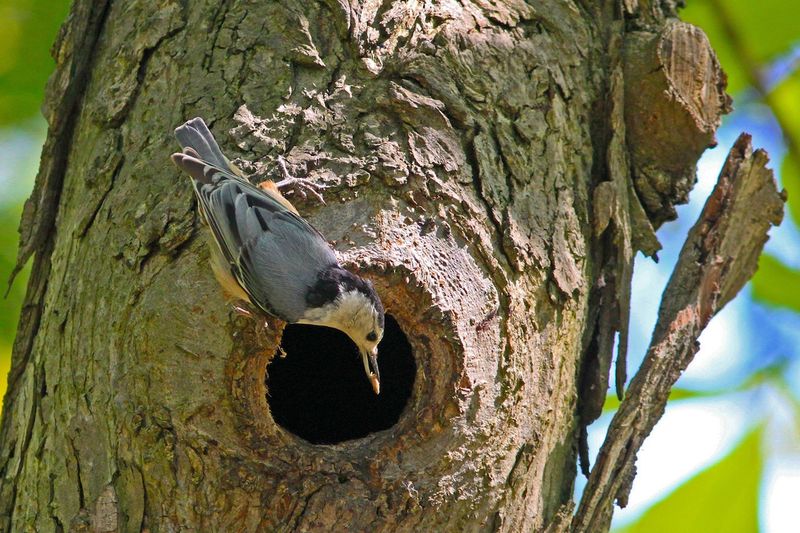
Upside down is just normal life for this bird. The white-breasted nuthatch walks headfirst down tree trunks, spotting insects and seeds that birds climbing upward tend to miss.
For your feeder, the winner is shelled peanuts. Nuthatches get their name from an old habit of wedging nuts into bark cracks and whacking them open with their sharp beaks, so peanuts feel right at home.
Offer them unsalted and unroasted in a mesh peanut feeder, or as chopped pieces on a tray.
Plan on seeing some sneaky behavior. A nuthatch will often grab a peanut and fly off to stash it under loose bark, then return again and again.
Some birders joke that their peanut supply disappears into the woods like a squirrel’s savings account.
Listen for a nasal yank-yank call, which sounds a bit like a tiny toy horn. That noise is often your first clue that one has arrived.
Nuthatches usually stay in pairs year-round and defend the same patch of woods, so once a pair discovers your peanuts, you may enjoy their company for many winters. Keep the feeder filled steadily, because they quickly learn where reliable food can be found.
5. American Goldfinch
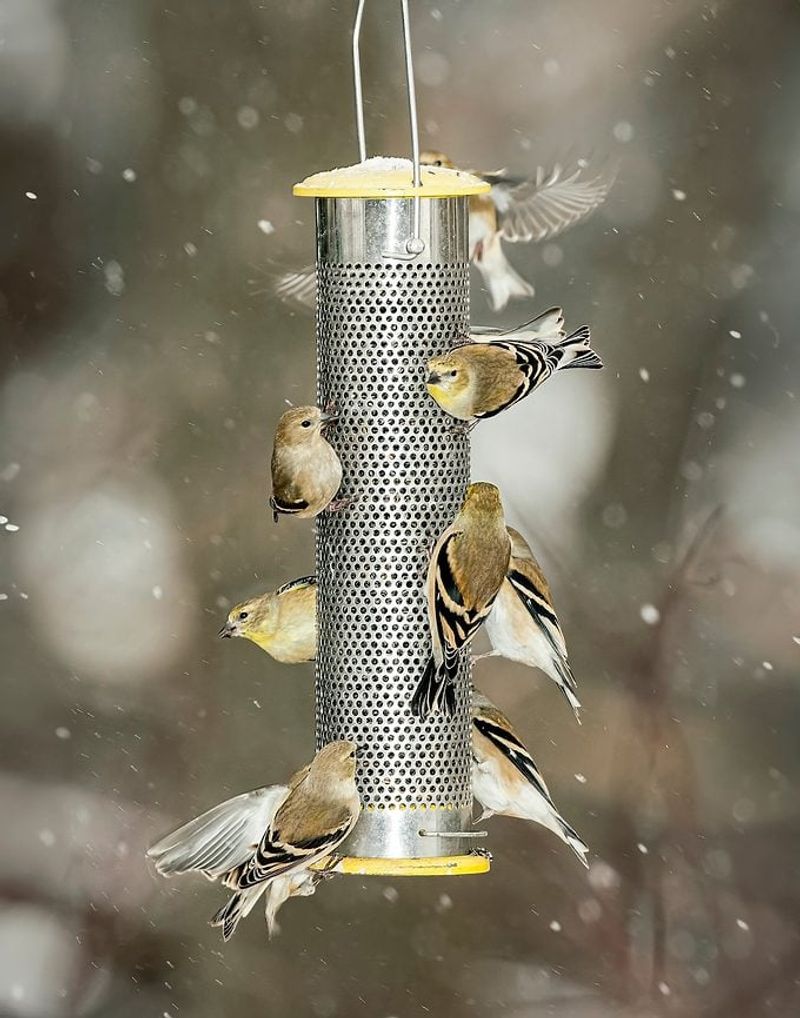
Plenty of people think their goldfinches leave in fall, but many never go anywhere. They simply swap their sunny yellow feathers for a dull olive-brown coat, which makes them blend in and easy to overlook.
Nyjer seed, often sold as thistle, is the food that keeps them busy. The seeds are tiny, black, and full of oil, and a goldfinch’s small, pointed beak is perfect for plucking them out.
Most other birds ignore nyjer, so it rarely goes to waste on uninvited guests.
Use a special finch feeder with tiny ports or a soft mesh sock. Goldfinches happily hang sideways or even upside down to feed, and a sock can host a whole crowd at once.
Seeing six or eight birds clinging to one sock is a fun winter sight.
One catch is freshness. Nyjer can dry out or grow moldy, and finches will skip stale seed entirely.
Buy smaller bags, store them somewhere cool and dry, and shake out old seed every couple of weeks. Do that, and by early spring you will get a front-row seat as the males slowly turn bright gold again, feather by feather.
6. Dark-eyed Junco
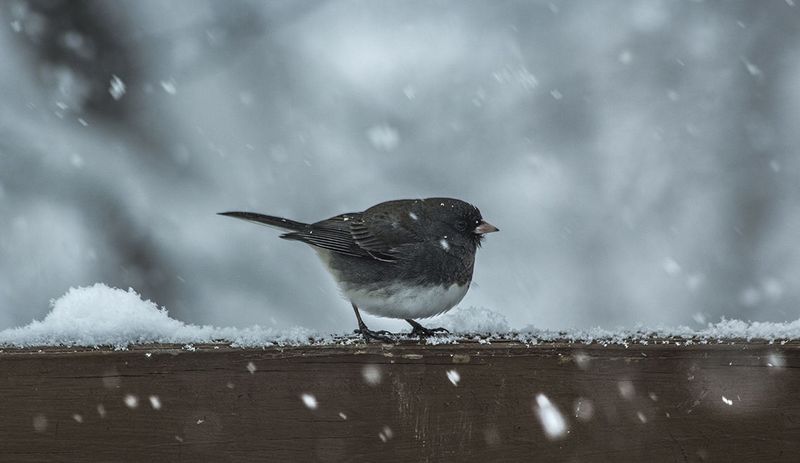
Old-timers call them snowbirds, because juncos often seem to arrive right along with the first flakes. These slate-gray sparrows breed up north or in the mountains, then spread across much of the country to spend winter in backyards.
Skip the hanging feeders for this one. Juncos are ground feeders, and their favorite treat is white proso millet scattered low.
They hop around, kick at the snow, and peck up seeds the way chickens scratch in a barnyard.
You can toss millet directly on the ground, but a low platform feeder keeps it cleaner and drier. Place it near brush piles or shrubs, since juncos like a quick escape route from hawks and cats.
A small pile of pruned branches from your garden makes a great shelter.
Watch closely when they fly off, and you will notice bright white outer tail feathers flashing like little signals. That flash may help them keep track of each other in a flock.
Juncos usually travel in groups of a dozen or more, so one bag of millet can bring a lively crowd. They often hang around until spring warms up, then quietly head back north to nest.
7. Blue Jay
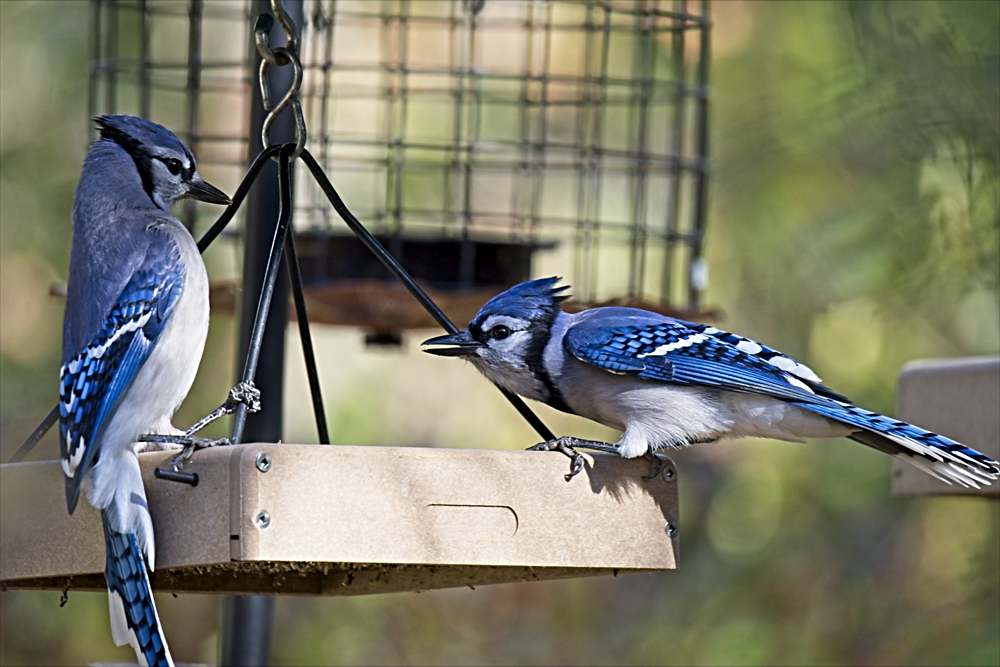
Loud, bossy, and a little dramatic, the blue jay is the backyard personality you hear long before you see it. Many jays stay put through winter, especially where oak trees and good food are easy to find.
Whole peanuts in the shell are the jackpot. A blue jay can stuff several into its throat pouch at once, then fly off to bury them around the neighborhood.
Scientists even credit jays with helping oak forests spread, since forgotten acorns sometimes sprout into new trees.
Set out a handful of in-shell peanuts on a sturdy platform feeder or a flat railing. Jays like room to land and grab, and they get frustrated at small tube feeders.
Some people use a wreath-shaped peanut feeder, which turns snack time into a little puzzle.
Fair warning, jays will sometimes chase smaller birds away. Giving them their own peanut station a short distance from your other feeders helps keep the peace.
Jays are also clever mimics and can imitate the scream of a red-shouldered hawk, possibly to scare off rivals. With a steady peanut supply, you may find a whole family showing up each morning, squawking for breakfast.