
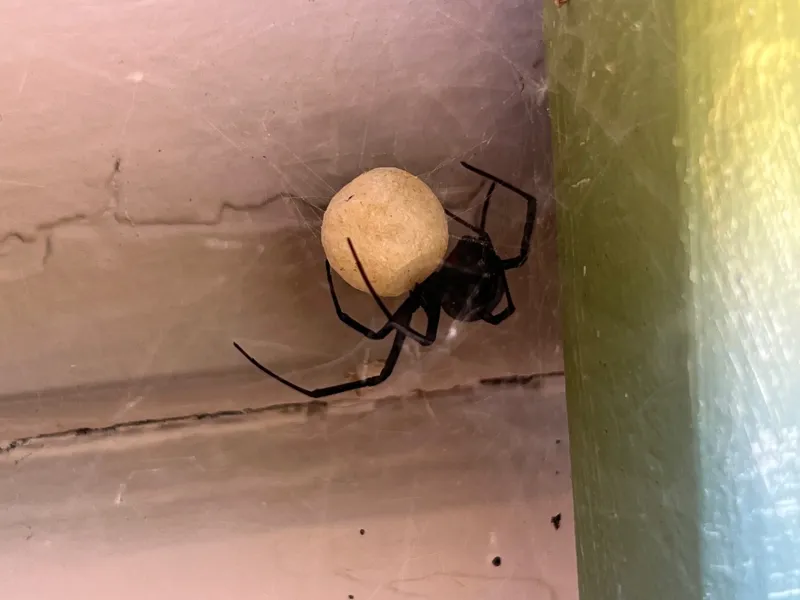
Yes, a venomous spider can be tucked away in your California garage or garden shed, and it is the Western black widow. These spiders like quiet, sheltered corners, which is exactly what many storage spaces offer.
They are shy and usually stay out of sight, so a calm look around before you reach in goes a long way. Here is how to spot the clues and clear the space safely.
Sheltered spaces can hold black widows
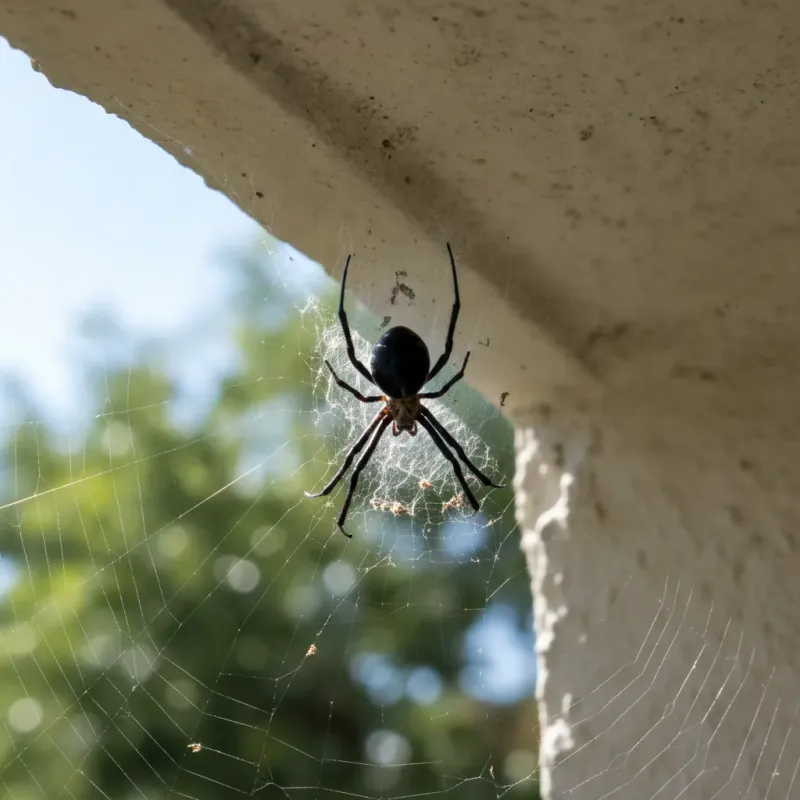
Western black widows are venomous spiders that can live in sheltered, undisturbed places around California homes. That includes garages, sheds, piles of clutter, and spots under some pots.
UC IPM guidance on widow spiders describes these quiet corners as places where they commonly nest.
Here is the honest wrinkle in the headline. California guidance supports these spots as possible habitat, but it does not establish that cooling fall nights push black widows into them.
Nobody has shown a fall move into sheds and garages, so treat that idea as unproven. The spiders can be there in any season.
Black widows generally live outdoors and out of sight, according to UC IPM’s general spider page. They can turn up in garages and other sheltered places, but that is not the same as invading your living spaces.
Your kitchen and bedrooms are not where this story plays out.
The takeaway is simple and not scary. Before you reach into a stack of pots, a cardboard box, or a dusty corner, take a moment to look first.
That habit works in October, in April, and every month between.
Where to look before moving things
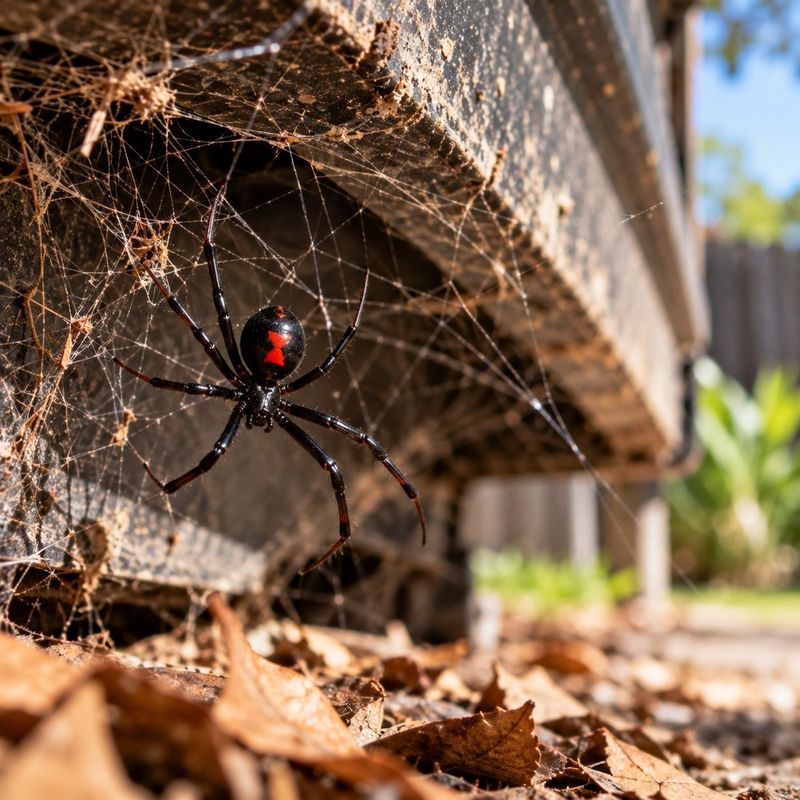
Start with the places a spider would find cozy. Western black widows commonly nest outdoors in holes, crevices, and clutter, and the same kinds of spots show up in a typical shed.
Think of gaps behind shelves, the corners of boxes, and piles of old supplies that have not moved in months.
Pots deserve a second glance. The undersides of pots with curled lips can make a sheltered nook, so stacked nursery containers and planters are worth checking before you pull them apart.
In a garage, look near doors, vents, and other openings where insects may pass. Insects are food, so a spider that sets up a web near a busy entry has a steady supply of meals.
UC IPM’s widow spider guidance points to these same spots.
Widows tend to be nocturnal and use a retreat connected to their web. That means a spider may be tucked into a hidden pocket during the day, even when the web looks empty.
A flashlight helps a lot, since the dark crevice is exactly where you will want to see.
For now, this is just a map of where to look. The handling and cleanup steps come later, so a quick scan with your eyes is all you need at this stage.
A web is a clue, not an identification
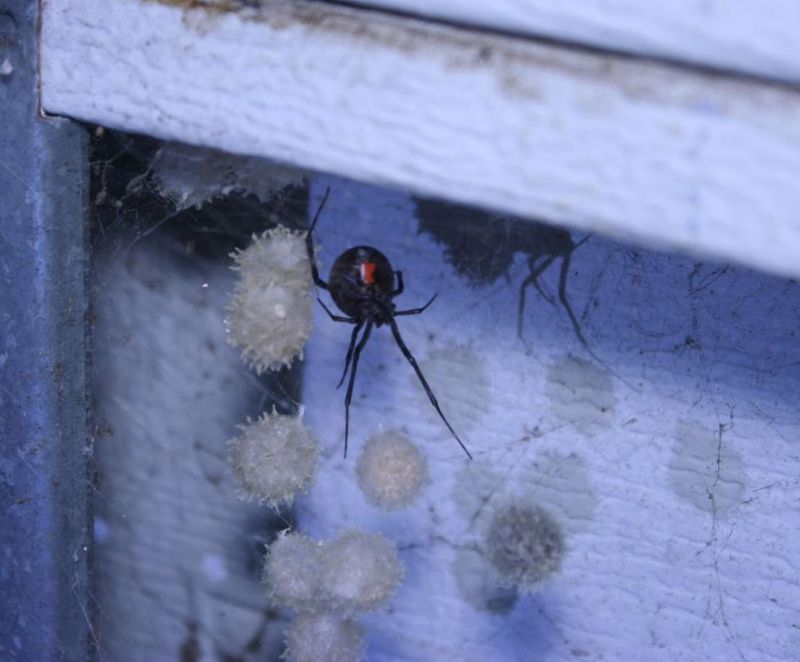
A messy web tells you to look closer, nothing more. Other spiders, including brown widows, can build irregular webs too, so a tangle alone proves nothing.
A female Western black widow is typically shiny black with a rounded abdomen. On her underside she usually has a red marking, often shaped like an hourglass.
You may not see that mark clearly, since the spider often sits with her belly turned away.
Her web is an irregular mesh of tough strands, according to UC IPM. The egg sac is generally yellowish, teardrop-shaped, and clearly defined.
Brown widows are the other lookalike to know. UC Riverside spider researchers report that they have gained a foothold in parts of Southern California.
Their egg sacs are often spiky, which can help tell them apart from the smoother black widow sac.
Use these details as hints, not a final answer. Keep your distance from any sac or spider, and do not try to touch either one just to get a better look.
A photo from a safe distance is plenty.
Inspect before you reach or lift
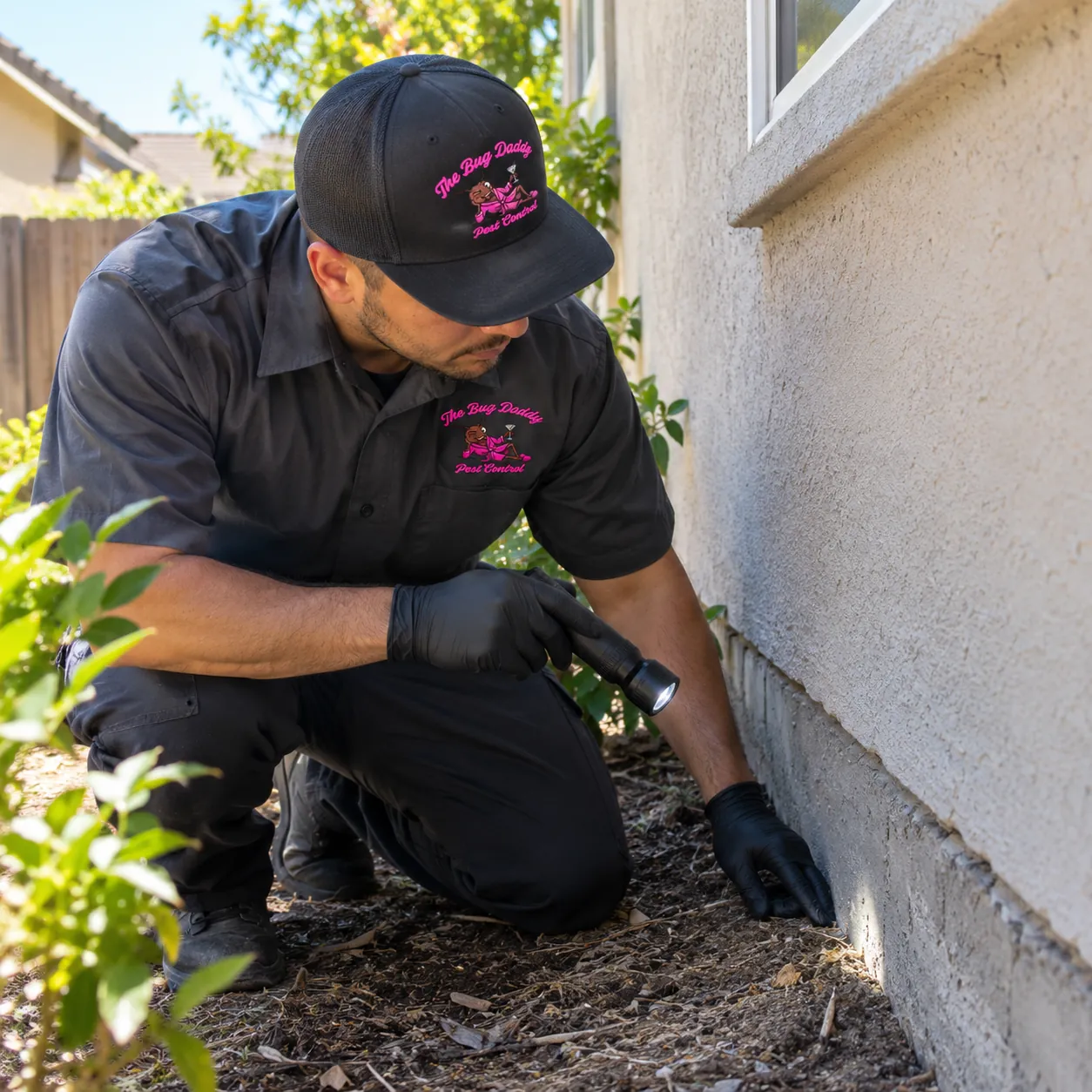
Slow down for a minute before you grab anything. Look over the area first, and keep bare hands out of places you cannot see.
Reaching blindly into a box, pot stack, or dark corner is the habit to drop.
Wear gloves when you handle clutter or move stored items, as UC IPM advises. Gloves that have sat on a shelf deserve the same care, so give them a good shake before you put them on.
The same goes for stored clothing, boots, and shoes.
Why so much caution around a spider that prefers to hide? Black widows are generally shy, and Poison Control explains that bites tend to happen when a spider is disturbed or trapped against skin.
A glove that gets squeezed or a hand pushed into a crevice is the usual setup.
If you spot a spider you think might be a widow, step back. Do not try to capture or handle it.
Leave it alone for the moment and plan to clear the area using the methods in the next section.
Clear webs without handling spiders

Cleanup does not require touching a spider. UC IPM recommends sweeping or vacuuming webs and spiders, which keeps your hands well away from the action.
A broom or a vacuum hose gives you reach and distance.
Work slowly and wear gloves, since you may disturb hidden corners as you go. A long hose attachment makes it easier to reach behind shelves and into the gaps where webs tend to hide.
If you vacuum, UC San Diego’s pest guidance says to dispose of the vacuum bag outdoors, or to open it outside with extreme care. That keeps any captured spider from escaping back into your garage.
There is a real difference between removing a web with a tool and picking up a spider or an egg sac. The first is the plan.
The second is not part of it. Stick to the broom or the hose, and skip any extra steps that no source supports.
After the sweep, look the area over again with a flashlight. If a web returns later, you will notice it sooner, and you can repeat the same simple routine.
Make storage areas easier to inspect

A tidy space is much easier to check than a crowded one. UC IPM suggests cleaning up clutter, and where possible, keeping stored boxes off the floor and away from walls.
With fewer dark pockets, there are fewer spots for a spider to settle, and fewer for you to wonder about.
Shelving does a lot of the work here. Set bins on racks instead of stacking them on the concrete, and leave a small gap behind them.
When you can see around and under your things, a quick scan takes seconds.
Sort through old cardboard, empty pots, and forgotten piles at a time that suits you. Do it in daylight with gloves on, and use the inspection habits from earlier.
Even a half-hour session in a corner makes a difference.
What about spraying? UC IPM notes that insecticides generally do not provide long-term control, so routine spraying is not the answer.
No arrangement guarantees a spider-free shed. The aim is a space you can read at a glance, so surprises are rare.
Get medical guidance for a suspected bite
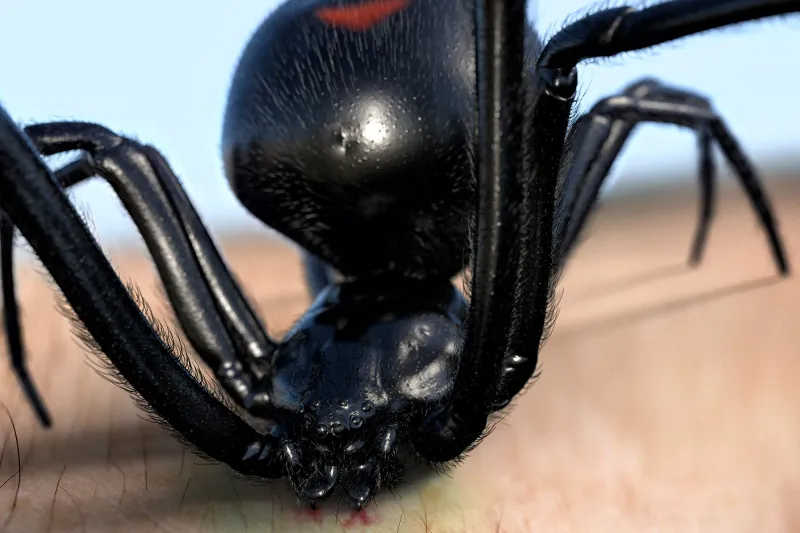
If you think a black widow may have bitten you, get medical advice. Wash the area with soap and water, then call Poison Control at 1-800-222-1222 or use its online tool for guidance.
Poison Control’s black widow page explains the steps and notes that deaths are very rare.
Severe or uncontrolled symptoms call for urgent evaluation. Do not wait it out if you feel very unwell after a suspected bite.
Keep in mind that a bite-like mark on its own does not tell you a black widow caused it. Many things can leave a red spot on skin, so the mark is not an identification.
A professional can help sort out what is going on.
The best plan is still the quiet one. A flashlight, a pair of gloves, and a few seconds of looking beat any reach into the dark.