
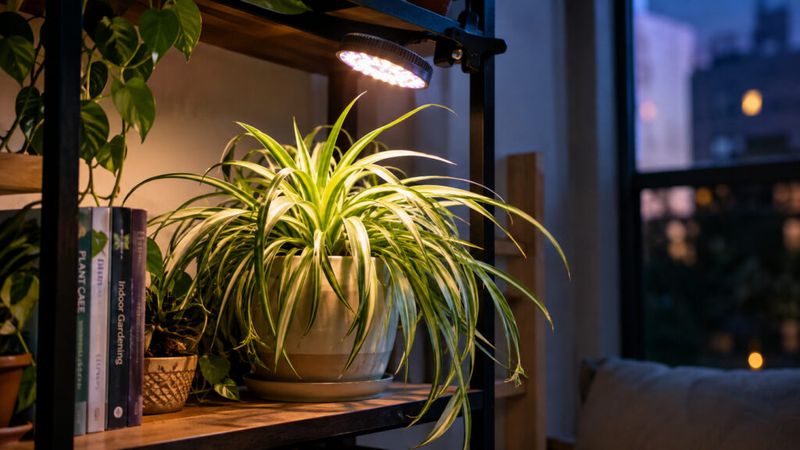
Spider plants have a reputation for being nearly impossible to kill, so it stings when yours starts looking brown, limp, or pale. The good news is that these tough plants usually tell you exactly what is wrong through their leaves.
Most problems come from small habits like watering, light, or the pot itself. Read through these 11 common reasons, find the one that matches your plant, and you could have it bouncing back by the weekend.
1. Overwatering and Soggy Roots
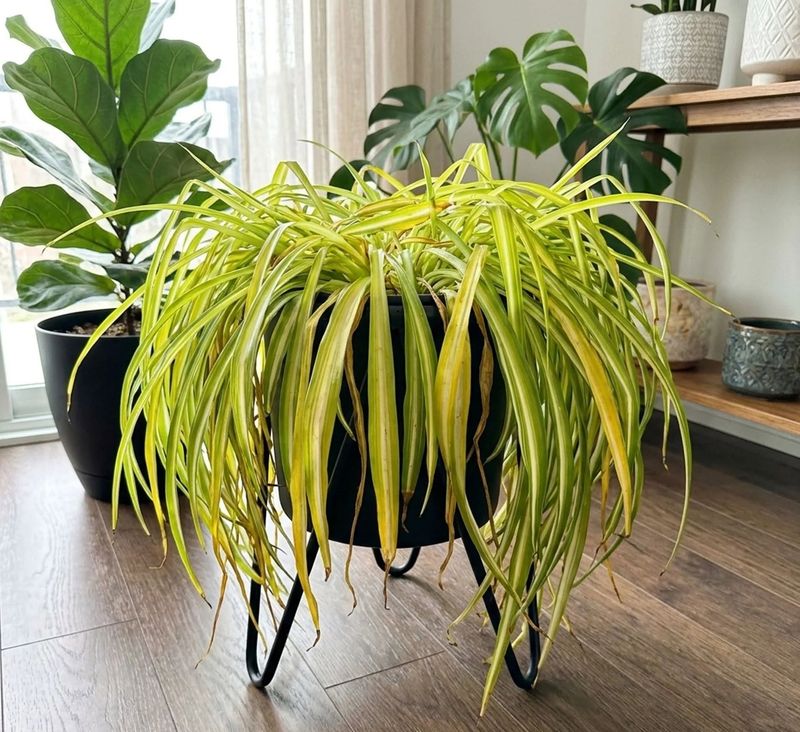
Love can drown a plant. Plenty of caring owners water their spider plant every few days, and the plant quietly suffers for it.
Its thick, fleshy roots store water like tiny tanks, so they rarely need a refill.
When soil stays wet, those roots run out of air and start to rot. You might notice mushy leaf bases, yellow leaves that feel soft, or a sour smell rising from the pot.
Gently slide the plant out and look at the roots. Healthy ones are white and firm, while rotten ones are brown and slimy.
The fix is simple and fast. Snip off any rotten roots with clean scissors, then repot into fresh, dry potting mix.
Going forward, only water when the top inch or two of soil feels dry to your finger.
For most homes, that means watering about once a week in summer and every two weeks in winter. A cheap moisture meter can take the guessing out of it if you tend to forget.
Once you stop the flood, new green growth usually appears within a few weeks, and your plant will look far happier for the break.
2. Underwatering for Too Long
Picture a busy month. Work gets hectic, a trip comes up, and the spider plant on the shelf gets forgotten.
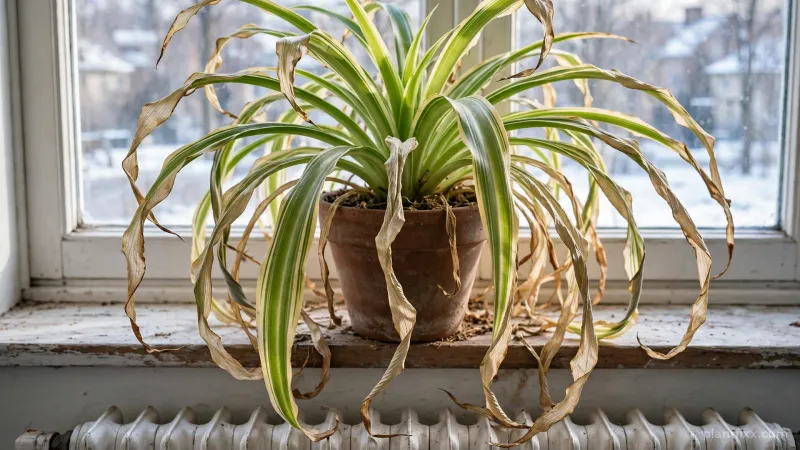
Weeks later, the leaves look pale, limp, and curled inward like they are trying to save every drop.
Spider plants can handle a short dry spell thanks to their water-storing roots. Even so, they have limits.
When soil stays bone dry for too long, the leaves lose their shine, tips crisp up, and the whole plant can flop over the side of the pot.
Bringing it back takes about five minutes. Set the pot in a sink or bowl of room temperature water and let it soak from the bottom for 20 to 30 minutes.
Very dry soil can repel water poured from the top, so bottom soaking helps it fully rehydrate.
After that, let the extra water drain away completely. Then set a simple reminder on your phone to check the soil weekly.
A dry plant usually perks up within a day or two, though crispy leaf tips will not turn green again. You can trim those off for a cleaner look while the fresh growth fills in.
3. Fluoride and Chlorine in Tap Water
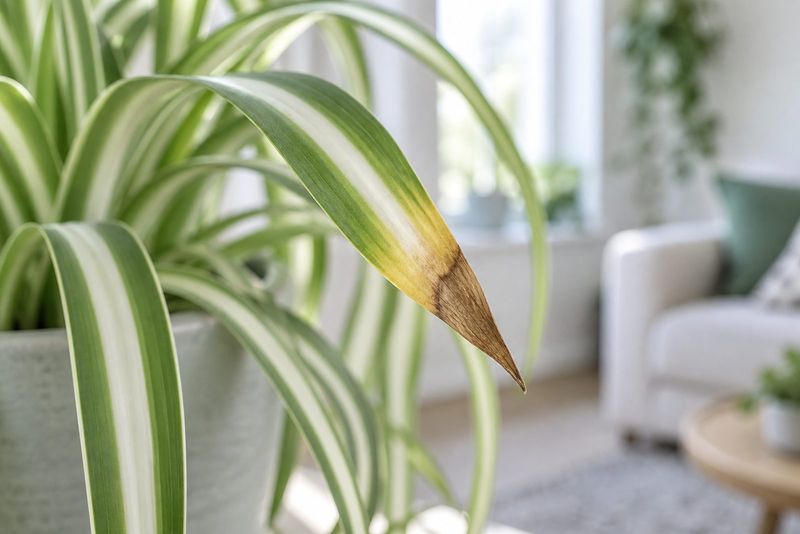
Brown tips are the classic spider plant complaint, and the culprit often comes straight from your kitchen faucet. Many city water systems add fluoride and chlorine, which are safe for people but tough on these plants.
Spider plants are unusually sensitive to fluoride. It builds up in the leaves and collects at the very tips, where it slowly burns the tissue brown.
You can water perfectly and still see this damage if your tap water is the problem.
Here is an easy switch. Collect rainwater in a bucket outside, or use distilled water from the grocery store.
Filtered water from a pitcher can help too, though not all filters remove fluoride.
Leaving tap water out overnight lets some chlorine escape, but fluoride stays behind. So if brown tips keep showing up, a different water source is the real answer.
Fun fact: spider plants are so reactive to fluoride that scientists have used them to study air and water pollution. Once you change water, older brown tips will stay, but new leaves should grow in clean and green.
Trim the old tips at an angle to keep the natural pointed shape.
4. Too Much Direct Sun
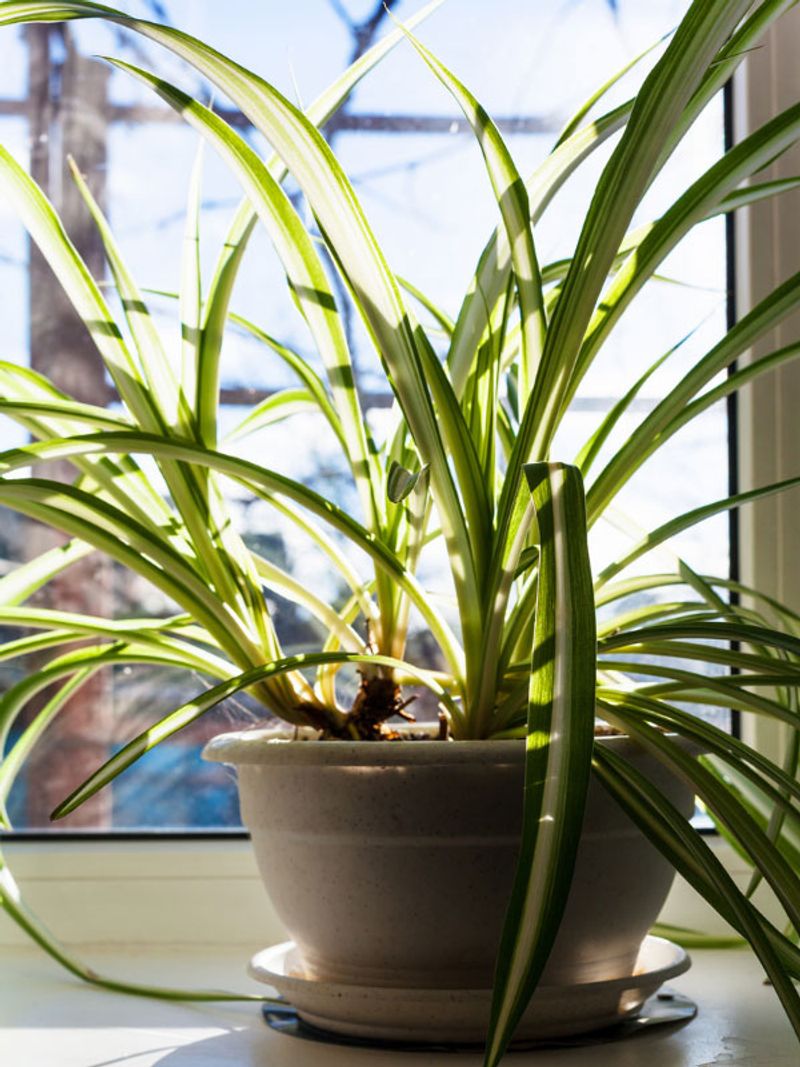
A sunny windowsill seems like a treat, right? For a spider plant, harsh afternoon sun can feel more like a heat lamp.
In the wild, these plants grow on the forest floor of southern Africa, shaded by taller trees.
Too much direct light shows up as scorched spots, faded or washed-out leaves, and brown streaks running along the edges. Variegated types with white stripes burn even faster because the white parts have less protection.
Moving the plant takes seconds. Shift it a few feet back from a south or west window, or hang a sheer curtain to soften the light.
East-facing windows are often ideal because the morning sun is gentle.
Outdoor spider plants on porches need care too. A shady spot under an overhang works much better than an open deck baking in summer heat.
Bright, indirect light is the sweet spot. That means a room full of light where the sun does not hit the leaves directly for hours.
Burned spots will not heal, but you can snip off the worst leaves. Within a month in a better location, fresh leaves should come in with rich color and crisp stripes.
5. Not Enough Light
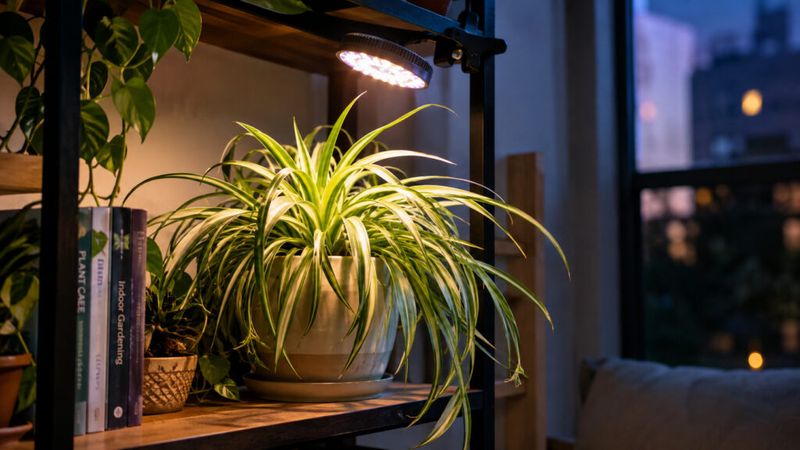
Dark corners are where spider plants go to fade away slowly. They may survive there for months, which fools people into thinking all is well, but the plant is actually starving.
Plants make food from light. Without enough of it, a spider plant grows thin, floppy leaves and loses the bright white or cream stripes that make it so pretty.
Growth slows to a crawl, and it almost never sends out those charming baby plantlets.
So grab the pot and walk it toward a window. A spot within a few feet of a bright east or north window usually works wonders.
If your home is naturally dim, a small LED grow light on a timer for 12 hours a day can fill the gap.
Bathrooms and offices with no windows are common trouble spots. A plant there might need a weekly vacation near a brighter window, or a full move.
Give it a couple of weeks after the change. You should see stronger leaves standing upright and bolder stripes returning.
Light is the fuel behind those dangling babies, so a brighter home often means a plant that finally starts multiplying again.
6. A Root-Bound Pot
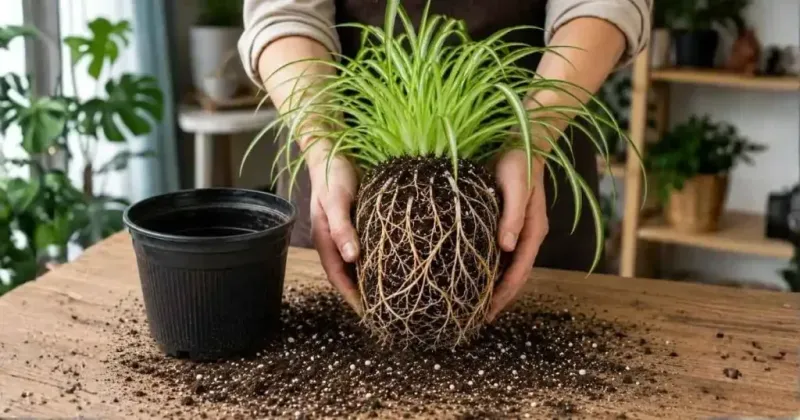
Ever seen a pot crack or bulge for no clear reason? A crowded spider plant can do that.
Those fat, white roots keep growing until they fill every inch of space, then start pushing against the walls.
Signs of a root-bound plant include water running straight through without soaking in, roots poking out of the drainage holes, and leaves that yellow even when you water correctly. The soil has simply been replaced by roots, so there is nothing left to hold moisture or food.
Repotting is a quick weekend job. Choose a new pot just one or two inches wider, with good drainage holes.
Loosen the roots gently with your fingers, trim any dead ones, and settle the plant into fresh potting mix at the same depth.
Interestingly, spider plants like being a little snug. A slightly tight pot actually encourages them to make babies.
So avoid jumping to a huge container, which holds extra wet soil and can lead to rot.
Most spider plants need repotting every one to two years. You can also divide a big clump into two or three smaller plants and share the extras with friends.
7. Fertilizer Burn and Salt Buildup
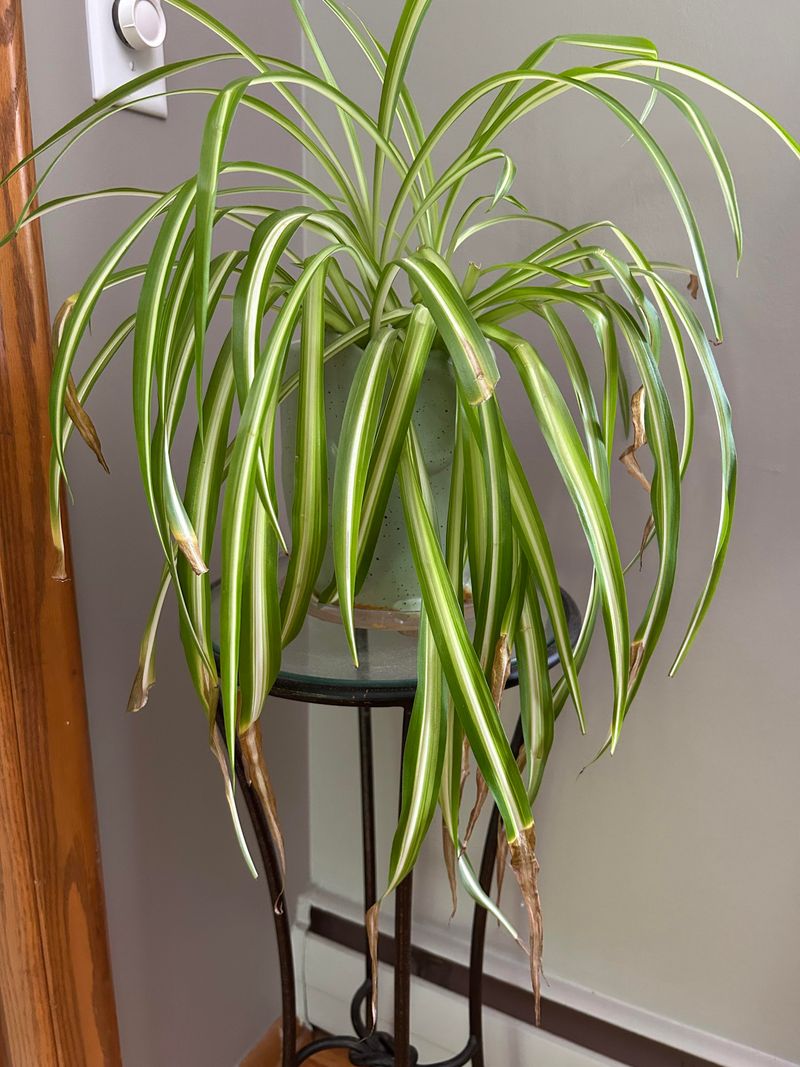
More food does not mean more growth. A lot of plant owners figure a little extra fertilizer will speed things up, but spider plants are light eaters that react badly to too much.
Excess fertilizer leaves salts behind in the soil. Over time, you may spot a white, crusty layer on the soil surface or around the pot rim.
These salts pull moisture away from the roots, causing brown tips, burnt edges, and droopy leaves.
Flushing the soil fixes it fast. Take the plant to a sink or bathtub and slowly run lukewarm water through the pot for a few minutes.
Let it drain fully. This washes out the built-up salts like rinsing a dirty sponge.
Scrape off any crusty white layer from the top of the soil. If the pot is clay, scrub the rim with a damp brush too.
Afterward, feed only during spring and summer, using a balanced liquid fertilizer mixed at half strength once a month. Skip feeding completely in fall and winter when growth slows down.
Your plant will be greener and steadier, and you will save money on fertilizer as a nice bonus.
8. Cold Drafts and Chilly Windows
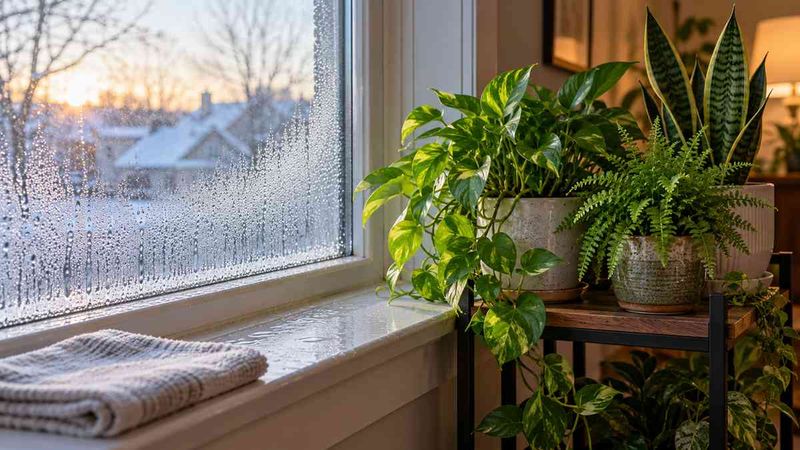
Winter sneaks up on houseplants. A spider plant that thrived all summer can suddenly look sad once the weather turns, especially if it sits near a drafty door or touches cold window glass.
These plants come from warm climates and prefer temperatures between 60 and 80 degrees. Anything below about 50 degrees can stress them.
Cold damage looks like dark, watery patches on leaves, limp foliage, or leaves that turn brown and collapse.
The fix takes about two minutes. Pull the pot a few inches away from windows on frosty nights so leaves do not touch the glass.
Move it away from exterior doors that open often, and keep it clear of air conditioning vents in summer too.
If your spider plant spends summer on the porch, bring it inside before nighttime temperatures dip into the 50s. That is the same timing many people use for geraniums and other beloved porch plants.
Heat can cause trouble as well, so avoid parking it right on top of a radiator. A steady, comfortable room is what it craves.
Snip off any mushy, cold-damaged leaves, and healthy new growth will replace them once things warm up.
9. Dry Indoor Air
Turn on the furnace, and the air in your home can become as dry as a desert. Spider plants notice right away, even if you do not.
Low humidity pulls moisture out through the leaves faster than roots can replace it. The result is brown, crispy tips that slowly creep down each leaf.
This happens most in winter, when heaters run all day, and in dry western regions year round.
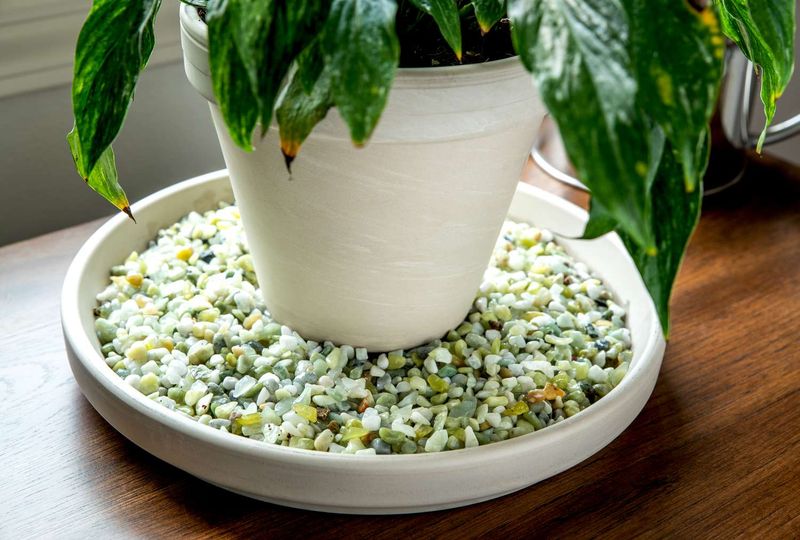
Luckily, raising humidity is easy and cheap. Fill a shallow tray with pebbles and water, then set the pot on top so it sits above the waterline.
As the water evaporates, it creates a little cloud of moisture around the leaves.
Grouping plants together also helps, since they release moisture and share it. A small room humidifier works even better and is nice for your skin too.
Bathrooms with a bright window make a cozy home for spider plants, thanks to the steam from showers. Misting the leaves feels helpful, but the effect only lasts a few minutes, so a tray or humidifier is more reliable.
Once the air gets friendlier, those crispy tips should stop spreading on fresh growth.
10. Hidden Pests
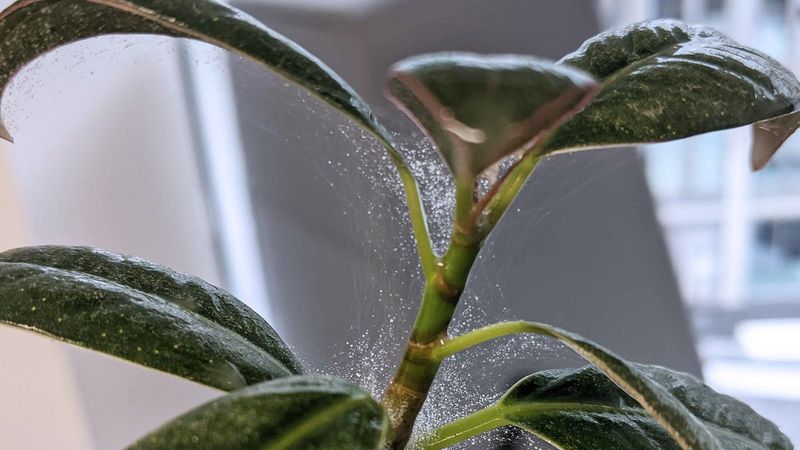
Tiny invaders love to hide where you never look. Spider mites, mealybugs, aphids, and scale can all settle on spider plants, especially when the air is dry and the plant is already stressed.
Flip a few leaves over and inspect them closely. Spider mites leave fine webbing and tiny speckled dots.
Mealybugs look like little bits of white cotton tucked where leaves meet. Scale appears as small brown bumps that stick tight, and aphids cluster on new growth.
Start with a quick shower. Rinse the whole plant in a sink or tub to knock pests off.
For mealybugs and scale, dab them with a cotton swab dipped in rubbing alcohol.
Next, spray the leaves with insecticidal soap or neem oil, covering both the tops and undersides. Repeat every five to seven days for a few weeks, since eggs can hatch after the first round.
Keep the infected plant away from your other houseplants until it is clear. Bugs spread easily, and a single plant can share them across a whole windowsill.
Checking leaves once a week while watering is the simplest way to catch trouble early, before it turns into a real infestation.
11. Poor Drainage and Heavy Soil
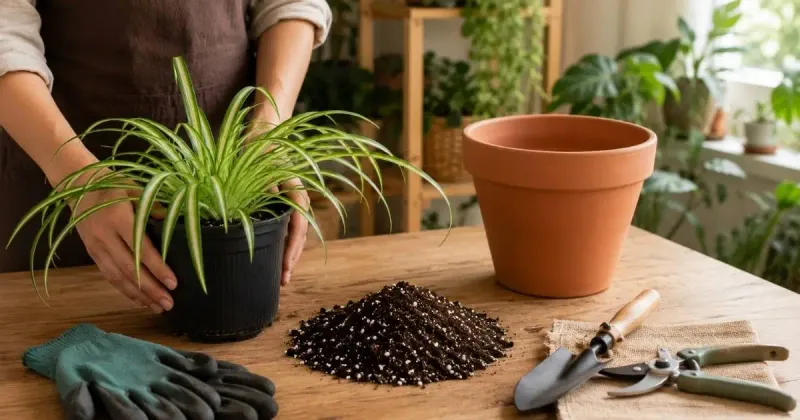
That beautiful pot you bought might be the real villain. Many decorative containers have no hole in the bottom, which turns every watering into a slow-motion swamp.
Without drainage, extra water pools at the base where you cannot see it. Roots sit in it day after day and start to rot, even if the top soil feels dry.
Heavy garden soil or old, packed potting mix causes the same trouble because it holds water and squeezes out air.
Here is a quick solution. Keep the spider plant in a plain plastic nursery pot with holes, then slip that inside the decorative pot.
After watering, lift it out, let it drain, and set it back. You get the pretty look without soggy roots.
For soil, use a light indoor potting mix and stir in a handful of perlite to keep it fluffy. Never use dirt from the backyard, which compacts badly in containers.
Empty saucers after watering too, so the pot is not soaking in a puddle. These small changes take minutes, but they protect your plant for years and keep its roots breathing easily.