
When the furnace kicks on in winter, the air inside your home can get as dry as a desert, and the short days leave rooms dim. Many houseplants sulk, drop leaves, or give up completely.
The good news is that some plants actually handle these tough conditions with ease. Here are twelve tough, good-looking picks that can keep your home green until spring.
1. Snake Plant
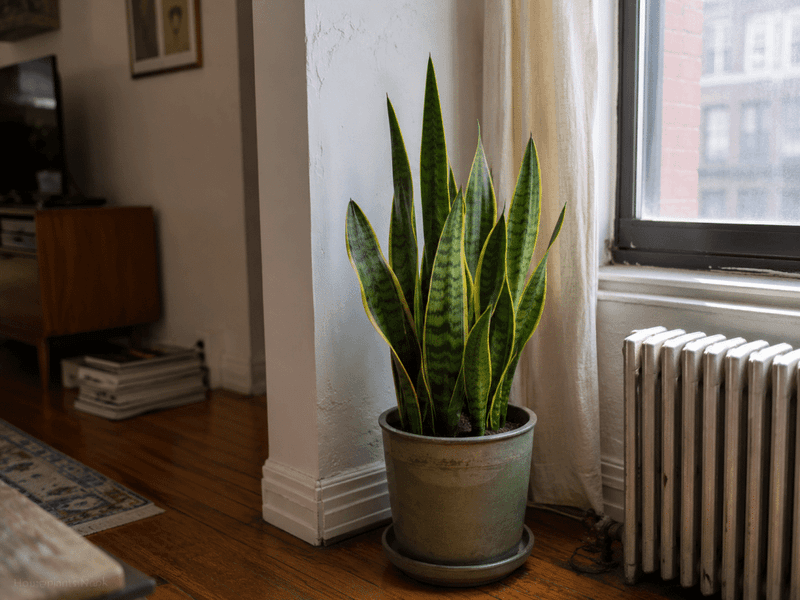
Picture a plant that shrugs off a forgotten watering, a dark hallway, and a blasting heater all in the same week. That is the snake plant, and it has earned its spot at the top of this list.
Its stiff, sword-shaped leaves store water like tiny canteens.
Dry indoor air barely bothers it, because the thick leaves lose very little moisture. It also uses a special kind of breathing that lets it open its pores at night, when the air is cooler.
That trick helps it save water during the day.
In winter, water only once every four to six weeks. Let the soil dry out completely before you pour.
Too much water is the one thing that can really hurt it, since soggy roots rot fast in cold months.
Low light is fine, though it grows slower in dim corners. Just keep it a few feet away from drafty doors and icy windows.
Temperatures below 50 degrees can damage the leaves.
Fun fact: the snake plant comes from West Africa, where it grows in rocky, dry ground. No wonder your stuffy living room feels like home to it.
Pick a heavy pot, since tall ones can tip.
2. ZZ Plant
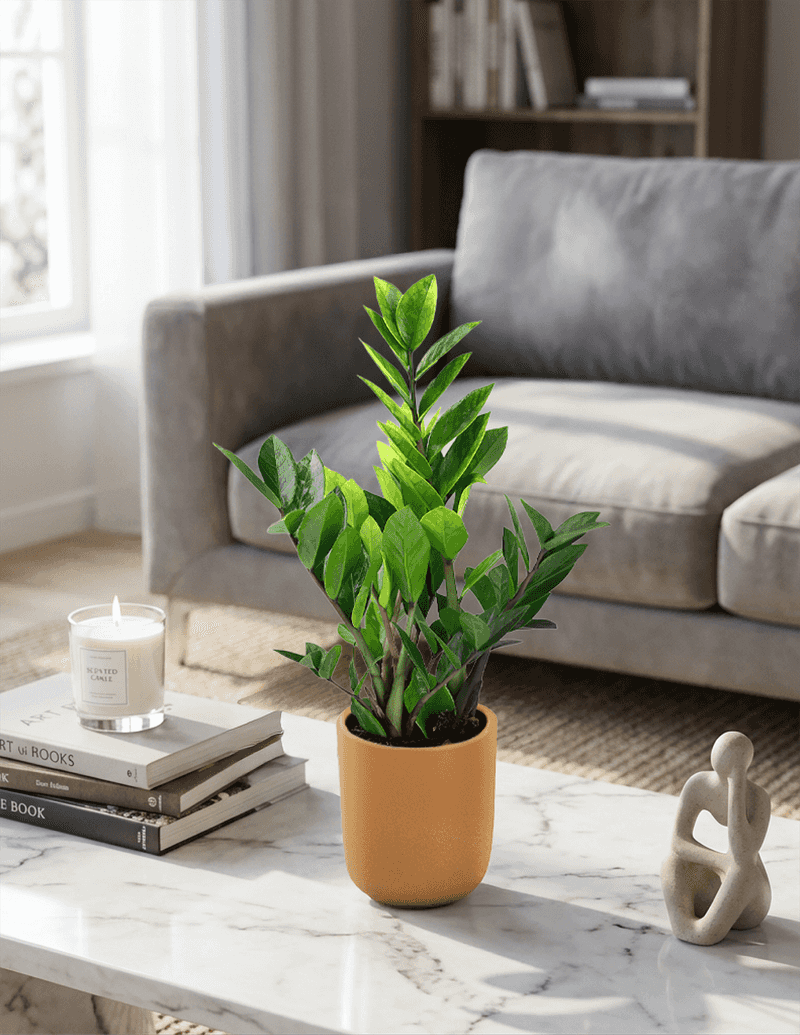
Glossy, almost fake-looking leaves make the ZZ plant a common guest at office desks. Visitors often reach out to touch it, just to check if it is real.
It is, and it is one of the toughest plants you can buy.
Below the soil, the ZZ hides thick, potato-like rhizomes. These store water for weeks, so a dry, heated room is no big deal.
You might water it only once a month from November through February.
Light needs are modest too. A spot several feet from a north window or even under bright office lights will keep it happy.
It will not grow much in winter, and that is normal, so do not panic or add fertilizer.
The biggest danger is love in the form of too much water. If stems turn yellow and mushy, the roots are likely sitting wet.
Use a pot with a drainage hole and a gritty mix.
One caution: all parts are mildly toxic if chewed, so keep it away from curious pets and toddlers. Wash your hands after trimming it.
Otherwise, this plant is about as low-drama as indoor greenery gets, perfect for busy folks who travel over the holidays.
3. Cast Iron Plant
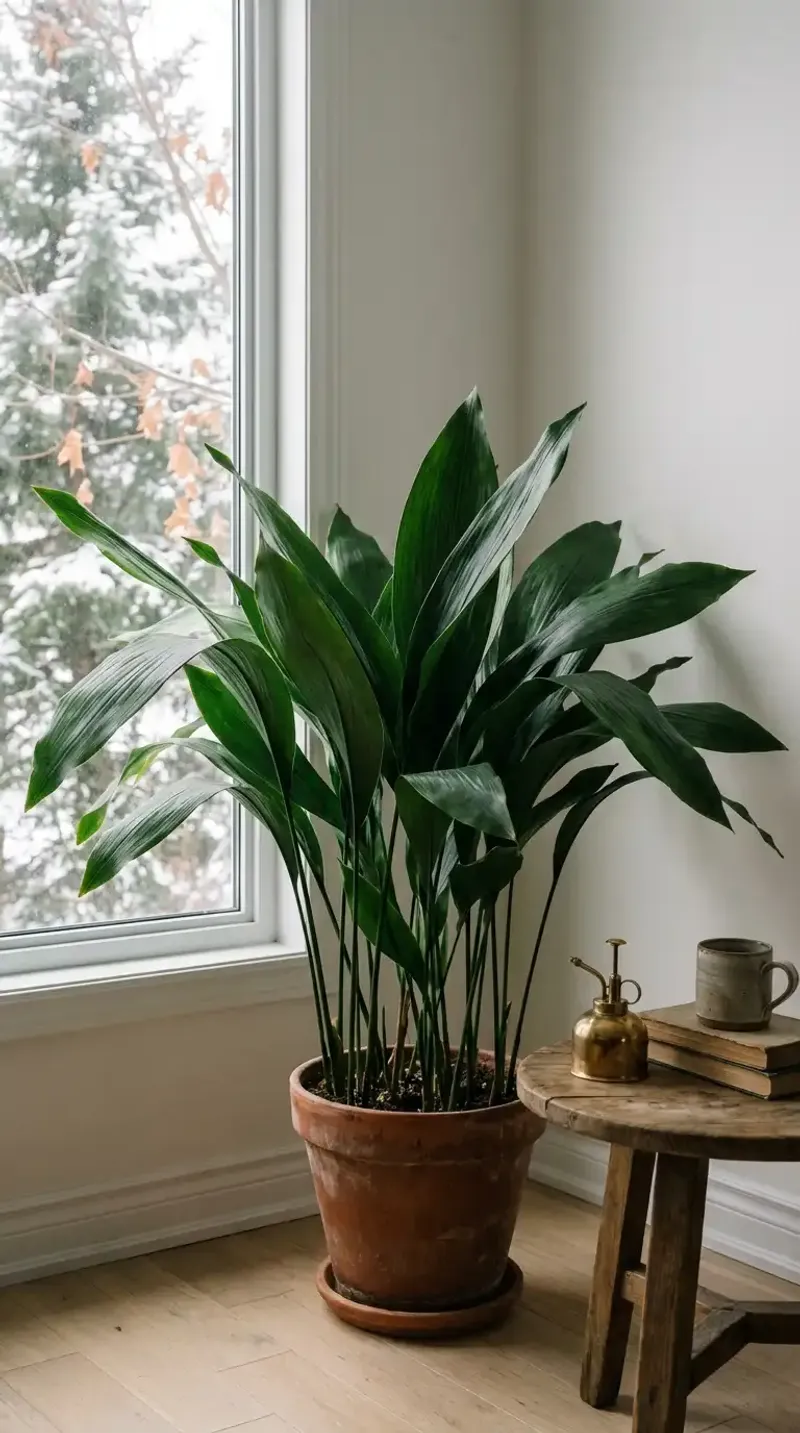
Back in the 1800s, Victorian homes were dark, smoky, and drafty. Almost nothing grew indoors, except one stubborn plant that earned the name cast iron plant.
It survived gas lamps, coal soot, and gloomy parlors.
Today, that toughness makes it a smart pick for your dimmest corner. Think of a north-facing hallway or the spot by the stairs that never sees sun.
The broad, dark green leaves soak up whatever light they can find.
Dry heat does not scare it either. The leaves are leathery and thick, so they do not crisp up the way thin-leaved plants do.
Wipe them with a damp cloth once in a while to remove dust, which helps them breathe.
Water when the top two inches of soil feel dry. In a cool, dim room, that might be every two or three weeks.
It grows slowly, sometimes just a few leaves a year, so be patient.
Because it hardly changes, you can buy a nice-sized one and enjoy it for decades. Many gardeners pass divisions down to their kids.
It is a living heirloom that asks for almost nothing in return.
4. Ponytail Palm
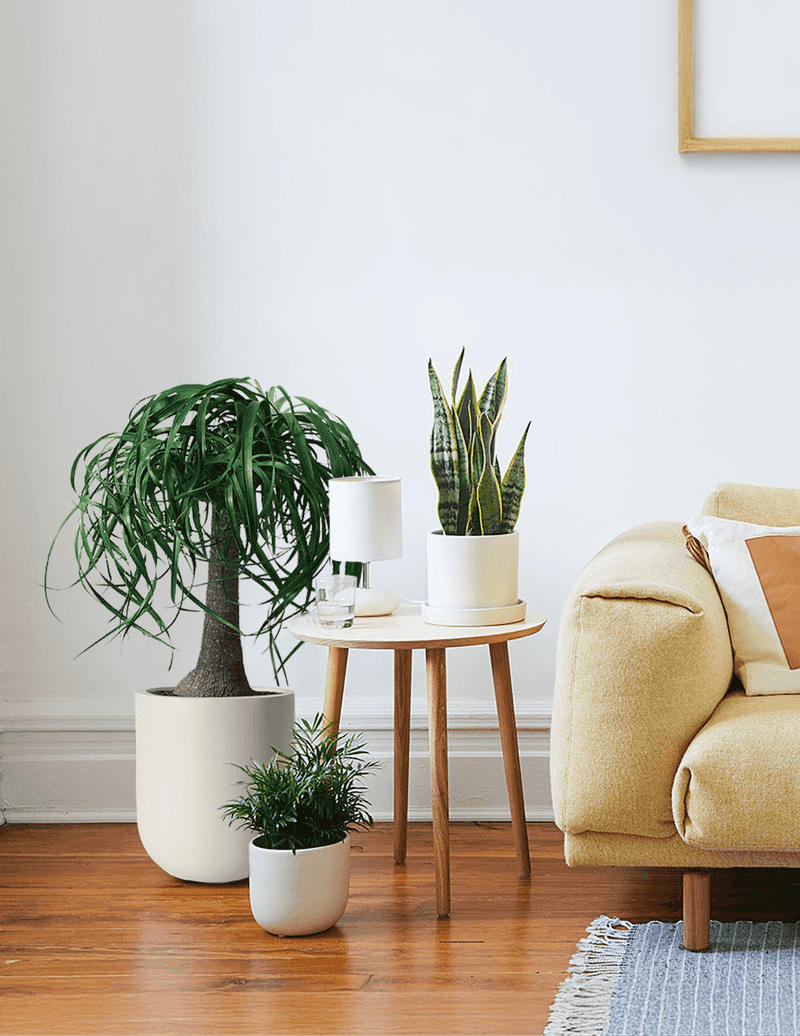
Funny-looking and full of charm, the ponytail palm has a fat, bulging trunk topped with a fountain of skinny, curly leaves. Kids often say it looks like a plant having a bad hair day.
Despite the name, it is not a palm at all.
It actually belongs to the same broad family as agave. That swollen base is a water tank, built to survive long droughts in the dry hills of Mexico.
So your bone-dry living room in January feels pretty familiar.
Give it the brightest spot you can, but do not worry if winter days are short. It will simply rest until spring.
Water deeply, then wait until the soil is fully dry, which may take three or four weeks.
Brown leaf tips sometimes appear in very dry air. You can snip them off at an angle with clean scissors.
They are cosmetic, not a sign of trouble.
Ponytail palms grow slowly and like being a little crowded in their pots. Repot only every few years.
Bonus points: it is non-toxic to cats and dogs, so it is a safe pick for pet owners who want something fun and quirky.
5. Jade Plant
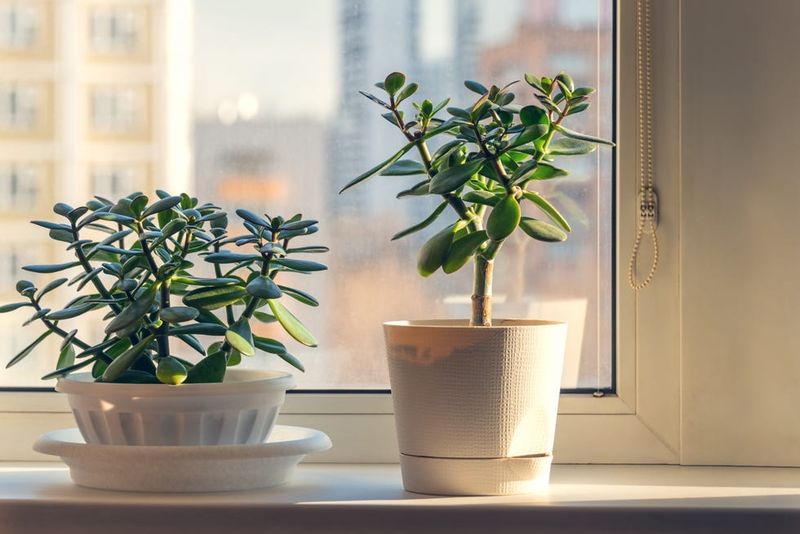
Grandma probably had one on her kitchen windowsill, and it might still be alive. Jade plants are famous for lasting generations.
Some families have kept the same plant growing for fifty years or more.
The plump, oval leaves are full of stored water. That means dry furnace air will not wrinkle them unless you totally forget to water.
In winter, a drink every three to four weeks is usually plenty.
Jade does like more light than some plants on this list. A south or west window works best during the dark months.
In dimmer spots it will survive, but it may stretch and look leggy.
Here is a neat secret: cooler nights in fall and winter can encourage jade to bloom. Tiny star-shaped white or pink flowers may appear around the holidays.
It is a sweet surprise for patient growers.
Use a heavy clay pot and cactus soil, since the plant gets top-heavy over time. If a branch snaps, do not toss it.
Let it dry for a few days, then push it into soil, and you have a brand new jade to share with a friend.
6. Pothos
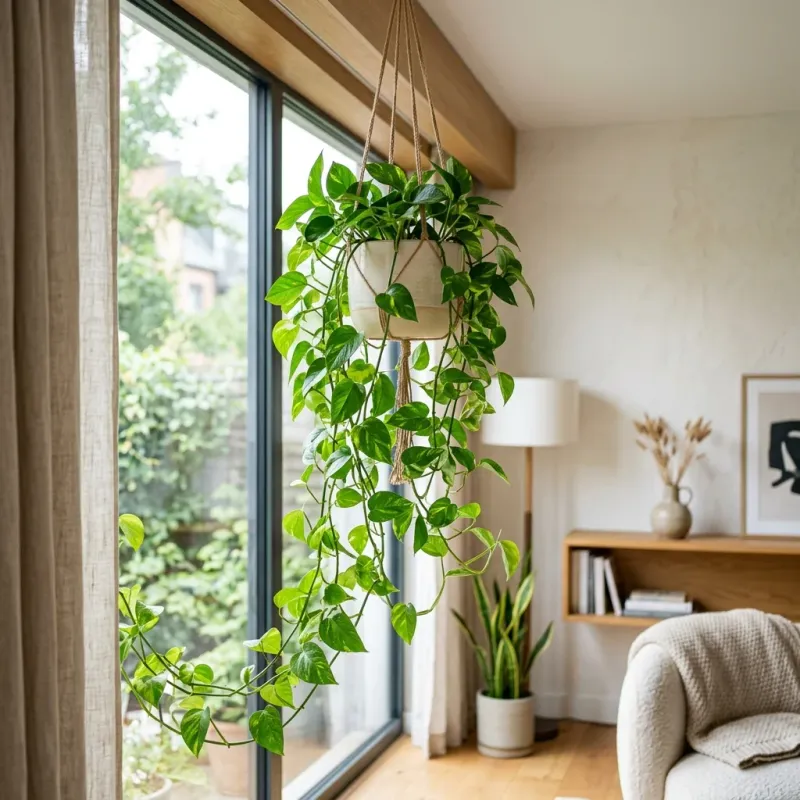
Ask ten plant lovers what their first houseplant was, and several will say pothos. It is cheap, fast-growing, and very forgiving.
Its trailing vines can spill from a shelf or climb a small trellis.
While pothos comes from humid jungles, it adapts surprisingly well to dry homes. The waxy leaves hold moisture better than you might expect.
It also tolerates low light, though variegated types may lose some of their yellow or white streaks in dim spots.
During winter, let the top inch or two of soil dry before watering. Droopy leaves are its way of saying it is thirsty, and they perk up within hours after a drink.
That built-in signal makes care easy for beginners.
If the vines get long and bare, give them a trim. Pop the cuttings in a glass of water on the counter, and roots will form in a couple of weeks.
It is a cheerful little project for gray afternoons.
Keep pothos away from pets, since the leaves can irritate mouths. Otherwise, it is a happy, easygoing vine that keeps rooms feeling alive all season long.
7. Chinese Evergreen
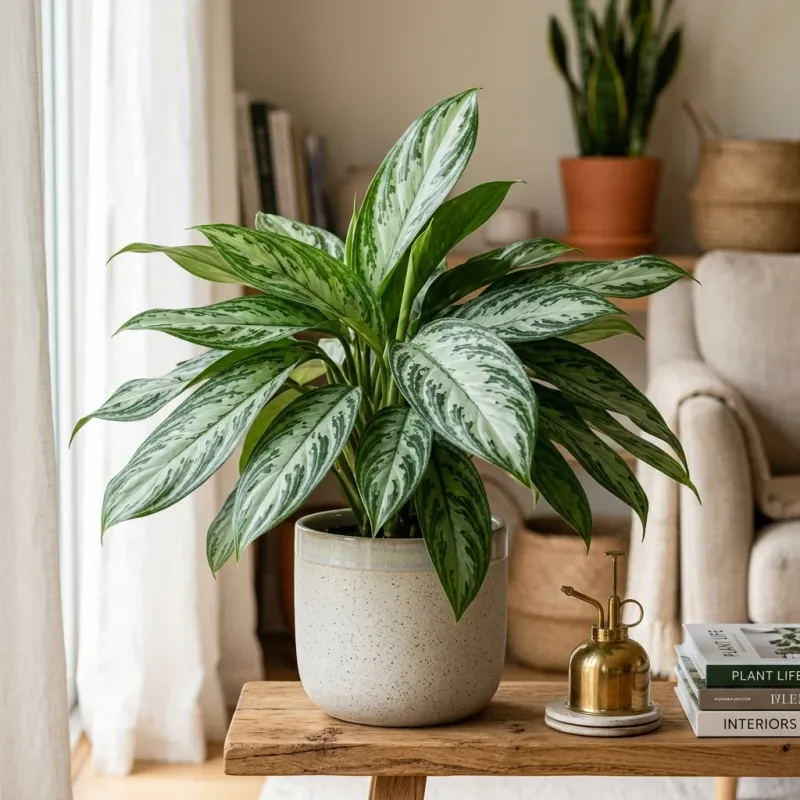
Few low-light plants bring real color, but the Chinese evergreen breaks that rule. Its leaves come splashed with silver, pink, red, or creamy green.
One pot can brighten a gloomy winter room like a bouquet that never wilts.
Aglaonema, as it is also called, has been grown in Asia for centuries as a symbol of good luck. It handles the low light found in offices and apartments with ease.
Darker green varieties take the dimmest spots, while pink and red types like a little more light.
Dry air is mostly fine, though very crispy conditions can brown leaf edges. Grouping it with other plants helps create a little pocket of moisture.
A small tray of pebbles and water underneath also does the trick.
Warmth matters more than humidity here. Chinese evergreen hates cold, so keep it far from drafty windows and doors.
Anything under 60 degrees can cause dark, damaged patches.
Water when the top half of the soil is dry. Over winter, that might be every week or two in a warm house.
Treat it kindly and it rewards you with steady, colorful growth.
8. Haworthia
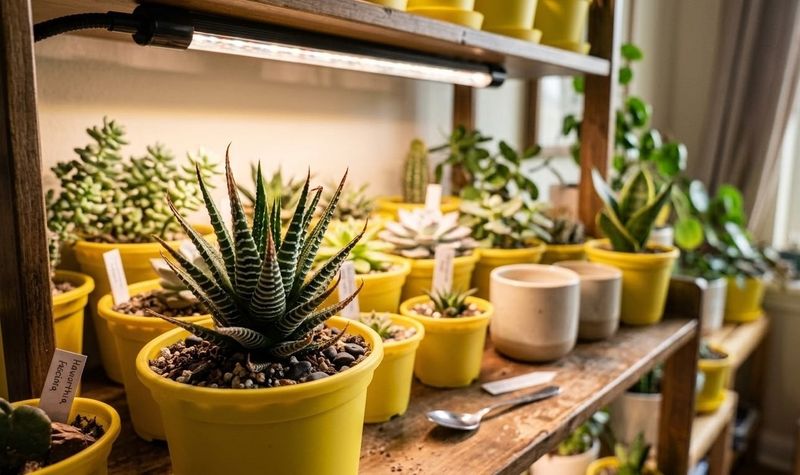
Small enough to fit in a coffee mug, haworthia proves good things come in tiny packages. The zebra type has pointy leaves striped with bumpy white bands.
It looks like a miniature aloe wearing pajamas.
Unlike most succulents, haworthia does not demand blazing sun. In the wild in South Africa, it often grows tucked under shrubs or rocks, out of the harsh light.
That makes it one of the best succulents for a dim winter windowsill.
Dry air suits it perfectly. Water only when the soil is completely dry, usually every three to four weeks during cold months.
Pour around the edge rather than into the center of the rosette to prevent rot.
Desks and bathroom shelves near a bright window are great spots. It also does well under a simple desk lamp.
If the leaves turn reddish, it is getting a bit too much sun, which is rare in winter.
Little baby plants, called pups, sprout around the base. Gently separate them in spring to make new plants.
They make sweet gifts for teachers, coworkers, or anyone who claims they kill every plant they touch.
9. Aloe Vera
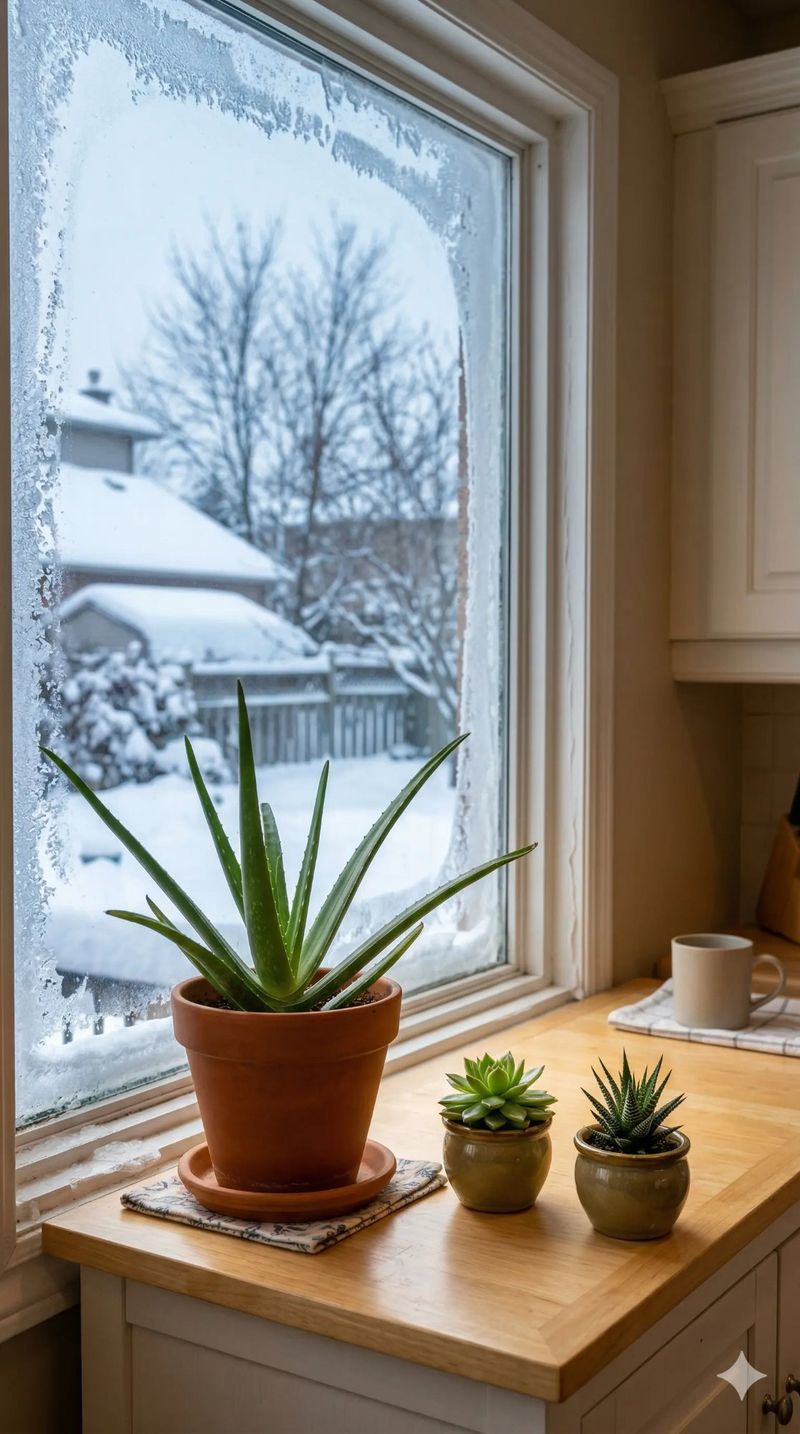
Burned your hand on a cookie sheet? A healthy aloe vera on the kitchen counter is like a first aid kit you can grow.
People have used its cooling gel for thousands of years, even back in ancient Egypt.
Built for deserts, aloe handles dry heated air without blinking. Its fat leaves are stuffed with water, so it can go a month or more between drinks in winter.
Wrinkled or thin leaves are the only sign it really needs water.
Light is where you should pay a little attention. Aloe prefers a sunny window, especially during short days.
In dim spots it may grow floppy and pale, so rotate the pot every week or two to keep it upright.
Plant it in terracotta with cactus soil, which lets roots breathe and dry quickly. Plastic pots hold too much moisture in cold months.
Always choose a pot with drainage.
To harvest gel, cut an outer leaf near the base and slice it open. The plant will keep making new leaves from the center.
Keep it away from pets, though, because eating the leaves can upset their stomachs.
10. Christmas Cactus
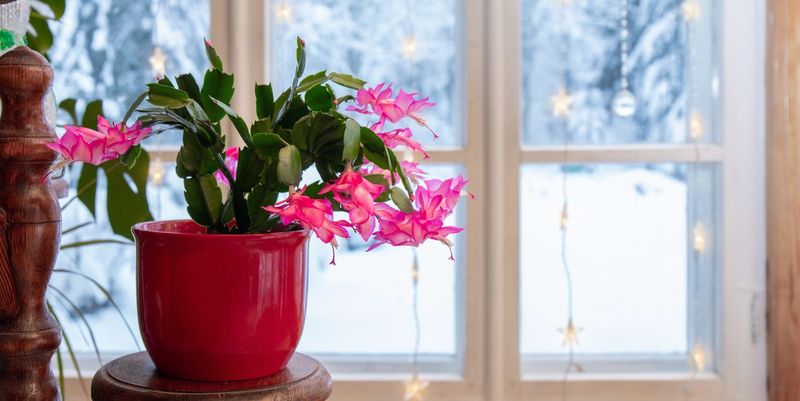
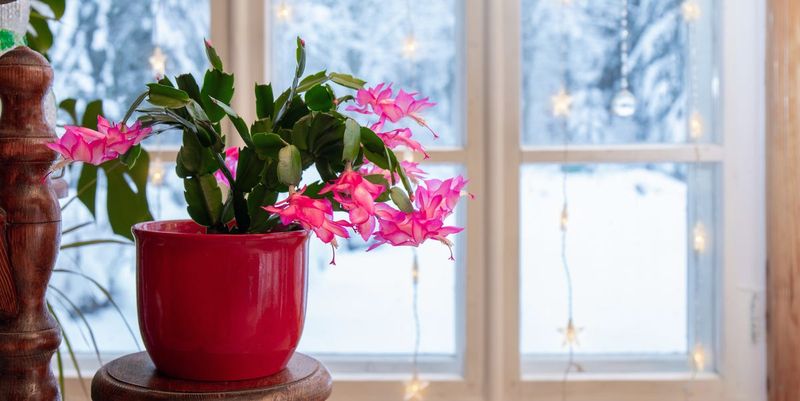
Not every plant on this list just survives winter. The Christmas cactus actually throws a party, covering itself in bright pink, red, or white flowers right when the snow flies.
Many families keep the same plant blooming for decades.
Surprisingly, it is not a desert cactus. It comes from the rainforests of Brazil, where it grows on tree branches.
Still, its flat, fleshy stems store enough water to handle dry indoor air nicely.
The key to blooms is darkness. Long winter nights trigger buds to form, which is why a dim room can help rather than hurt.
Avoid leaving lamps on near it in the evenings during fall.
Water when the top inch of soil feels dry. Once buds appear, keep the soil lightly moist and do not move the pot around.
Sudden changes can cause buds to drop, which is heartbreaking after all that waiting.
After flowering, let it rest with a little less water for a month. Cuttings root easily, so you can share pieces with friends.
It is a lovely tradition, passing down a holiday plant from one generation to the next.
11. Peperomia
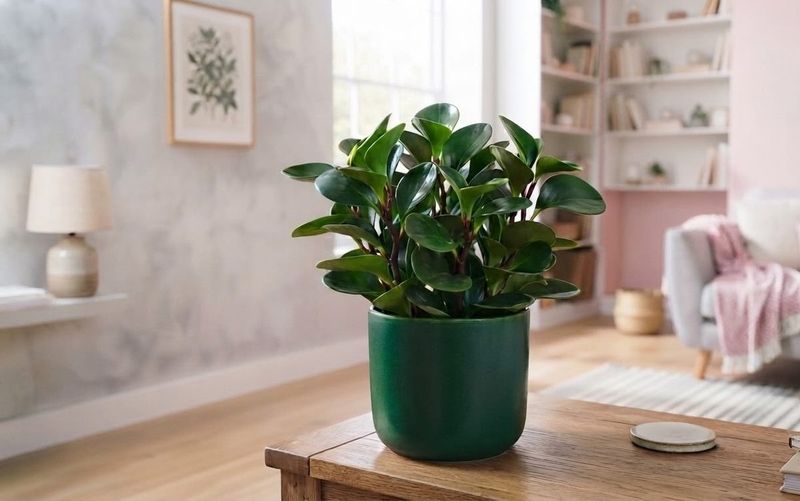
Some plants are big and bold, but peperomia is more like a quiet friend who is always pleasant. These compact plants stay small, making them perfect for nightstands, bathroom counters, and crowded windowsills.
There are over a thousand kinds, from round-leaved to rippled to striped like a watermelon.
Most popular types have thick, slightly juicy leaves. That built-in water storage lets them handle dry furnace air better than many tropical plants.
The baby rubber plant is an especially sturdy choice for beginners.
Bright, indirect light is ideal, but medium light works fine. They will not complain about a north window in winter.
Just avoid hot, direct sun that can scorch the leaves.
The biggest mistake is overwatering. Peperomia roots are fine and small, and they rot quickly in soggy soil.
Water only when the top half of the pot feels dry, maybe every two weeks in winter.
Good news for pet parents: peperomia is non-toxic to cats and dogs. You can tuck one almost anywhere without worry.
Collect a few varieties and you will have a charming little indoor garden that fits on a single shelf.
12. Dracaena
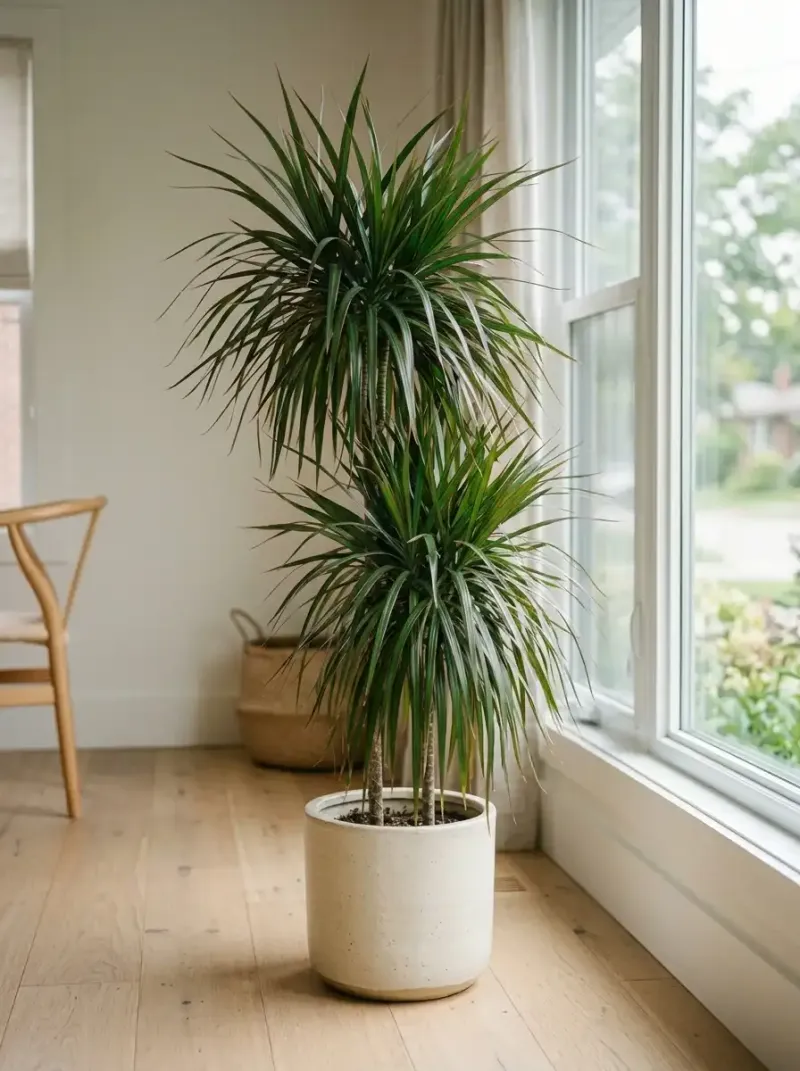
Need height without a fuss? Dracaena brings a tall, tree-like look to living rooms, offices, and entryways.
The popular dragon tree, Dracaena marginata, has spiky leaves edged in red on slim, twisting canes.
Dracaenas are tough customers in low light. They grow slowly in winter and happily sit a few feet from a window.
Corn plant, another dracaena, has wide striped leaves and is just as easygoing.
Dry air may cause brown leaf tips, but the plant keeps growing just fine. Fluoride and chlorine in tap water can make those tips worse.
Try filtered water or rainwater, or let tap water sit out overnight.
Water when the top few inches of soil are dry. In cool, dark months, that is often every two to three weeks.
Yellow lower leaves are normal as it grows, so just pull them off.
If your dracaena gets too tall, cut the cane at any height. New shoots will sprout just below the cut, making it bushier.
Plant the top piece and you get a second tree for free. Keep it away from cats and dogs, since it can make them sick.