
Your porch can look dressed for the holidays without a single poinsettia. Florida’s mild winter weather makes room for colorful leaves, bright flowers, and rich greenery in your pots.
The trick is choosing plants that suit your porch light and your part of the state. These seven choices bring holiday cheer, with simple care tips to keep the display looking full.
1. Croton
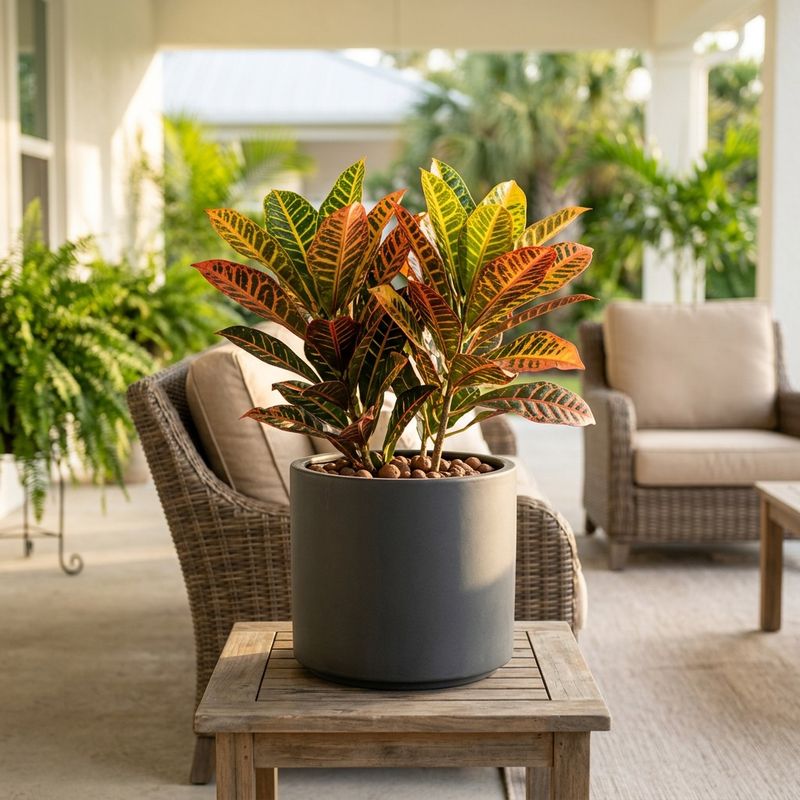
Who needs ornaments when the leaves already wear red, gold, and green? Croton brings bold color to a holiday pot without depending on flowers, making it a strong choice for a bright Florida entry.
Look for a full, compact plant with leaves along its lower stems. A cultivar such as Petra offers broad, colorful foliage that looks substantial even when planted alone in a simple container.
Give croton bright light, with morning sun and some afternoon shelter as a useful starting point. Plants raised under nursery shade need a gradual move into stronger sun to avoid scorched leaves.
Water when the top inch of potting mix feels dry, and let excess water escape freely. Empty saucers after watering, since roots sitting in water can decline even while the leaves still look healthy.
Cold weather is the catch: crotons can suffer when temperatures fall below about 50 degrees. South Florida porches usually offer the easiest conditions, while Central and North Florida gardeners should keep pots portable and bring them into a bright, protected space during cold spells.
2. Christmas Cactus
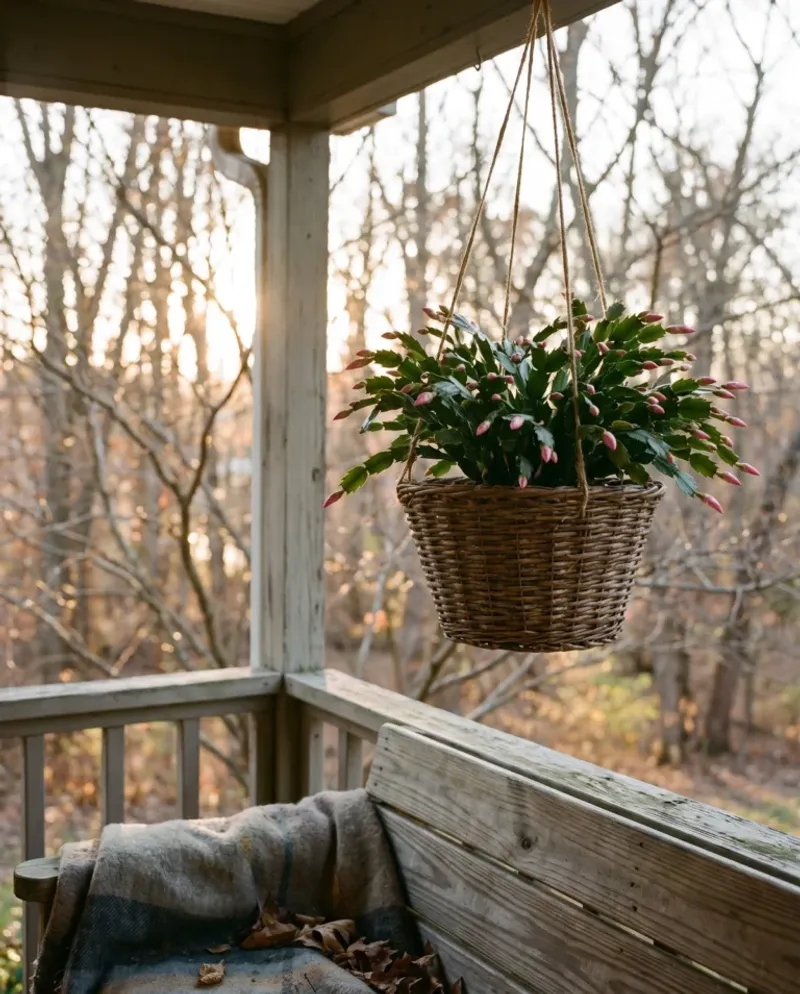
A pot spilling over with bright blooms feels like a small holiday celebration. Christmas cactus adds that graceful, trailing shape that upright porch plants cannot provide, especially on a plant stand or in a hanging basket.
Many plants sold for the season are actually Thanksgiving cactus, a close relative that often blooms earlier. Either can work beautifully, so choose a plant with plenty of unopened buds rather than worrying about the label.
A covered porch with bright, indirect light is ideal. Avoid harsh afternoon sun, which can damage the flat green stem segments, and use a loose potting mix that drains well.
Despite its name, this is a forest cactus, not a desert plant. Water thoroughly when the upper layer of mix dries, then allow the pot to drain instead of giving it frequent little splashes.
Once buds form, keep its light, temperature, and watering fairly steady to reduce bud drop. Protect it from frost throughout Florida, and remember that future flowering depends partly on long, uninterrupted nights, so bright porch lights can interfere with next season’s show.
3. Florist Cyclamen
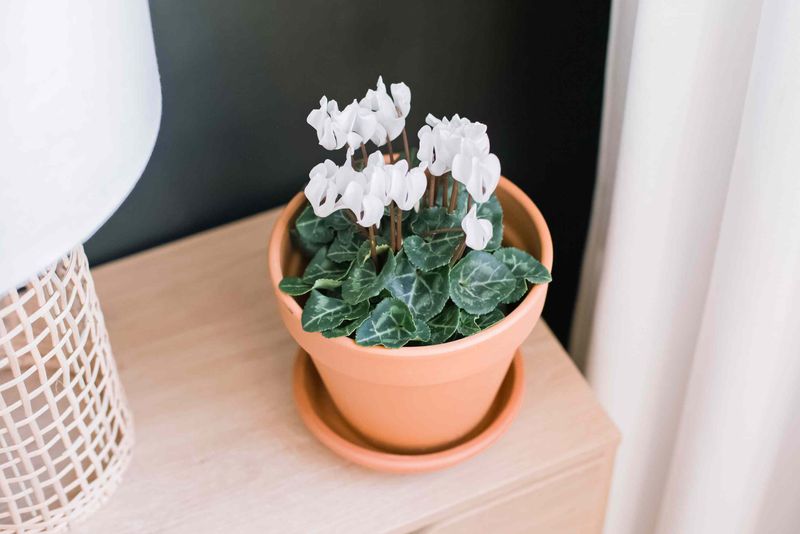
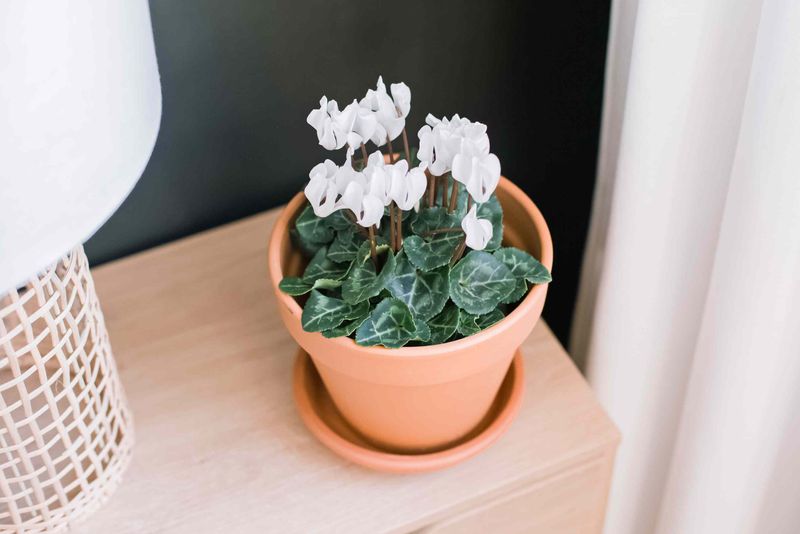
Cool weather finally gives Florida gardeners a chance to enjoy flowers that dislike summer heat. Florist cyclamen takes advantage of that window, pairing red, pink, or white blooms with heart-shaped leaves patterned in silver.
The flowers stand above the foliage like little swept-back flags. That combination creates a finished display without needing several companion plants, which is handy when porch space is limited.
Place the pot in bright shade or gentle morning sun, away from hot afternoon exposure. Cyclamen generally performs best in cool conditions, making it especially useful during North and Central Florida’s milder winter stretches.
Check moisture with a finger before watering, then direct water onto the mix rather than into the center of the plant. Keep the soil lightly moist but never soggy, and remove spent flower stems carefully from the base.
Florist cyclamen is not a plant to leave exposed during a freeze, even though it enjoys cool air. Move pots into shelter when frost threatens, and treat them as a seasonal display if warm weather later sends them into dormancy.
4. Florist Kalanchoe
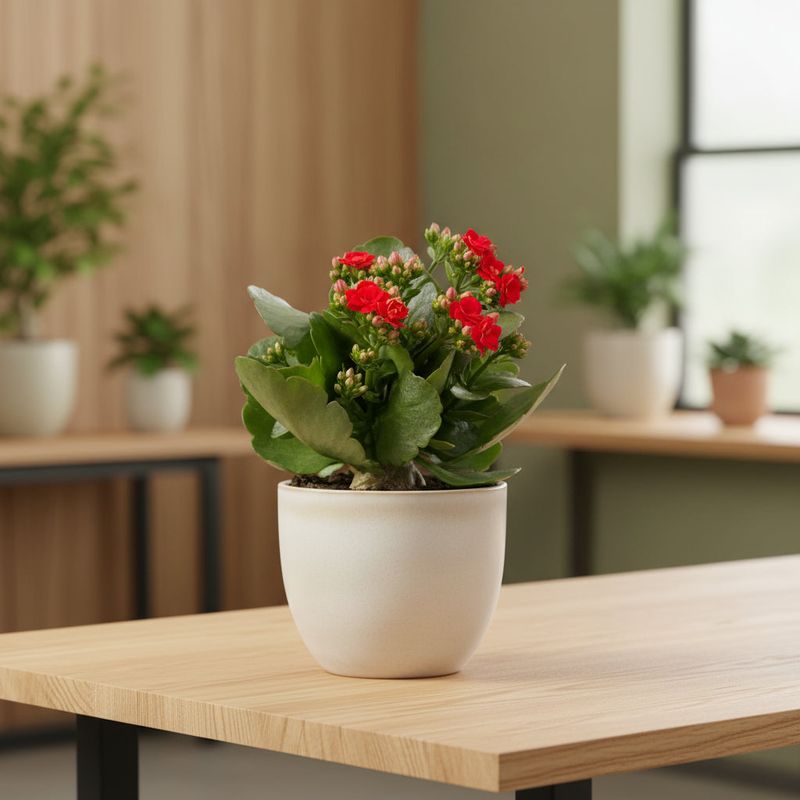
For the gardener who sometimes forgets the watering can, thick leaves are a welcome feature. Florist kalanchoe stores moisture in its foliage and carries tight clusters of small flowers that deliver strong color in a modest space.
Choose red for a classic holiday look or white for a quieter display. Buy a plant with some open flowers and plenty of buds so the pot has more color still to come.
Bright light helps keep growth compact, and a few hours of gentle morning sun often work well. A deeply shaded porch can leave the plant stretched out and less likely to flower well again.
Use a container with drainage holes and a fast-draining potting mix. Let the upper portion of the mix dry between waterings, and keep the pot out of repeated winter rain.
Frost can damage kalanchoe, so bring it inside during cold snaps, particularly in North and Central Florida. Keep it beyond the reach of chewing pets, since it is toxic if eaten, and remove faded flower clusters to keep the holiday display neat.
5. Norfolk Island Pine
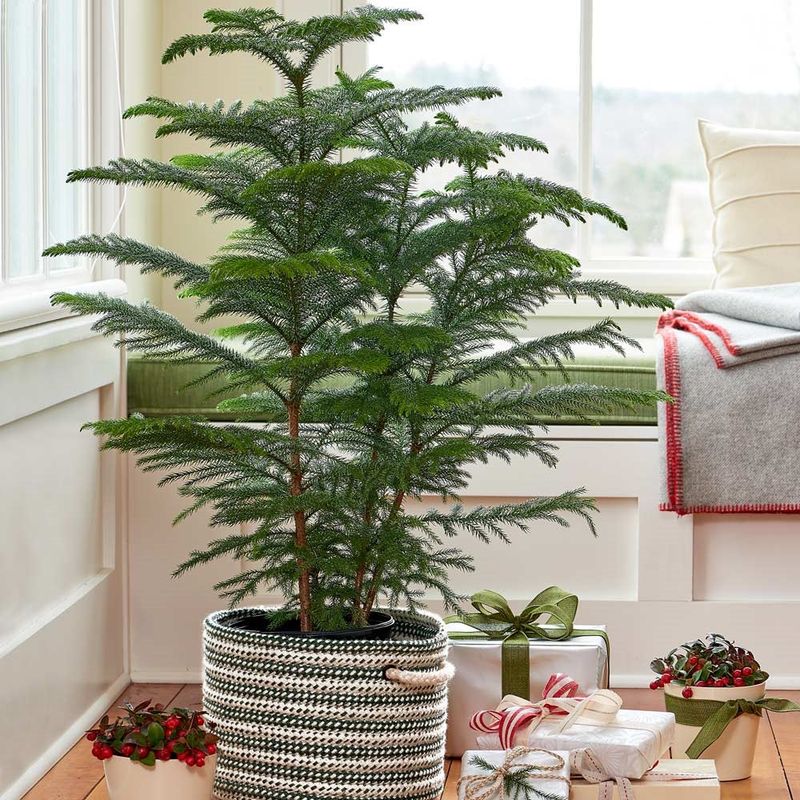
Sometimes the porch simply needs a tiny tree. Norfolk Island pine supplies height, soft green branches, and a familiar holiday outline without requiring a cut tree or a pot full of flowers.
Use it as the tall feature beside a doorway, leaving enough room for people to pass without brushing the branches. A few lightweight ornaments are plenty, because heavy decorations can bend its delicate growth.
Despite its name, Norfolk Island pine is a tropical conifer rather than a true pine. It appreciates bright light and protection from frost, so a sunny, sheltered South Florida porch is a better winter fit than an exposed North Florida doorstep.
Keep the potting mix evenly moist without leaving it waterlogged. Check the root ball rather than watering on a fixed schedule, since cool weather and a covered porch can slow drying.
Choose a sturdy container that will not tip easily in wind, and move the plant indoors before a cold snap. Plan for its future size, too: it can become a very large tree outdoors in frost-free areas, so keeping it in a pot is often the practical choice.
6. Dusty Miller
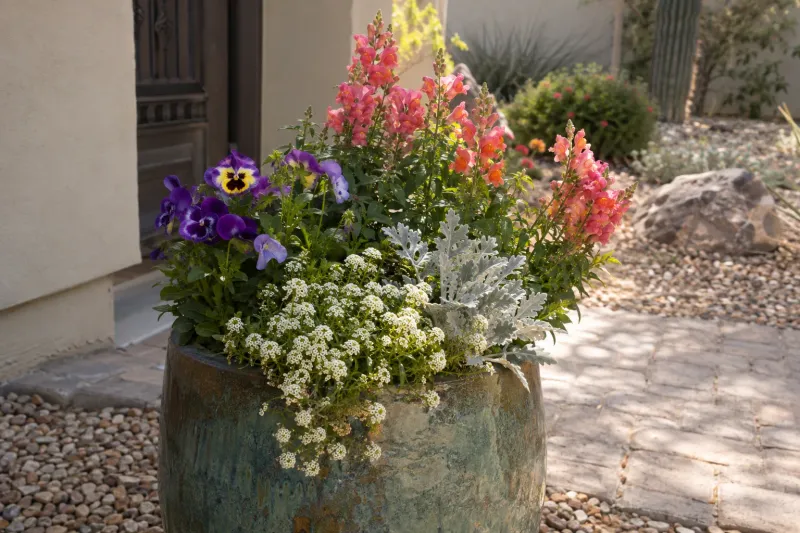
Silver leaves can suggest a frosty holiday scene, even when the lawn outside is still green. Dusty miller brings that cool contrast to Florida porch pots, and its soft-looking foliage breaks up a display filled with glossy leaves.
Its main contribution is texture rather than flowers. Set a full pot beside red-blooming plants, or use several small plants around a container’s edge for a broad silver border.
Give dusty miller a sunny position and excellent drainage. Too much shade can produce loose growth, while damp, crowded conditions encourage trouble around the roots and stems.
Florida’s cooler months are generally a better season for it than the wet, humid summer. North and Central Florida gardeners can use it for winter displays, while South Florida gardeners should favor an airy spot with plenty of light.
Water at soil level when the mix begins to dry, rather than keeping the foliage constantly wet. Pinch back an occasional long shoot to maintain a rounded shape, and pair it only with plants that also tolerate some drying between waterings.
7. Cast Iron Plant
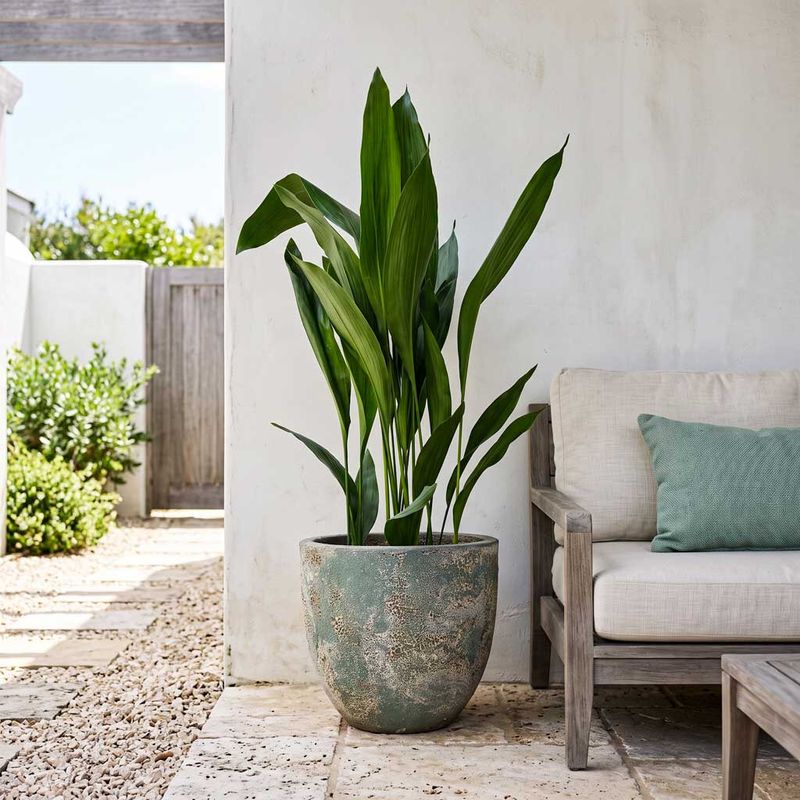
That shady corner beside the front door deserves more than an empty pot. Cast iron plant fills it with broad, upright leaves that create a calm green backdrop for wreaths, ribbons, and brighter seasonal containers.
Unlike the flowering choices on this list, its appeal does not depend on buds opening at the right time. A healthy, established clump provides body and height throughout the holiday season and stays useful afterward.
Choose a generously filled nursery pot if you want an instant lush look, because cast iron plant grows slowly. Place it in shade or filtered light, where its deep green foliage will avoid the bleaching and scorch caused by strong sun.
Water thoroughly when the upper inch or two of mix has dried, and use a container that drains freely. Its reputation for toughness does not mean it enjoys standing in water.
It handles cool weather better than many tropical foliage plants, but exposed containers still need protection during hard freezes. Wipe dust from the leaves, trim damaged foliage at the base, and attach decorations to the pot rather than tying them tightly around the stems.