
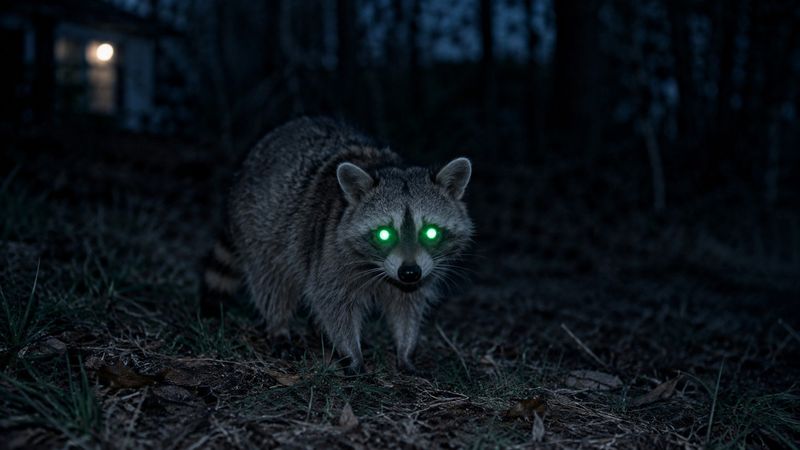
Your deck might be hiding a furry tenant who never signed a lease. Raccoons love dry, sheltered spots when the weather turns cold, and the space under a deck is close to perfect for them.
Catching the signs early can save you from damaged wood, torn insulation, and messy cleanup come spring. Here are ten yard clues that point to a masked visitor settling in for the season.
1. Freshly Dug Holes Along the Deck Edge
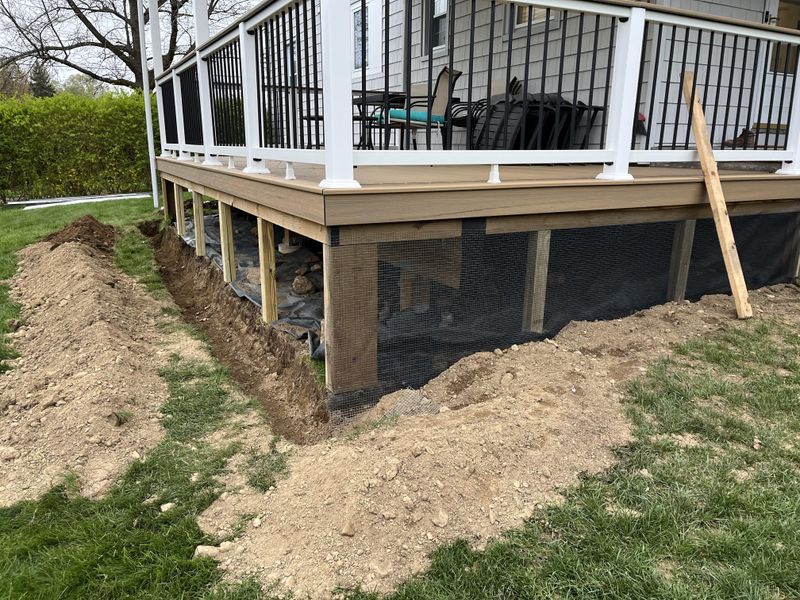
Picture walking out with your morning coffee and spotting a pile of loose dirt where there was none yesterday. Raccoons are surprisingly strong diggers, and they often scoop out soil near a deck skirt to squeeze into the space beneath.
The hole may look rough and uneven, with dirt flung outward like a toddler built it.
Look closely at the shape. A raccoon entry usually measures about four to six inches across, big enough for a wide body that can flatten itself surprisingly well.
Smaller, neat holes often belong to chipmunks, while very large burrows can point to woodchucks.
Timing matters too. Fresh digging in late fall, right when nights get frosty, is a classic sign that something is preparing a winter den.
The soil will look dark and damp compared to the dry ground around it.
Try a simple test. Loosely fill the hole with soil or stuff it with crumpled newspaper, then check it the next morning.
If it has been pushed open again, something is traveling in and out at night. Hold off on sealing it for good until you are sure nobody is trapped inside, since a stuck raccoon will cause far more damage trying to escape.
2. Tiny Hand-Like Footprints
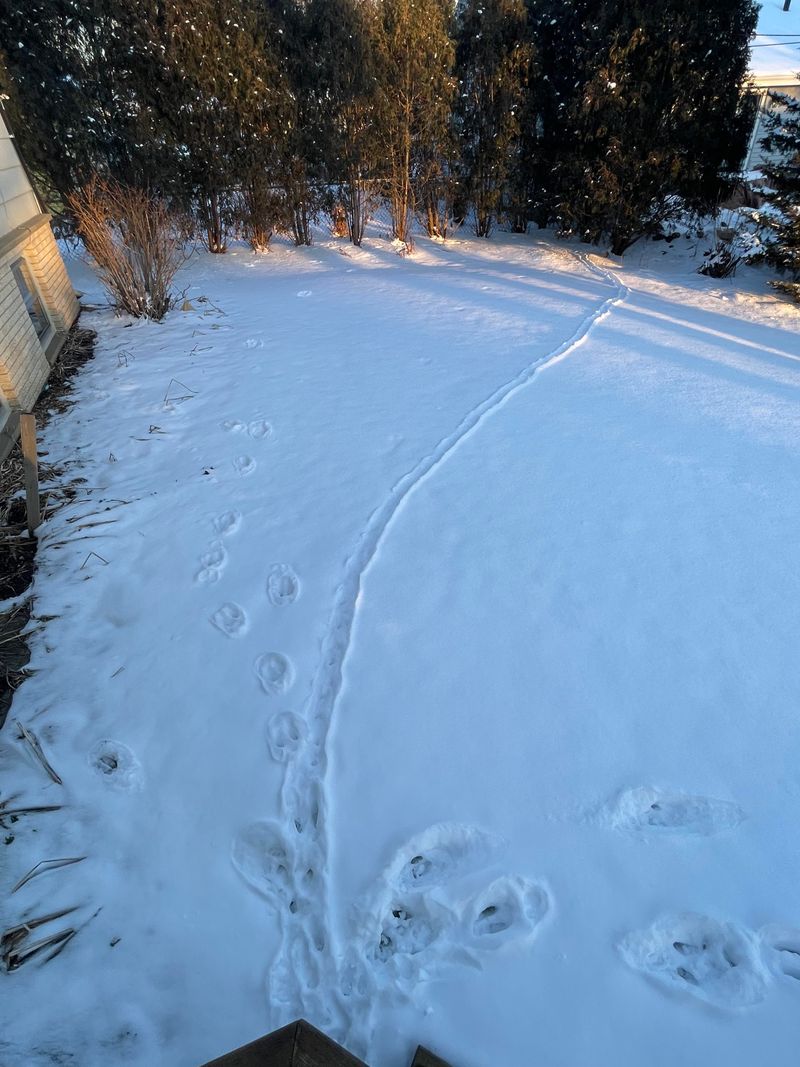
Few animal tracks look as human as a raccoon’s. Their front paws leave prints with five long, slender toes that resemble a baby’s hand, while the back feet look like tiny flat-footed shoes.
Once you see them, you will never mix them up again.
Fresh snow is your best friend here. After a light dusting, walk the perimeter of your deck before the sun melts everything.
A raccoon tends to follow the same path night after night, so you may find a clear trail heading straight to one spot under the boards.
No snow? Muddy flower beds, damp patio stones, and the edges of birdbaths also catch tracks nicely.
Some homeowners even sprinkle a thin layer of flour or sand near a suspected entrance to capture prints overnight.
Fun fact: raccoons walk on the soles of their feet like bears and people do, which is why the heel shows up so clearly. Their pace also creates a distinct pattern where front and back prints land side by side.
Spotting tracks that start and end at your deck, rather than passing through, is a strong hint that you have a resident, not just a traveler.
3. A Smelly Latrine Spot
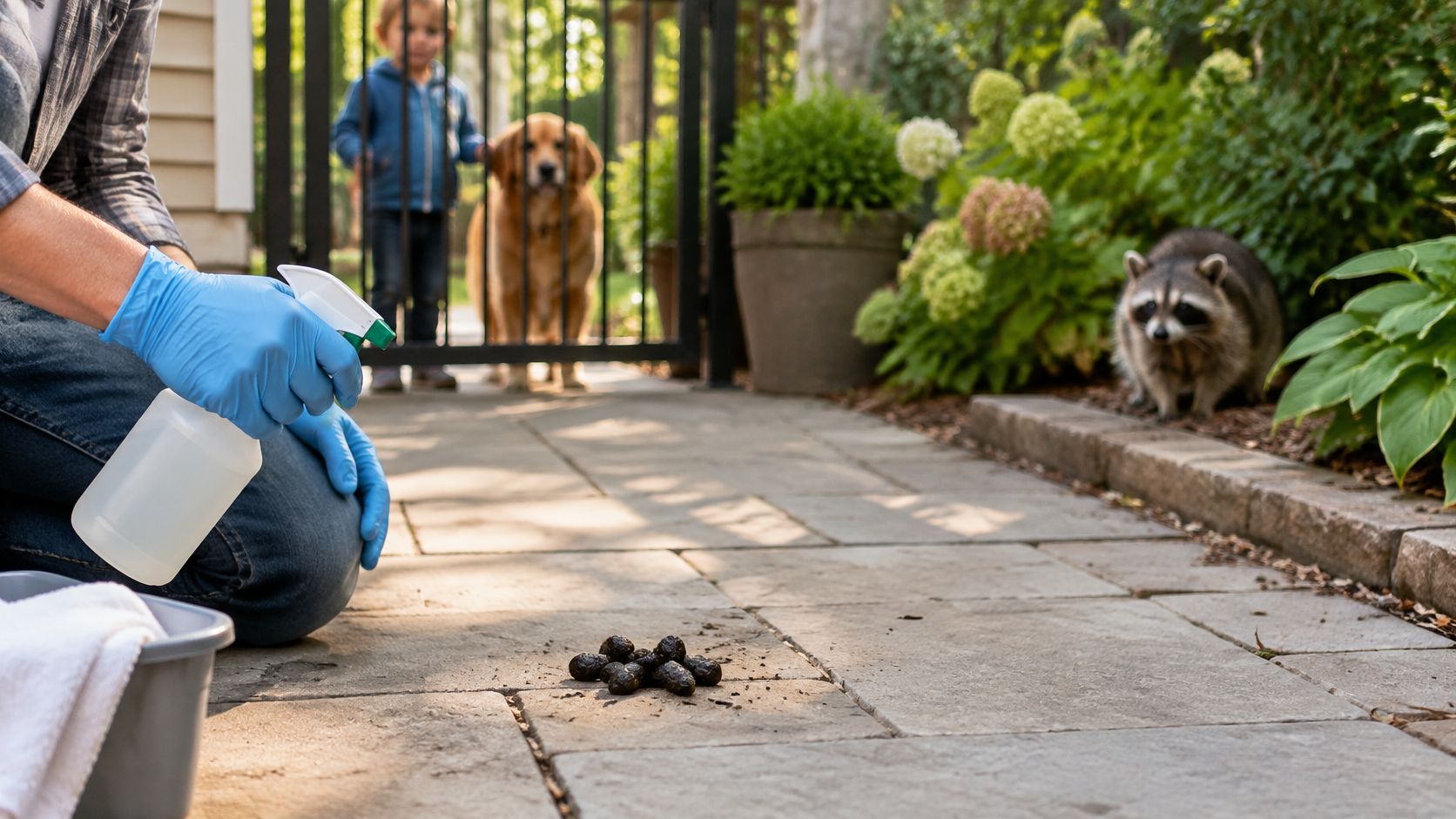
Nobody wants to talk about it, but raccoon poop tells a big story. Unlike many animals, raccoons pick a single bathroom area and return to it again and again.
Experts call these spots latrines, and they often show up on flat surfaces near a den.
Check the tops of woodpiles, the base of trees, deck steps, and even flat roof sections. Raccoon droppings are dark, tube-shaped, and roughly the size of a small dog’s, often packed with seeds, berry skins, or bits of shell.
Here is the serious part. Raccoon droppings can carry roundworm eggs that are harmful to people and pets.
Never touch a latrine with bare hands, and keep kids and dogs away from the area.
When cleaning, wear disposable gloves and a mask, scoop waste into a sealed bag, and toss it in the trash. Many experts suggest pouring boiling water over the spot afterward, since common household cleaners do not kill those tough eggs.
A growing pile in the same place tells you the animal feels at home. That is your cue to start planning a gentle eviction before spring babies arrive.
4. Tipped Trash Cans and Scattered Garbage

Ever stepped outside to find your trash can on its side and yesterday’s dinner spread across the lawn? That nightly mess is the calling card of a hungry neighbor with clever little hands.
Raccoons can pop loose lids, untie knots, and pull bags through narrow gaps with ease. While one raid might come from a wanderer, repeated visits suggest the animal lives close by.
When the den sits under your deck, your bins become the nearest buffet.
Winter makes them even bolder. Raccoons do not truly hibernate, though they sleep a lot during the coldest stretches.
On milder nights they wake up and go foraging, and easy food right next door is too good to pass up.
Fixing this one is pretty simple:
Use cans with locking lids or secure them with bungee cords. Store bins in a garage or shed when possible, and put trash out on pickup morning instead of the night before.
A splash of ammonia on the bag may also help mask tasty smells.
Cutting off the free meals makes your yard less appealing. Many raccoons will eventually move on once the snack bar closes.
5. Torn or Pushed-Out Deck Skirting
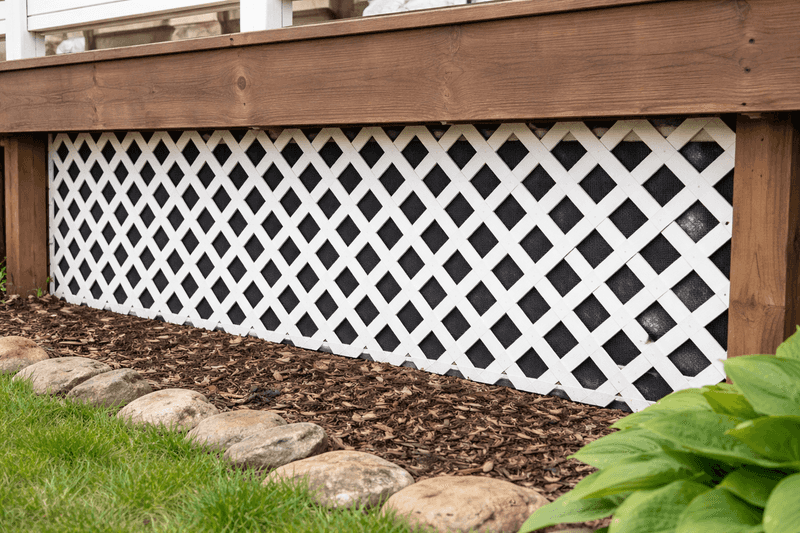
Lattice panels were built to look pretty, not to stop a determined raccoon. If a section of your deck skirting suddenly looks bent, cracked, or pried loose, a furry contractor may have done some remodeling.
Raccoons have strong front paws and sharp claws, and they work patiently at weak spots. Thin vinyl lattice, rotted wood, and loose screws are all easy targets.
You might notice one panel pushed outward, a corner peeled back, or a gap where boards meet the ground.
Walk around the full deck and press gently on each panel. Anything wobbly is a possible doorway.
Fresh scratch marks, splintered edges, or bits of fur caught on the frame make the case even stronger.
Here is a tip from wildlife pros: never repair the damage right away. Sealing an opening while an animal is inside could trap it, and a panicked raccoon will tear through anything to get out.
Instead, confirm the den is empty first. Once you know it is clear, reinforce the base with hardware cloth buried several inches into the soil and bent outward in an L shape.
That blocks future digging and keeps your deck skirt looking neat for years.
6. Strange Noises at Night
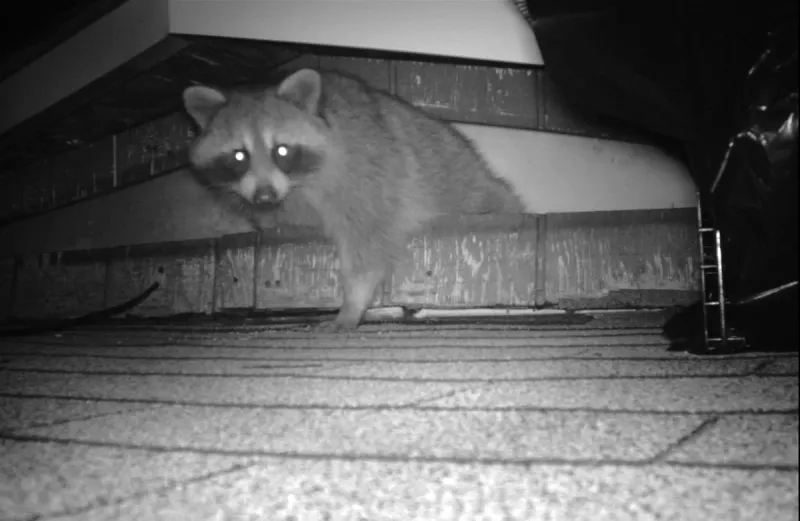
Chirps, purrs, growls, and something like a squeaky door hinge. If those sounds drift up from under your deck after dark, you may be listening to raccoon chatter.
Raccoons are surprisingly noisy. Researchers have recorded more than a dozen different calls, from soft trills between a mother and her kits to loud hisses when two animals argue.
Scratching and thumping as they shuffle around their den are also common.
The best time to listen is around dusk and again just before dawn. That is when raccoons head out to forage and return home to sleep.
Step outside quietly, turn off music or the TV, and stand near the deck for a few minutes.
Sounds coming from directly beneath your feet are a giveaway. Squirrels are mostly active in daylight, and mice are much quieter, so nighttime rustling usually points to a bigger critter.
Late winter deserves extra attention. Raccoon mating season starts around January and February, which can mean more fussing and fighting.
By early spring, tiny high-pitched cries may signal babies. If you hear those, call a wildlife expert so the family can be moved together safely instead of being separated.
7. Raided Bird Feeders
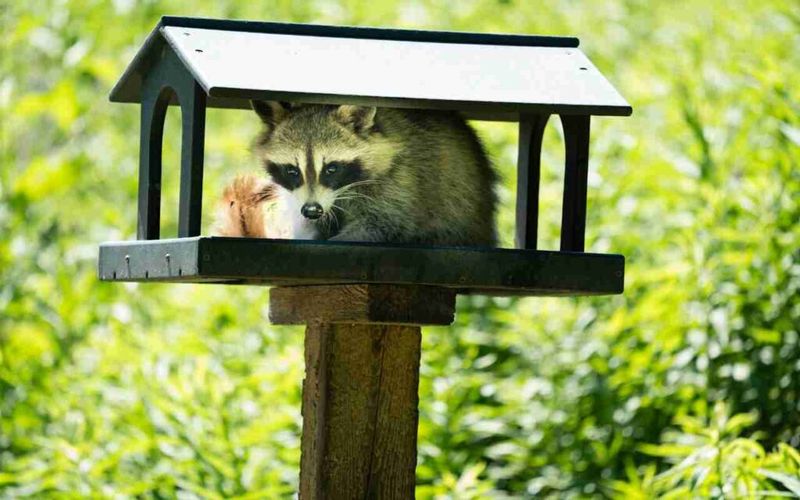
Your cardinals are not the only ones who love sunflower seeds. A bird feeder that empties overnight, or one found lying on the ground in the morning, often points to a raccoon with a sweet tooth for seed.
Raccoons climb poles, swing from branches, and pull feeders down with ease. They also love suet cakes, which give them a rich fat boost during cold weather.
You might spot bent hooks, chewed mesh, or seed husks scattered across the snow.
Birds eat during the day, so if your feeder is full at sunset and bare at sunrise, a nighttime visitor is the likely culprit. A den under your deck means the trip is short and safe.
Want to protect your feathered friends without feeding a raccoon?
Bring feeders inside at night during winter. Mount them on a smooth metal pole with a cone-shaped baffle placed at least four feet off the ground.
Clean up spilled seed regularly so nothing tempts a forager at ground level.
A few small changes keep the birds happy and remove one more reason for that masked bandit to stick around your yard.
8. Gray Fur Snagged Near the Entrance
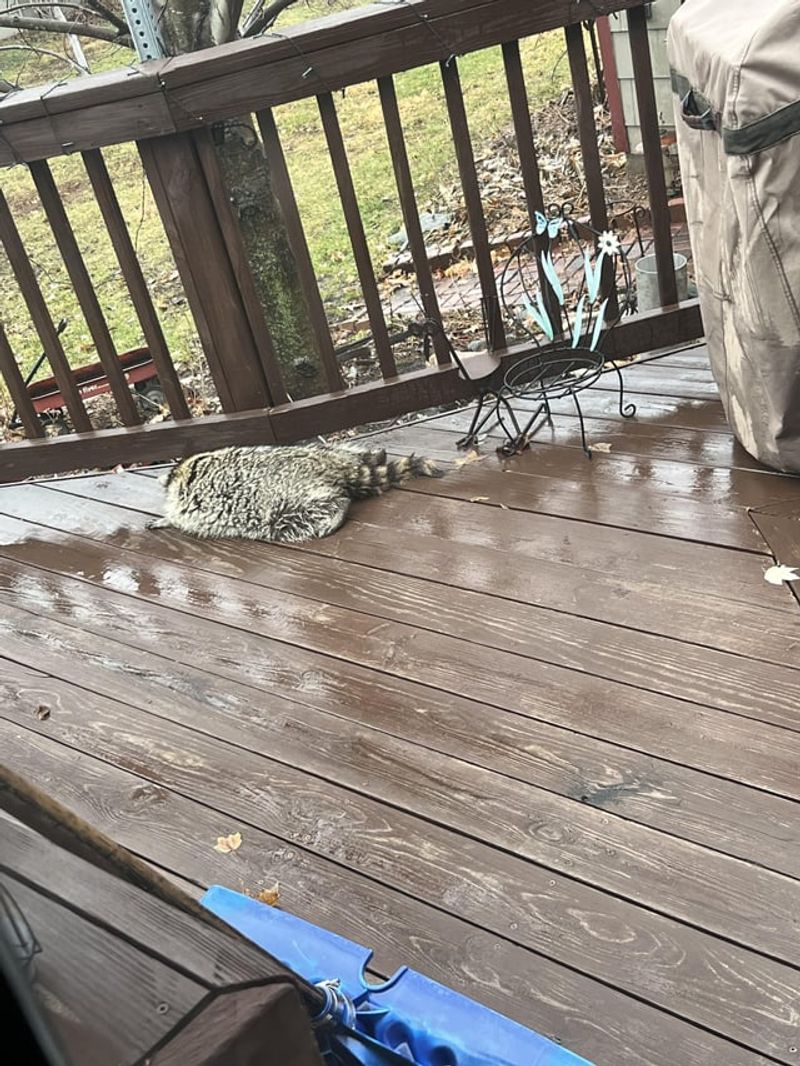
Think of it as a hair sample left at the scene. When a raccoon squeezes through a tight gap again and again, a few strands of fur often get caught on rough wood, nails, or wire.
Raccoon fur is easy to recognize once you know what to look for. It tends to be coarse and grizzled, a mix of gray, brown, and black, with some hairs showing light tips.
In winter, their coats grow extra thick, so shedding bits are more noticeable.
Check the edges of any suspected opening, the bottom of deck boards, fence gaps, and the underside of steps. A small tuft hanging on a splinter is a strong clue that something has been brushing past regularly.
Did you know? Raccoons can build up to half their body fat in fall to help them survive winter, which partly explains why tight squeezes leave fur behind.
A chunkier body plus a narrow gap equals snagged hair.
Collecting a sample is not necessary, but snapping a photo helps if you later talk to a wildlife removal pro. Combined with tracks and droppings, fur gives you solid proof of who exactly is living below.
9. Damaged Lawn Patches
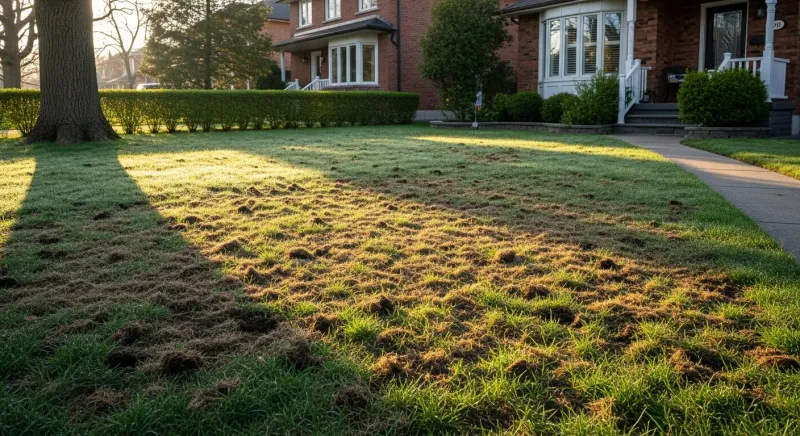
Some mornings it looks like someone rolled up your grass like a carpet. Those flipped sections of sod are often the work of a raccoon hunting for grubs.
Grubs are beetle larvae that live just under the soil surface, and raccoons treat them like candy. Using their nimble paws, they peel back turf in chunks to get at the snack below.
Skunks dig too, but they usually leave small cone-shaped holes rather than big torn strips.
Lawn damage tends to show up in fall and during winter thaws when the ground softens. If the torn patches cluster close to your deck, the digger probably does not have far to travel home.
Here are a few ways to fight back:
Treat your lawn for grubs in late summer using a product approved for your area, or try beneficial nematodes for a natural option. Press loose sod back down and water it so roots can reattach.
Motion-activated sprinklers also startle night visitors during warmer stretches.
Fixing the grub problem removes the buffet. Without it, your lawn becomes a lot less exciting for a hungry raccoon looking for an easy dinner near its winter bed.
10. Glowing Eyes in Your Flashlight Beam
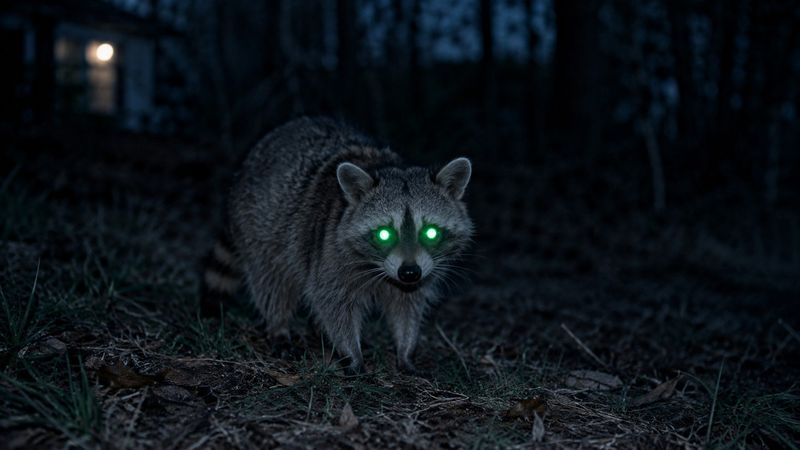
Sometimes the clearest clue is staring right back at you. Shine a flashlight under your deck after dark, and a pair of glowing eyes may answer the question once and for all.
Raccoons have a reflective layer behind their eyes called the tapetum lucidum. It helps them see in low light and makes their eyes shine a bright yellow or greenish color when light hits them.
Cats and deer share the same trick.
Stay calm and keep your distance. A raccoon tucked into its den usually wants to be left alone, but it may hiss or growl if it feels cornered.
Never reach under the deck or try to poke it out with a stick.
A trail camera is a smart, safe alternative. Point one at the suspected entrance for a few nights, and you will likely capture clear footage of your guest coming and going, sometimes with a friend or two.
Once you confirm a raccoon is living there, decide on your next step. Gentle deterrents like bright lights, a radio playing talk shows, or rags soaked in ammonia often encourage it to relocate.
For a mother with babies, call a licensed wildlife professional for help.