
Moving your potted succulents under a covered porch or eaves before a long stretch of rain is one of the easiest ways to protect them. The cover keeps repeated rain off the pots while the plants still get daylight.
Rain alone is rarely the problem. Soggy mix that stays wet for days can hurt roots, and a few simple checks can help you head that off.
Start with the pots that stay wet
When the forecast for your town shows several rainy days in a row, take a walk around your yard. Look for outdoor pots that sit in the open and catch every shower.
Those are the ones to move first, especially if they hold plants that dislike wet feet.
Rain is not automatically a threat to every succulent. The trouble starts when the potting mix stays soaked for days.
Extension guidance from Iowa State explains that mix that stays wet and drains poorly can starve roots of oxygen and lead to root rot.
How much risk a pot faces depends on several things: how well it drains, how exposed it is, which species it holds, and how long the mix stays damp. A sturdy plant in a gritty mix on an open patio may do fine through a short shower.
A prized rosette in dense soil, sitting in a saucer, is a different story.
Soft, mushy leaves or stems can be a warning sign that roots are struggling, though they do not always mean the plant is lost. Catching them early gives you more options.
UC Master Gardeners suggest putting vulnerable pots under a covered porch or eaves to keep rain off. Because storm timing varies across California, base your move on the forecast where you live, not on a calendar date.
The next sections cover where to put the pots and how to keep them healthy once they are there.
Choose cover that still lets in light
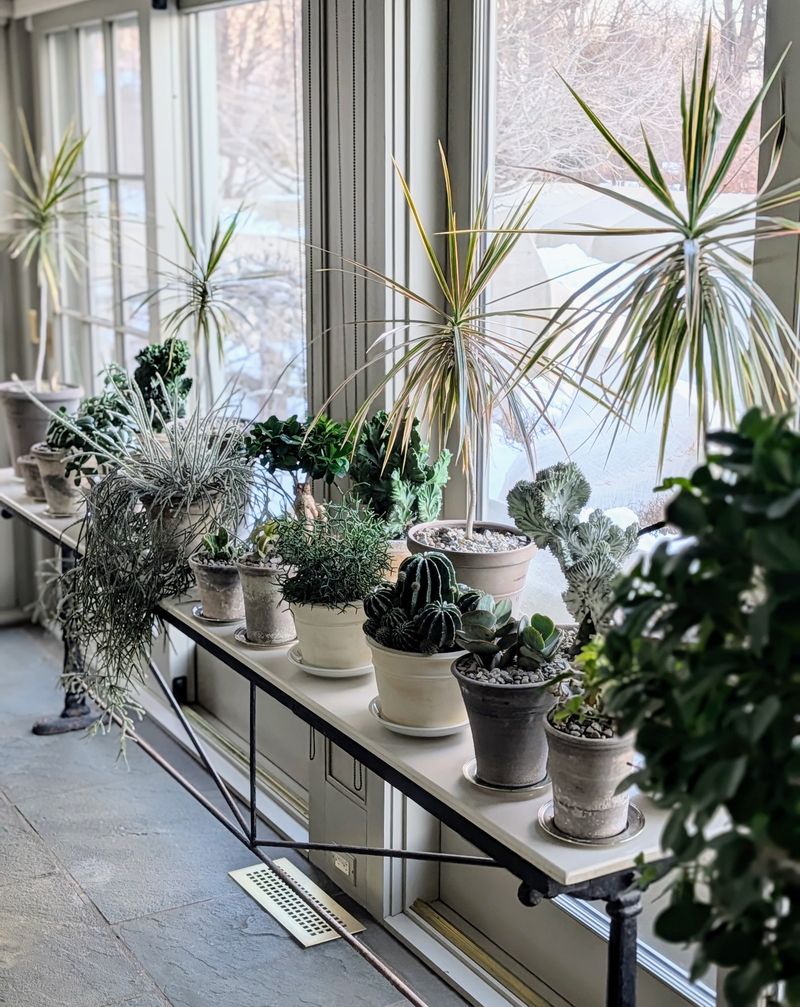
A covered porch or the area under your eaves is the best first choice. It blocks falling rain, and the plants can still enjoy plenty of daylight.
Succulents tucked into a dark corner will stretch and weaken, so light matters as much as dryness.
UC guidance mentions a south-facing porch or wall as one possible spot. Treat that as an option, not a rule.
Your yard may have a bright east-facing step or a sunny spot beside the garage that works just as well.
Watch for rain that blows sideways. Pots pushed to the edge of a porch can still get soaked, so move them closer to the wall.
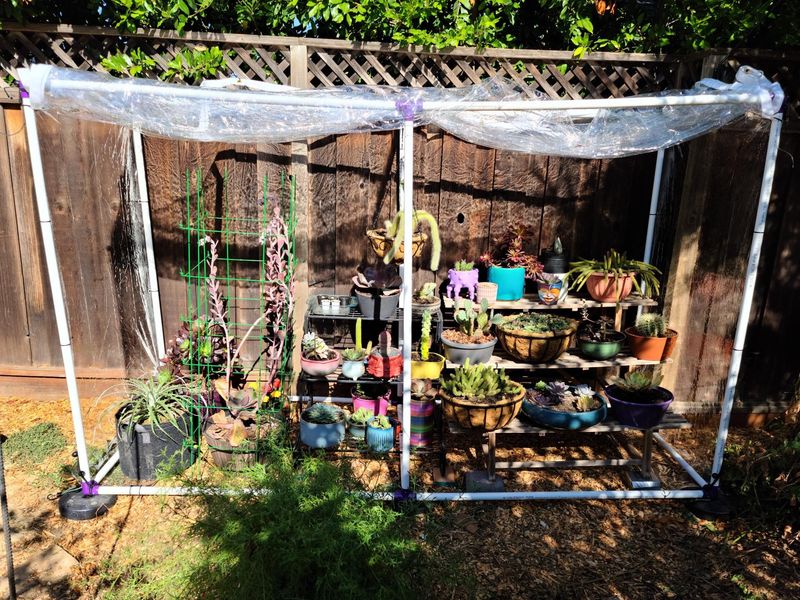
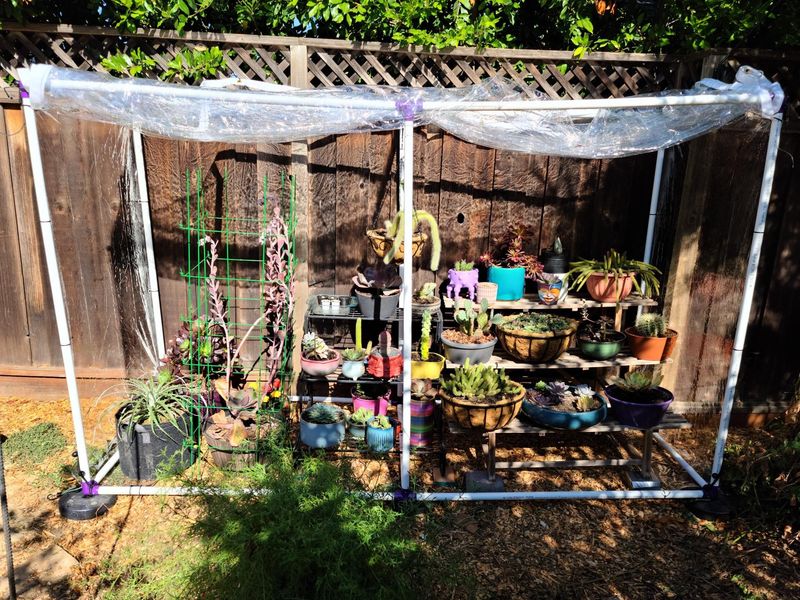
If you have no covered space, you might build a simple rain shield. Think of a small frame that holds a sheet over the pots, with the cover raised well above the leaves and open on the sides so air can move.
This is a cautious idea, not a tested fix for every yard, so keep an eye on how your plants respond.
Never wrap plants in a sealed plastic bag or tent with no ventilation. Also keep plastic from resting on the foliage.
UC advice on protecting tender plants says to support plastic so it does not touch the leaves.
Make sure each pot can drain
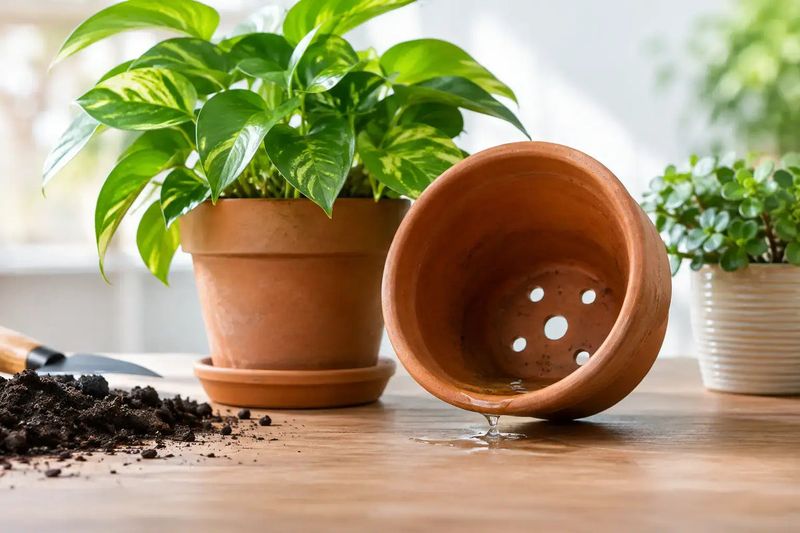
Flip a pot over and look. Every container needs at least one clear drainage hole, and it should not be clogged with roots or packed soil.
A pretty pot without a hole is a trap for winter rain and for your watering can.
Next, check the saucers and decorative outer pots. After rain, tip out any water that has collected, since pots should never stand in a puddle.
A UC ANR handout on succulents makes the same point about saucers and cachepots.
Fill pots with a fast-draining succulent mix, one that feels gritty and lets water run through quickly. Old, dense soil that clumps and stays heavy is worth replacing before the wet weeks arrive.
You may have heard that a layer of gravel at the bottom helps water escape. UC guidance advises against it.
The answer is a pot with holes and the right mix throughout, not stones in the base.
Shelter helps, but it cannot rescue a pot whose water has nowhere to go. A covered porch will not fix a blocked hole or a mix that holds water like a sponge.
UC Master Gardeners also note that cover and open drainage work best together.
Check the mix before you water
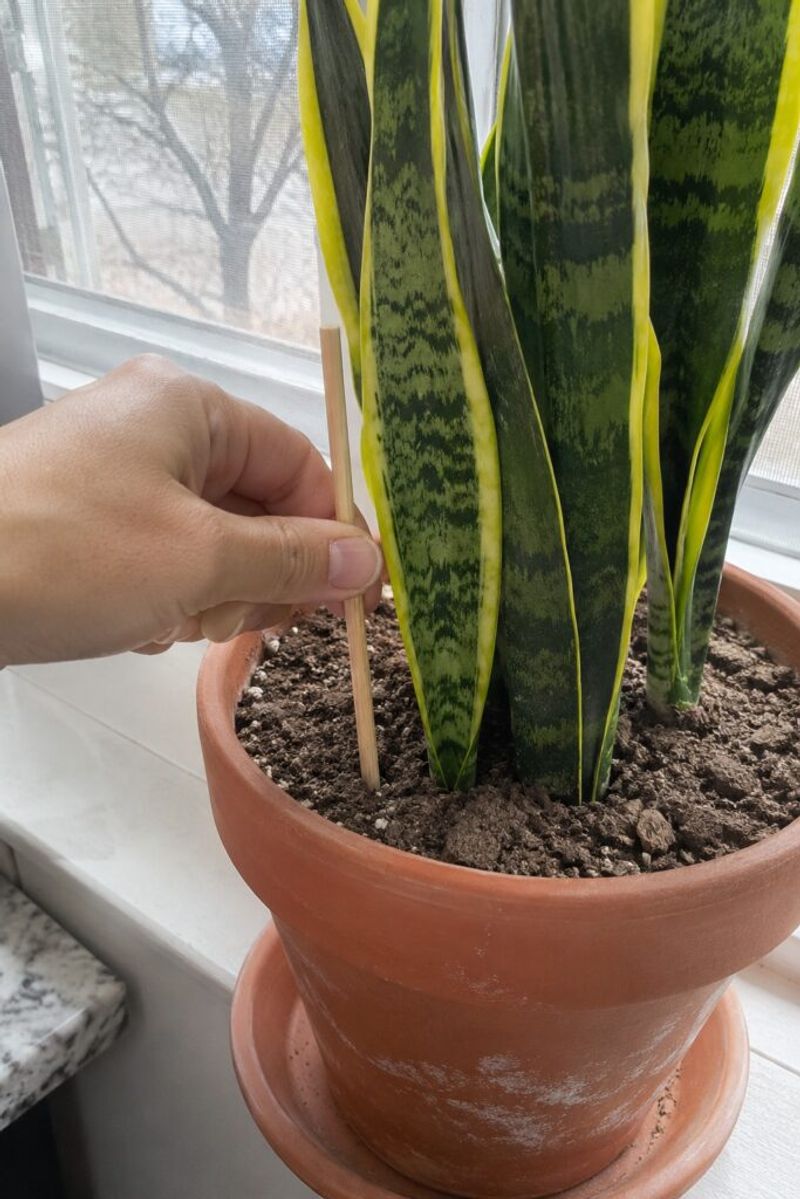
Sheltered plants still get thirsty now and then. Since the rain no longer does the watering, you decide when, and the best guide is the mix itself.
Let it dry out between waterings, and check before you add any.
A chopstick makes an easy tester. Push it down into the mix, pull it out, and look.
If the stick is damp or dark, moisture remains and the plant can wait. Iowa State Extension describes letting the mix dry between waterings as a key way to avoid rot.
That does not mean you must hold back water all winter. UC Master Gardeners note that plants under cover should still be checked to see whether they need a drink.
A pot under a porch in a dry, breezy week may dry out faster than you expect.
Also remember that succulents do not all grow on the same calendar. UC Master Gardeners of Orange County list echeverias and many cacti among summer growers that dislike winter-wet conditions, while aeoniums and several other types grow during California’s cooler months.
So an aeonium may want a bit more attention in winter than a sleepy echeveria. Group pots by type if you can, and water each group when its own mix says so, not by one schedule for the whole porch.
Handle frost as a separate concern

Staying dry and staying warm are two different jobs. A porch that keeps rain off a pot does not tell you whether the plant can handle a cold night.
Treat frost as its own question.
Cold tolerance depends on the species and on where you live. Some succulents shrug off a chilly night, while others are frost-sensitive.
UC Marin Master Gardeners point out that some succulents can be damaged by frost, so learn the names of your plants and read up on each one.
No single temperature is safe for every succulent, so skip any rule that claims one. A coastal garden and an inland valley can feel very different on the same winter night.
For long stretches of freezing weather, UC guidance in its succulent handout recommends moving container plants indoors. That does not mean every succulent must come inside every winter.
Bring in tender ones when a real freeze is forecast for your area.
If you do bring pots indoors, think about light first. A bright window is far better than a dim hallway.
Keep checking the mix there too, since indoor pots often dry more slowly.
Use a short check before the next rainy spell
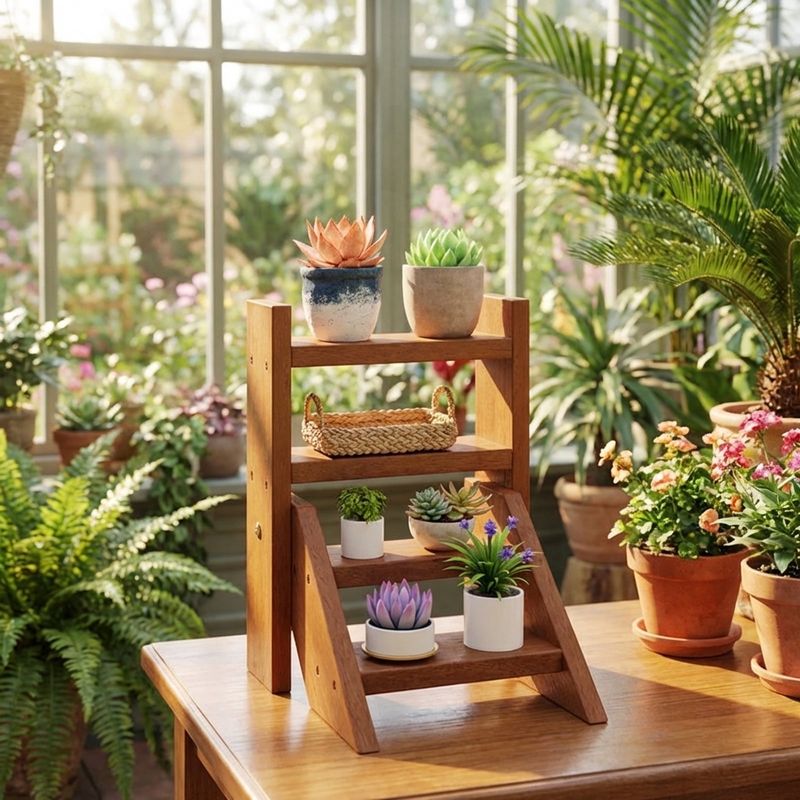
Before the next stretch of rain, walk through four quick steps. Spot the pots that sit out in the open.
Move vulnerable plants under a porch or eaves where light still reaches them. Confirm that holes are clear and saucers are empty, as UC ANR advises.
Then test the mix, and as Iowa State Extension suggests, water only once it has dried.
No routine removes every risk, but a little prep tilts things your way. A dry pot in good light is a happy place for a succulent to wait out the storm.