
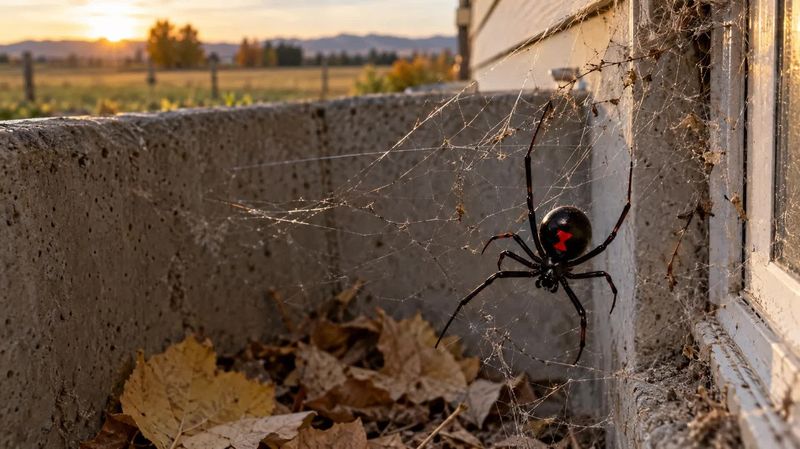
Firewood stacked by the back door can carry black widows indoors, because spiders hide in woodpiles and can ride inside on the logs. That makes a simple winter chore worth a second look.
A few habits for storing and carrying wood can lower your chances of meeting one. Here is how it works and what to do.
Woodpiles can shelter black widows
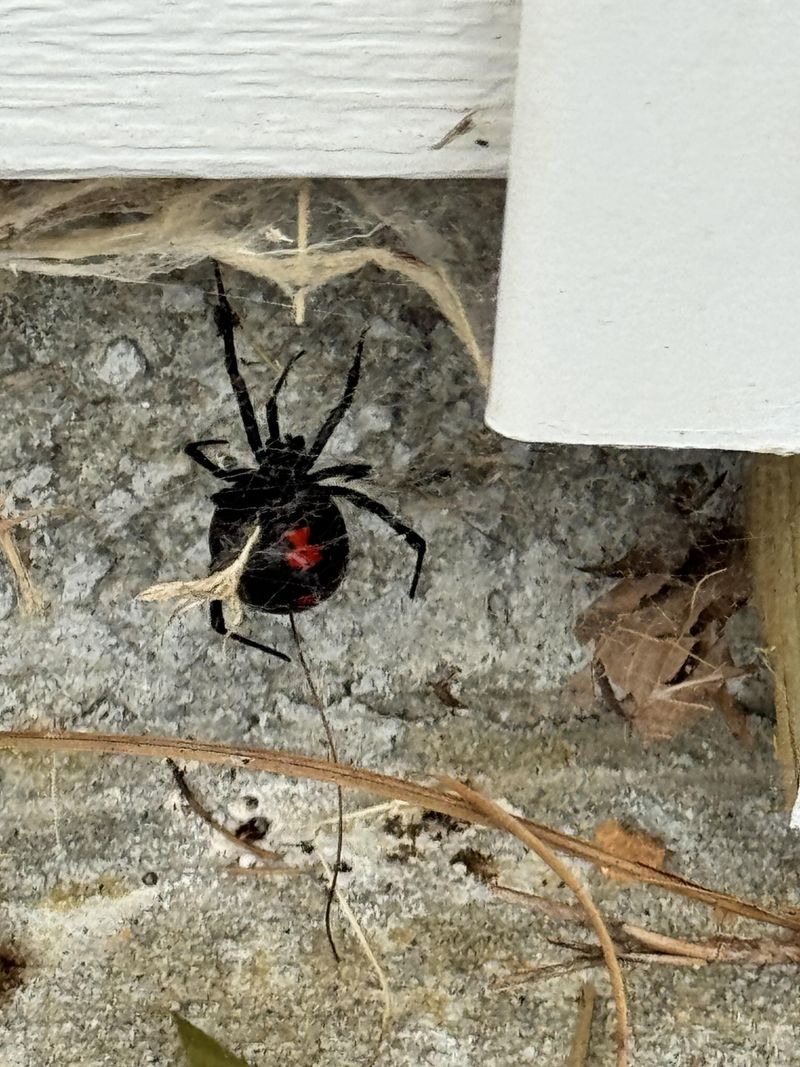
Gaps between split logs are dark, dry, and quiet, which is exactly the kind of spot spiders like. NC State names the southern black widow as the North Carolina species most likely to turn up in woodpiles.
That is a real basis for care, but it is a limited one.
A woodpile does not mean you have an infestation. Plenty of piles hold no widows at all, and a spider living in a pile is not the same as a spider entering your home.
The point is simply that sheltered spaces give spiders places to hide, so it helps to know the pile is a possible hiding spot.
Looks can also mislead. A dark spider is not automatically a black widow, and North Carolina has more than one widow species.
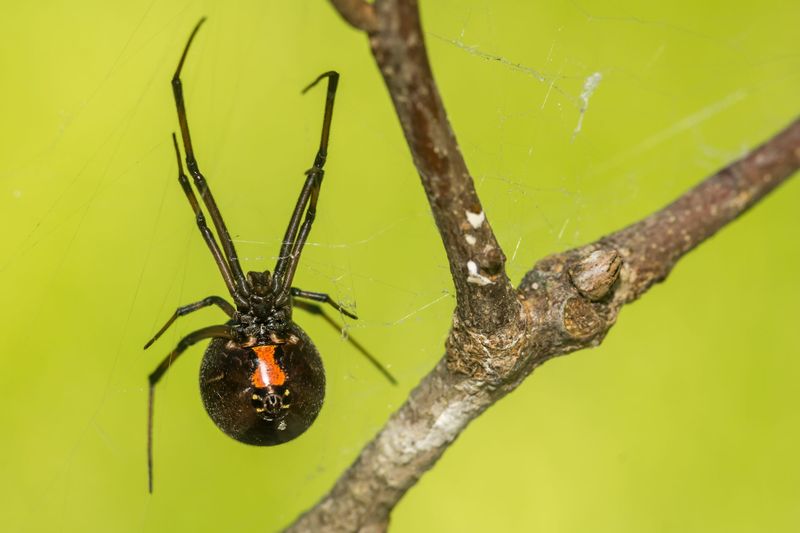
According to NC State Extension, young and male widows may not resemble the familiar shiny black adult female with a red hourglass.
Because of that, a red hourglass should not be your only test. Many harmless spiders are dark, and some widows look quite different from the textbook picture.
If you are unsure what you are seeing, treat the spider with distance and care instead of guessing.
Knowing the pile is a possible shelter sets up everything else in this article. The goal is not to fear the stack of wood.
It is to handle it in a way that makes surprises less likely.
Firewood can carry spiders indoors
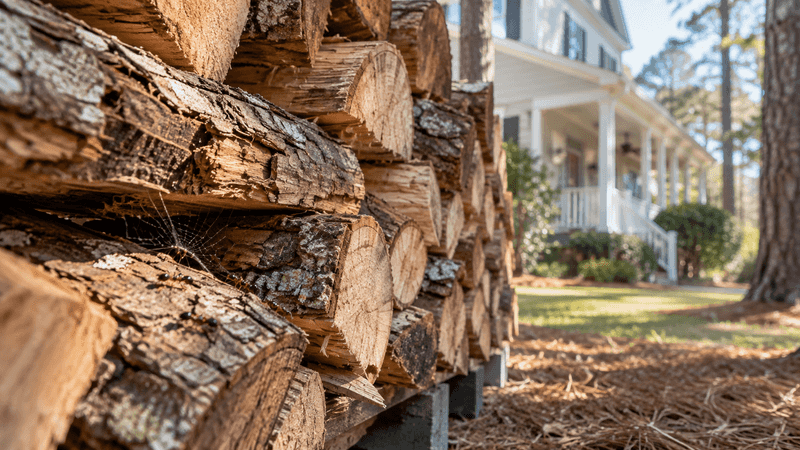
Spiders can hitchhike. If one is tucked into a crevice or bark, it can come inside with the log you carry in.
UC IPM describes spiders using spots like woodpiles and sometimes ending up indoors, so firewood is a possible route.
A possible route is not a predictable one, though. The sources cited here do not show that putting a pile near the back door commonly causes black widows to enter a house.
They also do not show that winter makes this more likely, so there is no reason to treat the season as a special danger.
Firewood can carry many kinds of spiders, plus other small creatures. Most of what hides in a log pile is harmless, and plenty of it is not a widow at all.
Southern black widows are one species that can use woodpiles, as NC State notes, but they are not the only thing you might find.
The same goes for a spider you spot indoors. Its source may be unknown.
It could have come in on wood, through a gap in a door, or from a garage or basement, so it is better not to assume the woodpile is to blame.
What you can do is treat wood as something worth a quick look before it crosses the threshold. A glance at each log, and a gentle shake outdoors, costs almost nothing.
Store the main pile away from the house and off the ground
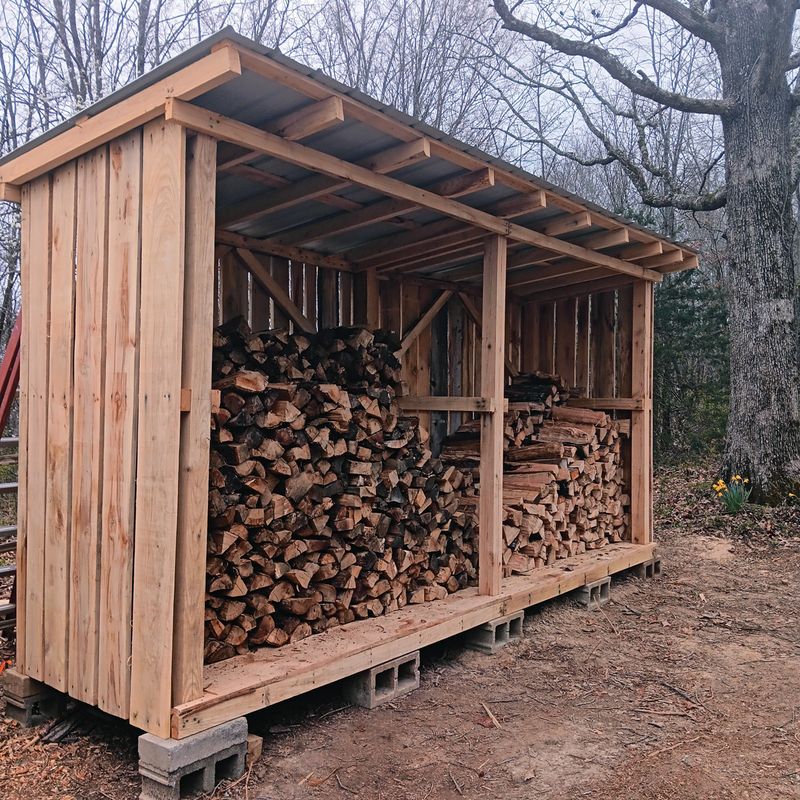
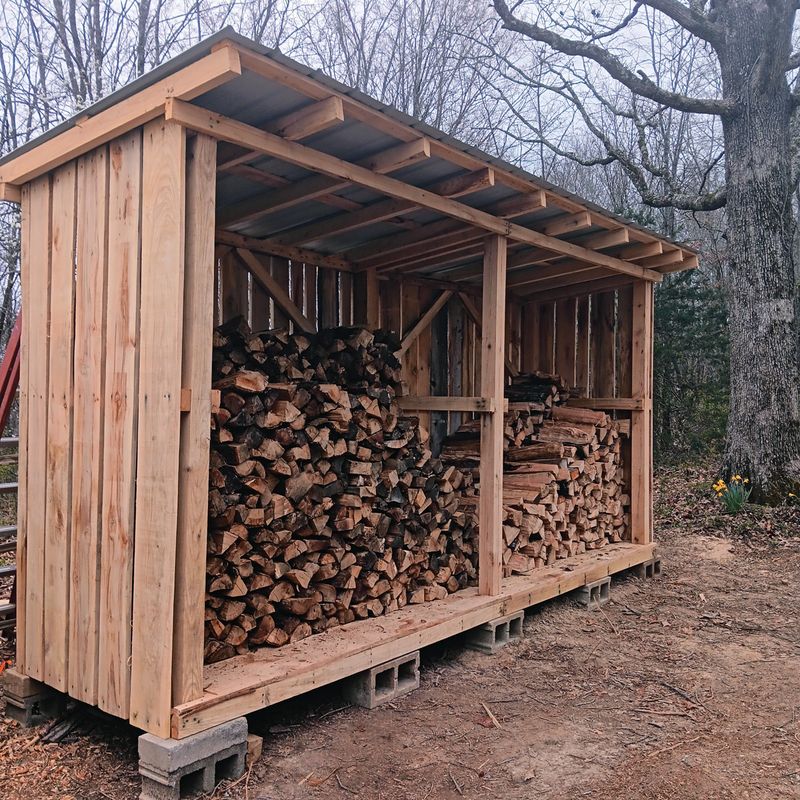
Where the pile sits matters. The North Carolina Forest Service advises keeping firewood away from the house and off the ground.
That advice covers fire safety, faster drying, and fewer wood-damaging pests.
It is general firewood guidance, not a black-widow study. No spider-specific minimum distance has been set, so skip anyone who gives you an exact number of feet for spiders.
Use the idea instead: the main stack belongs out in the yard, not leaning on the siding or the back steps.
Getting the wood off the ground helps in practical ways. A simple rack, a pair of pressure-treated beams, or a few pallets keeps logs drier and lets air move through the stack.
Dry wood burns better, and a tidy raised pile is easier to inspect.
When picking a spot, think about both convenience and sense. Look for level ground with good airflow, and place it a sensible stretch from the house, fences, and sheds.
A short walk to the pile is a fair trade for keeping the bulk of the wood outdoors.
Treat this as one way to reduce exposure. It does not promise a spider-free house, but it removes the easy handoff from pile to doorway.
Bring in only the wood you plan to use soon
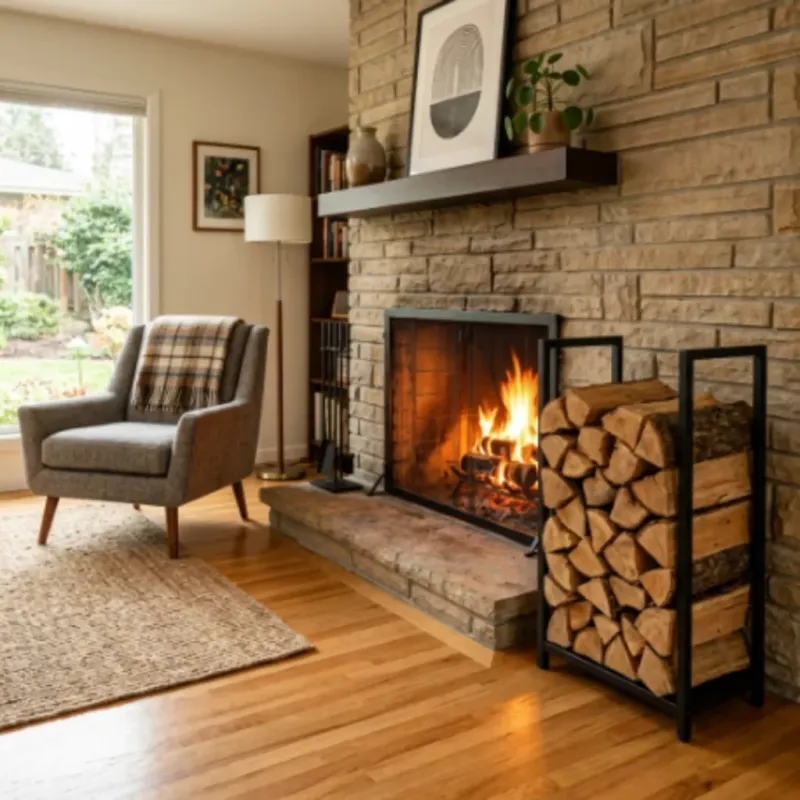
A small indoor stash beats a big one. University of Maine Extension suggests bringing in no more than a two-week supply of firewood.
That is broad firewood-pest advice, not a rule made for black widows.
The reasoning is about warmth. Wood that sits in a heated room can wake up insects that were dormant outside, and the longer it sits, the more time they have to become active.
Moving only what you will burn soon shortens that window.
None of this means the wood you carry in holds spiders. Most loads come in with nothing alive on them.
The habit simply lowers the odds and the time anything hidden has to wander off.
A practical setup is a log carrier or a basket near the fireplace, refilled every few days. Keep it away from bedding, curtains, and cluttered corners.
When the basket runs low, bring in a fresh armful from the outdoor pile.
Think of it as risk reduction, not a guarantee. A smaller indoor supply makes fewer chances for something to hitch a ride and gives you less to check each time.
Wear gloves and avoid reaching into dark spaces
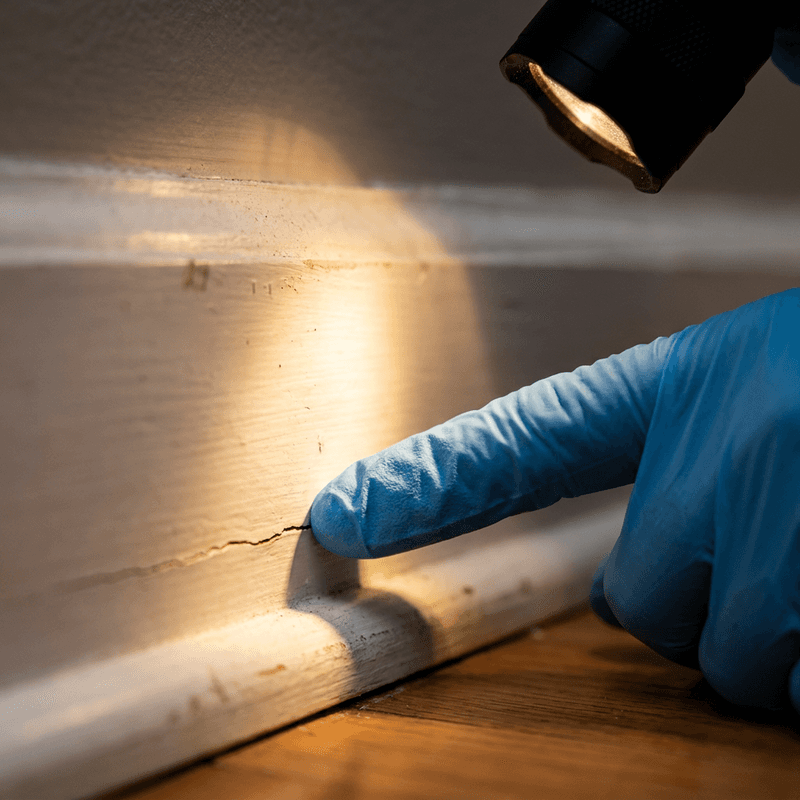
Gloves are cheap and easy. NC State Extension recommends wearing gloves when handling firewood, and Poison Control gives similar advice.
Both also caution against reaching into hidden spaces.
Black widows generally avoid people. They bite defensively, usually when pressed against skin or trapped.
A bare hand sliding into a dark gap is the kind of surprise that can cause that.
So pull logs out from the front or top, where you can see them, instead of groping deep into the stack. If a log sits in a shadowy spot, tip it toward the light first.
Give each piece a quick glance and a firm tap before it goes in the carrier.
Do the same for stored kindling, old bins, and corners of a shed. Spiders use any dark, undisturbed space, not just logs.
A flashlight helps when the light is poor.
These habits can lower the chance of disturbing a hidden spider, but they cannot guarantee protection. Gloves can be gripped through or slipped past, so a careful pace matters as much as the gear.
Skip insecticide sprays and treat prevention as risk reduction
Leave the spray can on the shelf. NC State warns against applying insecticide to wood meant for burning, and University of Maine Extension says firewood should not be treated either.
Burning treated wood is not a good idea.
A tidier yard is a better tool. Clearing clutter near the pile, such as boards, buckets, and stray debris, makes the area less welcoming to spiders.
NC State is clear, though, that this reduces the chance of an encounter and cannot eliminate it.
It helps to see the whole routine as a short sequence. Store the main pile away from the house and off the ground, as the North Carolina Forest Service advises.
Bring in only the wood you need soon, and handle it with care, with gloves and a look before each grab, as NC State Extension recommends.
Each step cuts down exposure a little. None of them is a promise, and none replaces the others.
Together they make a calm, low-effort habit you can follow all season.
Contact Poison Control about a suspected bite
If you think a black widow bit you, call Poison Control at 1-800-222-1222 or use its online tool. Trained staff can talk you through next steps.
The call is a clear first move, and you do not need to be sure what bit you.
Bites are generally defensive, so they tend to happen when a spider is pressed or trapped. Symptoms can include pain that spreads outward and muscle cramps.
Deaths are very rare, and Poison Control reports none among more than 15,000 exposures it reviewed.
Please do not try to diagnose a bite from how it looks. Many skin problems resemble spider bites, so appearance alone proves little.
If you can safely do so, note what happened and, if possible, keep the spider for identification.
Seek medical guidance if symptoms are severe or getting worse. Handling precautions are good habits, but they never stand in for care once something has happened.
A woodpile is a chore, not a threat, and a little care keeps it that way.