
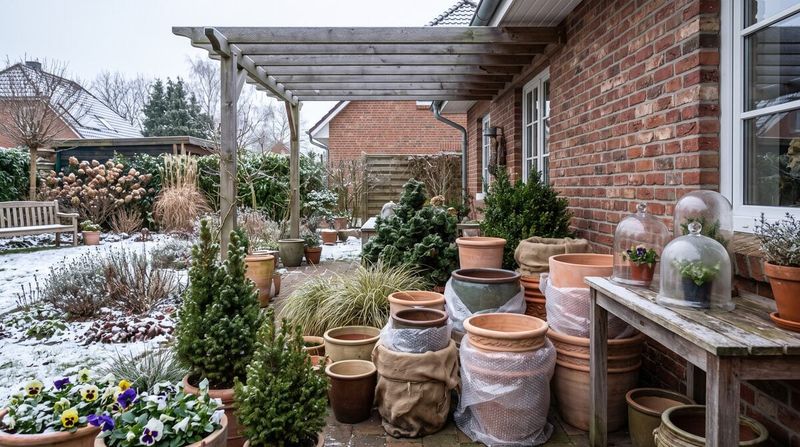
Wrapping your porch pots in burlap and bubble wrap before the hard freeze can help the perennials inside make it to spring. Plant roots in pots get hit by cold harder than roots tucked into garden soil, so a little cover goes a long way.
The right wrap, the right spot, and a few quick checks all work together. Here is how to give your pots their best shot at a comeback.
Container roots face greater winter exposure
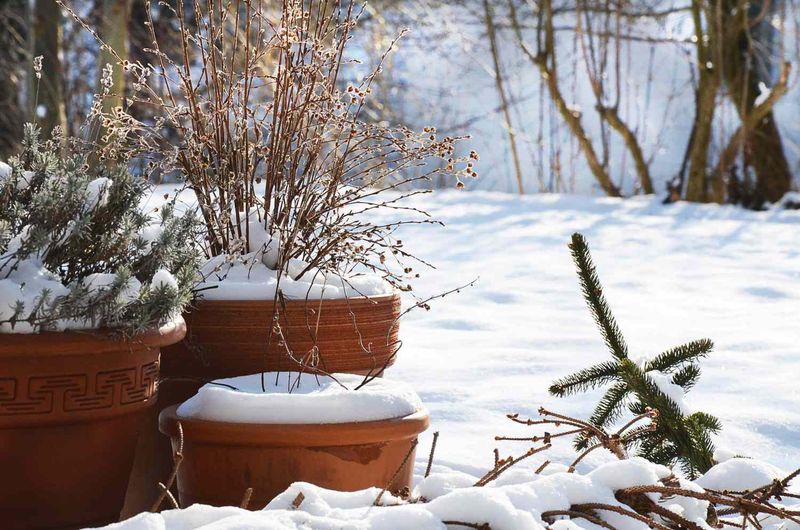
Garden soil acts like a big blanket. It holds onto warmth and changes temperature slowly, so roots planted in the ground are shielded from sudden swings.
A pot has no such blanket, and roots growing near its walls have very little between them and the cold air.
That is why container roots are more exposed to temperature swings. During a long freeze, the mix inside a pot can approach the air temperature, as UMass Extension explains.
Rutgers Cooperative Extension describes the same pattern for container plants during cold weather.
Picture two identical hardy perennials, one in a bed and one on the porch. The bedded plant may sail through a winter that injures the potted one.
Still, plenty of potted perennials survive, especially hardy ones in good spots. The goal is simply to narrow the gap.
Check the plant and the winter conditions
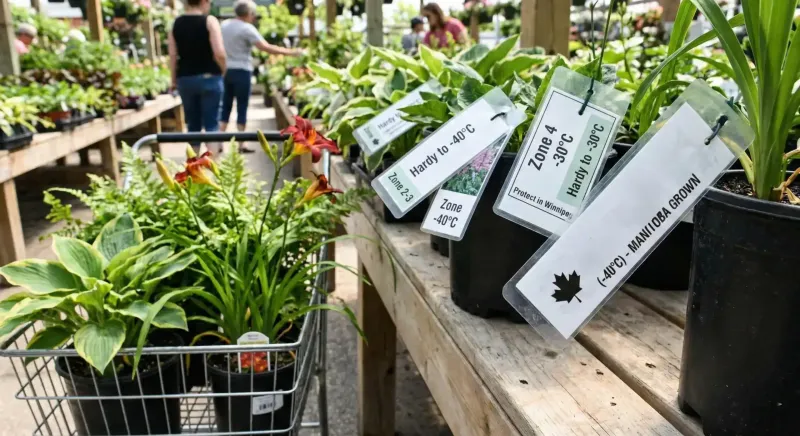
Before you grab any wrap, look at what you are protecting. Roots and crowns are often less cold-hardy than the stems and leaves above them.
Yet UMass notes that the hardiness of many herbaceous perennial roots and crowns has not been well established, so a plant tag only tells part of the story.
Hardiness zones help, but they have limits. The USDA explains that zones reflect average annual extreme minimum air temperatures.
They do not measure what an exposed pot’s roots will feel, and wind, snow, winter sun, and how long the cold lasts all matter too.
You may hear that you should pick plants rated two zones colder than yours. That is a cautious rule of thumb, not a promise.
A University of Minnesota Extension response points to repeated freezing and thawing as a real concern and suggests other protections.
Timing works the same way. Watch your local forecast for expected lows and match your protection to your plant, not to a single calendar date.
Move pots to a more sheltered spot
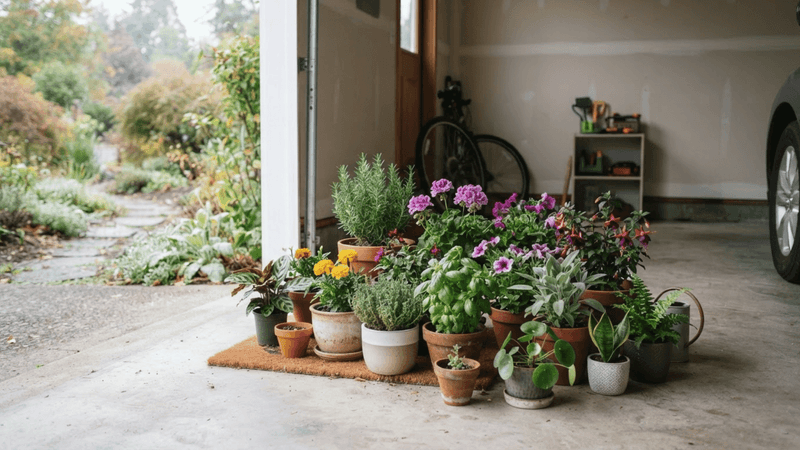
Moving is the easiest fix, and it comes before any wrap. Pull pots off elevated stands and set them directly on the ground, where some earth warmth can reach them.
Then huddle them together against a wall or in a protected corner, as Oregon State University Extension suggests.
If you have room in the garden, burying the pot up to its rim lets the surrounding soil do the buffering. An unheated garage or shed is another choice, and a University of Minnesota Extension response mentions options like these when container plants face freeze-thaw cycles.
Stored pots still need attention. Peek at the mix now and then, because sheltered soil can dry out, a point also raised in University of Maryland Extension guidance.
None of these moves is a guarantee. They simply cut down on exposure, which improves the odds.
Choose a wrap or added insulation
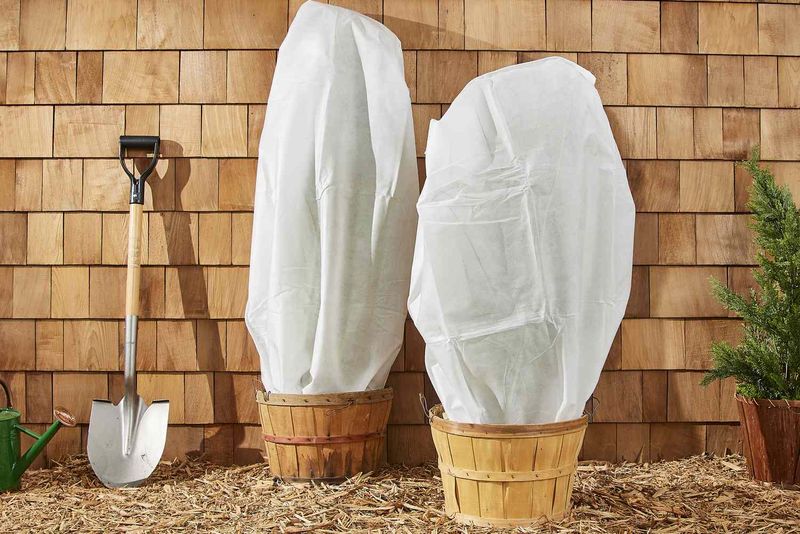
Some pots have to stay outside, and then wrapping comes into play. NC State Extension lists bubble wrap, frost blanket, closed-cell foam, and quilt batting as ways to wrap a pot directly.
Maryland Extension is more cautious, saying in its guidance that thin materials such as bubble wrap may give a root ball limited insulation.
Putting those views together, bubble wrap alone should not be trusted in severe cold. Thicker layers or doubled materials make more sense.
Burlap does a different job. It breaks the wind, and Oregon State University Extension includes it among materials for protecting outdoor containers.
Think of it as a windbreak, not a strong thermal barrier.
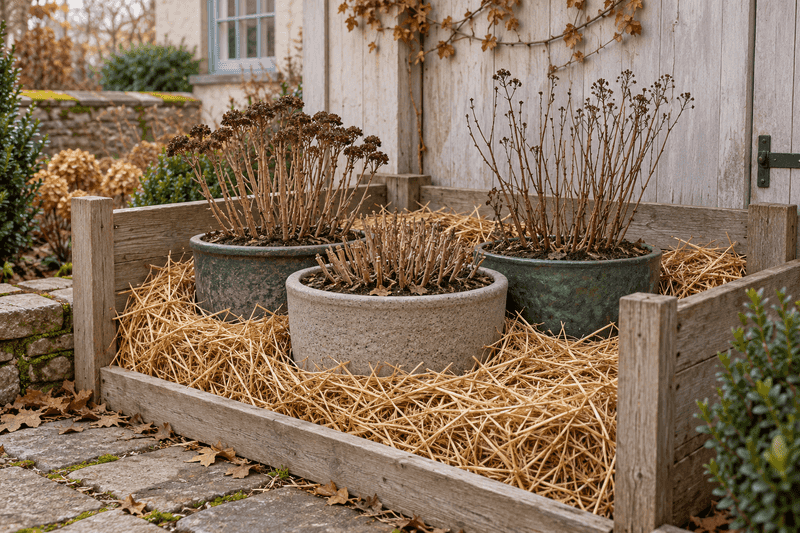
For real bulk, skip the direct wrap. Stand a wire cylinder around the pot and fill the gap with leaves, straw, or similar material.
That surrounding layer adds far more insulation than a thin skin. No single material will protect every pot, so match your choice to your plant and climate.
Keep drainage open and check moisture
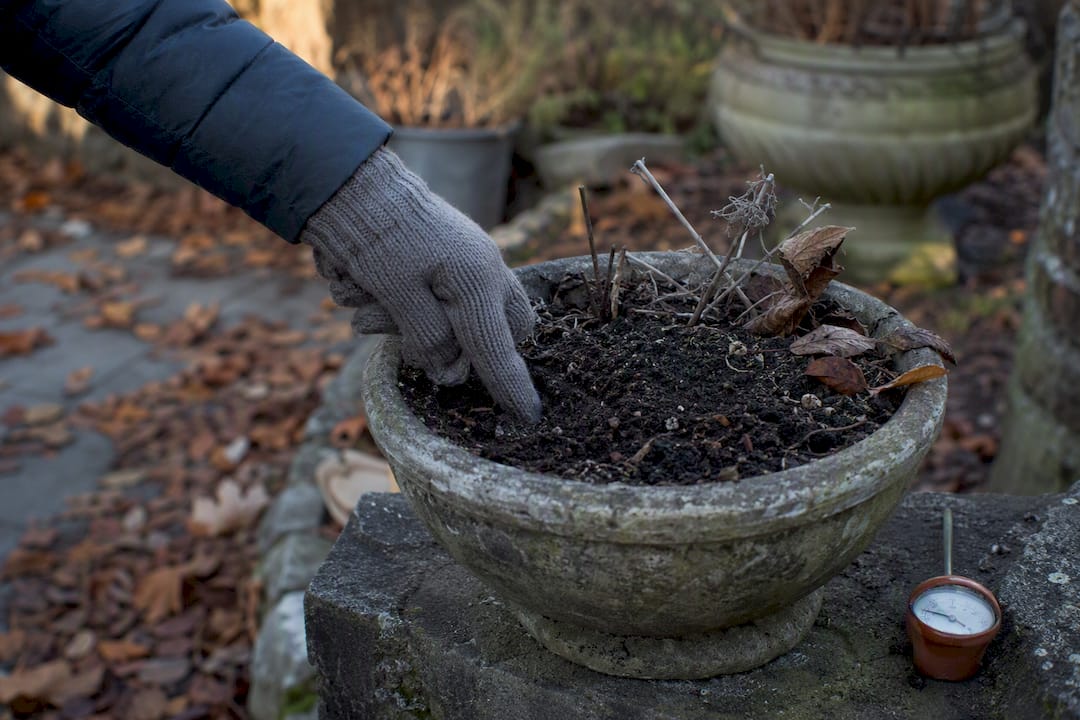
Wet feet can hurt a dormant plant as much as cold can. Keep drainage holes clear, and do not let the mix stay soggy, since waterlogged pots can encourage root rot, as NC State Extension notes.
Check the mix every couple of weeks by pushing a finger a couple of inches down. If it is dry and temperatures are above freezing, give it a drink.
UMass Extension also warns that covers can trap moisture, block access for watering, and lead to mold and decay.
That is why sealing a whole plant or pot in impermeable plastic is not a safe all-purpose method. Covered plants still need regular looks.
Insulation will not fix every winter problem either. Cold, windy days can pull water out of evergreen foliage, as NC State Extension describes, and a frozen root ball can limit water uptake, a point Rutgers Cooperative Extension makes as well.
Keep expectations realistic through winter
Your plan comes down to three steps. Size up the plant and your local lows, pick the best shelter or insulation you can manage, and keep checking the pots all winter.
A thick layer of leaves around a pot in a sheltered corner beats a single thin wrap in an open spot.
Wrapping can help moderate root-zone temperatures, as both UMass Extension and NC State Extension describe, but no wrap can promise a plant will return. Some will skip a year or fade, and that is the nature of growing in containers.
Next steps are simple. Note your plants’ hardiness, set pots together in the most sheltered spot, add insulation, and check moisture on mild days.
In spring, give a quiet pot time before you give up on it.
A good wrap does not guarantee spring, but it gives the plant a fair fight.