
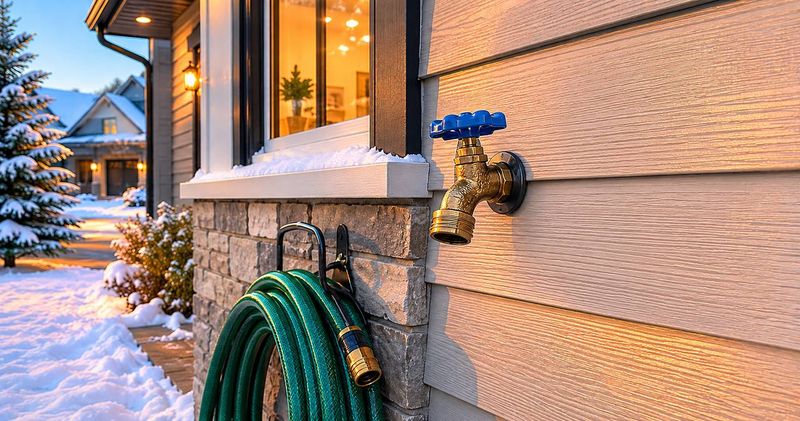
A garden hose left on an outdoor faucet can set up a freeze problem that starts in the wall and stays out of sight. With some frost-free faucets, the hose holds water inside the faucet, and that trapped water can freeze, expand, and split the tube.
You may not find out until spring, when you turn the water on and it leaks where you cannot see. The fix is simple, and the details depend on the faucet you own.
Why an attached hose can stop a faucet from draining
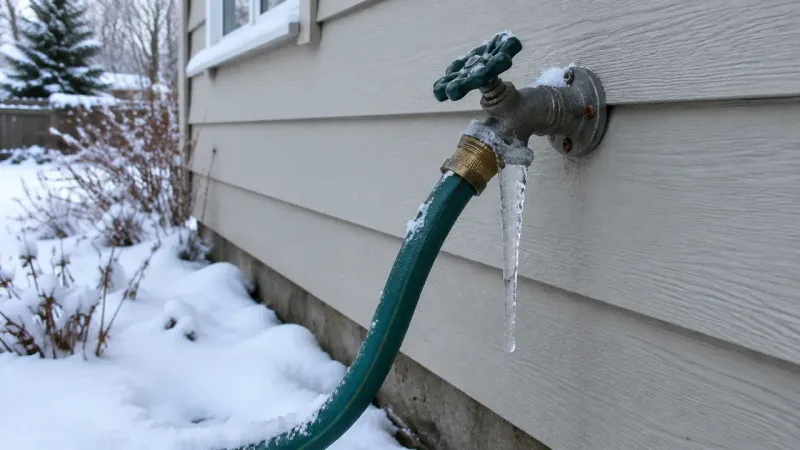
Picture a long metal tube running from the outdoor handle deep into the wall. A standard frost-proof faucet is built so the valve seat sits inside the heated part of the house.
When you shut the handle off, the water left in the tube is supposed to run out through the spout.
That draining step is the whole trick. According to Woodford’s explanation of how a standard frost-proof faucet works, an attached hose can trap water in the faucet, which allows it to freeze and burst.
The same goes for a splitter, a spray nozzle, or a timer screwed onto the spout. Anything that closes off the outlet can keep air from getting in and water from getting out.
Even a hose that looks empty may hold enough water at the end to block the flow.
Water expands when it turns to ice, and a closed metal tube has nowhere to let that pressure go. That is why trapped water raises the risk of damage.
It does not mean every attached hose will cause a problem, and it does not mean every freeze will do it.
Some winters in North Carolina bring only a few cold nights, and some faucets are installed well enough to cope. Still, a faucet that cannot empty itself leaves you relying on luck.
Knowing how the drain-down works makes it easier to see why a hose does not belong on the spout during freezing weather.
A leak may not appear until you use the faucet
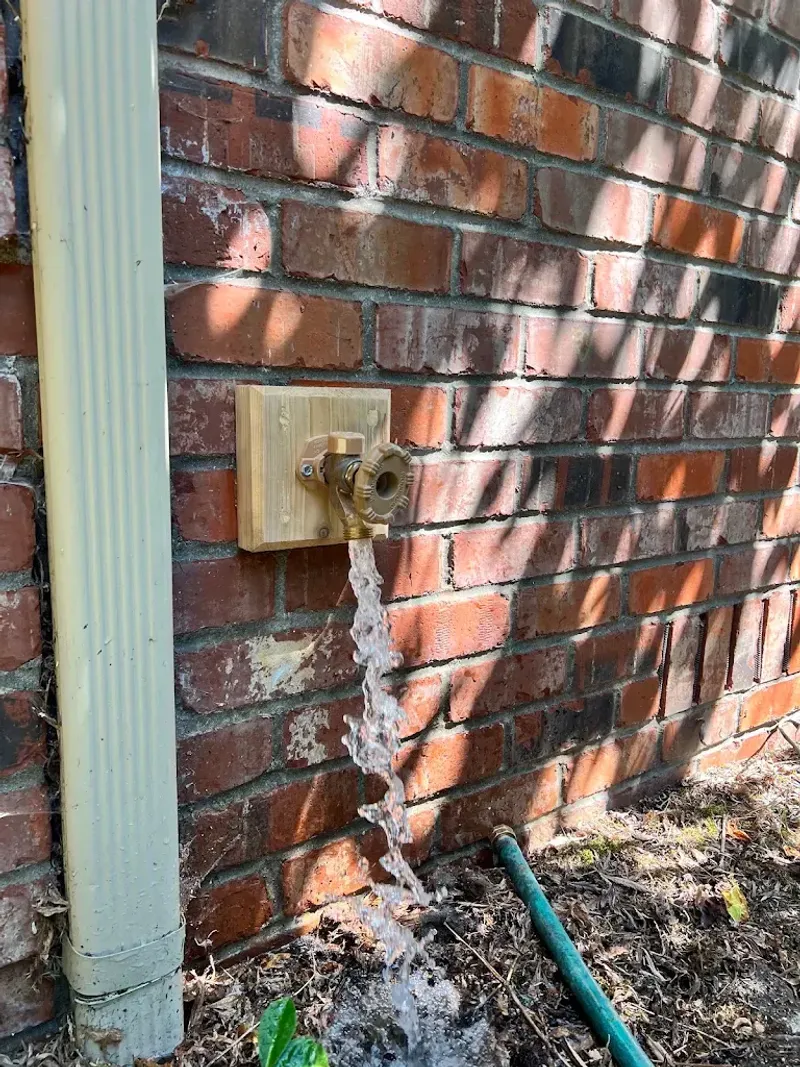
Freeze damage can be quiet. Once the ice thaws, the faucet may look and act normal, because the handle is off and no water is pushing through the tube.
The damage only shows when the supply is turned on again.
For some standard frost-proof designs, the possible result is a split in the faucet tube. Woodford’s explanation describes a leak that may only become obvious when someone uses the water later.
In that case the first sign could be a spray or drip the moment you open the valve in spring.
Where the water goes depends on the faucet and how it was installed. The split might be in the faucet assembly itself, or the leak could show up in nearby plumbing.
A split inside the wall is one possibility, not a sure outcome, so a leak should not be assumed to be in any one spot.
Clues worth noticing include water running when the handle is closed, damp siding or trim near the faucet, or a wet spot on an inside wall or ceiling close to where the pipe enters. Any of these is a reason to shut the supply off and have the plumbing looked at rather than guess.
Check whether your faucet is designed to drain with a hose attached
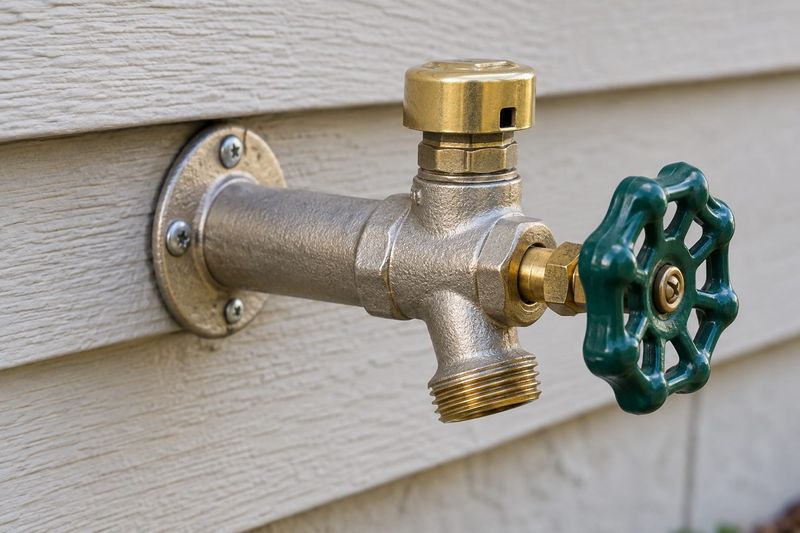
Not every frost-free faucet works the same way. Conventional designs usually need an open outlet so the water can leave the tube.
Some specific models, however, are built to drain even with a hose attached.
For example, Woodford lists automatic draining wall faucets, including its Model 30. A PRIER product guide describes its C-434 as self-draining with a hose attached.
That is a product-specific exception. It is not a reason to assume your unlabeled faucet has the same feature.
Look for a brand name or model number on the handle, the body, or any paperwork from the install, and then read the instructions for that model.
Installation matters just as much. Typical frost-proof faucet drainage relies on a slight downward pitch toward the outlet and an outlet that is not blocked.
A faucet mounted level or tilted the wrong way may hold water even without a hose, and debris, insects, or a cap can also get in the way.
If you cannot tell what you have, treat the faucet as conventional and remove the hose. That is the cautious choice until you can confirm the model.
Disconnect and drain outdoor hoses before freezing weather
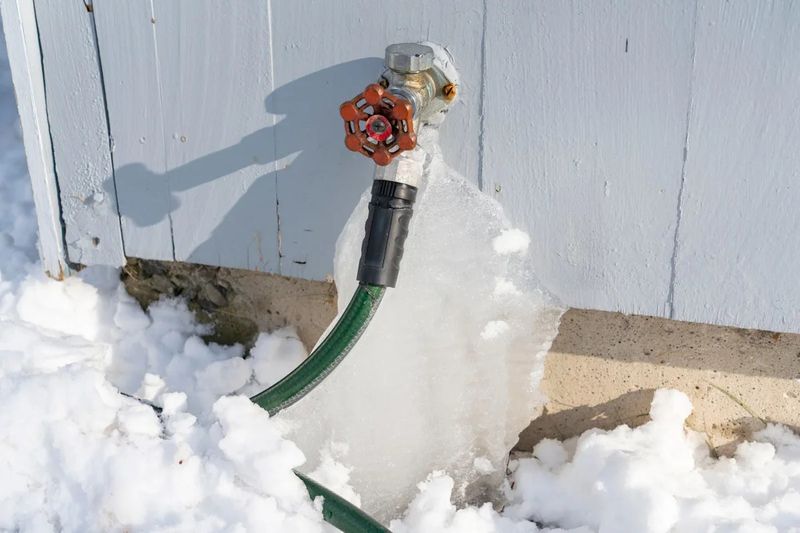
Winter prep for hoses is short and plain. Durham’s winterizing guidance advises disconnecting and draining outdoor hoses, which lets water drain from the pipe.
Start by shutting off any hose-end sprayers or nozzles. Then unscrew the hose from the spigot, and take off any splitters, timers, or adapters too.
Removing the fittings gives conventional faucets an open outlet for water to leave.
Next, drain the hose. Lift one end and walk the hose along so the water runs out the other end.
Lay it out on a slope for a bit if it still holds water.
Finally, coil it and store it in a garage, shed, or basement. A hose left outside can still collect water, and storing it keeps it from being left attached by habit.
Do this before freezing weather arrives, and watch your own local forecast instead of a set date. There is no one statewide temperature or calendar deadline that fits every property.
Taking the hose off is a recommended preventive step, but it does not guarantee against every winter plumbing problem. A faulty faucet, poor installation, or exposed pipes can still cause trouble.
Use an indoor shutoff if your plumbing has one
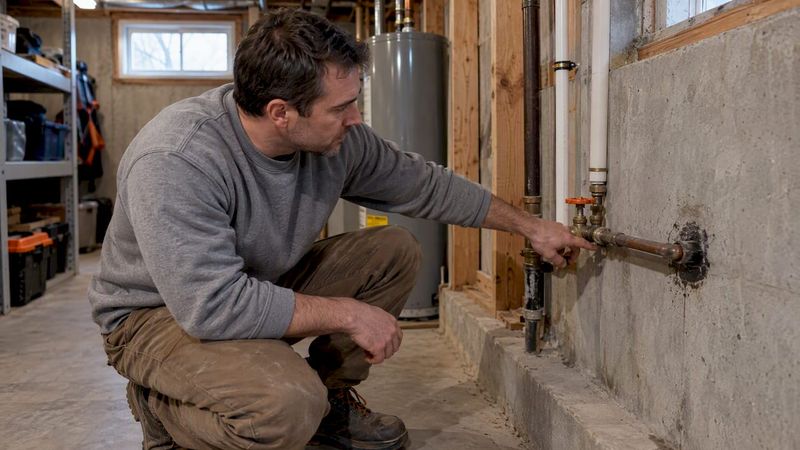
Some homes have a separate valve inside that controls the line to the outdoor faucet. If yours does, you have an extra tool.
Johnston County’s freezing temperature alert advises shutting off the supply if possible and draining the remaining water.
Steps differ by home. Some setups have a valve with a small drain cap, and others have no indoor shutoff at all.
If you are not sure what you have, follow the guidance for your specific plumbing and ask a plumber to point it out.
A typical sequence is to close the indoor valve, then open the outdoor faucet so what is left in the line can come out. Some people place a bucket under a drain cap to catch drips.
Do not assume this applies to every house, since many are plumbed differently.
An insulated faucet cover adds some extra protection. Think of it as a bonus layer.
If your faucet is a conventional type, a cover does not replace taking the hose off, because trapped water is still trapped.
If pipes freeze, do not use an open flame
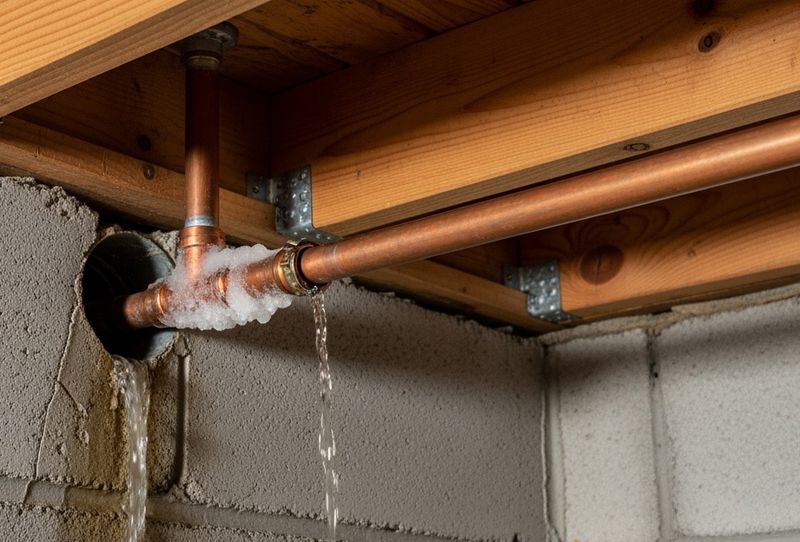
If you suspect a pipe has frozen, stay calm and keep the heat source safe. Johnston County’s guidance warns against using an open flame to thaw pipes.
A torch or lighter can start a fire in walls, insulation, or stored items.
If water is still running, the county advises waiting for the pipe to thaw. Slow thawing is less risky than rushing it with something dangerous.
Keep an eye on the faucet while you wait.
After the pipe has thawed, check for cracks or leaks. Look at the faucet, the exposed pipe, and the area around where it enters the house.
Damp spots, dripping, or water that keeps flowing when the handle is closed are signs to act on.
This article does not cover how to repair a pipe or find the source of a hidden leak. If you see damage or are unsure, shut off the water supply to that line if you can and call a licensed plumber.
A match is never a plumbing tool.