
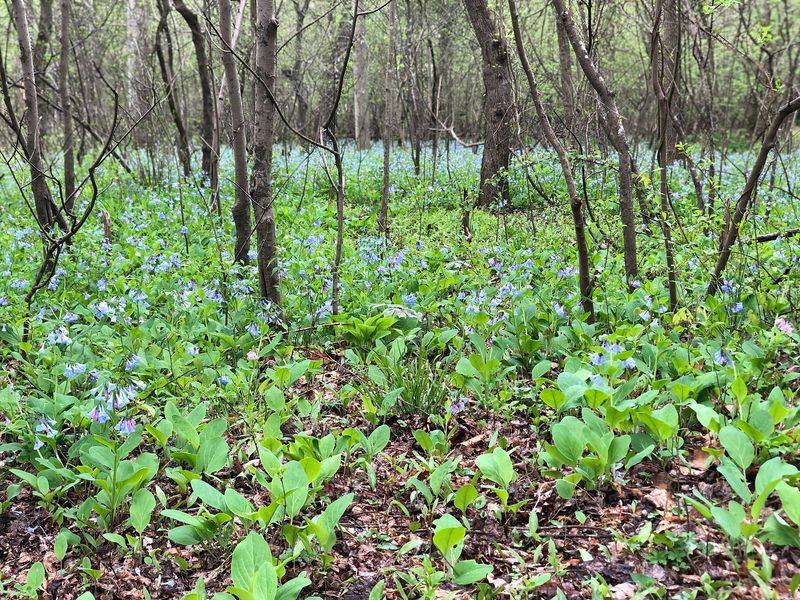
That low, purple-flowered plant spreading under your oaks may be a small groundcover worth a second look before you reach for the mower or the shovel. Missouri violet is a plausible match, since Austin describes it as a shade-suited plant that attracts butterflies.
Color and location alone cannot name a species, though, so a little careful looking comes first. Taking your time also protects the oak roots and soil right beneath your feet.
Purple flowers in shade point toward a violet
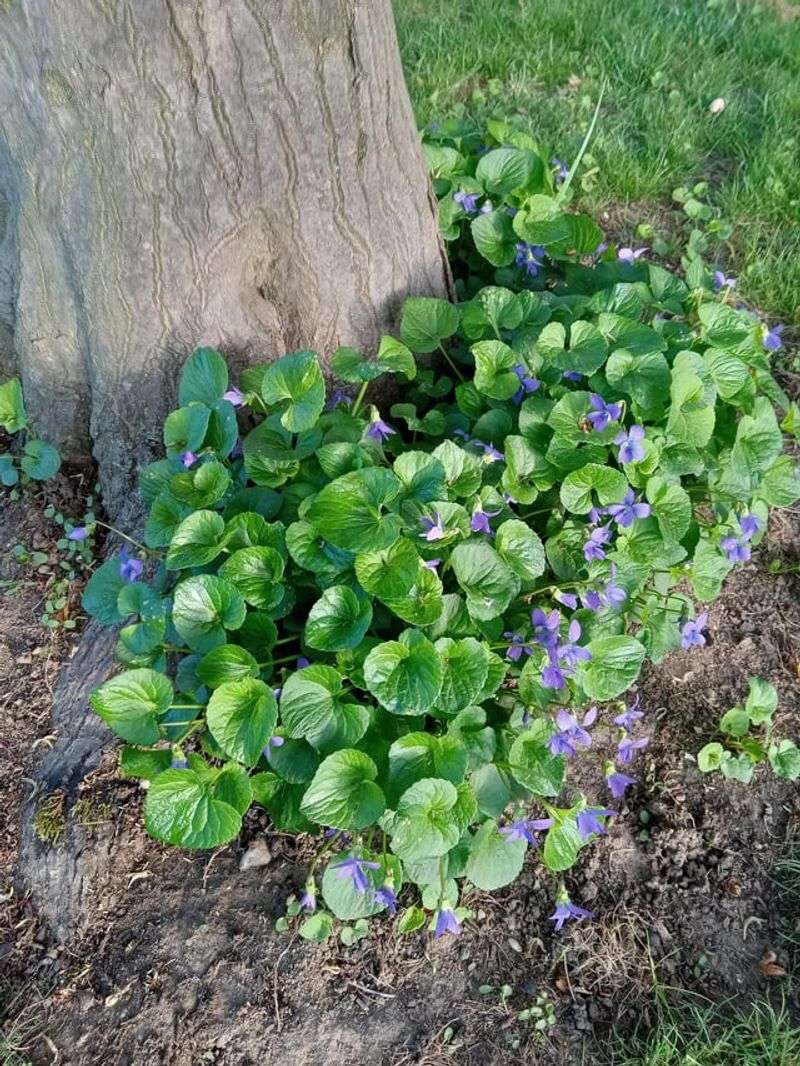
A low plant with purple flowers in a shady spot gives you a real clue. Missouri violet is a plausible candidate for that description, and it is worth keeping in mind before you pull anything out.
Still, color and location are not enough to name a species. Many plants have purple blooms, and plenty of them like shade.
Treat violet as a good first guess that you can test, not as an answer.
Names need care too. Austin’s violet plant guide lists Viola missourensis as its shade-growing violet and says it is native to Texas but not to the Edwards Plateau or Blackland Prairie.
That matters if you live in those regions. It means you should not assume every violet in your yard is a local native.
The Lady Bird Johnson Wildflower Center takes a different path. Its page for Viola sororia uses the common name Common Blue Violet and includes Texas in the distribution.
Those two names are not interchangeable just because both are violets, and sources may not agree on how they relate.
So check which species a source is actually describing. Look at leaf shape, flower color, and where the plant is growing, then compare your plant to a trusted guide before you decide anything.
Missouri violet is a small, shade-suited groundcover
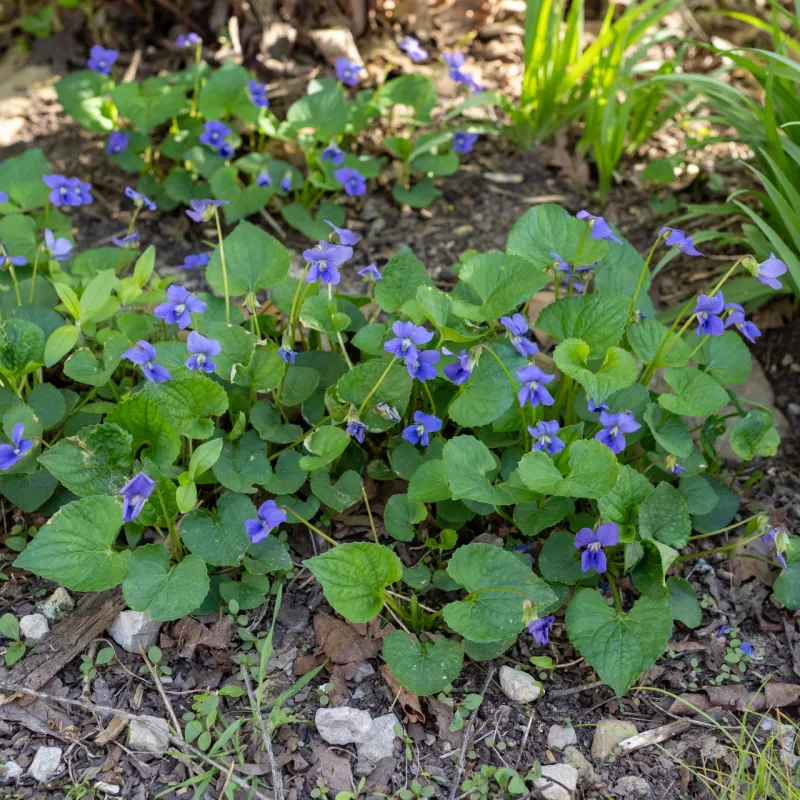
Size is one of the easiest traits to check. Austin’s guide gives Missouri violet a height of 4 to 6 inches and a spread of 8 to 10 inches.
That is a small, ground-hugging plant, not a shrub or a vine.
The flowers show up in spring and are purple. If your plant blooms in a different season or stands much taller, it may be something else entirely.
Shade suitability is the other big clue. The city lists this violet as a plant for shade, which fits the dim ground under a tree canopy where turf often struggles.
Austin’s groundcover guide also lists violet flowers and shade suitability for Viola missourensis, so the two city sources point the same direction.
That said, a good match on paper does not promise success in every yard. Soil, water, and how much light really reaches the ground all vary from one spot to the next.
This section is about form and site fit only. It is not a suggestion to plant new groundcover under mature oaks.
If a violet-like plant has already settled in, its small size and shade habit simply explain why it might be thriving there.
Frogfruit has different flowers and light needs
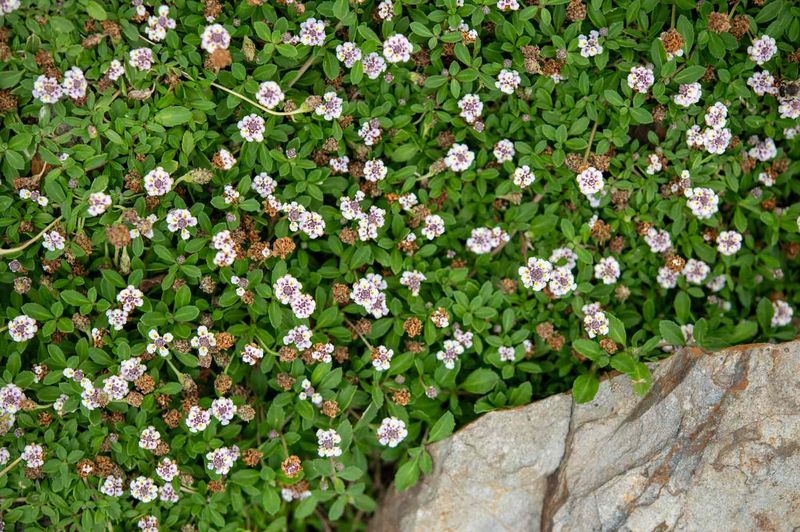
Frogfruit often comes up when people talk about tough Texas groundcovers, so it makes a useful comparison. It is not a second guess for your purple-flowered plant, because the flowers do not match.
Austin’s frogfruit guide describes the flowers as white and recommends sun to part shade. It lists the plant as a perennial native to the Blackland Prairie and Edwards Plateau.
The Wildflower Center’s page on Phyla nodiflora describes the flowers as white to pink and the light needs as sun to part shade.
Compare that with violet. The city’s violet entry lists purple flowers and shade suitability.
That violet guide is the reason violet fits the shady, purple scene better.
Neither source suggests frogfruit thrives in deep shade beneath oaks. If your oak canopy is dense and the ground is dim, frogfruit is a poor guess.
The Wildflower Center also calls frogfruit vigorous, meaning it spreads with energy. Do not count on it staying put if you ever encounter it in a sunnier spot.
What the sources say about butterfly value
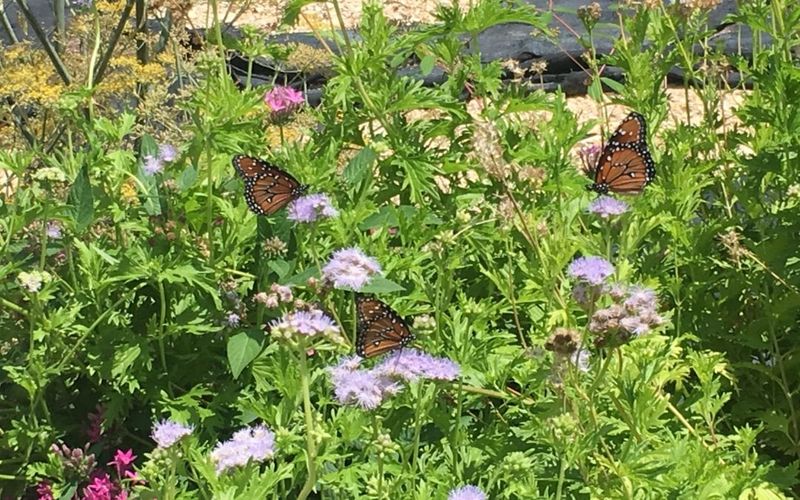
The butterfly claim for violet is short and specific. Austin’s groundcover guide says Missouri violet attracts butterflies.
That is the extent of what these sources say.
It does not name which butterflies visit, and it does not say how much a patch helps them. So a violet patch is a nice bonus, not a rescue plan for local wildlife.
Frogfruit is documented differently. The Wildflower Center says frogfruit attracts pollinators and names Phaon crescent, buckeye, and white peacock butterflies as larval hosts.
A larval host is a plant whose leaves caterpillars can eat, which is a different job from offering a visit to adult butterflies.
Keep those two ideas apart. The frogfruit information does not transfer to violet, and the violet statement does not claim any host role.
A practical way to use this: if you see butterflies near your patch, enjoy it, and note what you see. But a small groundcover is not a major or indispensable pollinator resource, and no source here says it is.
Protect oak roots and soil from disturbance

Whatever the plant turns out to be, the ground beneath an oak deserves care. University of California guidance on planting under oaks advises avoiding root-cutting digging or trenching, soil compaction, and grade changes beneath oak canopies.
That is general oak-care advice from California, not a Texas-specific planting plan. It is still a sound reason to slow down around established trees.
Picture the practical side. Pulling out a patch by hand with a shovel, tilling bare spots, or trenching for edging can slice through roots near the surface.
Parking a trailer or running heavy equipment across the area can press the soil down. Piling soil or mulch deeply, or scraping the ground lower, changes the grade.
Each of those is a form of disturbance. A low plant already growing there may be a sign that the ground has been left fairly quiet.
This does not mean you must never touch the area. It means the default should be gentle: look, identify, and avoid heavy digging.
Use this guidance as a reason for caution, not as a recipe for filling bare ground with new plants.
Identify the plant before deciding what to do
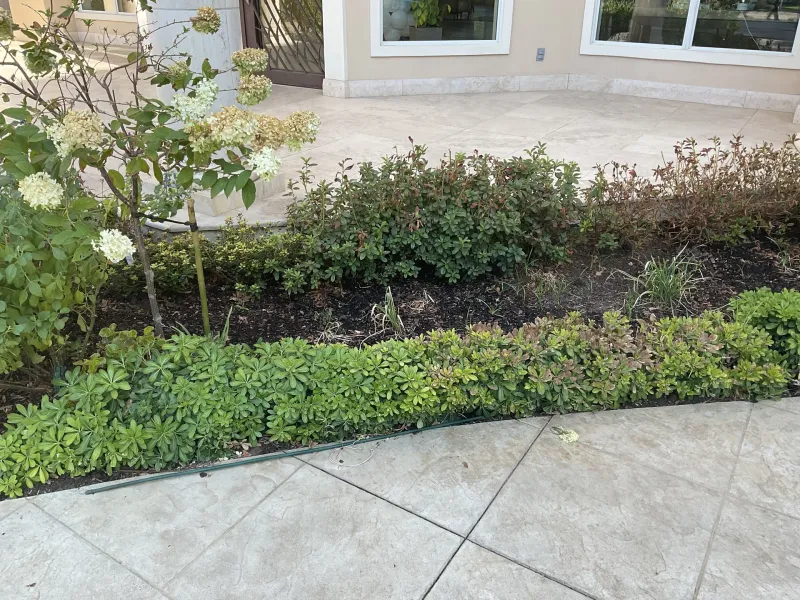
Start with a photo of the flowers, leaves, and the whole patch. Compare them with a trusted guide or a local extension office, and note the light, season, and how fast it spreads.
Once you know what it is, think about where it grows. A small patch under an oak that is not in anyone’s way may be fine as it is, while a patch creeping into a walkway may need a decision.
If it is Missouri violet, remember that Austin says it reseeds easily and may move around a garden. Leaving it does not mean it will stay put.
Sometimes the best first move is simply a slow look.