
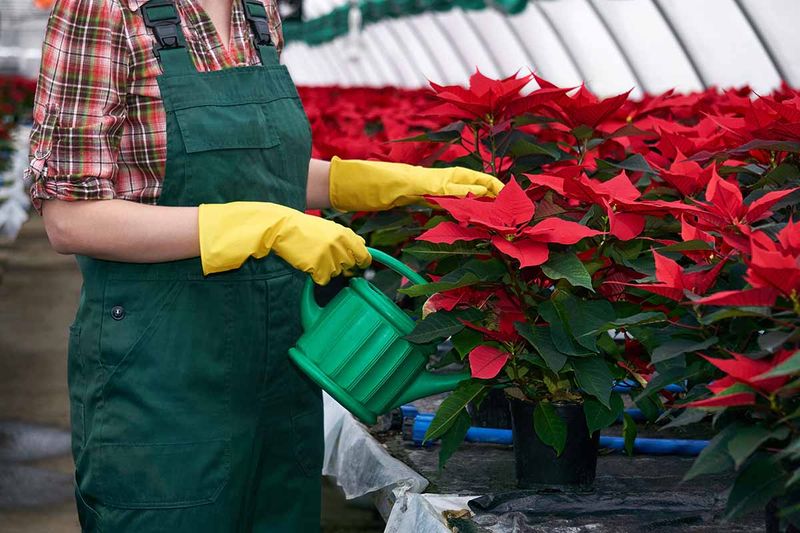
A store-bought poinsettia can look great on day one and shed leaves a couple of weeks later. Water is often part of the story, but not in the way most people think.
A quick check of the pot, followed by a good drink and a full drain, takes the guesswork out of it. Here is how to do it, and what else your plant needs to look its best.
Both too much and too little water can cost a poinsettia leaves
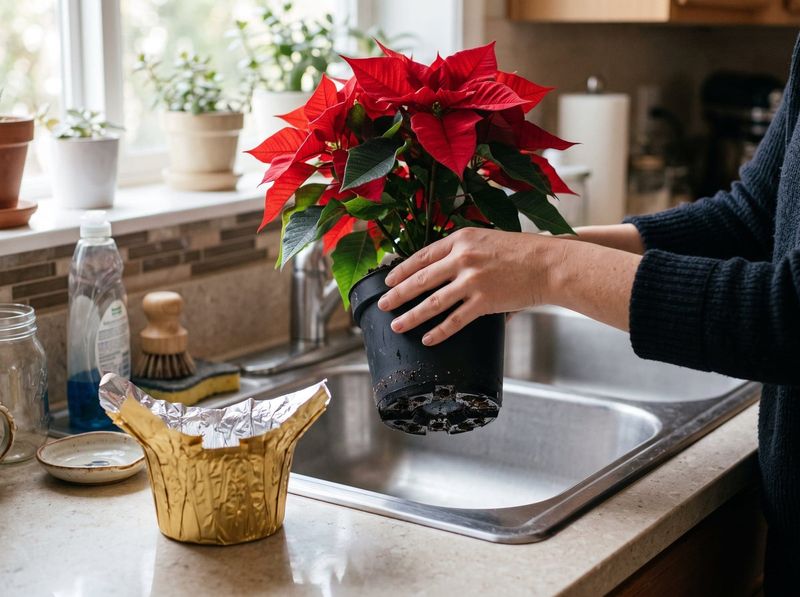
Poinsettias are fussy about water, and the trouble can come from either side. If the mix dries out so much that the plant wilts, University of Delaware Extension warns that leaves may drop early.
Soaking soil that is already wet causes its own mess. Roots sitting in soggy mix struggle to get oxygen, and the plant can respond with wilting, yellowing leaves, and leaf loss.
A wilted plant in wet soil looks a lot like a thirsty one, which is how people end up watering the wrong way.
Water is also not the only cause. Oklahoma State Extension points to temperature, light, and moisture together as the things that keep a poinsettia attractive.
That is why a calendar rule such as water every Sunday does not work well. Your plant needs a routine based on what the pot is telling you right now, and that starts with a simple check.
Check the soil before you water
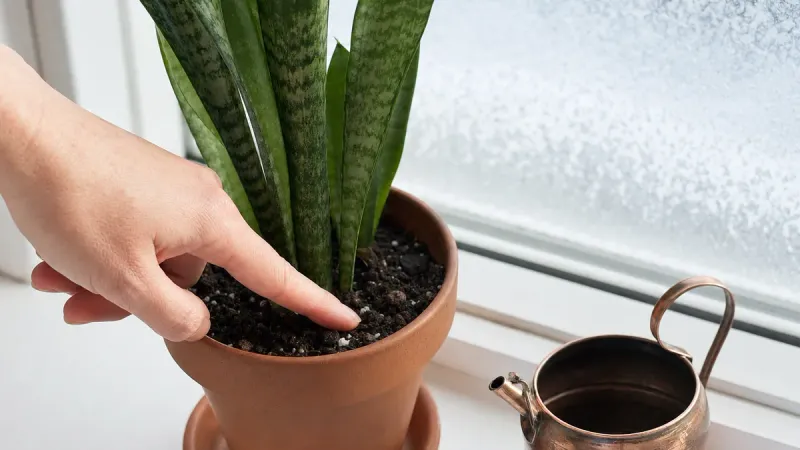
Before you pick up the watering can, touch the surface of the potting mix. If it feels dry, it is time to water.
You can also lift the pot: a light pot usually means the mix has dried out, while a heavy one still holds plenty of moisture. University of Minnesota Extension recommends checking the soil surface or pot weight.
Drying speed changes from home to home. The U.S.
Botanic Garden notes that brighter light and lower humidity can mean more frequent watering. A plant by a sunny window may need a drink sooner than one in a cooler room, so a fixed interval will often be wrong.
Try not to wait for droopy leaves as your signal. Delaware Extension mentions slight drooping as a cue, but it also cautions that letting a poinsettia wilt can lead to early leaf drop.
A dry-surface check or a light pot lets you water before the plant gets stressed.
Water thoroughly, then let the pot drain
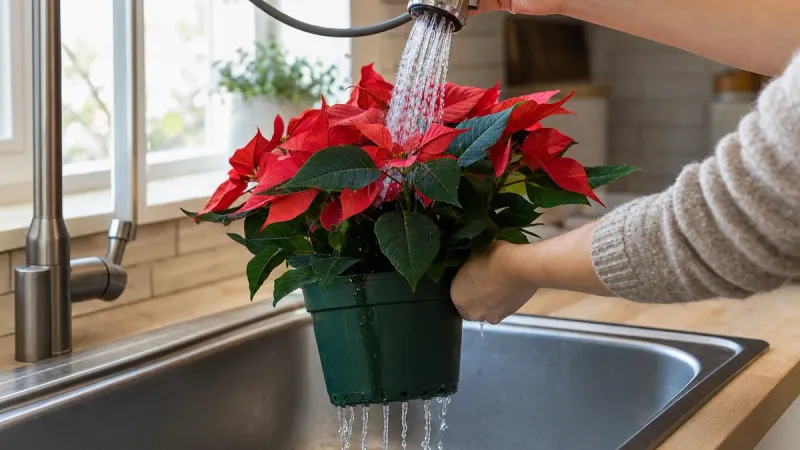
Start by looking at the wrapping. Decorative foil or plastic sleeves can trap water at the bottom, so take them off or poke open the drainage holes.
University of Maryland Extension also advises against leaving water standing in the saucer.
Next, water slowly until liquid runs out of the bottom of the pot. A good soaking wets the whole root ball instead of just the top inch.
Many people find the kitchen sink handy for this, since the pot can sit there for a few minutes while the extra water escapes.
Once it stops dripping, return the pot to its saucer and empty any water that collected. According to Minnesota Extension, steady wetness can damage roots and lead to rot, and the U.S.
Botanic Garden gives similar drainage advice.
You may see the phrase moist, not soggy. It means the mix feels damp after watering, not that roots should sit in a puddle.
It also does not mean letting the plant wilt between drinks.
Watering is not the only factor behind leaf drop
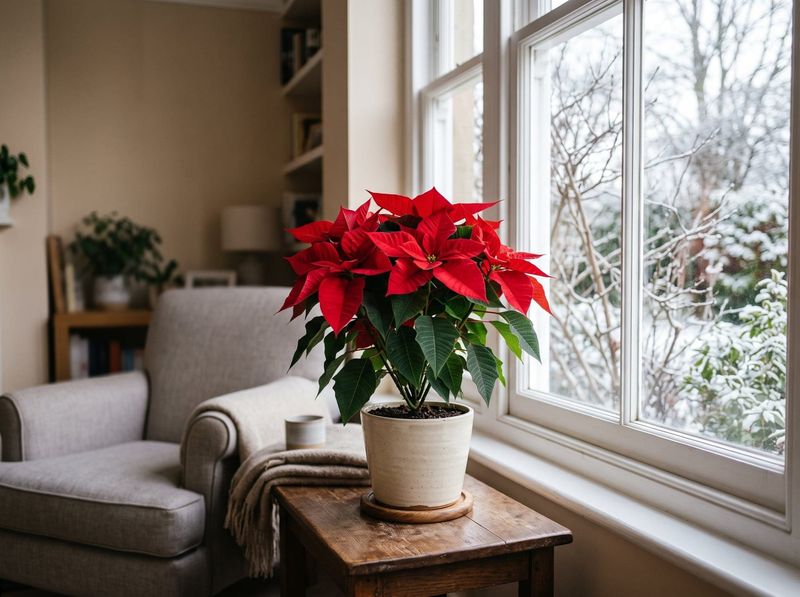
Even perfect watering cannot cancel out a bad spot. Oklahoma State Extension notes that low light can lead to leaf drop, so give your plant bright natural light.
Drafts matter too. Maryland Extension says they can contribute to leaf and flower drop.
Keep the pot away from cold windows, exterior doors, and heat vents or other sources of hot, dry air.
For temperature, aim for roughly 60 to 70°F indoors. Minnesota Extension says poinsettias can suffer damage below 50°F, and Delaware Extension gives the same warning.
That matters on the car ride home from the store in cold weather.
Think of these as ways to lower your odds of trouble, not guarantees. A plant in a good spot can still lose a few leaves, but a plant in a bad spot will struggle no matter how carefully you water.
Watering will not make the red bracts red
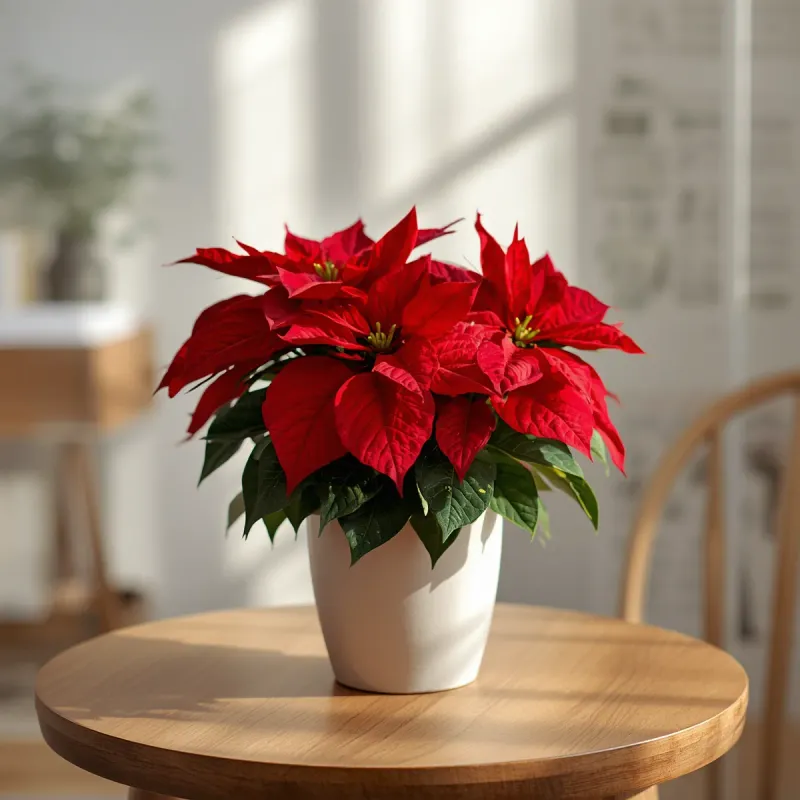
The bold red part of a poinsettia is not made of petals. Those colored parts are bracts, which are modified leaves, and the tiny yellow clusters in the middle are the actual flowers.
Bract color is tied to light exposure and the plant’s flowering cycle, according to University of Minnesota Extension. Maryland Extension describes the same link to light and flowering.
So watering alone does not create or preserve red color. Good watering supports the plant’s overall health, and a healthy plant is more likely to hold its leaves, but it will not turn pale bracts red or keep them that way by itself.
If your plant looks bright red when you buy it, that color was already set by the grower. Your job at home is to keep it comfortable, not to boost the color.
Use a check-and-drain routine, not a promise
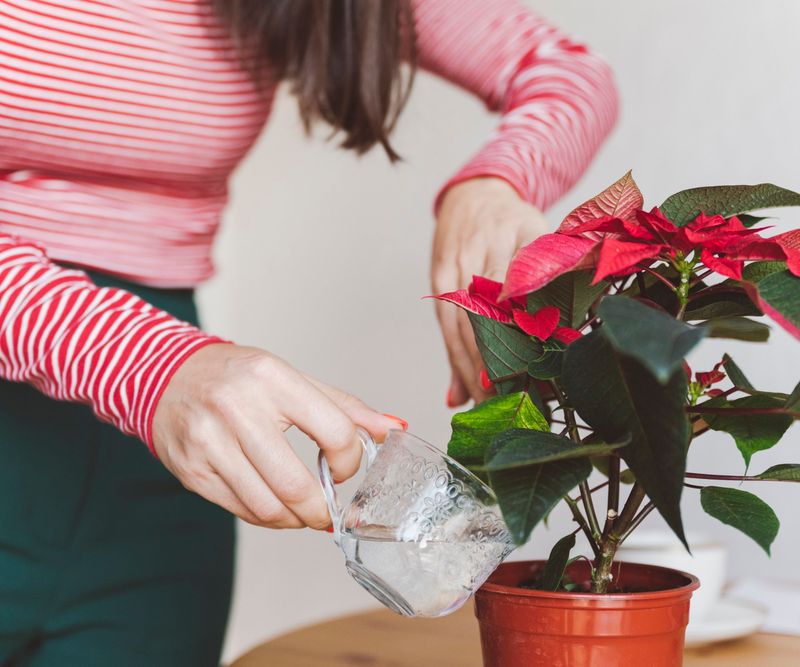
Here is the routine in a nutshell. Touch the mix or lift the pot, water when it feels dry or light, let the pot drain, and empty the saucer.
It takes a minute and fits into any week.
This habit lowers your risk of watering-related problems, but it cannot stop every cause of leaf drop. Light, drafts, and heat still count, and no routine can promise a red, full plant on New Year’s Day.
Oklahoma State Extension says a carefully chosen plant can stay attractive for at least eight weeks with attention to temperature, light, and moisture. Notice the word if: results depend on the care.
Treat the pot as the one giving the cues, and the plant will usually reward you for listening.