
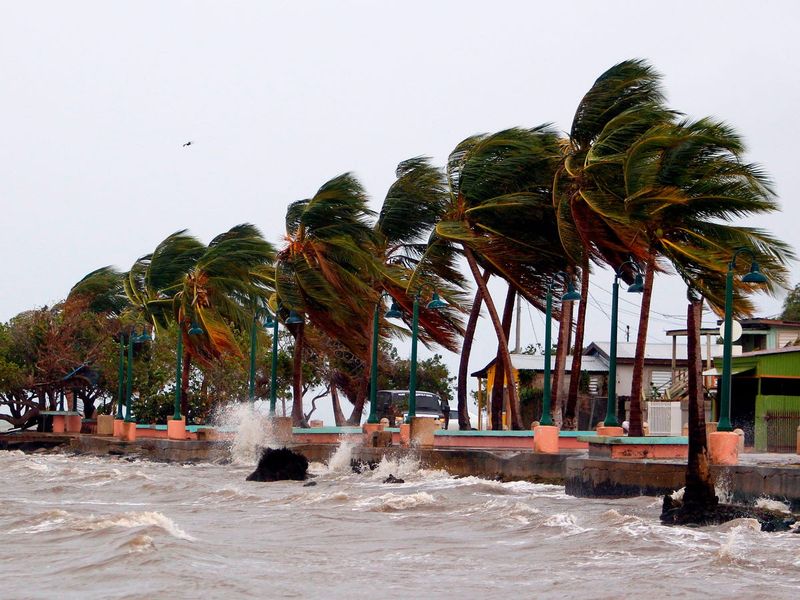
Cutting most of the green fronds off a palm before hurricane season sounds smart, but it leaves the palm with less of what it needs to stay healthy. Florida researchers have not found that this cut protects palms, and after two busy storm seasons they saw it linked to more broken crowns.
A full, natural crown is usually the better starting point. Here is what to trim, what to leave alone, and when to call for help.
The hurricane cut is not a proven storm strategy
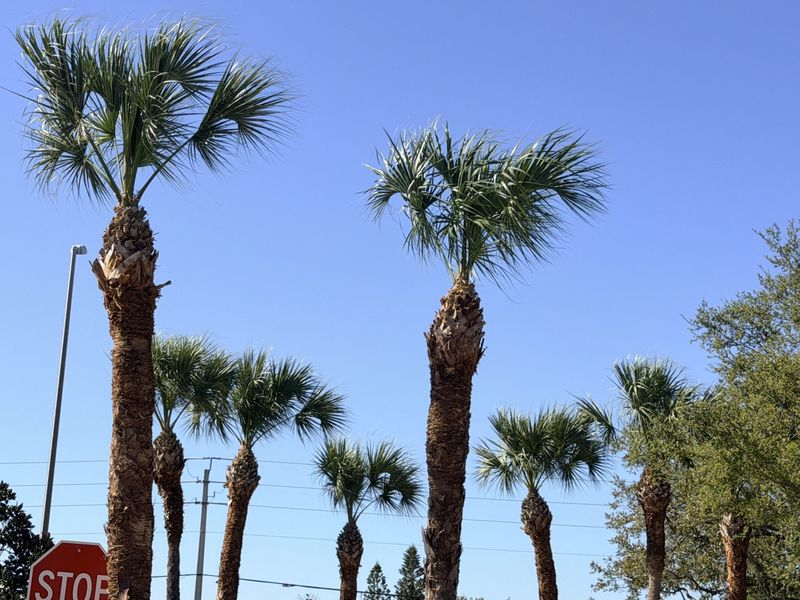
The idea behind a hurricane cut is simple. If you remove most of the fronds, the wind has less to push against, so the palm should be safer.
It sounds logical, and many landscapers offer it every spring as a standard service.
The trouble is that UF/IFAS does not recommend the hurricane cut and says it is not rooted in science. Nobody has shown that stripping a crown makes a palm safer in a storm.
What Florida experts did see came after the 2004 and 2005 hurricane seasons. UF/IFAS reports from those post-storm observations that palms given a hurricane cut were more likely to have their crowns snap off than palms with fuller crowns.
One possible reason is that the young leaves left behind may be less hardened and lack support from the older leaf bases around them.
This was an observation made after the storms, not a controlled trial. It does not mean every heavily pruned palm will fail, and it does not mean a full crown will always make it through.
It does mean the promised benefit is unproven, while a possible downside showed up in real Florida yards.
So when a crew offers a hurricane cut as storm prep, it is fair to ask what science backs it up. A good landscaper should be able to explain what they plan to remove and why, and they should be comfortable with leaving healthy green fronds in place.
A palm’s leaves do more than catch the wind
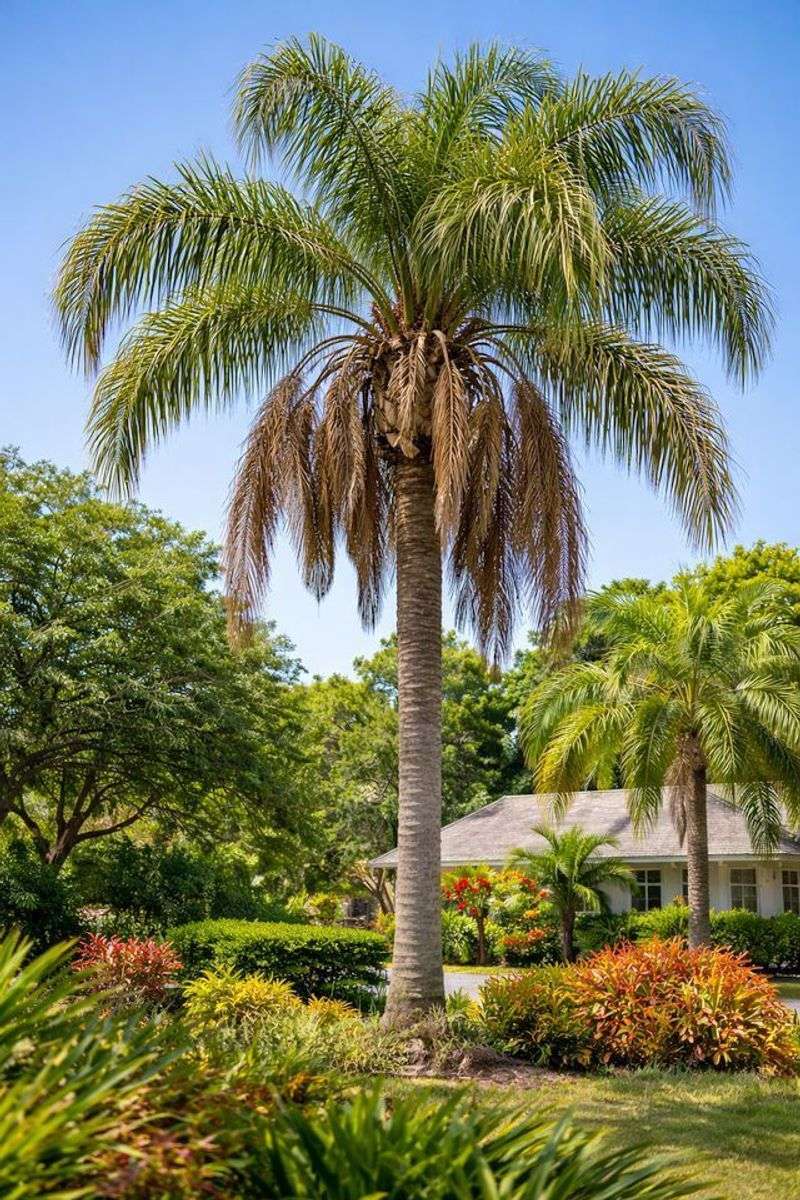
Think of each green frond as a small kitchen. Through photosynthesis, leaves turn sunlight into the sugars the palm uses to grow, repair itself, and build up its trunk.
Take away a lot of living leaves and you take away a lot of the palm’s food production.
A palm only grows from one central bud, so it cannot simply sprout new branches the way many trees do. It has to rebuild its crown one leaf at a time.
That makes every healthy frond more valuable than it looks from the ground.
According to UF/IFAS pruning guidance, repeated heavy pruning can result in smaller leaves and a smaller trunk diameter. A thinner trunk and smaller leaves are not what you want going into storm season.
You will sometimes hear that a hurricane cut starves a palm. That is a handy way to say it, but it is shorthand.
A palm does not run out of food overnight, and not every pruned palm will decline. The more accurate picture is a slow squeeze on the palm’s energy supply, especially when the cut is done year after year.
If your palm already looks thin, the best next step is to let new growth fill back in rather than pruning again.
Yellowing fronds need a closer look
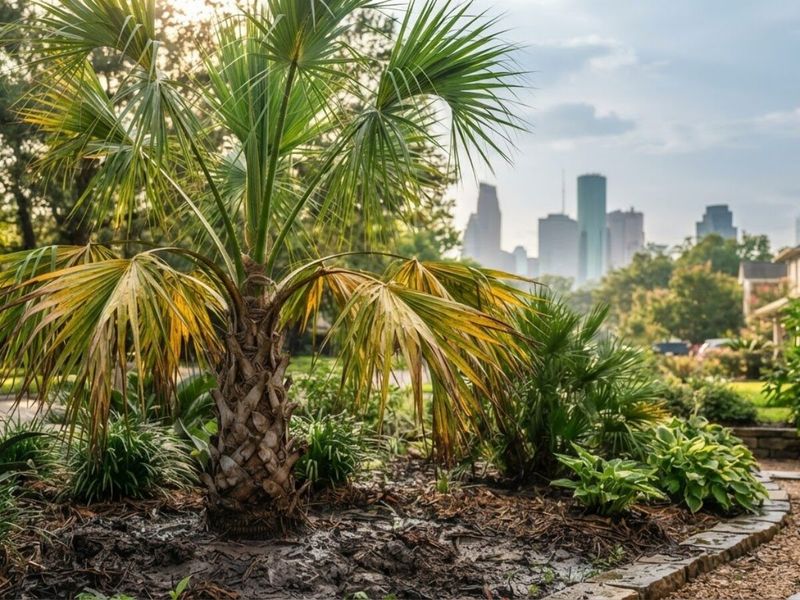
Color change in a frond does not automatically mean it is finished. A yellow or partly brown leaf may still be making food, and it may be doing something else useful too.
Older leaves can pass along mobile nutrients, especially potassium, to the newer growth. UF/IFAS advises against routinely cutting green or partly green fronds for this reason.
If you cut them early, the palm loses a resource it was still sharing.
Discoloration can also be a clue. Yellowing, flecking, or browning tips may point to a nutrient problem, and UF/IFAS palm nutrition guidance explains how to match symptoms with a fertilizer fix.
Cutting off the leaves can erase the evidence you need to work that out.
Context matters, too. Some palms naturally yellow their older fronds as part of normal aging, so what looks alarming on one species may be ordinary on another.
The UF/IFAS pruning publication is a helpful reference.
Before reaching for the pruners, take a photo, check the species, and look at whether the pattern repeats across several fronds. A quick look now may save the palm from an unneeded cut.
Prune dead material and genuine hazards
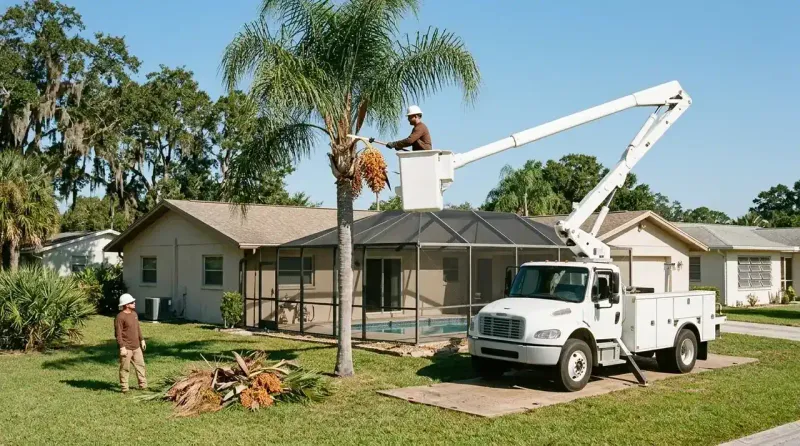
Good palm care mostly comes down to taking away what is already gone. Fully brown, dead fronds are fair game, and so are dead fronds hanging where they could drop on people, cars, or roofs.
A few palms shed their old leaves on their own and may need little or no pruning at all. If yours is one of them, doing less is perfectly fine.
UF/IFAS notes that pruning should have a reason, not just a calendar date.
Green and partly green fronds are a different story. They should not be removed as a routine, even when a storm is on the way.
The exception is a real hazard, like a frond hanging low over a walkway, which is a safety call rather than a preemptive strip.
Flower and fruit stalks are not the same as leaves. Heavy stalks can make a mess or a hazard, and UF/IFAS says removing them does not harm the palm.
If you want to help pollinators, wait until the blooms have dropped and the fruit has begun developing before you cut the stalks. Bees and other insects get their visit, and you still get a tidy palm.
Treat 9 and 3 as a limit, not a target
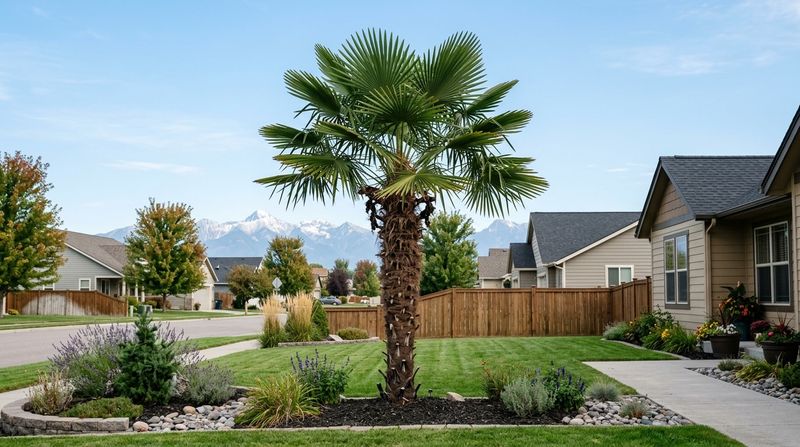
Picture the palm’s crown as a clock face. The 9 and 3 rule says you should not cut fronds that sit above the line running from 9 o’clock to 3 o’clock on one side to the other.
Some crews treat that as a pruning goal, which is a mistake.
UF/IFAS describes 9 and 3 as an outer limit, the most you should ever go, not the look to aim for. Plenty of palms look best, and stay healthiest, with far less taken off.
What UF/IFAS favors is a naturally rounded, full canopy. That includes keeping green leaves low in the crown, where many people are tempted to cut because those fronds hang down and look untidy.
A handy check is to step back across the yard and look at the silhouette. If the crown looks like a round, full head, you are in good shape.
If it looks like a pineapple top or a skinny feather duster, too much has come off.
When you hire someone, ask them to stay well above that limit. A crew that talks about leaving the canopy full is usually a safer bet than one that talks about getting it as high as the rule allows.
Tall palms and power lines call for trained help
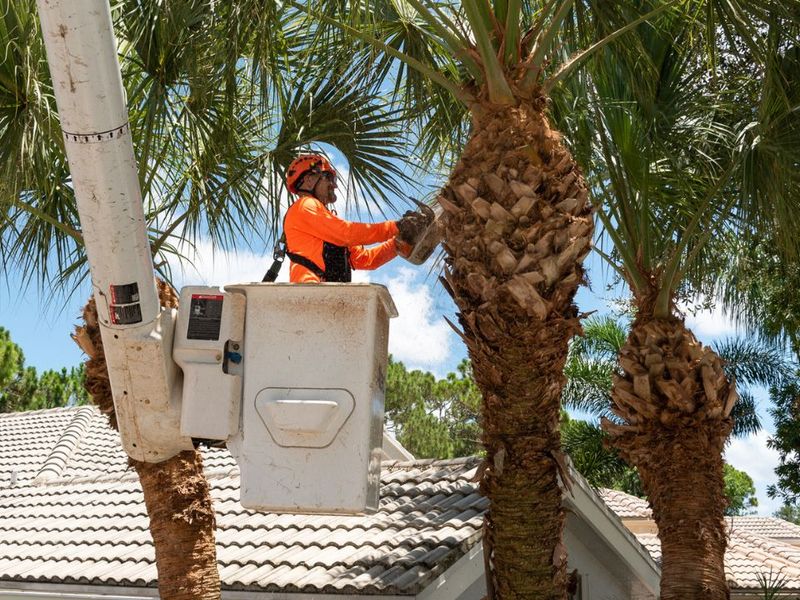
Some palm jobs are simply not do-it-yourself work. A tall palm means falling risks, heavy fronds, and sharp tools overhead, and a slip can be serious.
Skip climbing spikes. UF/IFAS warns that spikes damage the palm, leaving wounds in the trunk.
Also leave alone any frond that does not come away easily. Yanking on it can tear healthy tissue, so cut it properly or leave it for now.
For tall or tricky pruning, hire a qualified or certified arborist. Ask for proof of insurance and ask what they plan to remove before they start.
A good pro will be happy to explain.
Power lines deserve special respect. Treat every line as energized, even if it looks old or insulated.
OSHA says work within 10 feet of a power line must be done by trained, experienced line-clearance tree trimmers.
If a palm crown is close to a line, call your utility or a line-clearance professional rather than a general yard crew. No frond is worth the risk.
A full crown is a better default, not a storm guarantee
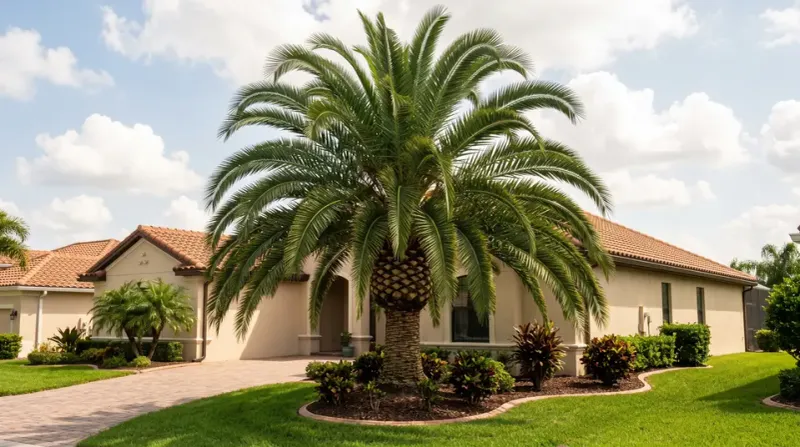
Here is a simple rule for hurricane season: do not strip healthy fronds. Remove what is dead or truly hazardous, and let the rest of the crown do its job.
A full crown is a sound default, but it is not a promise. Palm species differ in how well they handle wind, and UF/IFAS lessons from past hurricanes show that even wind-tolerant trees can be damaged.
Storm strength, soil, and planting also play a part.
If a storm does break some green leaves, and only a few remain, keep them where you can. UF/IFAS post-storm palm care advice notes that they can still photosynthesize and help the palm recover.
Targeted pruning and safe work beat a blanket cut every time. A palm’s best protection is steady care all year, not a haircut in June.