
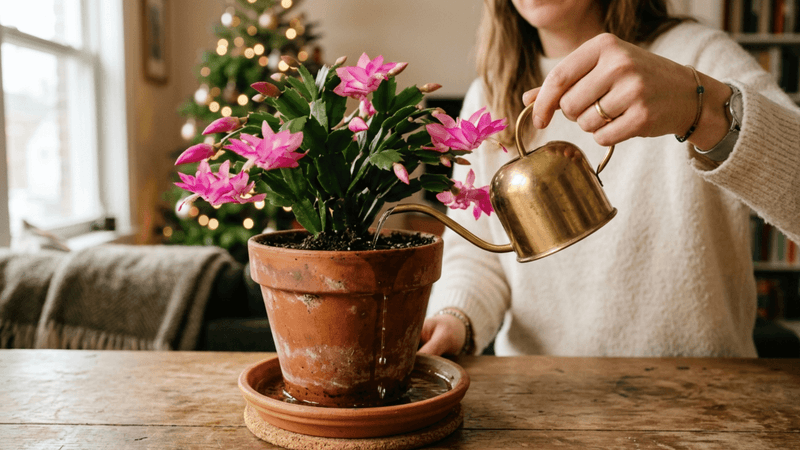
Water your Christmas cactus when the top of its potting mix starts to dry, soak it well, and let the extra water drain away. That simple rhythm gives your buds their best shot at staying on the plant while they grow and open.
Skip the calendar and let the mix tell you when to water. Here is how to do it, plus what else can make buds fall.
Holiday cacti are not desert cacti
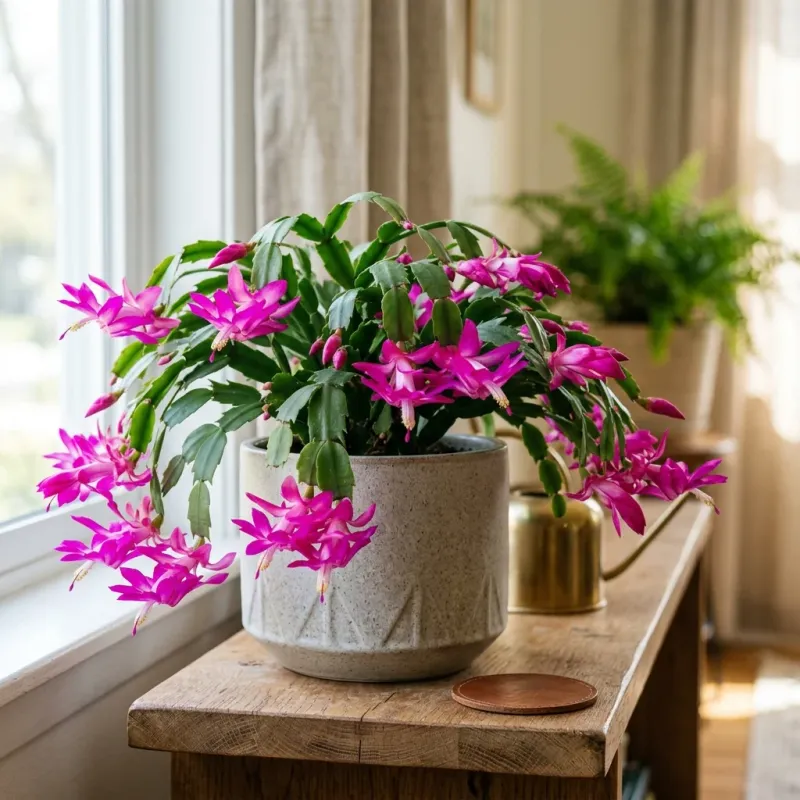
Picture where these plants come from. Holiday cacti grow in tropical forests, often perched in tree branches, where rain is regular and the air is humid.
That is very different from the sandy deserts where spiny cacti live, so the sparse watering that suits a desert cactus can leave a holiday cactus stressed.
You may also notice the plant tag does not tell the whole story. Many plants sold as Christmas cactus are really Thanksgiving cactus or hybrids, and the true Christmas cactus is just one of the group.
The good news, according to Iowa State University Extension, is that all three holiday cactus types have similar growing needs.
So whichever one is on your table, the same watering approach applies. Think of it as a forest plant that likes steady, moderate moisture and good airflow around its roots.
The next sections show how to read your plant’s pot and water it in a way that suits those tropical habits.
Check the mix instead of following a calendar
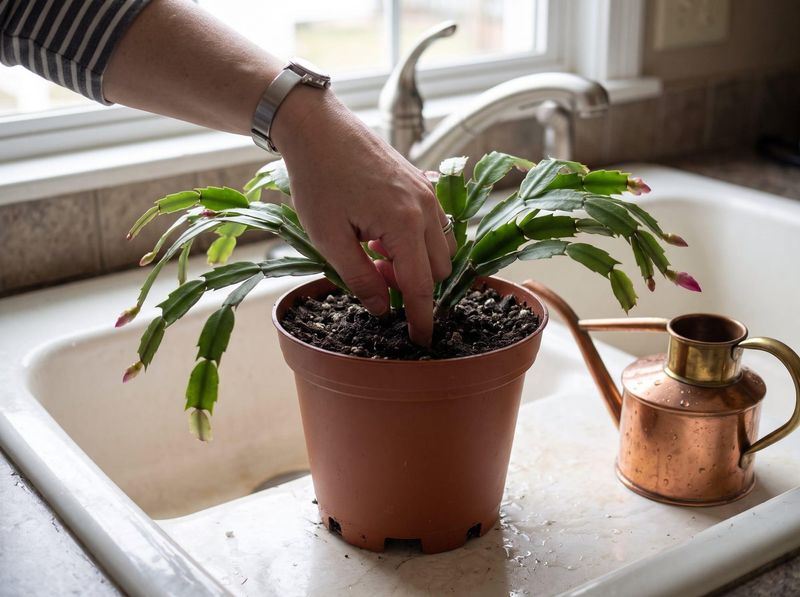
A finger works better than a calendar. Once a week sounds tidy, but your plant does not know what day it is.
A sunny, warm room dries the pot faster than a cool, cloudy one, and a small pot dries faster than a big one.
Instead, check the potting mix every few days. Clemson Cooperative Extension advises watering when the mix begins to dry at the surface.
Push a fingertip about an inch into the mix. If the very top feels dry but it still seems slightly cool and damp below, it is time to water.
If the surface is still clearly damp, wait a day and check again. This quick habit takes only a few seconds, and it keeps you responding to what the plant actually needs.
Lifting the pot also helps, because a dry pot feels noticeably lighter than a freshly watered one.
Over time you will learn the rhythm of your own plant in your own home, which beats any fixed schedule.
Water well, then let the pot drain
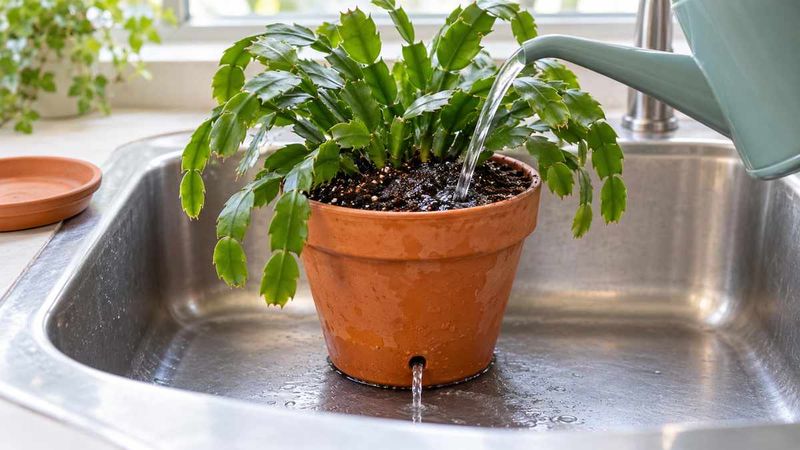
When the surface has started to dry, give the plant a real drink. Pour water slowly over the mix until it flows out of the drainage holes.
A thorough soaking wets the whole root ball, while small sips only dampen the top.
Then comes the step that matters most: let the extra water drain freely. Clemson’s guidance is to never leave the pot standing in runoff.
Setting it in the sink for a few minutes works well, and so does tipping out the saucer after the dripping stops.
Decorative cachepots deserve a second look, since water can pool unseen in the bottom of a pretty outer container. Lift the plant out and empty it each time.
The reason is simple. University of Minnesota Extension notes that excess water and poor drainage can lead to wilting, bud drop, and root rot.
Roots need air as well as moisture, and a pot that drains well gives them both.
Once buds appear, avoid watering extremes
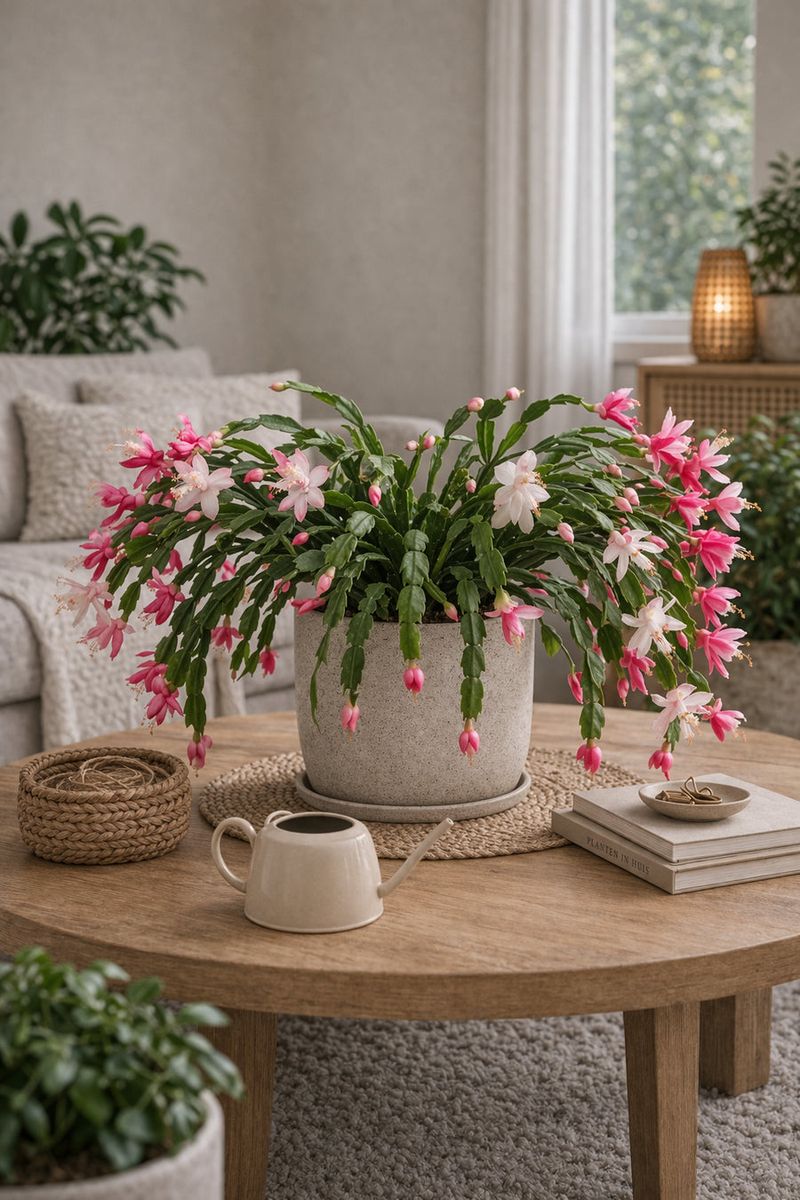
Timing changes the advice. Before buds form, some growers use a drier period.
Oklahoma State University Extension reports that research has not supported a dry-down as a flowering trigger, so treat it as an unproven trick, not settled advice.
After buds show up, the goal shifts to steadiness. Iowa State and Clemson both recommend evenly moist mix once buds form.
UConn words it as keeping the plant on the dry side, yet it also warns that too little or too much water can drop buds.
The shared message is to avoid extremes. Do not let the mix go bone-dry, and do not keep it soggy.
One more note: UMass Amherst says water stress during flower induction can reduce bud set. That is commercial-production guidance, but it fits the same lesson about avoiding stress.
Keep the plant’s surroundings steady
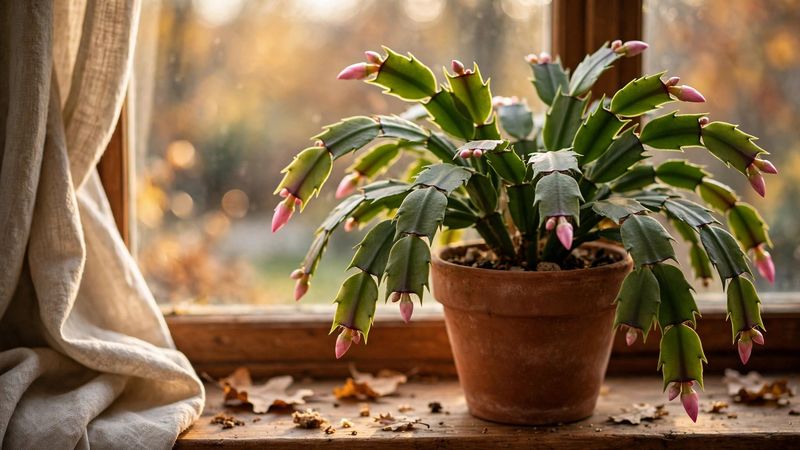
Buds are sensitive to change. A plant that has settled into a spot is happiest when that spot stays the same, so try to hold light, temperature, humidity, and watering habits steady while buds develop.
Iowa State advises not moving the plant until the flowers begin to open. That means resisting the urge to carry it to the dining table for a party or turn it toward a better view.
Even rotating the pot can be a shift worth saving for later.
Location matters too. University of Minnesota Extension suggests keeping holiday cacti away from drafts, heaters, and vents.
A spot near a frequently opened door or a warm heating register can blast the plant with hot or cold air.
Pick a bright place with gentle, even conditions, and let the plant stay put. A calm home for the plant is a quiet kind of care that supports every bud.
Look beyond watering when buds drop
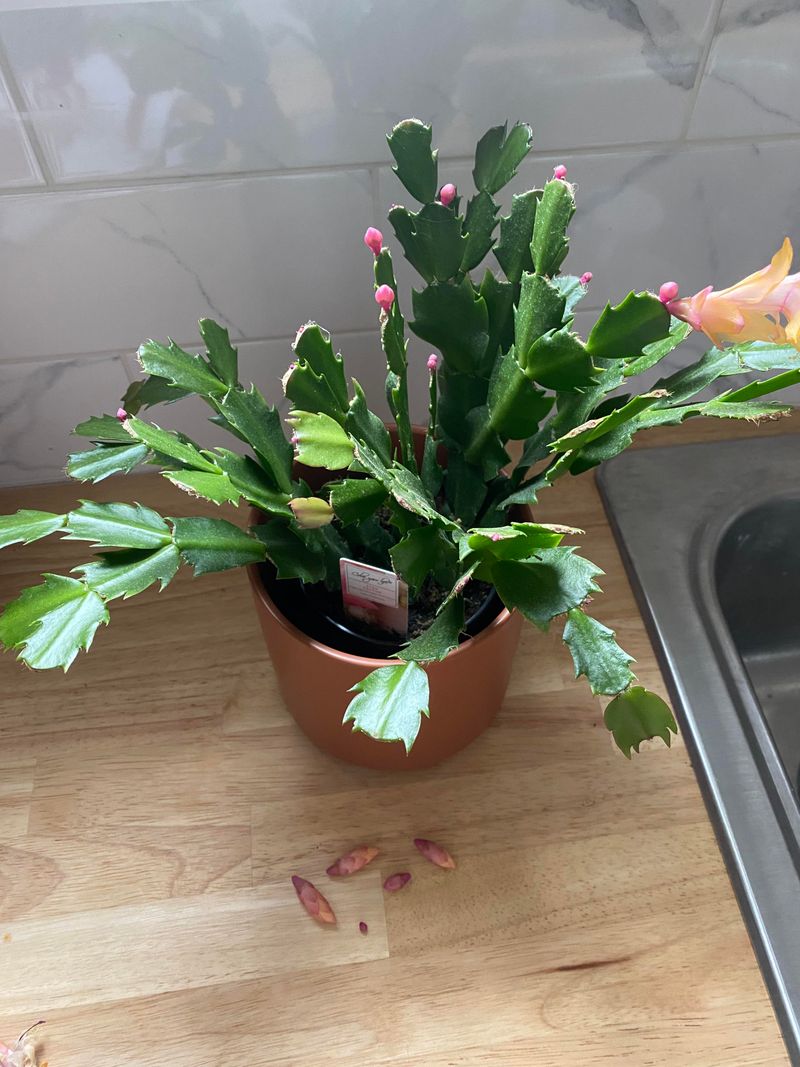
Finding a bud on the table can feel like a verdict on your watering. Often it is not.
Water is one possible cause, and University of Minnesota Extension lists excess water among the reasons for bud drop, along with wilting and root rot.
Other causes are just as common. Drafts, temperature swings, and changes in light can all prompt a plant to let go of buds, as Iowa State points out.
A plant may also set more buds than it can support, and it sheds the extras on its own.
Use clues to sort it out. Soggy mix and limp stems point to too much water.
Crispy, shriveled segments suggest dryness. If the mix feels fine, think about recent moves, cold air, or a new heater nearby.
Keep checking the mix and the surroundings, and expect that a few buds may still fall. Even a plant with perfect care keeps some buds to itself, and the rest are plenty to enjoy.