
When the rains come and the days get short, California birds start hunting hard for food. A plastic feeder full of seed helps a little, but it can spread disease, draw rats, and cost money every month.
Native plants do the job for free, offering berries, seeds, nectar, and bugs right when birds need them most. Plant a few of these seven and your yard can turn into the busiest winter diner on the block.
1. Toyon (Heteromeles arbutifolia)
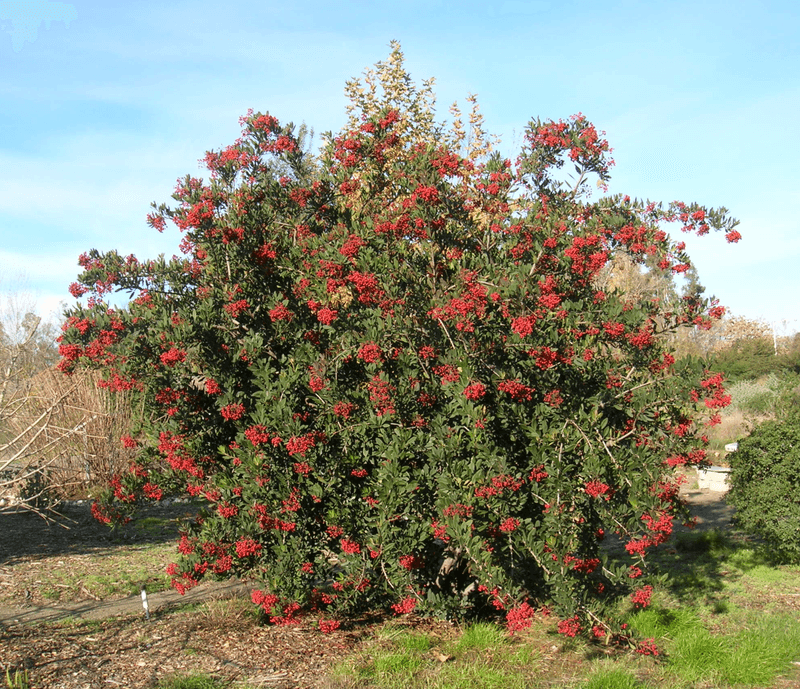
Hollywood is actually named after this shrub. Early settlers thought its glossy leaves and scarlet berries looked like holly, and the name stuck to a whole neighborhood.
Toyon berries ripen in late fall and hang on through winter, which is exactly when robins, cedar waxwings, mockingbirds, and hermit thrushes roll into town hungry. A big shrub can feed flocks for weeks, and the birds strip it in noisy, happy bursts.
Once established, it needs almost no summer water and handles clay, sand, and slopes. Give it room, since it can reach 10 to 15 feet, and it doubles as a root-safe privacy screen along a fence.
2. Coffeeberry (Frangula californica)
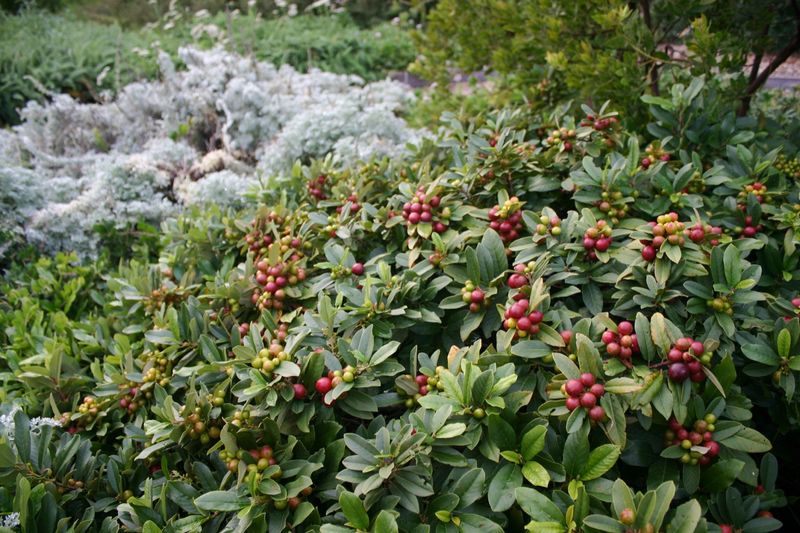
Picture a shrub that hands out berries in three colors at once. Coffeeberry fruit goes from green to red to nearly black, so there is always something ripe for a passing bird.
Thrushes, towhees, band-tailed pigeons, and western bluebirds all love it. The fruit often lingers into early winter, filling the gap after summer berries are long gone.
Compact cultivars like Mound San Bruno or Eve Case stay around 4 to 6 feet, which makes them a smart swap for a thirsty boxwood or privet hedge. Bees work the tiny flowers in spring, so you get a bonus season of wildlife.
3. Manzanita (Arctostaphylos)
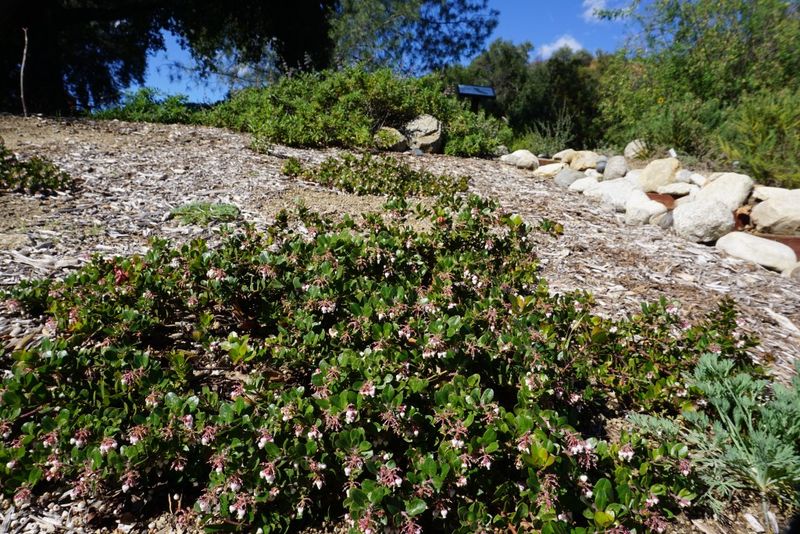
Here is a plant that blooms when almost nothing else does. Many manzanitas open their tiny pink or white bell flowers from December through February, right in the coldest stretch of the year.
Anna’s hummingbirds stay in California all winter, and they lean on manzanita nectar to survive chilly nights. A sugar-water feeder needs cleaning every few days.
Manzanita just needs you to leave it alone.
Later, the little apple-like fruits feed quail, jays, and foxes too. Plant it in fast-draining soil, skip summer water once it settles in, and enjoy that gorgeous mahogany bark year round.
4. California Buckwheat (Eriogonum fasciculatum)
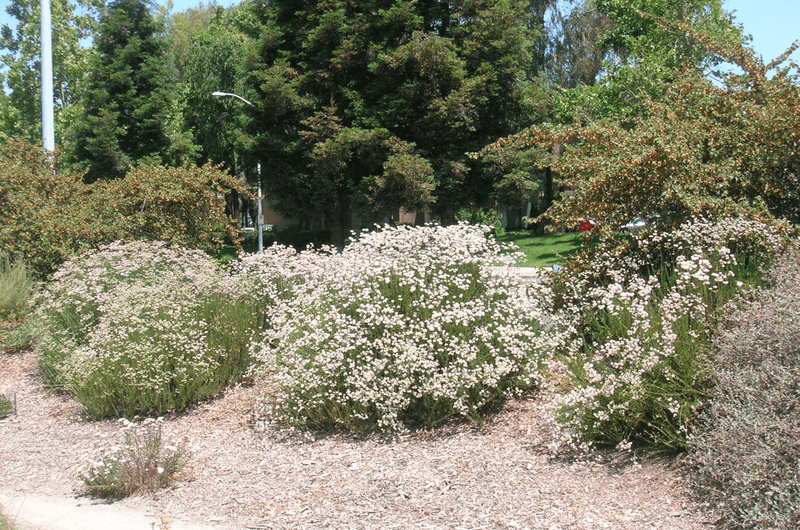
Don’t cut it back. That is the single best tip for anyone growing California buckwheat for birds.
After its creamy summer flowers fade, the heads turn a rich rusty brown and fill with seeds. Sparrows, juncos, goldfinches, and quail pick through them all fall and winter, basically a seed feeder that grew itself.
It is also one of the toughest slope plants around, holding soil as winter rains arrive and thriving with zero summer irrigation. Few low-water shrubs do so much for so little.
5. Elderberry (Sambucus nigra ssp. caerulea)
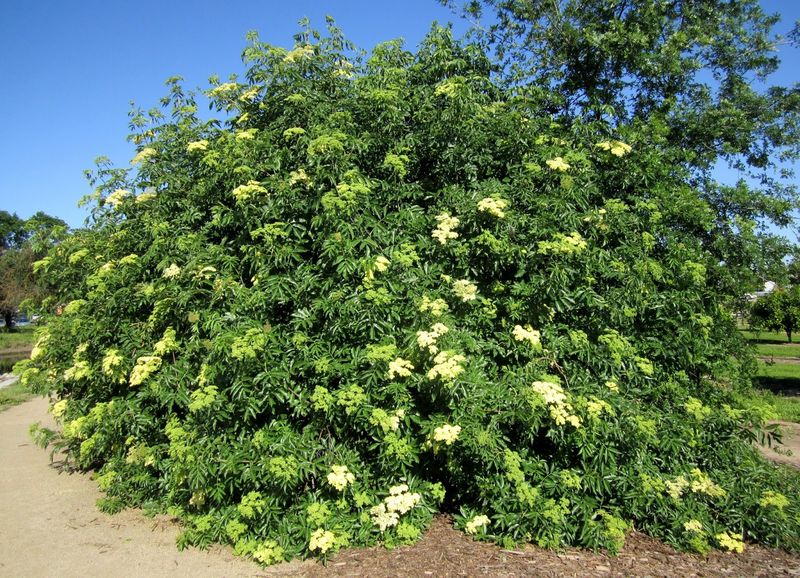
Grandma might have baked these berries into pie, but in a California yard the birds will beat you to them every time.
Blue elderberry fruits for a long stretch, and in mild coastal areas it can still be offering berries and bloom into late fall. Phainopeplas, waxwings, thrushes, and jays swarm it, and the bugs drawn to its flowers feed insect-eating birds like bushtits and warblers.
It grows fast, so it suits a back corner or a spot where you want quick wildlife cover. Prune hard in winter if it gets leggy, and it will bounce back eager as ever.
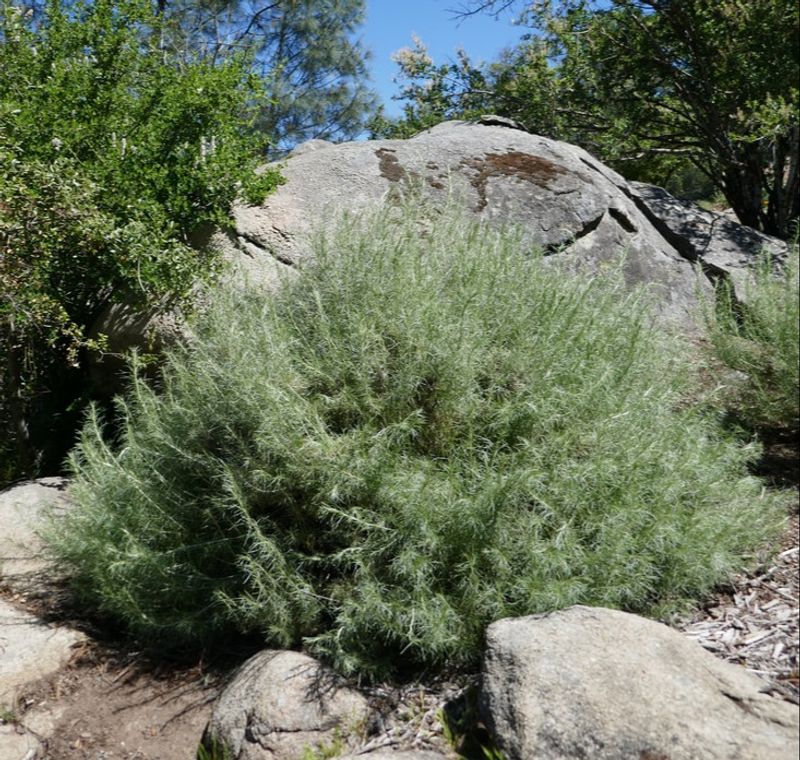
6. California Sagebrush (Artemisia californica)
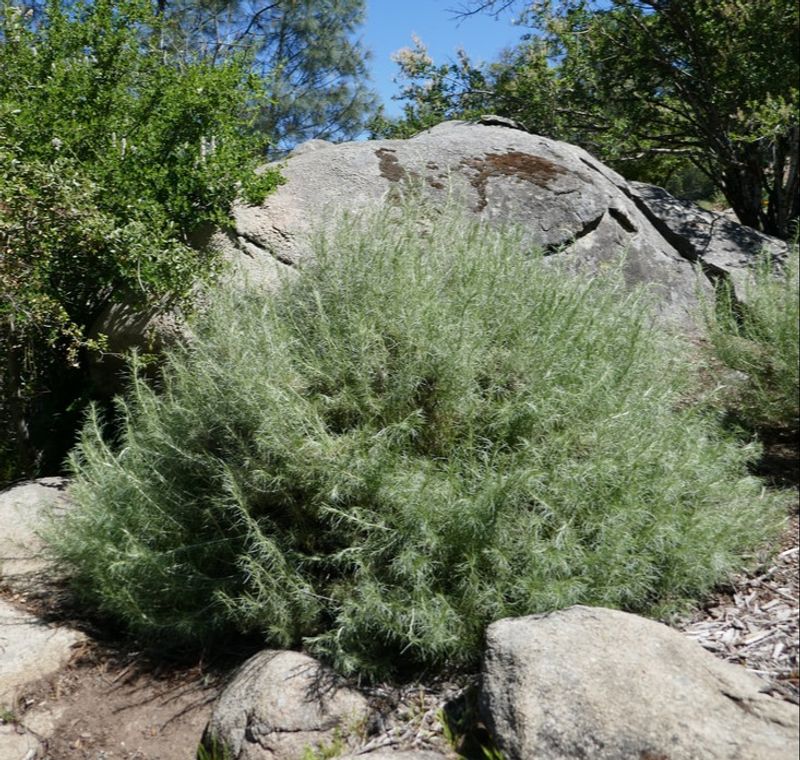
Crush a leaf and you will smell the classic scent of a California hillside after rain. Birds care less about the aroma and more about what hides inside.
The soft, feathery foliage shelters spiders, caterpillars, and tiny beetles all winter. Wrentits, bushtits, and the threatened California gnatcatcher hunt it constantly, and towhees scratch below for fallen seed.
Protein from insects is something no store seed mix can match. Plant sagebrush on a dry slope with no summer water and watch the little gray birds work it like a buffet.
7. Coast Live Oak (Quercus agrifolia)
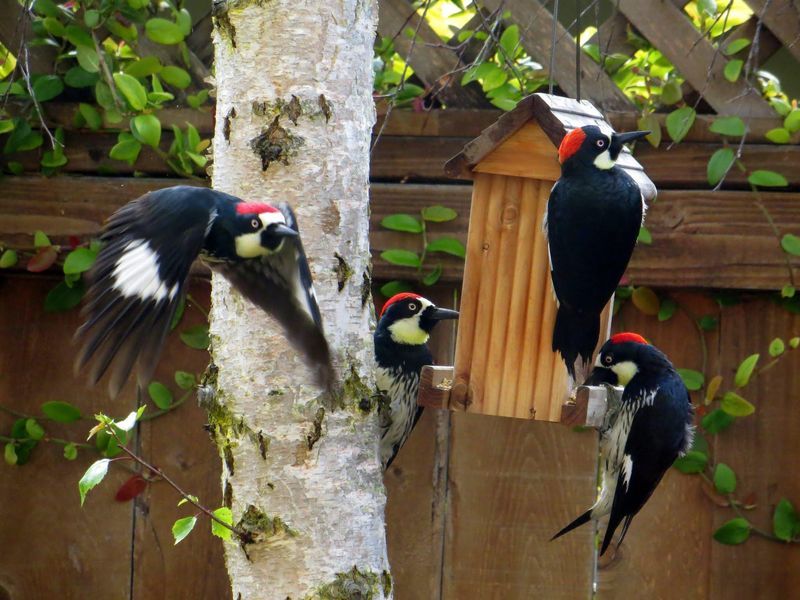
If you have room for just one tree, make it this one. A single mature coast live oak can host hundreds of insect species, which makes it a nonstop grocery store for birds.
Acorns feed jays, acorn woodpeckers, band-tailed pigeons, and quail through the cold months. Meanwhile titmice, nuthatches, and kinglets glean bugs from the evergreen leaves and bark.
Plant it well away from foundations and keep summer water off the trunk. It grows slowly, so think of it as a gift to the birds your kids will see.