
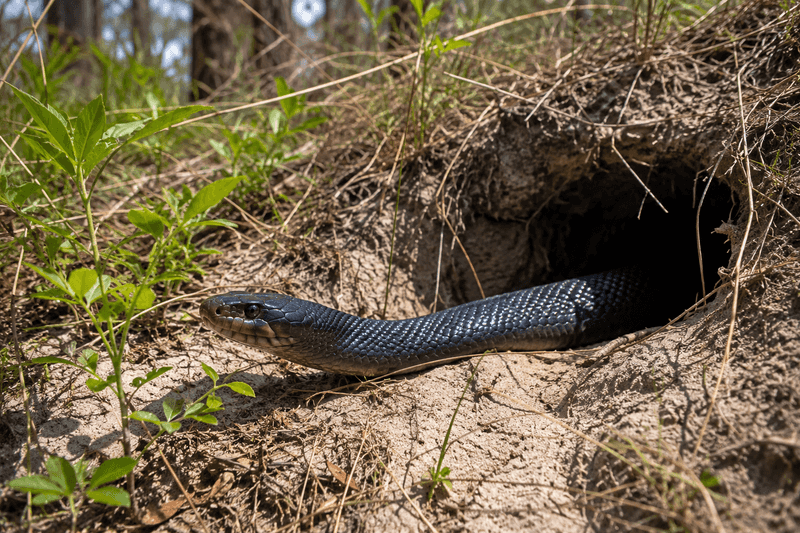
A long, dark snake slides across your Florida lawn, and you wonder what it is. Two common candidates look alike at a quick glance: the black racer and the protected eastern indigo.
A single mark, like a pale chin, will not settle the question. A few simple comparisons can help you understand what you are seeing and respond safely.
A white chin is not an indigo giveaway
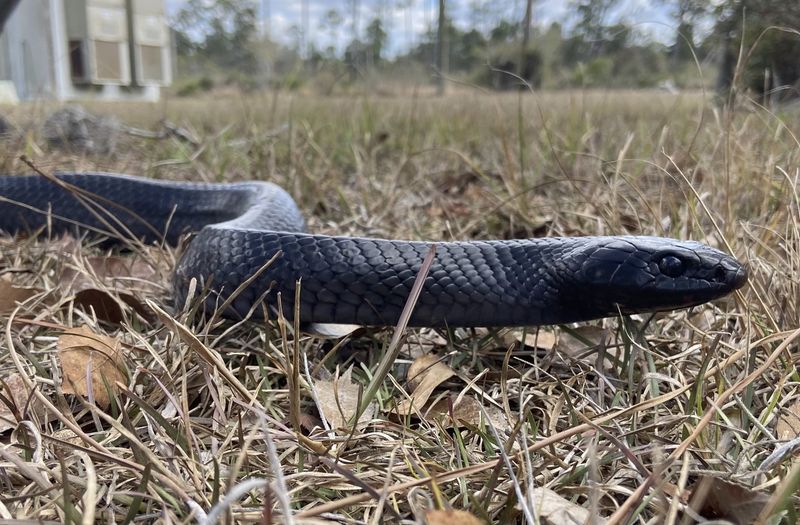
Many people see a pale chin and jump to a name. In Florida, that clue points more toward a black racer.
The Florida Museum racer profile lists whitish chin and throat markings as typical for the species.
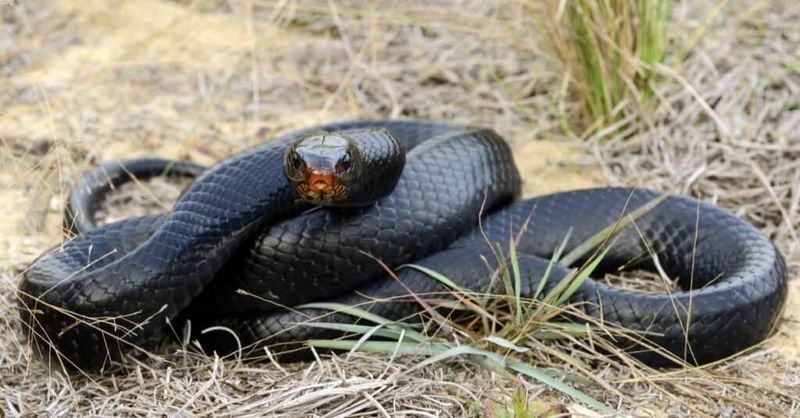
That does not rule out an indigo, though. An eastern indigo’s chin and throat can be black, red, orange, or cream-colored, so a white or cream chin can show up on either snake.
Color alone cannot settle the question, which is why the whole animal matters.
Size and build give better clues. According to the Florida Museum indigo profile, typical adult indigos measure about 60 to 82 inches and are thick-bodied.
Adult racers commonly run about 20 to 56 inches and are long and slender. A heavy, muscular snake is a different animal from a thin, whip-like one.
Surface shine is another comparison point. Indigos are glossy black, often with blue or purple highlights that show up in bright sun.
Racers are generally slimmer and look sleeker rather than bulky.
Treat all of these as clues, not proof. A snake seen for two seconds at the edge of a flower bed, with no clear view of its body, may simply stay unidentified.
Plenty of long black snakes in Florida yards are racers, and nobody can responsibly name one from a single mark or from the phrase long black snake.
If you can safely look from across the yard, note how thick the body seems compared with its length, and whether it has a heavy, powerful look. Those details are more useful than the chin.
A broad diet makes indigos useful, not yard rodent control
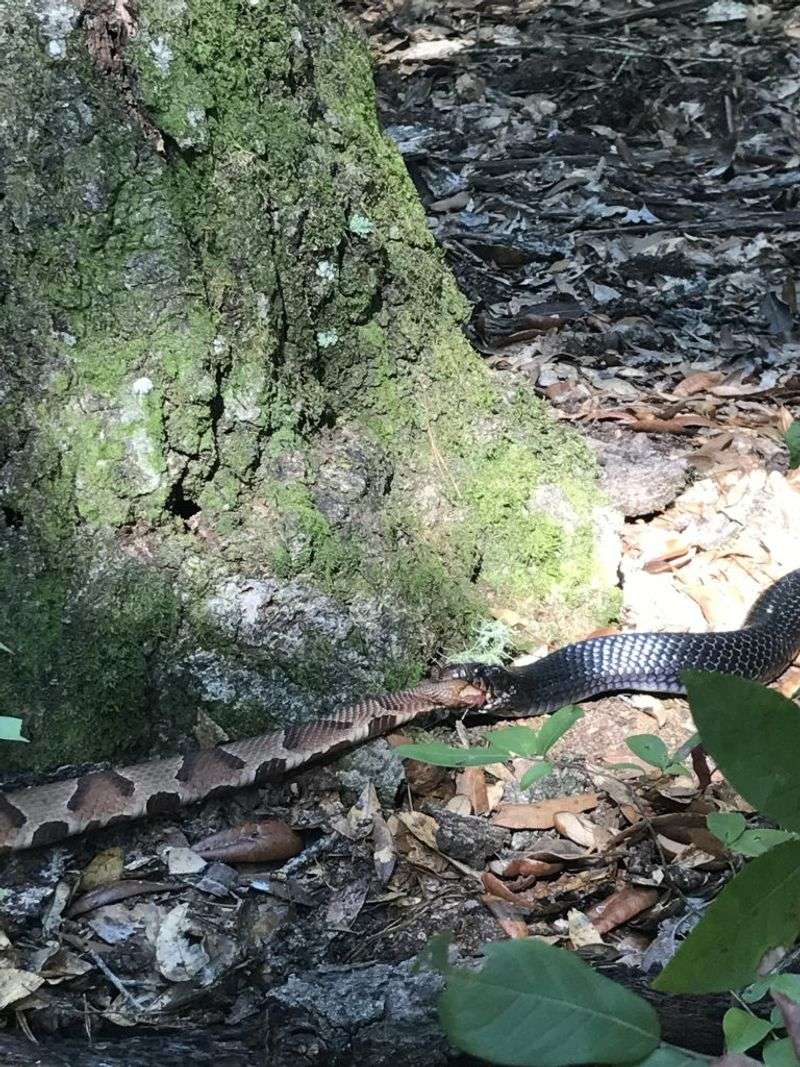
Eastern indigos earn their helpful-neighbor reputation through a wide menu. The Florida Museum describes prey that includes reptiles, amphibians, mammals, and birds, with reptiles an important category.
In the wild, that makes them part of the web that keeps many animal populations in balance.
The U.S. Fish and Wildlife Service notes that indigos eat other snakes, including venomous ones.
That is a striking detail, and it explains why people call the species a friend to homeowners.
Still, a broad diet is not the same as a pest-control service. Indigos may eat small mammals, but they hunt many kinds of animals, so no one can promise one will clear rodents from your particular yard.
If mice are the problem, treat them as a separate project.
Snake-eating is also not a way to tell the species apart. UF/IFAS Extension says in a post on the southern black racer that racers also eat snakes, including small venomous species.
So a story about a snake that dealt with a neighborhood copperhead does not point to an indigo.
The practical takeaway is that many native snakes quietly do useful work. Seeing one is a sign your yard connects to local wildlife, not a reason to guess at its identity or expect a particular benefit.
Venom resistance does not mean immunity
Stories about indigos shrugging off rattlesnake bites make the rounds, but the science is more limited. A peer-reviewed study, Serum-based inhibition of pitviper venom by eastern indigo snakes, tested blood serum from indigos in laboratory assays.
The serum inhibited some of the effects of copperhead venom that the researchers measured. That is a real and interesting finding, and it hints at why indigos can tackle venomous prey.
It does not show complete protection, though. The tests were done in lab dishes, not on living snakes in a yard, and they covered only certain venom effects.
The researchers also note that bites can still cause injury.
In plain terms, resistance means a better chance of surviving, not a guarantee. An indigo that meets a venomous snake can still be hurt, so the word immune does not fit.
For homeowners, this is one more reason to leave wildlife encounters alone. A snake going about its business does not need help, and a snake in a standoff does not need you stepping in.
Admire the story from a distance and let the animal handle its own day.
Protection changes how homeowners should respond
Eastern indigos are federally threatened, and they are protected in Florida as well. The U.S.
Fish and Wildlife Service species page explains the status and the reasons the species needs care. That protection shapes what you should do when you see a large dark snake.
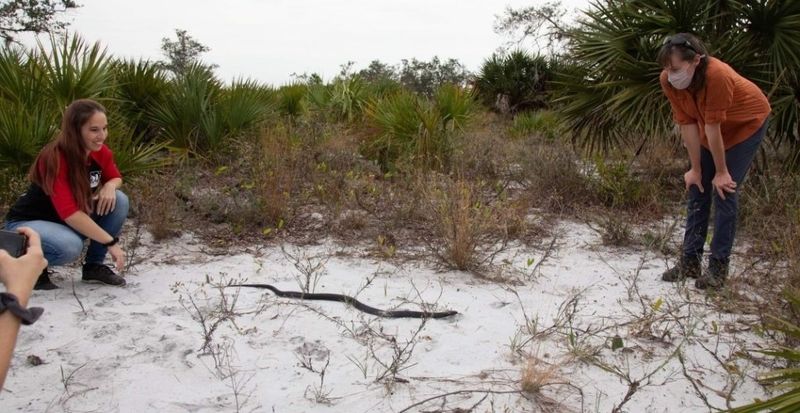
The best move is the simplest one. Stay back, watch from a distance, and let the snake move on.
Do not handle it, chase it, or try to harass it into leaving, and keep children and pets away.
If you think it might be an indigo, consider reporting the sighting. The Florida Fish and Wildlife Conservation Commission runs a Rare Snake Registry, and it asks for photographs to help verify reports.
A photo is helpful only when it comes with no risk. If you can get one from where you already stand, great.
If it would mean walking closer, skip it and write down the date, place, and what you noticed about its size and shine instead.
Reports from ordinary yards add to what biologists know about where this species still lives. A calm, distant look can contribute more than any close encounter would.
Reduce attractants without targeting the snake
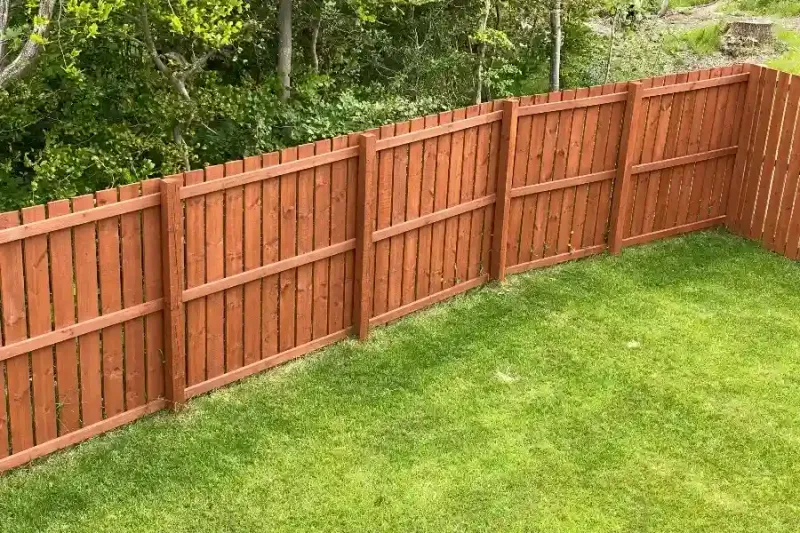
If you simply want fewer snakes wandering through, start with the habits of your yard. The FWC page Living with Snakes advises removing brush, lumber, and other debris.
Those piles offer shade and hiding spots for rodents and for the snakes that follow them.
Food scraps matter too. Spilled birdseed and pet food can draw rodents, and rodents can draw snakes.
Sweep under feeders, store pet food in sealed containers, and bring bowls indoors after meals.
A few easy habits fit Florida yards well. Stack firewood or spare boards off the ground and away from the house, trim overgrown corners, and clear fallen debris after storms, since hurricane season often leaves piles behind.
Think of this as general yard management, not a plan aimed at any one animal. It is not a way to push out a protected snake, and it will not tell you what kind of snake you saw.
It also cannot promise a snake-free yard. Florida is full of native wildlife, and a tidy property may only lower the odds of surprise encounters.
Even so, a neater yard is easier to walk through and easier to enjoy.
When identification is uncertain, give the snake room
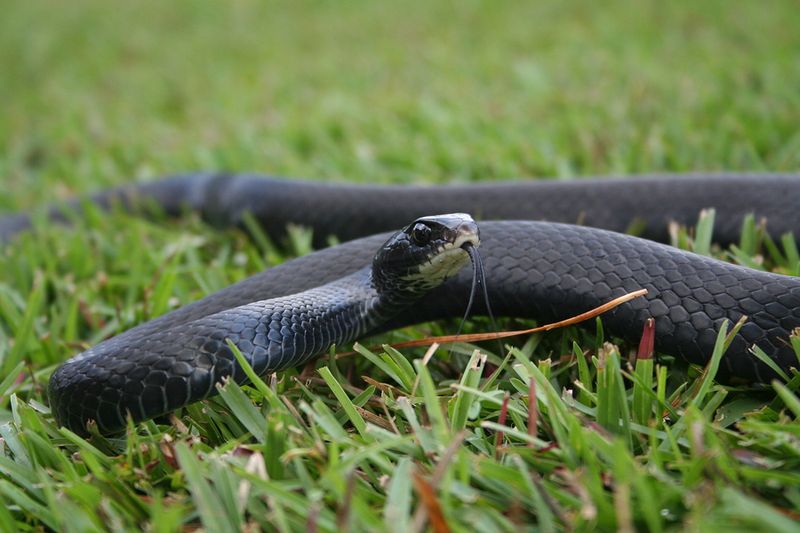
A pale chin by itself will not tell you whether you have a racer or an indigo. Not being sure is perfectly fine, but it is never a reason to move closer or pick the snake up.
Keep your distance, let it go on its way, and consider passing the sighting along to FWC. Add a photo only if you can take one safely from far away.
Some snakes stay a mystery, and that is a fair price for leaving wildlife unharmed.