
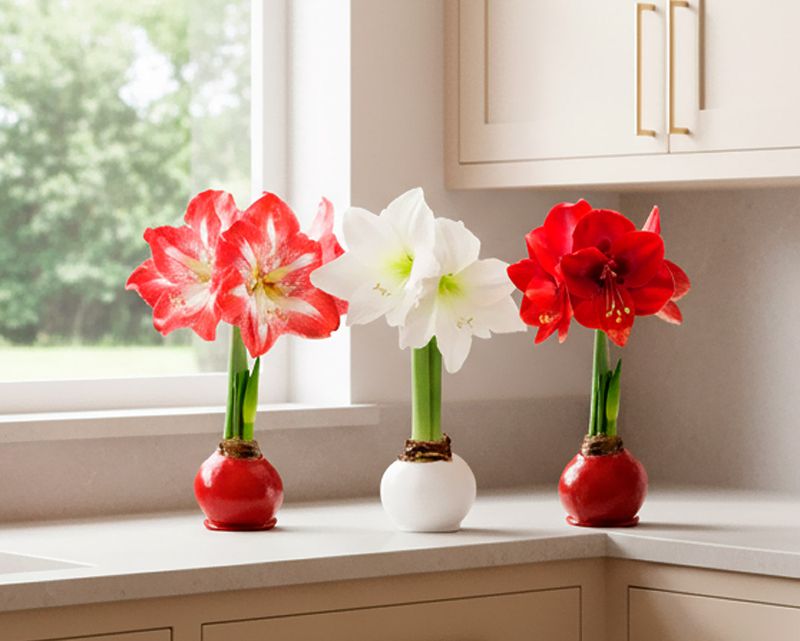
A fat amaryllis bulb on the counter can turn into a tall, trumpet-shaped flower show right when the house fills with guests. The catch is that the calendar is tight, and bulbs do not read it.
Potting one this week gives you a real shot at holiday color, even though no one can promise the exact day it opens. Here is how to set one up today and give it the best chance.
Can a bulb potted this week flower by Christmas?
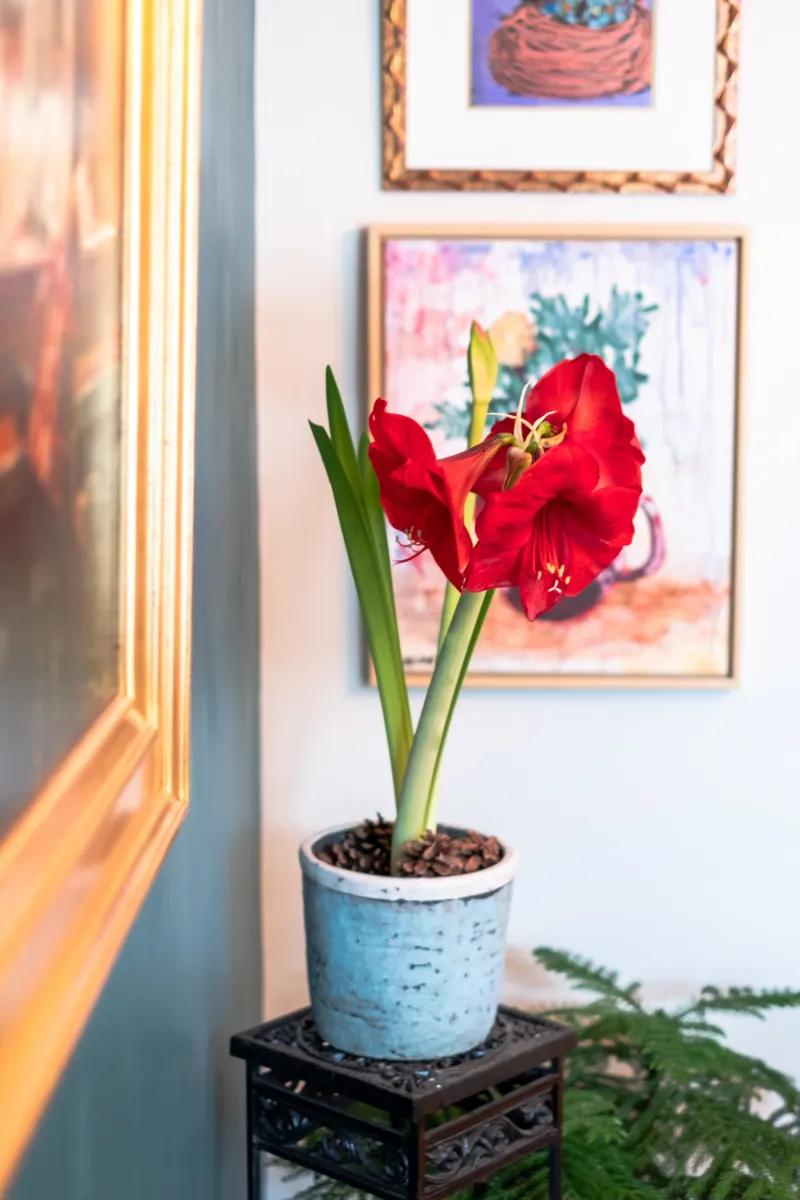
Yes, a Christmas-season bloom is possible, but Christmas Day is not guaranteed. Christmas falls 40 days after November 15, 2026, and only 34 days after November 21.
A bulb potted early in the week simply has more room on the calendar than one potted at the end of it.
Published timing estimates vary quite a bit. UF/IFAS and NC State give 3 to 6 weeks for forcing or pre-forced bulbs, while Iowa State Extension points to 6 to 8 weeks.
Other sources use a 4 to 8 week window, and South Dakota State Extension notes that some varieties may take up to 10 weeks.
Those ranges overlap with Christmas, but several also run well past it. Bulb, variety, and source all change the answer.
Kansas State Extension says now is the time to start for holiday blooms, so treat that as a reason to pot today, not as a promised date.
Choose a healthy bulb prepared for indoor forcing
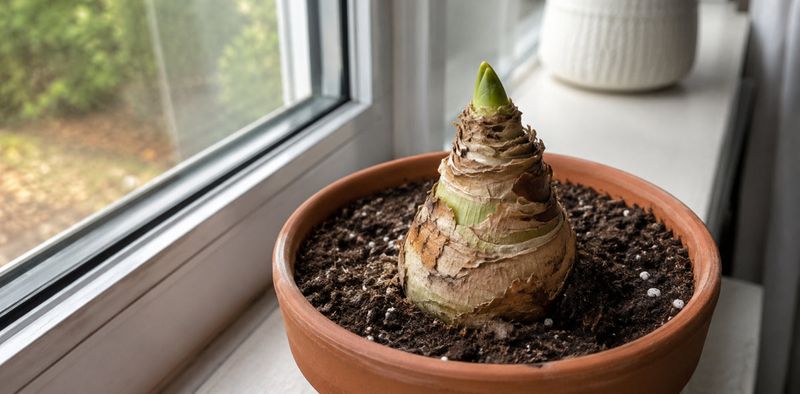
Start at the garden center or mailbox with a bulb that feels firm and heavy for its size. Skip any that are soft, moldy, or mushy.
Bulbs sold for forcing have been prepared to bloom indoors, which is exactly the job you need done on a holiday schedule, as NC State Extension explains.
Size matters for the show. According to UF/IFAS Extension, a larger bulb generally produces larger flowers and may send up more flower stalks.
That makes a big bulb a nice pick for a centerpiece.
A big bulb does not mean an earlier bloom, though. Think of size as the thing that shapes the display, not the thing that sets the date.
Once you have a healthy bulb in hand, the next job is getting it into the right pot.
Use a close-fitting pot with drainage
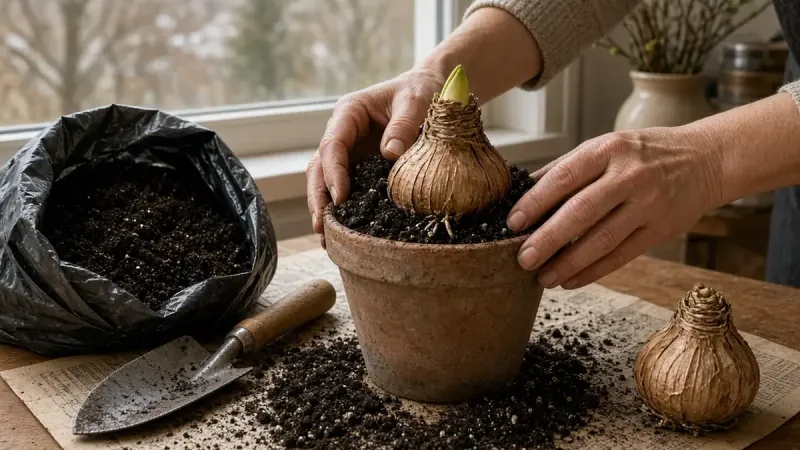
Amaryllis does well in a pot that fits it closely. Exact advice differs by source.
University of Maryland Extension suggests a pot about an inch wider than the bulb, while Kansas State says 1 to 2 inches wider. Treat those as a snug-fit range, not one fixed rule, and know that a snug pot will not guarantee flowers.
Pick a container with drainage holes and fill it with free-draining potting mix. A heavy pot also helps, since the tall flower stalk can tip a light one over.
Now set the bulb so its upper portion stays exposed. Guidance runs from about one-quarter to one-half of the bulb above the mix, and one-third is common.
This is an indoor container method. UF/IFAS gives separate directions for landscape beds, so do not copy outdoor planting depth into your holiday pot.
Keep water out of the neck, not out of the pot
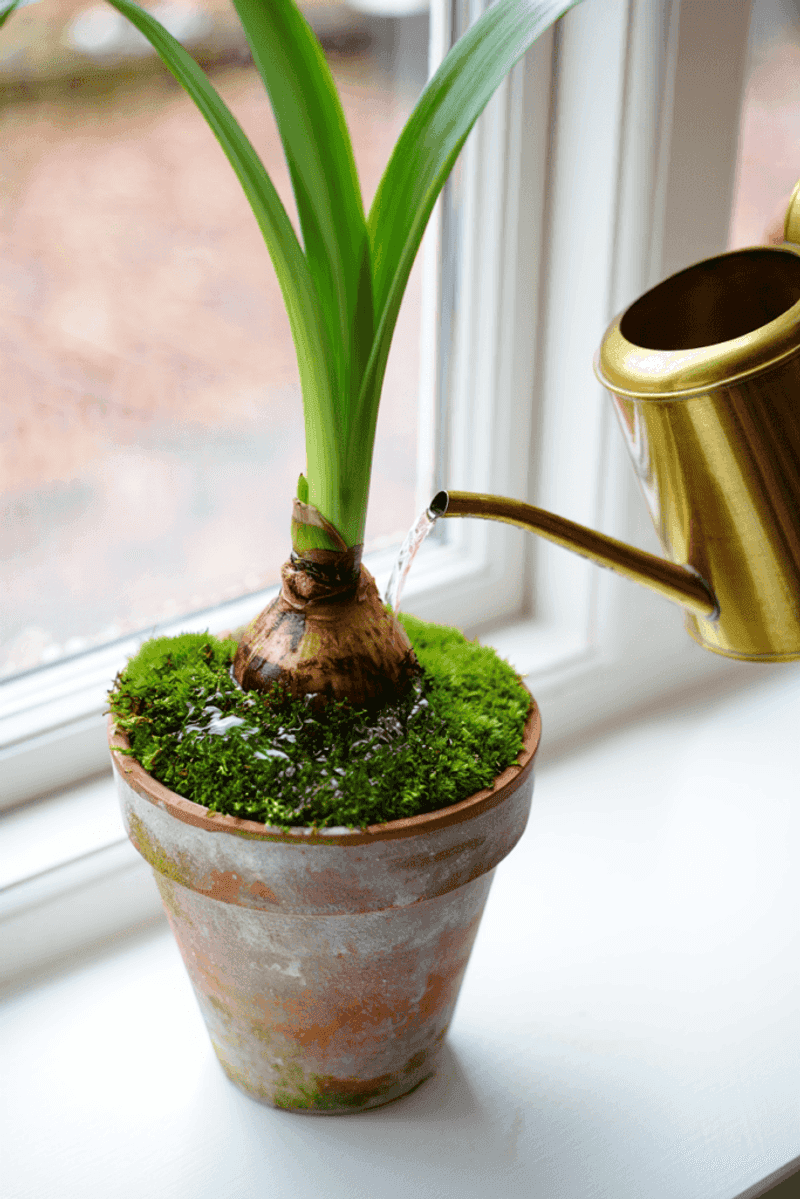
A dry neck does not mean a dry pot. The roots still need moisture to grow, so water the potting mix and aim the stream away from the exposed top of the bulb.
Letting the upper portion stay out of the mix helps keep water from collecting there, as UF/IFAS describes.
For the first watering, moisten the mix and let the extra drain out completely. UF/IFAS advises holding off on more water until sprouting, and then letting the soil dry between waterings.
Maryland Extension words it a little differently, suggesting sparing water at first and a mix that stays barely moist. No single schedule fits every home.
Empty the saucer so the pot never sits in water. Constantly soggy mix and poor drainage can lead to rot, a problem also flagged by University of Minnesota Extension.
If the bulb turns soft, that is your cue to cut back on water.
Provide warmth and bright light as the bulb grows
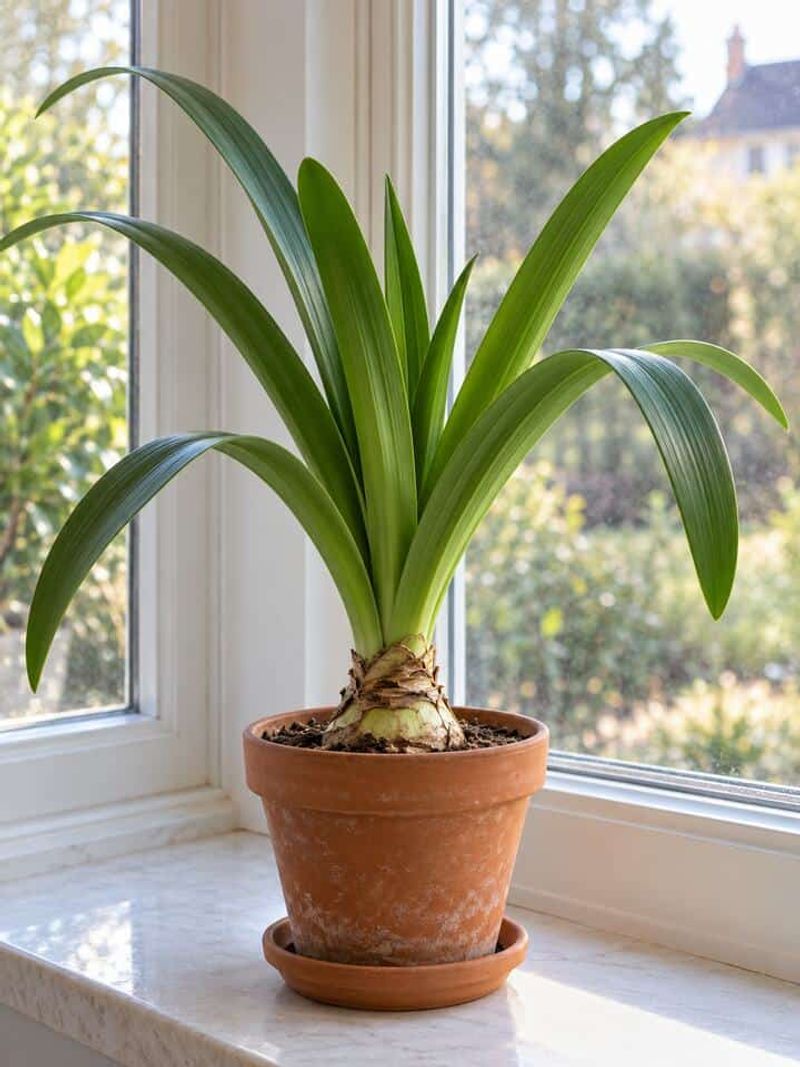
Once potted, park the bulb somewhere warm and bright. A sunny windowsill or a spot near a bright window works well in most Southern homes.
Skip drafty doors and cold glass on chilly nights.
Temperature guidance gives you a steady target for growth. Kansas State mentions daytime temperatures in the 70s and nights in the 60s, and NC State recommends 65 to 75 degrees F.
These numbers support healthy growth, but they will not set the flowering date.
When the green shoot appears, give the pot a quarter turn every few days. The stalk tends to lean toward the light, and turning the pot helps it grow straighter.
A taller, top-heavy stalk may still need a stake once the buds swell.
Extend the display and protect pets
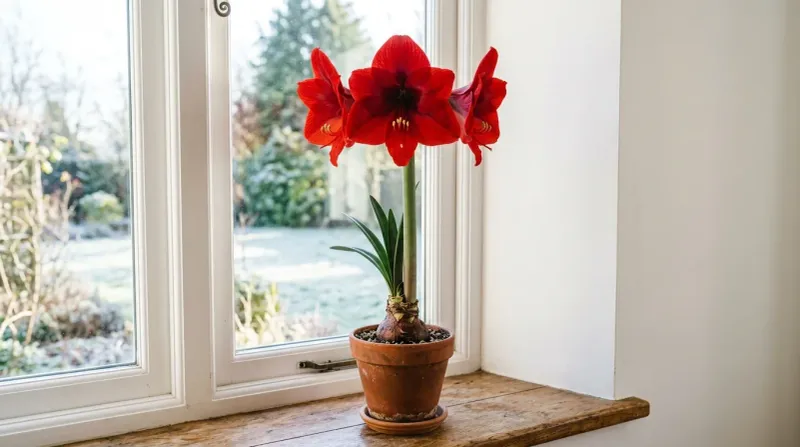
When the first flowers open, move the pot to a cooler spot out of direct sun. Cooler air and softer light can help the blooms last longer, a tip echoed by South Dakota State Extension and UF/IFAS.
A cool entryway or a bright room away from a sunny window can work.
Pets need a little planning. According to the ASPCA, amaryllis is toxic to dogs, cats, and horses.
Keep the pot, loose bulbs, and any cut stalks or trimmings where animals cannot reach them.
Good care supports a healthy plant, but it cannot guarantee flowers on Christmas Day. Some years the buds open early, and some years they open for New Year’s.
Either way, a bloom is worth the wait.