
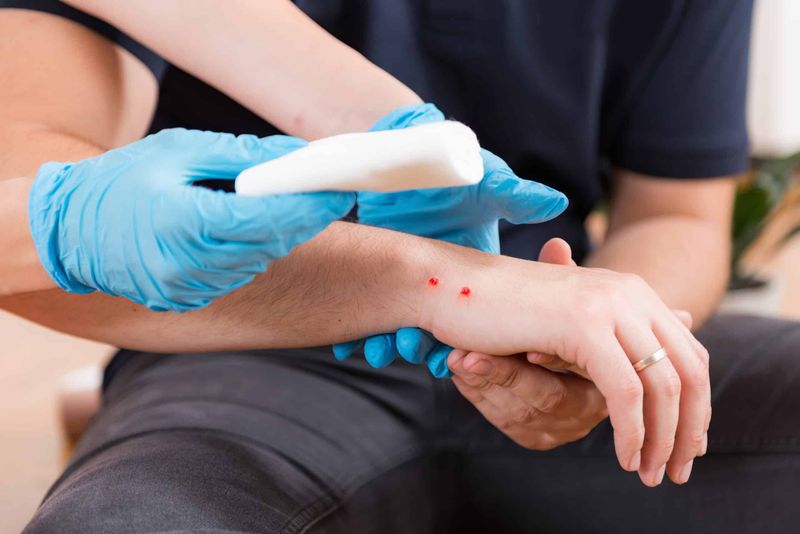
You are pulling dry brush or stacking firewood when something strikes your hand or ankle. In the first few minutes, what you do and what you skip can shape how the rest of the day goes.
California yards, from brushy hillsides to tidy suburban lots, can shelter rattlesnakes. Here is a calm, step-by-step plan, plus the popular remedies that only make things worse.
A fall yard bite still calls for emergency care
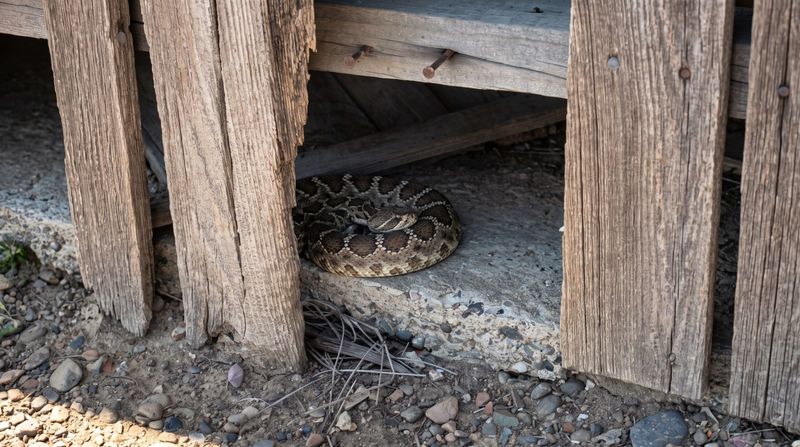
Fall can feel like the season when yard snakes have called it quits. Cooler mornings and shorter days make that assumption easy, but it is not a safe one.
According to the California Department of Fish and Wildlife, most rattlesnake bites happen between April and October, and activity varies with temperature and location.
That means fall is not the peak season, yet it is not a free pass either. Some snakes may slow down or settle in for the colder months, but they can still be active during stretches of favorable weather.
A warm, sunny afternoon in October can bring one out near a wood pile, a brushy corner, or the edge of a patio.
Rattlesnakes live around both urban and rural homes. They usually avoid people, but they may bite when they feel threatened, and they do not always rattle first.
Reaching into leaf litter, lifting a board, or tugging at overgrown groundcover can surprise one at close range.
So the season on the calendar should not change your response. If you think a rattlesnake has bitten you or someone nearby, treat it as an emergency right away.
California Poison Control notes that severe symptoms can develop within minutes or a couple of hours, so a bite that looks mild at first still needs medical attention.
Do not wait to see what happens. A small puncture, little pain, or no swelling yet does not tell you the bite is harmless.
The next sections walk through what to do, in order, and what to leave out.
Move away from the snake and call 911
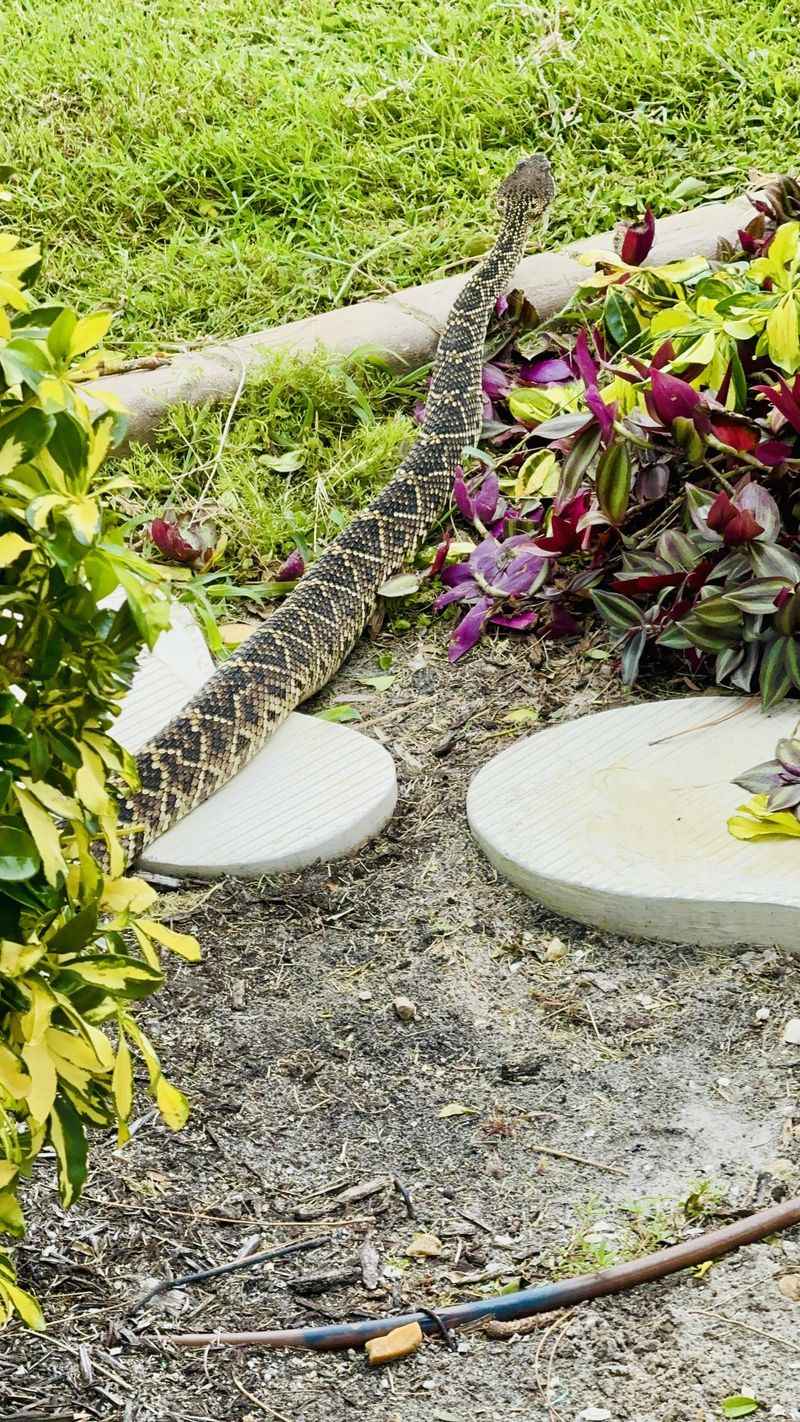
Your first move is simple: get yourself or the injured person away from the snake. Walk several steps back, without approaching, poking, or trying to move it.
A snake that has already struck may strike again if it feels cornered, so distance is the safest tool you have.
Once everyone is clear, call 911 for a suspected bite. Say that a rattlesnake may have bitten someone, give your address, and mention any landmarks if your yard is on a hillside or a rural road.
Put the phone on speaker so your hands stay free to help.
Emergency care should not wait for symptoms. California Poison Control advises calling 911 and seeking medical attention even when symptoms seem mild or have not shown up yet.
Treat the bite as venomous until medical professionals have assessed it.
You also do not need to know what kind of snake it was. Doctors can begin evaluating a patient without a positive identification, and the 2024 American Heart Association and American Red Cross first aid guidelines point to activating emergency services as a core step for a snakebite in North America.
Fieldwork often happens alone, so a quick note applies there. If you are the one bitten and no one is around, move away from the snake yourself, call 911, and then sit down.
Do not drive yourself if you can avoid it, since swelling, dizziness, or panic can build quickly.
Keep the person calm and the bitten limb still
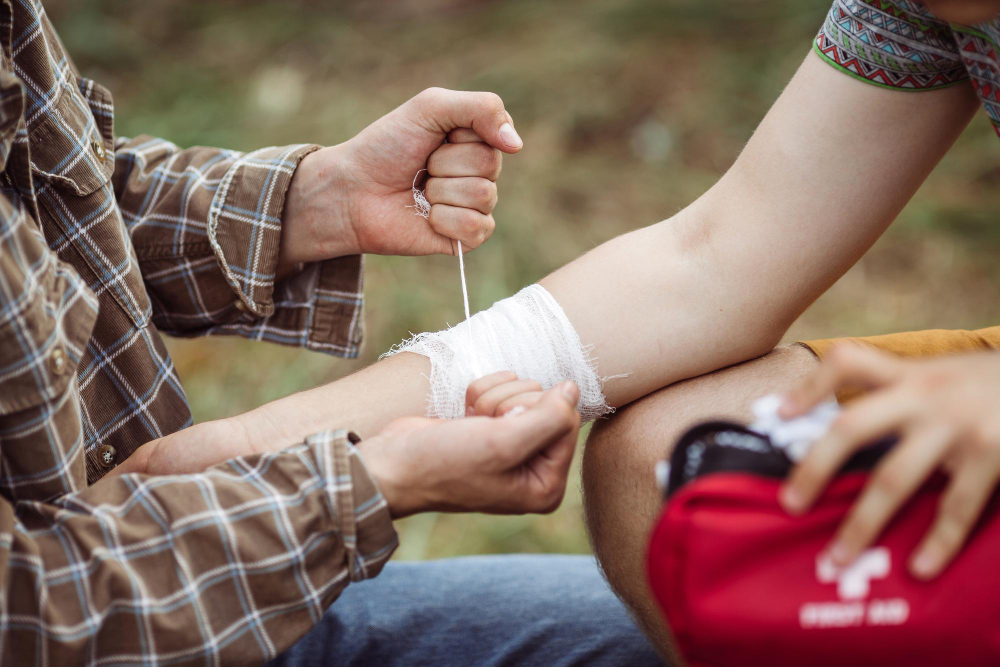
While you wait for paramedics, your job shifts to keeping things quiet. Have the person sit or lie down in a safe spot away from the snake, and encourage slow breathing.
Running around or pacing the yard burns energy and keeps the body moving, which is the opposite of what you want.
The 2024 American Heart Association and American Red Cross guidelines recommend rest and immobilization for snakebites in North America. In practice, that means keeping the bitten arm or leg as still as you can, as long as doing so does not delay care.
A loose wrap or a resting surface can help you avoid movement, but do not spend time hunting for supplies.
You may hear different advice about limb position. Some first aid pages, including the American Red Cross page, suggest keeping the limb below the heart.
Poison Control recommends keeping it at heart level. Because guidance differs, do not worry about getting the angle perfect.
Rest it comfortably, at about heart level if you can, and keep it still.
Stay with the person and watch them. Check that they are breathing normally and responding when you talk.
If they become very drowsy, confused, or struggle to breathe, tell the 911 dispatcher right away, since the call may still be open or you can call back.
Calm words matter more than they seem. Fear raises the heart rate, so a steady voice and a simple message like help is coming, stay still can make a real difference.
Remove tight items and cover the wound
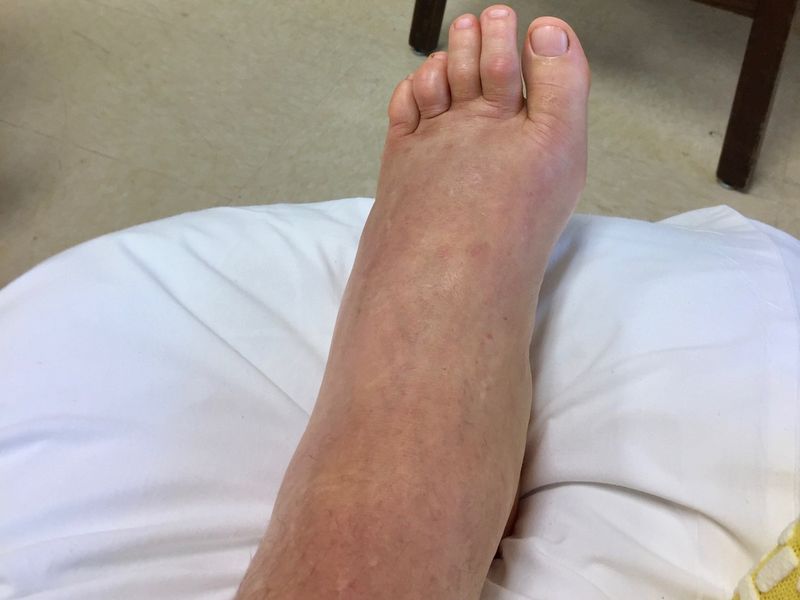
Swelling can come on fast, so tight items near the bite should come off early. Slip off rings, watches, bracelets, and anklets, and loosen or remove snug sleeves, cuffs, or socks.
A ring that slides off easily now may need to be cut off later if the finger puffs up.
The 2024 American Heart Association and American Red Cross guidelines include removing constricting objects along with rest and calling emergency services. Do this gently and quickly, without making the person move the limb more than needed.
If you can do it without slowing anything down, the American Red Cross says you can wash the wound gently with soap and water, then cover it with a clean, dry dressing. Skip scrubbing and skip any creams, herbal pastes, or ointments from the garage or garden shed.
Keep the order straight in your mind. Calling 911 comes first, staying still comes next, and these steps fill the gaps while you wait.
Washing and covering a bite keeps the area clean, but it does nothing to treat venom, so it should never replace emergency care.
If you are the only adult nearby, you can prop the phone on speaker and handle the jewelry yourself. If the person is alone and shaky, ask the dispatcher to talk you through what to do.
Either way, the goal is a calm, uncluttered limb with nothing tight around it when paramedics arrive.
Ice, venom-stopping tourniquets, cutting, and suction do not help
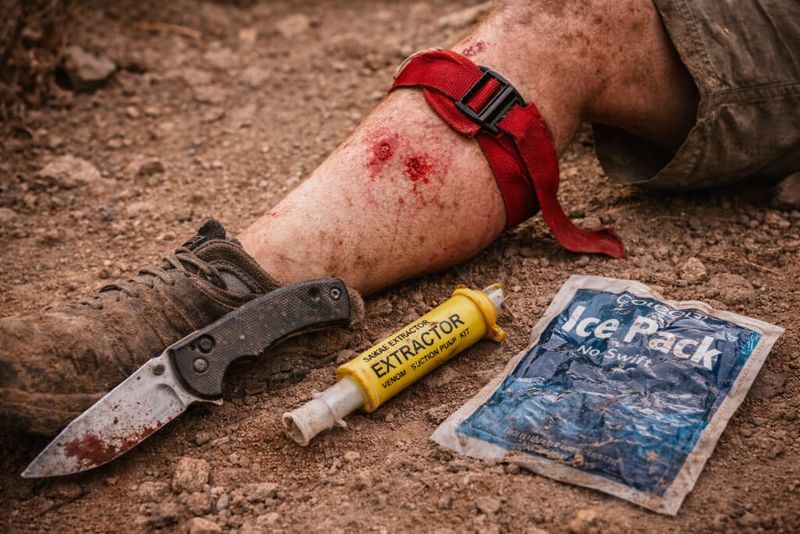
Old movies and campfire stories have left a pile of bad snakebite advice floating around. The short list of things to skip is worth memorizing: no ice, no cutting, no suction, and no tourniquet meant to hold back venom.
The 2024 American Heart Association and American Red Cross guidelines describe these approaches as ineffective or potentially harmful. The California Department of Fish and Wildlife specifically cautions against ice, cutting, suction, and tourniquets for the same reason.
Here is why each one backfires in practice. Ice does not neutralize venom, and it can add cold injury to an already damaged area.
Cutting the bite can injure tissue, nerves, and blood vessels and raises the risk of infection. Sucking or using a suction device does not pull out meaningful venom and wastes minutes.
A tight band meant to trap venom can cut off blood flow and may worsen tissue damage.
There is one point of confusion worth clearing up. Tourniquets do have a legitimate role in certain life-threatening bleeding emergencies, such as severe bleeding from a limb injury, and the same guidelines address that separately.
A tourniquet used to try to stop venom from spreading is a different thing, and it is not recommended.
If you feel the urge to do something, put that energy into the steps that help. Keep the person still, remove tight items, and keep talking to the 911 dispatcher.
Doing less with the wound is often the better first aid.
Leave the snake alone; a photo is optional
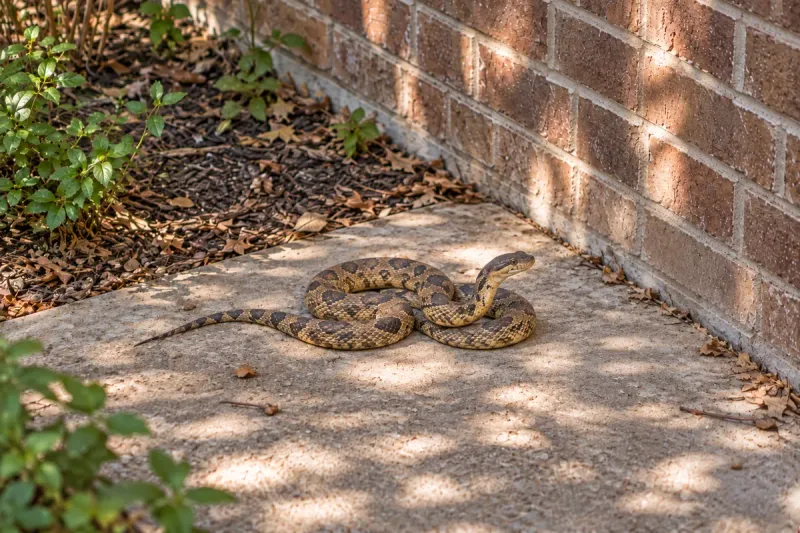
After a bite, curiosity can pull people straight back toward the snake. Resist it.
Do not try to catch it, kill it, move it, or step closer to get a better look, even if you think it is gone or looks dead.
The California Department of Fish and Wildlife warns that even a dead rattlesnake may still inject venom shortly after death. A second bite would turn one emergency into two, and it would not help the doctors treat the first.
Many people believe the hospital needs the snake in hand. It does not.
Poison Control notes that a photo or description can be useful, but it is not essential. If you can snap a picture from a safe distance without delaying anything, that is fine.
If not, a quick description of the size, color, and pattern is plenty.
Identification should never slow down emergency care. The American Red Cross also steers readers away from trying to capture the animal, and treatment begins based on the patient, not the snake.
Once the injured person is safe, keep kids and pets well away from the area. If the snake is still near a walkway or door, tell the dispatcher so responders know where it is.
Wildlife officials or a trained snake removal professional can deal with it later, after the emergency has passed.
A pet bite follows the same logic. Call a veterinarian urgently, because human first aid and human poison advice do not replace veterinary care.
Let medical professionals assess the bite and choose treatment

At home, there is no safe way to tell whether a bite was dry, mild, or serious. A small puncture can hide a significant injection of venom, and a dramatic-looking bite may turn out to be less severe.
That is why the answer is always the same: get evaluated.
Treatment decisions happen at the hospital. According to Poison Control, antivenom is the definitive treatment for bites that warrant it, but clinicians decide based on symptoms and examination.
Not every bite requires antivenom, and dry bites or mild reactions may be managed differently. The 2024 American Heart Association and American Red Cross guidelines likewise treat antivenom as a hospital therapy.
Expect the team to examine the bite area, track swelling and symptoms over time, and check how the body is responding. You may be observed for a while even if you feel fairly well, since effects can change.
If you want extra guidance, California Poison Control can be reached at 1-800-222-1222. Treat that number as a helper, not a substitute.
Call 911 first, and never let a phone call to Poison Control delay emergency care.
Prompt medical evaluation matters more than naming the snake or trying a home remedy. Put your phone, not your pocketknife, to work.