
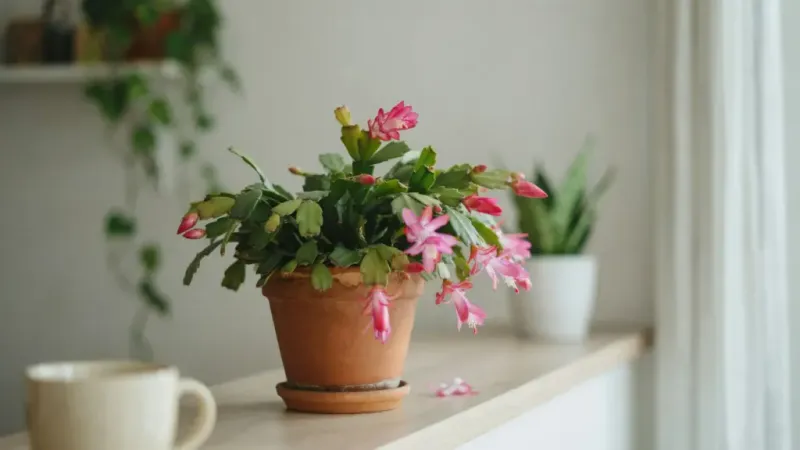
Your holiday cactus may already be holding tiny buds, or it may be bare. That difference decides what kind of care makes sense right now.
A quick look at the stem tips can save you from guesswork and from needless bud loss. Here is how to check and what to do next in a North Carolina home.
A budless cactus is unlikely to bloom by Christmas
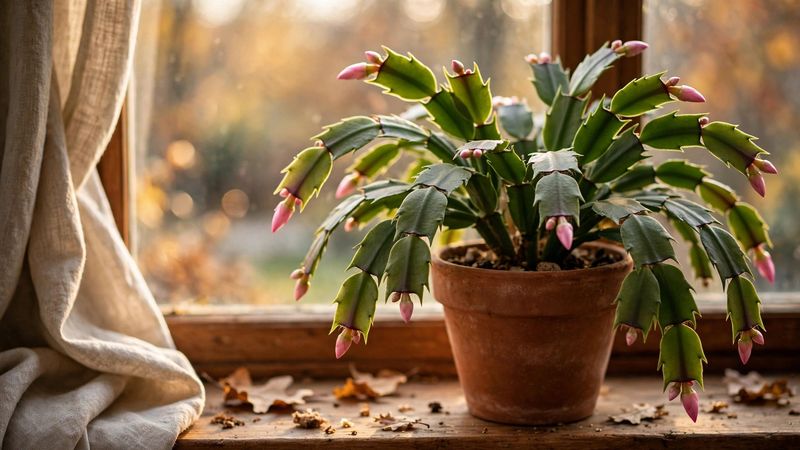
Timing is the hard part. Holiday cacti need several weeks of flower-inducing conditions before buds appear, and then the flowers still need time to develop.
UF/IFAS Extension estimates that a six-week short-day treatment produces bloom in about ten weeks.
Kansas State guidance measures something different. Kansas State Extension says flowers take nine to ten weeks to develop after buds form.
The first number starts with a treatment period, and the second starts once buds already exist, so they should not be treated as one schedule.
Put those timelines next to a calendar in late November and the picture is plain. A plant with no buds is unlikely to flower by Christmas, no matter how carefully you tend it now.
Anyone promising a holiday rescue is promising more than the plant can deliver.
That does not make late-November care pointless. If your cactus has buds, steady conditions can help you keep them.
If it has none, the right light, temperature, and watering may support flowering later in winter. Cultivars differ, so treat any timeline as a rough guide rather than a guarantee.
The next step is simple. Look at the plant before you change anything, and let what you see set the plan.
Check for buds before changing the plant’s routine
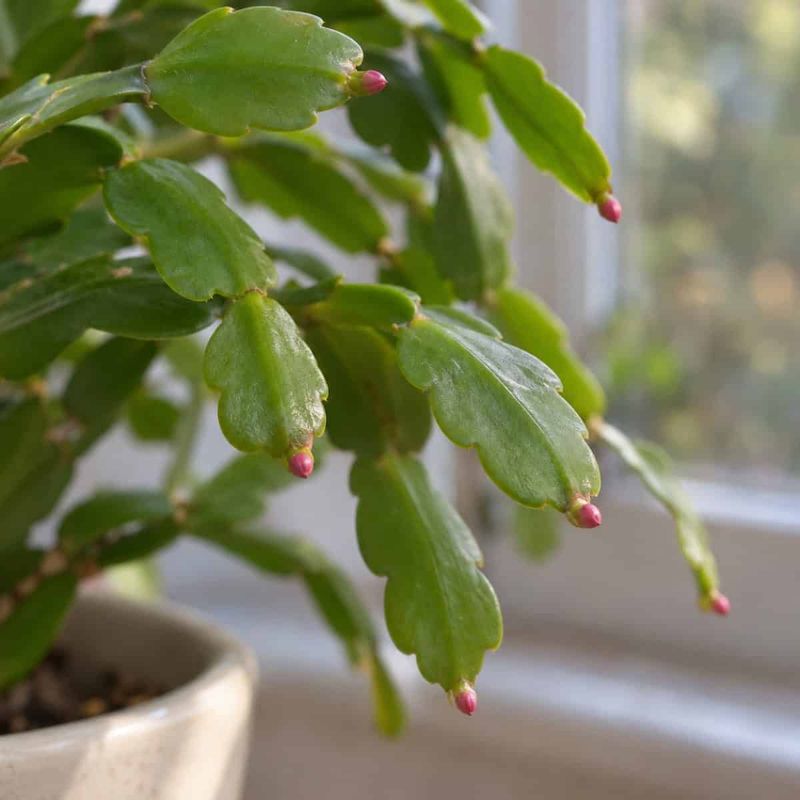
Start at the stem tips. Buds look like tiny bumps or small pinkish nubs at the ends of the flat segments.
Check each branch, since a plant can carry buds on only part of its growth.
What you find sets your path. Buds present means steady care, covered next.
No buds means a different routine aimed at later flowers.
Do not rely on the plant tag to predict timing. NC Cooperative Extension in Henderson County notes that Thanksgiving cactus is commonly sold as Christmas cactus.
According to NC State Extension Gardener, the two differ in stem segment shape and usual flowering time.
Many store plants are hybrids, so shape and label alone will not tell you when yours will bloom. Pointed, toothlike segment edges often suggest Thanksgiving cactus, while rounded, scalloped edges point toward true Christmas cactus.
Treat that as a clue, not a promise.
Guidance such as Pender County Extension’s holiday cactus care tips applies to either type. Identification can wait.
The bud check cannot.
Visible buds need steady conditions
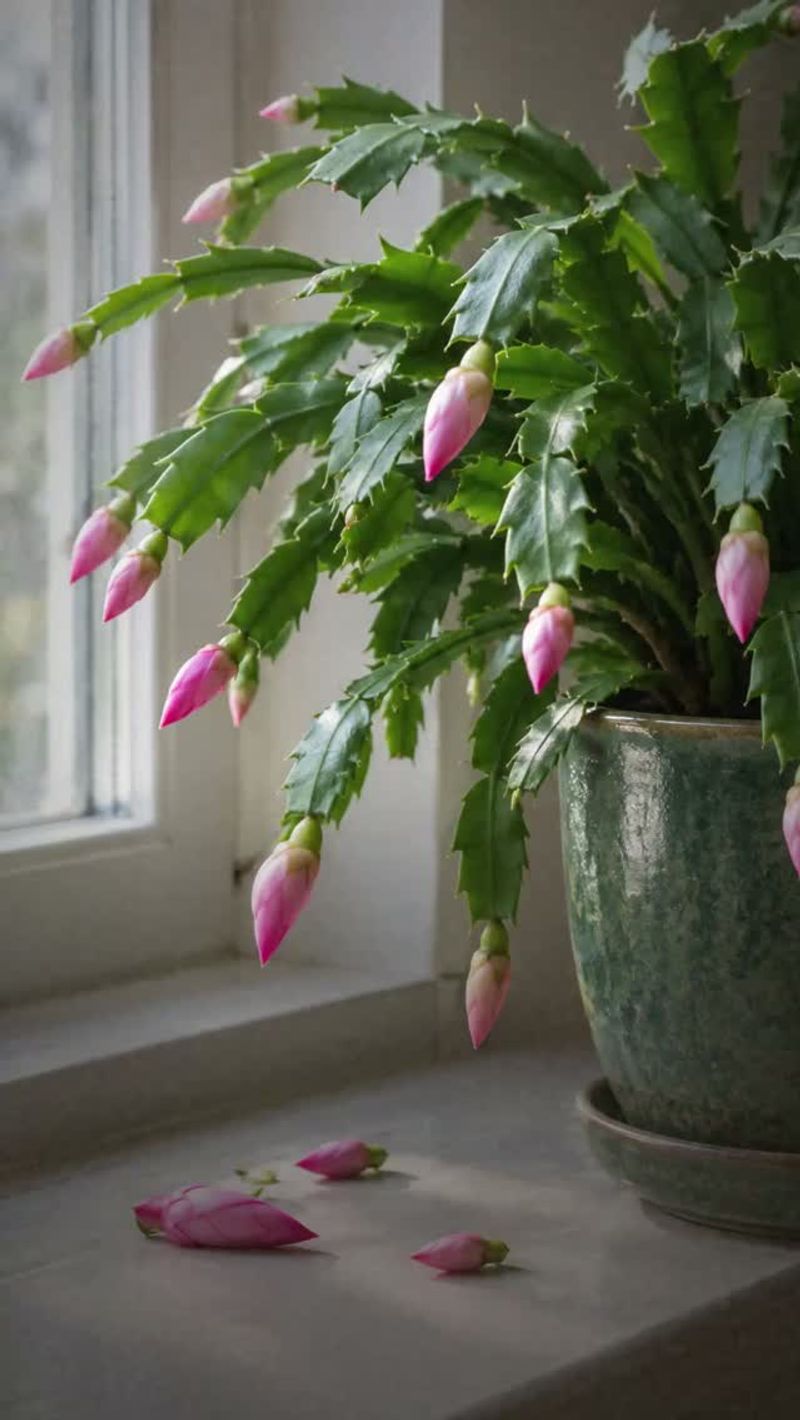
When buds are showing, your job is mostly to leave things alone. The plant has done the hard part, and your goal now is to avoid upsetting it.
Changes in location, light, temperature, or watering are linked to bud drop, though not every plant reacts the same way.
Iowa State Extension points to these kinds of changes as common reasons buds fall. UF/IFAS gives similar cautions about disturbing a plant that is setting buds.
Pick a spot with bright, indirect light and leave it there. Avoid turning the pot every few days, which is a habit that can feel helpful but changes how light hits the buds.
If you must move it, such as to protect it from a cold window at night, keep the change small.
Keep the plant away from drafts and heat sources. Think of a heating vent, a fireplace, a space heater, or a door that opens to a chilly porch.
Hot, dry air and sudden chills both put buds at risk.
Resist experiments. This is not the time to try a new fertilizer, a different window, or a cooler room.
Maintain the indoor conditions that got the plant this far, and enjoy watching the buds swell.
Unbudded plants need bright days and uninterrupted nights
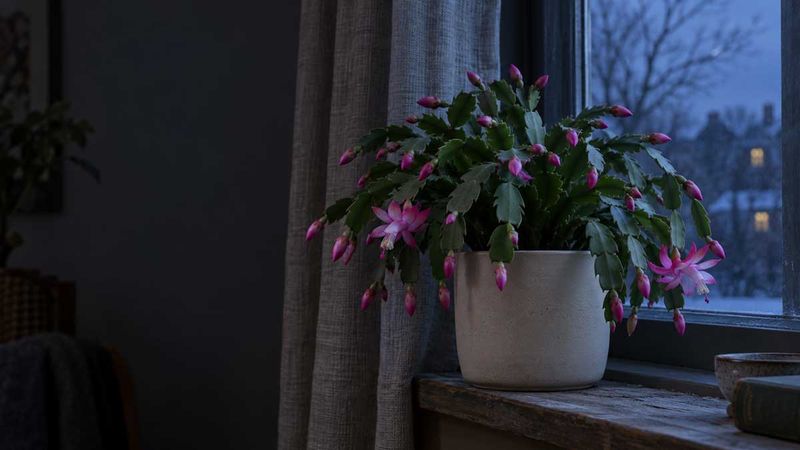
A plant with no buds can still be set up for later flowers. It needs bright, indirect light during the day and a long stretch of real darkness each night.
Direct afternoon sun through glass can scorch the stems, so filtered light works better.
The dark period matters most. NC State Extension Plant Toolbox describes long, uninterrupted nights of at least 13 hours.
Other sources give different numbers, and University of Minnesota Extension and Iowa State describe ranges rather than a single rule.
Because published recommendations run from roughly 12 to 16 hours, treat any one figure as a starting point. Cultivar and temperature can shift the response.
Protect the darkness from household light. A lamp, a hallway light, a television glow, or a porch light shining through a window can interrupt the night and interfere with bud formation.
A closet, a spare room, or a spot that stays dark after dinner often works.
Be realistic about timing. Starting this routine in late November does not erase the weeks that flower formation and development require.
Flowers, if they come, will more likely arrive after the holidays.
Cool nights can help, but cold exposure can harm
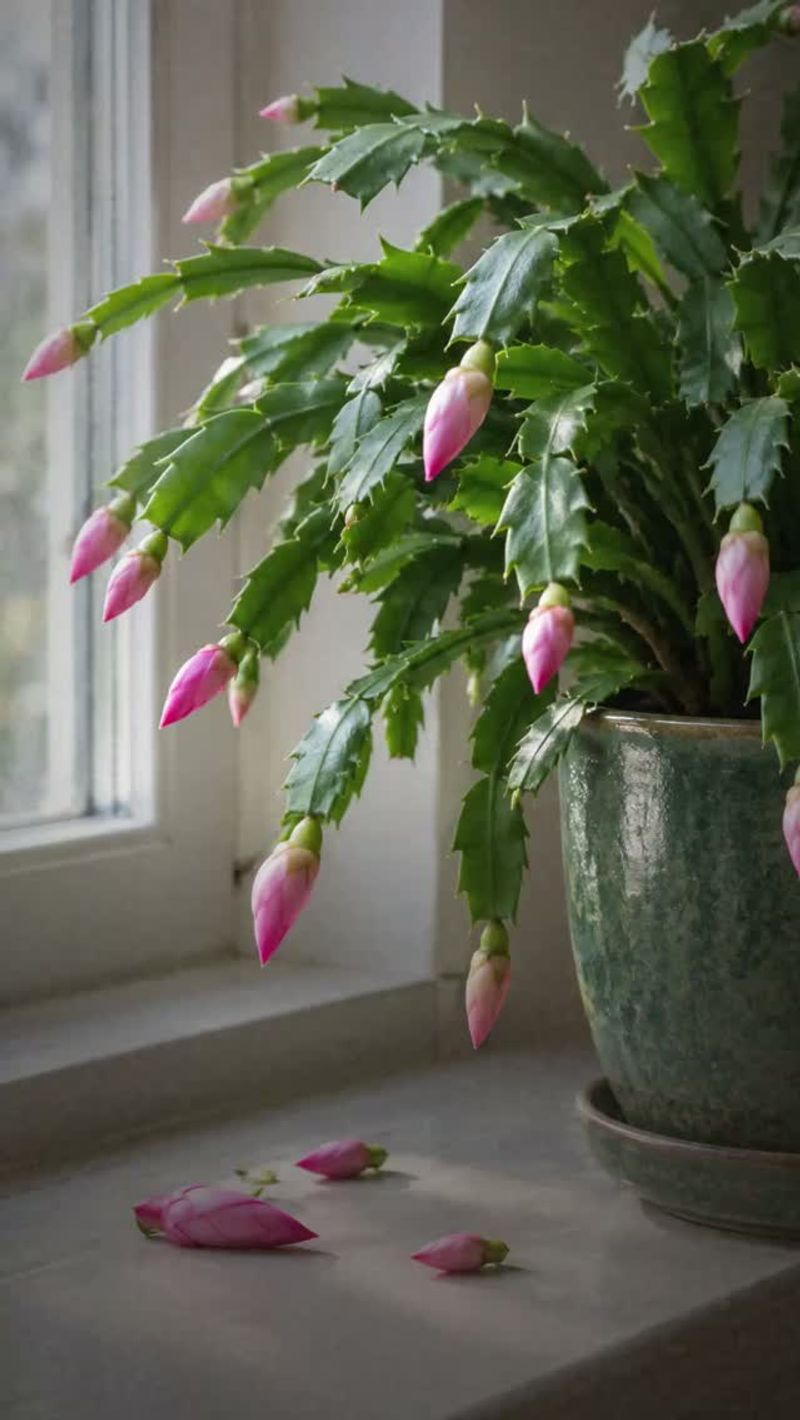
Cool nights can support flowering, but the advice comes in ranges. University of Minnesota Extension gives evening temperatures of 55 to 65 degrees F.
NC State’s Henderson County guidance calls 55 to 60 degrees F nights ideal and warns that temperatures around 50 degrees F can risk bud drop.
Those two sources overlap, but they are not identical, so aim for a comfortable cool room rather than a precise number. A spare bedroom or a sunroom that stays moderate overnight is often easier than a cold window ledge.
Cultivar matters too. Iowa State notes differences among cultivars.
In a controlled study of one Schlumbergera truncata cultivar, flowering time ranged from 50 to 99 days across temperature settings. That is one cultivar under lab conditions, so it does not predict your plant.
Cool does not mean cold. North Carolina nights in late November can dip to freezing, especially in the mountains and parts of the Piedmont.
Do not leave the cactus outdoors when frost or temperatures below 50 degrees F threaten.
Avoid cold drafts from leaky windows and abrupt swings, such as moving the pot from a warm room to a chilly porch. Those are risks for bud drop, not forcing methods.
Water for steady care, not to force a bloom
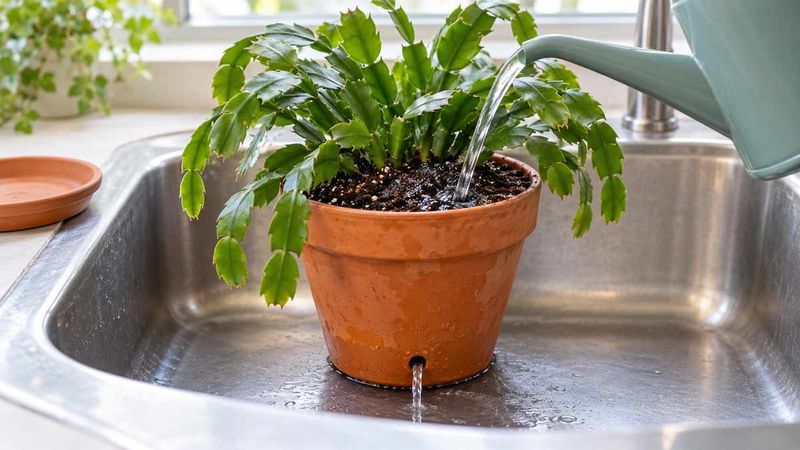
Reliable watering starts with your finger. Push it into the top inch of the mix.
If it feels dry, water thoroughly, let the excess drain, and then empty the saucer.
NC Cooperative Extension in Pender County recommends this kind of approach. It keeps roots from sitting in standing water, which can lead to root problems.
Both extremes cause trouble. Severe drying stresses the plant, and waterlogged soil can damage roots.
Either can contribute to bud or flower loss.
Once buds are present, do not let the mix go completely dry. Henderson County Extension stresses avoiding excessive dryness, especially while buds develop, because dryness can cause buds or flowers to drop.
Skip any advice to hold back water to trigger blooms. That idea is not supported by extension guidance, and it puts a plant with buds at risk.
Pots in warm, dry rooms near heating vents may dry faster, so check more often. Cooler rooms dry more slowly.
Let the mix, not the calendar, tell you when to water.
Choose the next step by what the plant shows
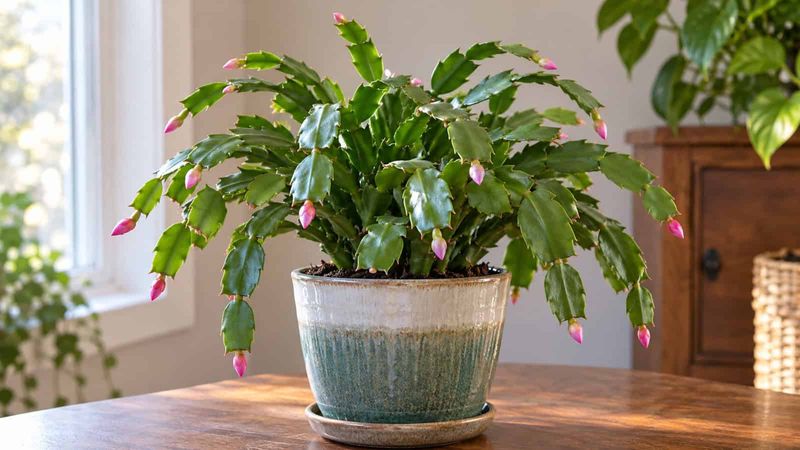
Let the plant make the call. With buds, protect them with stable light, temperature, and watering, and keep it away from drafts and heat.
Without buds, give bright indirect days, uninterrupted nights, safely cool conditions, and careful watering, and expect flowers later rather than by Christmas.
Today, take one action: turn the pot toward the light, look at every stem tip, and decide which path you are on. Buds or not, a plant that stays healthy now has the best chance to bloom when it is ready.