
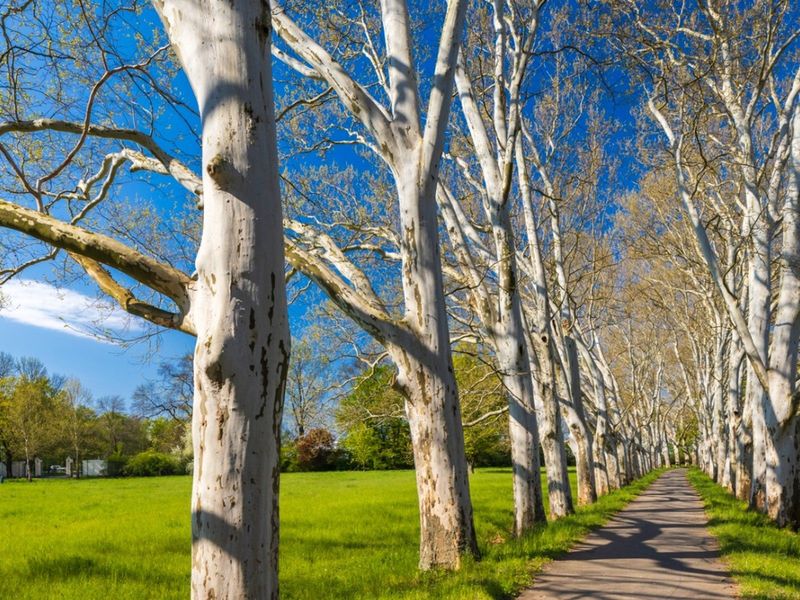
A bare patio in August can feel like a frying pan, and a tree seems like the obvious fix. California sycamore is a native tree that grows fast and can become a giant, so it only fits some yards.
Planting at the right time and giving it good care can help it get a strong start. Here is how to decide if it belongs in your yard and what kind of shade you can realistically expect.
California sycamore needs room to become a shade tree

Picture a tree with pale, patchy bark, big maple-like leaves, and a canopy that spreads wide overhead. That is California sycamore (Platanus racemosa), a deciduous tree that drops its leaves in the cooler months.
According to Oregon State University’s plant profile, it grows fast and can reach roughly 40 to 80 feet.
It is also a true local. Calflora lists it as native to California and Baja California.
That makes it a California story, not a tree to assume will suit Florida, Texas, or the wider South.
Fast growth and big size are what make sycamore a candidate for shade. They are also why it is not right for every lot.
A tree that large needs space for its branches overhead and its roots underground, for decades.
Before you think about timing or shovels, walk your property and ask a plain question. Is there a spot with generous open room in every direction?
If your yard is small, narrow, or crowded with structures, a smaller tree is likely the better pick.
Also keep expectations honest. A sycamore is a long-term investment in shade, not an instant fix.
A young tree starts small, and the big, cool canopy comes with years of growth.
Fall planting may fit some California climates
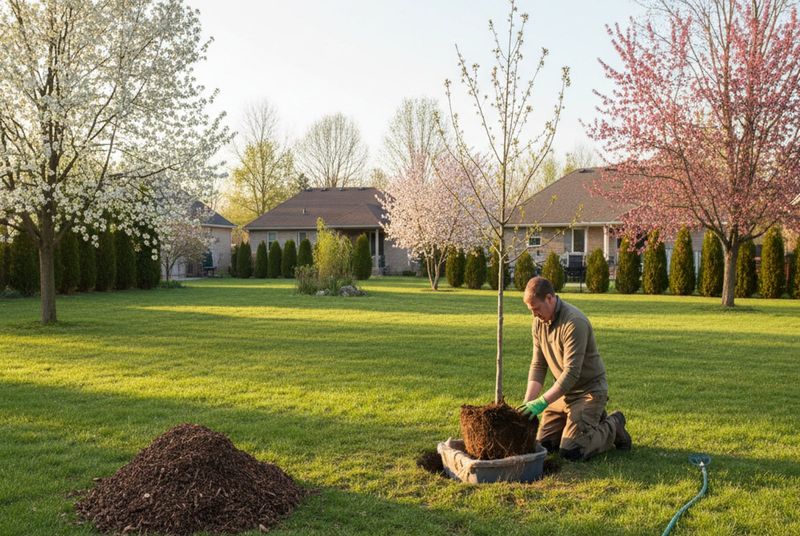
Many California gardeners plant natives in fall, and there is a good reason. Our climate has wet winters and long dry summers, so roots can settle in while the soil is cool and rain is likely.
UC Marin Master Gardeners recommend planting natives in fall, before anticipated rains, in the mild Mediterranean climate.
That advice comes from one part of the state. It is not proof of a single planting window for all of California.
Coastal areas, inland valleys, deserts, and mountain communities have different rain patterns and frost risks.
So treat fall as a good option where your local climate and expected rainfall support it. If you live outside the Bay Area, check with your county UC Master Gardeners, a local native plant nursery, or your water district for timing that fits your area.
Winter rain can help a new tree get established, but it does not do the whole job. A dry winter or a long gap between storms can leave the root zone drier than you think.
Plan to check the soil instead of trusting the forecast.
This timing advice also stays in California. Planting seasons in other states follow different climates and different native plants, so do not copy this calendar elsewhere.
One young tree may shade a nearby target by next summer
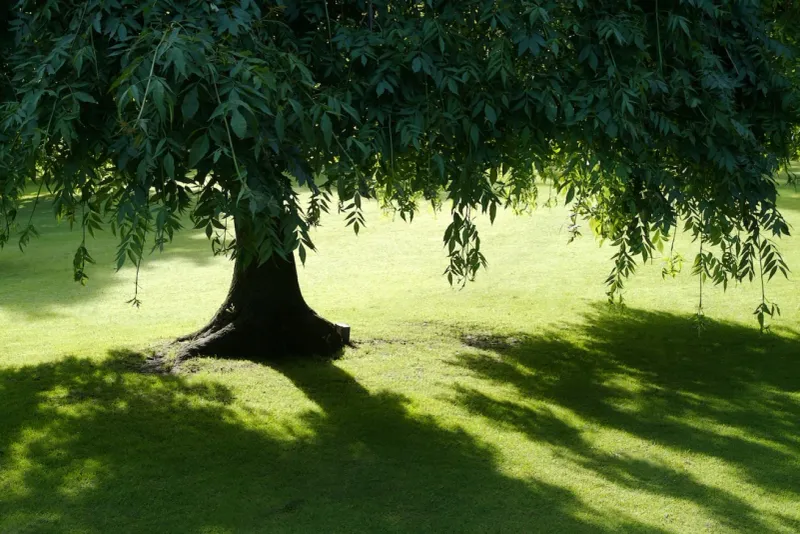
Shade works where it lands. Standing under a tree feels cooler than standing in full sun, and a shaded wall or patio takes in less heat.
That is a real benefit, but it is a local one.
The U.S. Department of Energy offers a useful example in its Guide to Home Landscaping.
It says a deciduous tree 6 to 8 feet tall planted near a house may begin shading windows in its first year. Notice the modest claim: a nearby window, not an entire yard.
Shade on a surface is also not the same as cooler air across your property. A young tree can shade a bench or a patch of ground without changing the air temperature of the whole yard in any measurable way.
Studies showing big cooling effects usually involve large, established tree canopies or city-wide tree cover, not one new backyard tree.
What you get by next summer depends on a few things. The starting size of the tree matters, as does how well it grows, where you put it, and the conditions of your site.
A small sapling placed far from your target may give little shade for several years.
A smart way to use this is to pick one target, such as a west-facing window or a favorite seat. Then plant with that spot in mind and count any early shade as a bonus while the tree builds its canopy.
Choose a site for future shade and mature growth
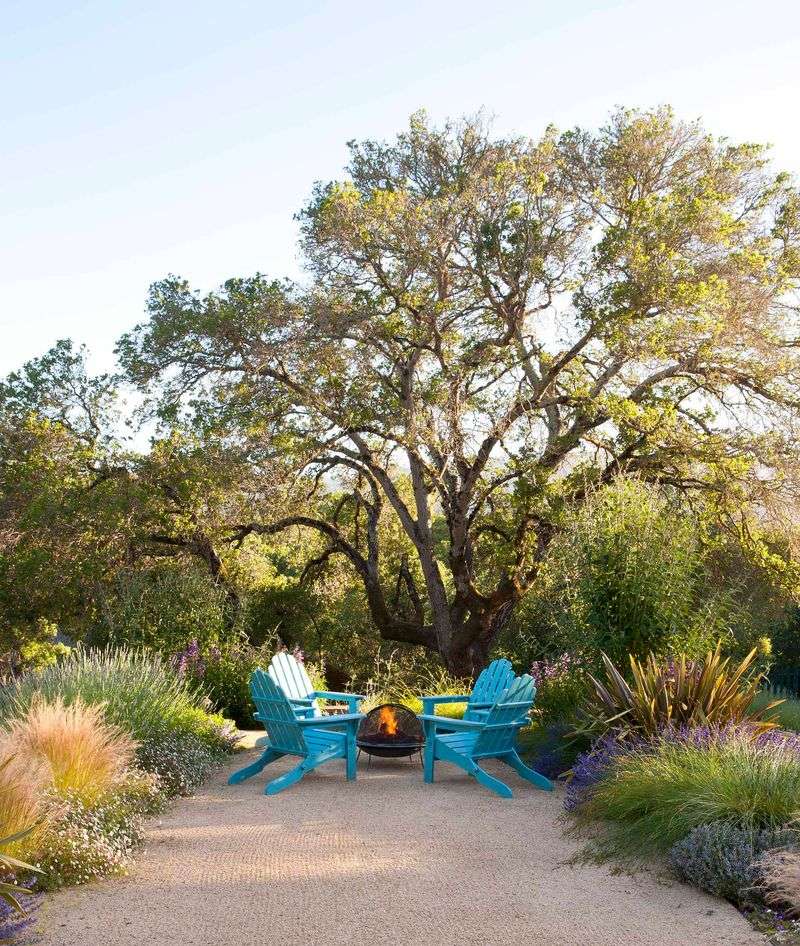
Start by choosing what you want to shade. It might be a patio, a hot window, or a bare patch of ground where you sit in summer.
Watch how the sun moves across that spot, since the tree should stand where its shadow will fall on your target as it grows.
Then think big. Oregon State University describes this tree as potentially very large, so its canopy and roots will need room.
The Department of Energy’s landscaping guidance says to leave space for mature roots and branches, and UC ANR’s oak planting guidance likewise advises planting away from buildings, hard surfaces, and utility lines.
In practice, that means checking a few things before you dig:
Look up for overhead wires and down for buried lines. Call 811 before digging.
Measure the distance to your house, fences, driveways, sidewalks, and pipes, and picture a tree several times wider than it is today.
If you live in a wildfire-prone area, add one more check. Tree placement should follow CAL FIRE’s defensible-space guidance, including vertical separation between tree branches and lower vegetation.
If no spot passes these checks, that is a useful answer. It may mean a different tree suits your yard better.
Set the root flare at the right level
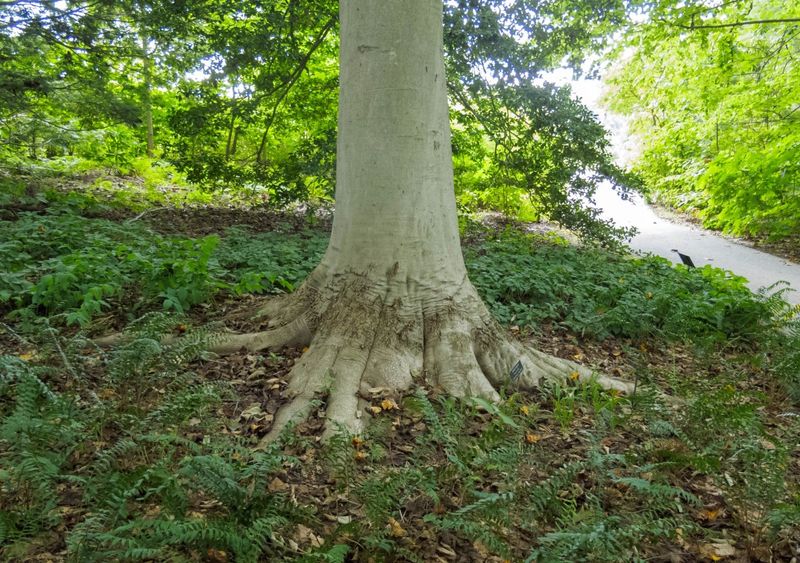
Planting depth decides a lot about how a tree does later. UC ANR’s planting guidance and UC Marin Master Gardeners point to the same simple approach.
Dig the hole two to three times as wide as the container, but no deeper than the root ball. A wide hole gives roots loosened soil to spread into.
A deep hole can leave the tree sitting too low and settling over time.
Next, find the root flare. This is the spot near the base where the trunk widens and the roots begin to spread.
Set the tree so that flare stays visible at or just above the soil surface, not buried.
Backfill with the soil you dug out, and firm it gently so the tree stands straight. Check the level once more before you finish, since it is easy to end up lower than you meant to.
Finally, add mulch around the planting area, but keep it off the trunk. Pull it back so a clear gap surrounds the base.
Mulch piled against bark holds moisture where it does not belong.
That is the whole job: wide, not deep, flare showing, mulch back.
Check soil moisture after winter rains
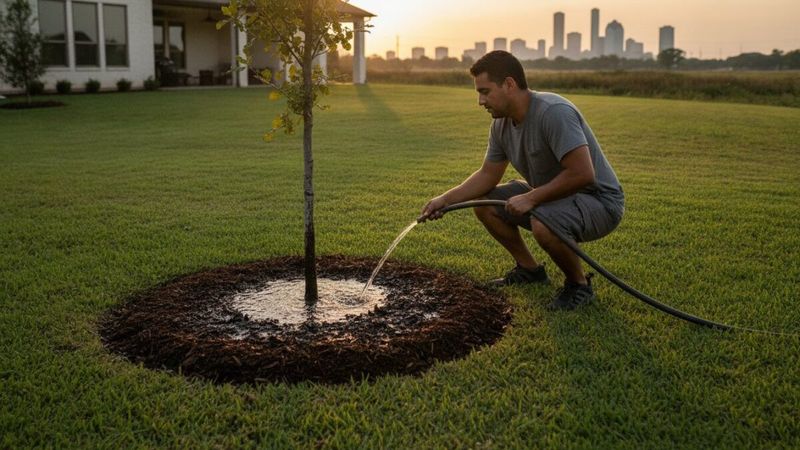
A wet winter can make a new tree look taken care of. Spring and summer tell a different story.
Rain may stop early, and dry months can arrive before roots have spread far.
UC guidance says newly planted trees and shrubs may need more frequent watering for up to two growing seasons, according to UC Marin Master Gardeners. That includes the first summer, so winter rain does not retire the watering can.
Sycamore is not a low-water tree you can ignore. UC IPM notes that sycamores do best with some deep summer watering.
Deep means soaking the soil well around the root zone instead of giving a quick sprinkle.
The sources do not give a fixed schedule, so use the soil as your guide. Push a finger or a small trowel several inches into the soil near the root ball and the area just beyond it.
If it is dry at that depth, it is time to water.
Check more often during warm, dry, or windy stretches, and after a rainy spell that fades early. Keep in mind your local water rules, and water slowly so moisture sinks in instead of running off.
Check defensible-space needs before planting in wildfire areas
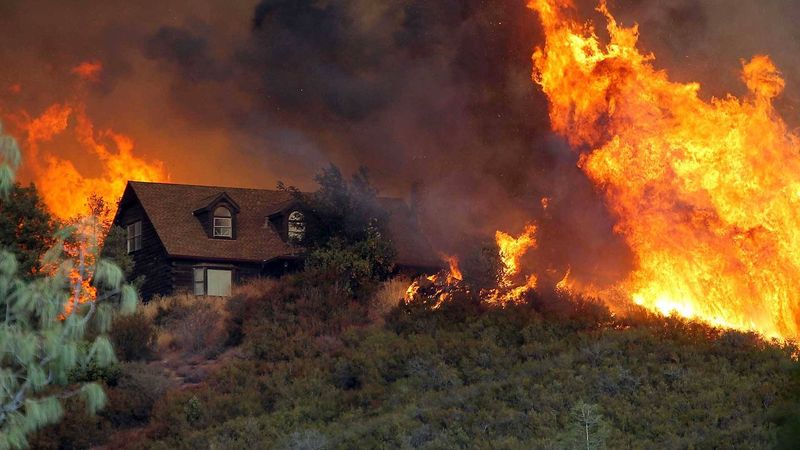
Shade is welcome in hot hills, but fire risk changes the planting plan. If your home sits in a wildfire-prone area, California sycamore is not automatically a fit for every spot on your property.
Start with CAL FIRE’s defensible-space guidance. It covers how to space and maintain plants around a home, including vertical separation between tree branches and lower vegetation.
That gap helps keep a fire on the ground from climbing into the tree.
Think about the layers under and around any tree you plant. Shrubs, tall grass, and dead leaves below a canopy can bridge that gap.
As your tree grows, its lowest branches will need attention so the separation stays in place.
Next, find out which rules apply to your address. Requirements can vary by location, so contact your local fire agency or fire safety council and ask about your zone.
They can tell you what is expected and where trees are best placed.
If planning for fire safety leaves you with no good spot, you have lost nothing. Sometimes the best shade decision is to wait, choose a different spot, or choose a different plant.