
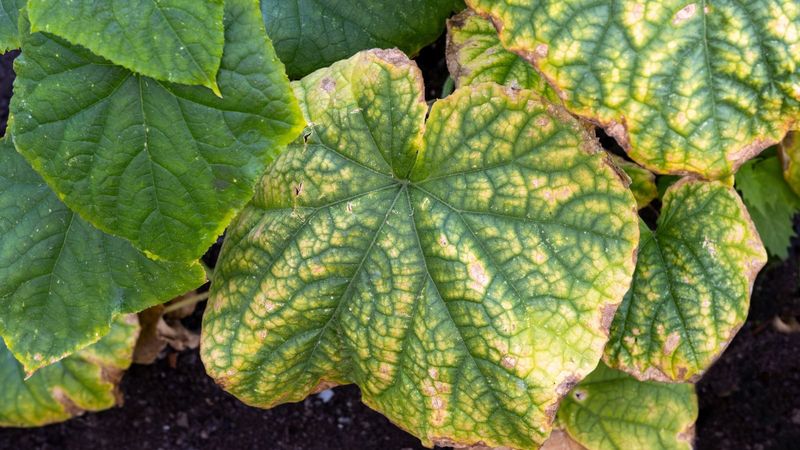
You walk out to check your cucumber patch, expecting lush green vines, and instead you find leaves fading to a sickly yellow. It feels like your plants are quietly waving a white flag, and you have no idea why. The good news is that yellow cucumber leaves almost always point to a fixable problem, and once you learn to read the signs, you can turn things around. Let’s look at the nine most common causes, plus the single habit that might be quietly draining the life out of your vines.
Overwatering Drowns the Roots You Cannot See
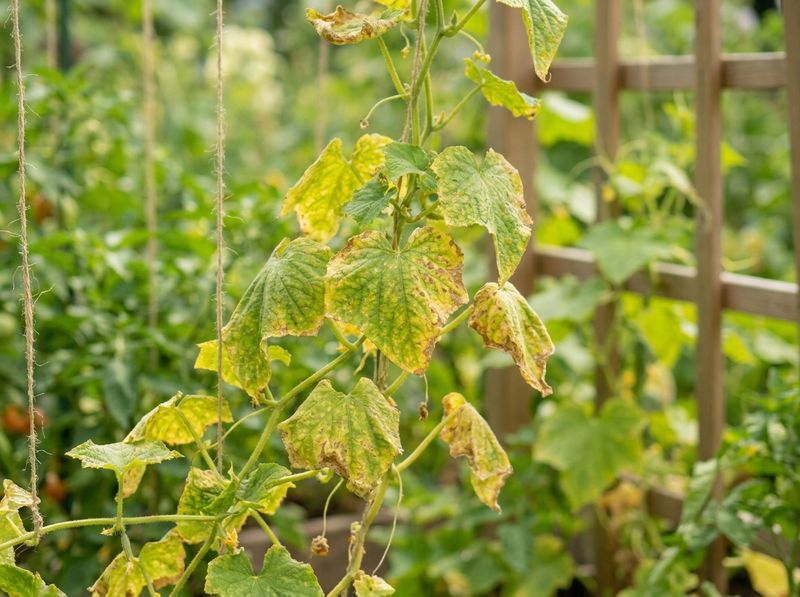
Soggy soil is the sneakiest culprit on this list, because most gardeners assume more water equals a happier plant. Cucumbers love moisture, sure, but their roots also need air pockets in the soil to breathe.
When you water too often, those pockets fill up and stay flooded. Roots left sitting in muck cannot pull up oxygen or nutrients, so the lower leaves fade to a dull, uniform yellow. You might even notice the soil smells slightly sour or stays wet days after watering.
Stick your finger two inches into the ground before reaching for the hose. If it feels damp, wait. Most cucumber beds only need a deep soak once or twice a week, depending on your summer heat.
Raised beds and containers with good drainage holes can save you here, since excess water escapes instead of pooling. If your plants are in heavy clay, mixing in compost often improves how quickly water moves through. Cutting back on frequency, rather than amount, is usually the fastest fix for waterlogged, yellowing vines.
Thirsty Vines Fade From the Bottom Up
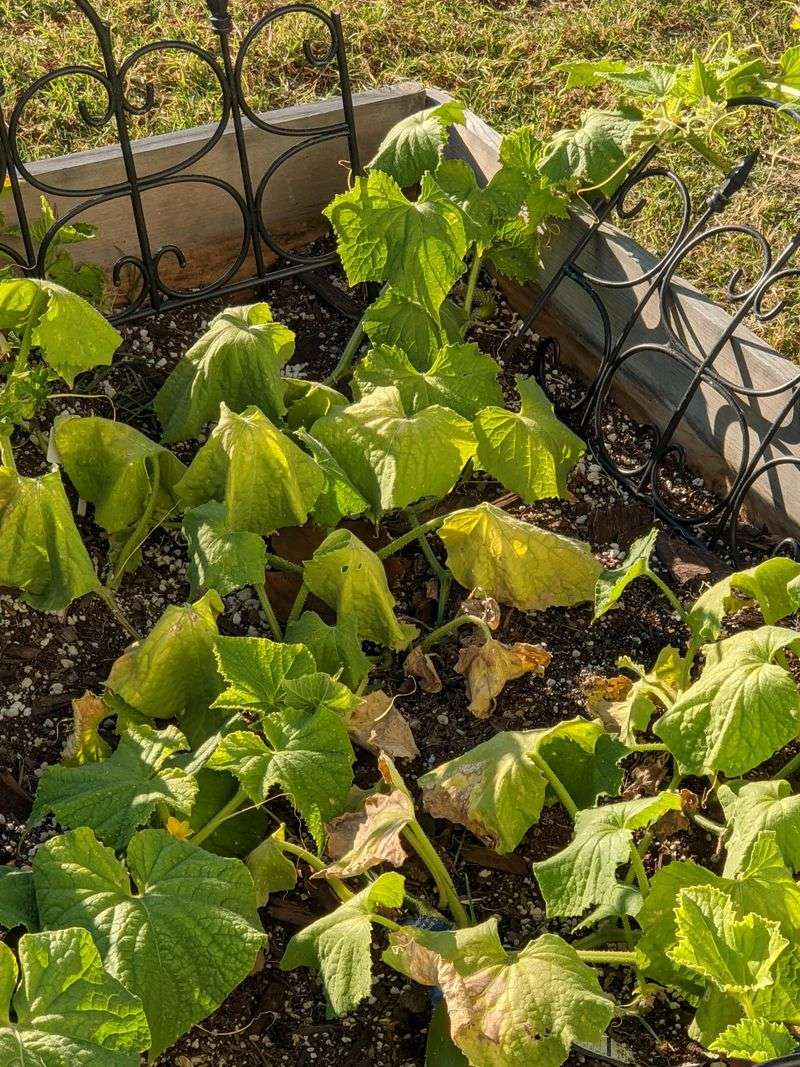
On the flip side, cucumbers that go too long between drinks throw their own kind of tantrum. During a hot US summer, a single vine can guzzle more water than you’d expect, and the first sign of trouble is usually yellowing paired with a wilted, papery look.
Underwatered plants tend to sacrifice their oldest leaves first, pulling moisture toward the newer growth and the developing fruit. So if the yellowing starts low and the leaf edges feel crispy, thirst is a strong suspect.
Deep, consistent watering beats quick daily sprinkles that only wet the surface. Aim to soak the soil down to the root zone, roughly six to eight inches, so the plant builds a strong, deep root system.
A two to three inch layer of mulch, such as straw or shredded leaves, can dramatically slow evaporation and keep moisture steady between waterings. Morning is the ideal time to water, giving leaves a chance to dry and reducing disease risk. Once you settle into a rhythm, those crispy yellow edges often stop spreading.
Hungry Plants Signal a Nitrogen Shortage
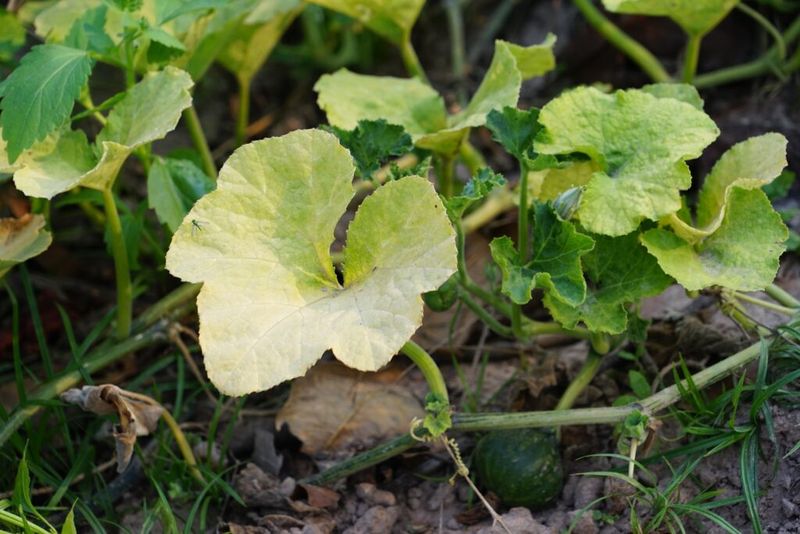
Cucumbers are heavy feeders with big appetites, and when the buffet runs low, they show it in their leaves. A nitrogen deficiency creates a classic pattern: the oldest, lowest leaves yellow first while the veins may stay slightly greener.
Nitrogen is the nutrient plants use to build lush green growth, so when it’s scarce, the vine cannibalizes its older foliage to feed new shoots. The result is a plant that looks pale and tired from the ground up.
A balanced vegetable fertilizer, or a nitrogen-rich amendment like blood meal or well-rotted manure, can help green things back up within a couple of weeks. Compost worked into the bed before planting gives a slower, steadier supply.
Go easy, though, because dumping on too much nitrogen can backfire, pushing leafy growth at the expense of actual cucumbers. Follow the label rates and resist the urge to overdo it.
If your soil has never been tested, a cheap home kit can reveal whether feeding is really the issue or whether something else is stealing the show.
Yellow Spots Between Veins Point to Magnesium and Iron Gaps
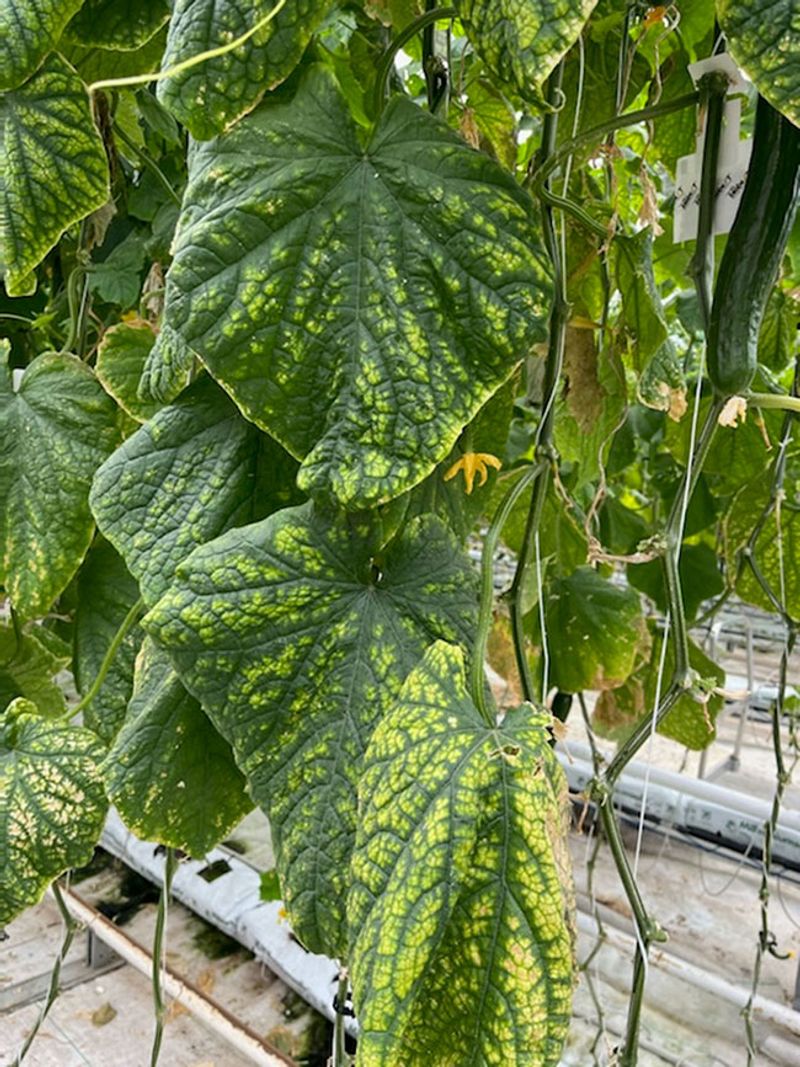
Not every nutrient problem is about nitrogen. When yellowing shows up between the veins while the veins themselves stay stubbornly green, you’re likely looking at a magnesium or iron shortage.
Magnesium deficiency usually hits older leaves first, creating a marbled, patchy look. Iron shortage tends to strike the newest leaves at the tips of the vine, turning them almost lime-yellow while the veins glow green.
These issues often crop up when soil pH drifts too high or too low, locking nutrients away even when they’re technically present in the dirt. A soil test can help you pin down what’s actually available to the roots.
For magnesium, a diluted Epsom salt drench may help correct the balance, though it’s smart to confirm the deficiency first rather than guessing. Adjusting pH toward the slightly acidic to neutral range that cucumbers prefer, roughly 6.0 to 6.8, can also unlock trapped iron.
Because these deficiencies mimic each other, watching which leaves yellow first, old versus new, gives you the biggest clue about which nutrient to chase.
Tiny Pests Are Draining Your Vines Dry
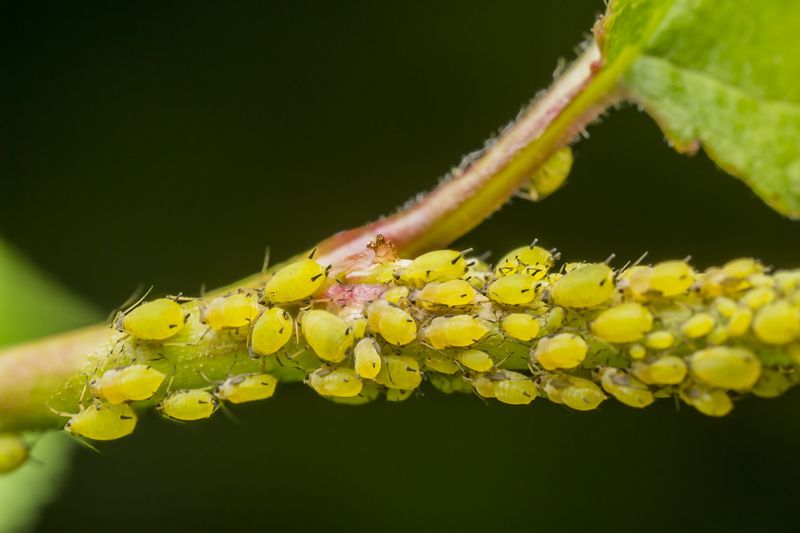
Flip a yellowing leaf over and you might catch the real thieves red-handed. Aphids, spider mites, and whiteflies cluster on the undersides of cucumber leaves and quietly suck out the sap, leaving stippled, speckled, or blotchy yellow patches behind.
Spider mites are especially sneaky, so small they look like moving dust, often announcing themselves with fine webbing along the stems. Aphids leave behind a sticky residue that can attract ants and sooty mold.
A strong blast of water from the hose knocks many of these pests loose and can reduce their numbers fast. For stubborn infestations, insecticidal soap or neem oil sprayed on both leaf surfaces may help bring the population down when applied in the cool of morning or evening.
Encouraging beneficial bugs like ladybugs and lacewings gives you free, ongoing pest patrol. Keeping plants healthy and unstressed also makes them less tempting targets.
Check your vines every few days, since catching an infestation early is far easier than rescuing a plant that’s already half yellow and covered in webbing.
Fungal Diseases Spread Yellow Blotches Fast
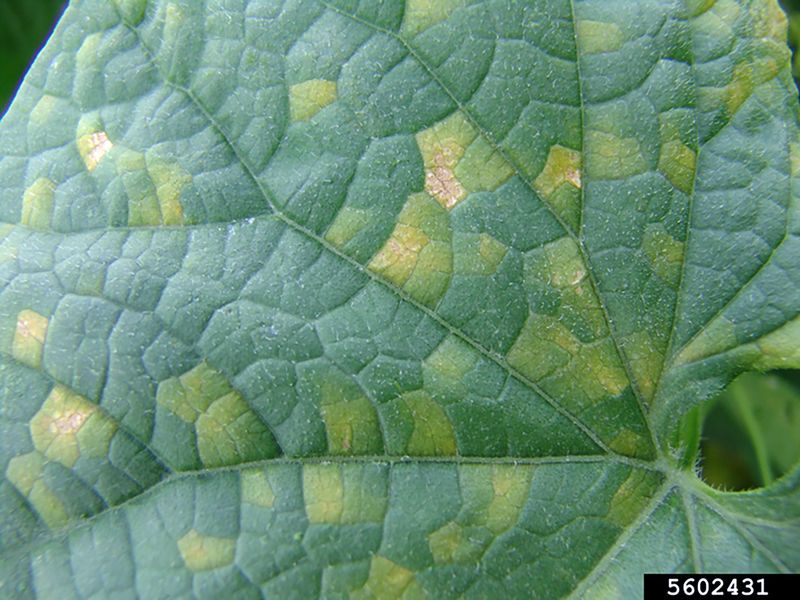
Some yellowing has nothing to do with water or bugs and everything to do with disease. Downy mildew and powdery mildew are two common cucumber troublemakers, each leaving its own telltale mark.
Downy mildew produces angular yellow patches on the upper leaf surface, often with fuzzy gray growth underneath. Powdery mildew coats leaves in a white, dusty film before they yellow and crisp. Both thrive in humid, crowded conditions.
Airflow is your best defense. Space plants generously, train vines up a trellis, and water at the soil line so leaves stay dry. Wet foliage overnight is basically an open invitation for fungal spores.
Removing infected leaves promptly can slow the spread, and disposing of them in the trash rather than the compost keeps spores from lingering. Copper-based or biofungicide sprays may help protect healthy foliage when applied early, though they work better as prevention than cure.
Choosing disease-resistant cucumber varieties from the start gives you a real head start, especially in muggy regions where these fungi return like clockwork every summer.
Bacterial Wilt Turns Yellowing Into a Death Sentence
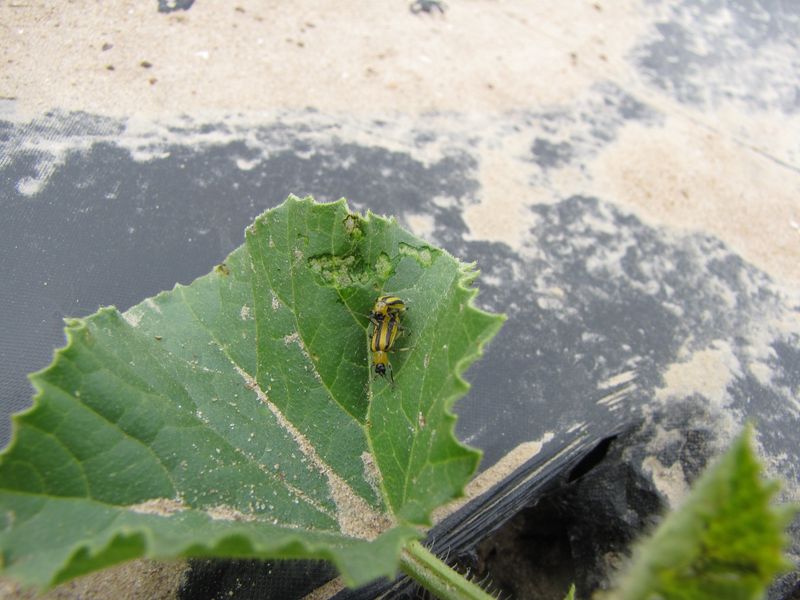
Here’s a scary one worth knowing about. When cucumber leaves yellow, wilt, and collapse even though the soil is plenty moist, bacterial wilt may be the reason, and it’s spread by those striped and spotted cucumber beetles chewing on your plants.
The bacteria clog the vine’s internal plumbing, so water can’t reach the leaves no matter how much you pour on. A quick field test involves cutting a wilted stem and touching it: if a sticky, stringy strand pulls away as you separate the cut ends, wilt is likely present.
Sadly, there’s no cure once a plant is infected, so removing and destroying it protects the rest of your patch. The real battle is against the beetles that carry the disease.
Floating row covers over young plants can block beetles early in the season, though you’ll need to remove them at flowering so pollinators can reach the blooms. Yellow sticky traps and prompt hand-picking may help reduce beetle numbers.
Planting resistant varieties is one of the few reliable defenses against this heartbreaking vine killer.
Too Much Sun or Sudden Cold Stresses the Leaves
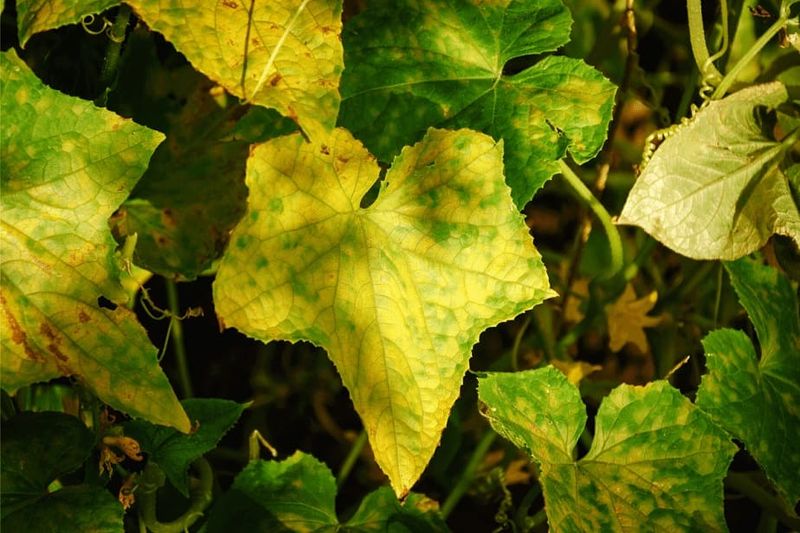
Weather swings can rattle cucumbers more than you’d think. A brutal heat wave can scorch leaves into bleached yellow patches, especially on the side facing the harsh afternoon sun.
Cold snaps do damage too. Cucumbers are warm-season plants that sulk when nights dip below the fifties, and a surprise late-spring chill can leave foliage yellow, spotted, or limp.
During extreme heat, temporary shade cloth over the bed during the hottest hours can ease the stress and reduce scorching. Consistent moisture also helps plants cope, since a well-hydrated vine handles heat far better than a parched one.
For cold protection, wait to transplant until nighttime temperatures reliably stay warm, and keep row covers or old sheets handy for unexpected dips. Planting in a spot that gets morning sun and a little afternoon relief can strike a nice balance in scorching climates.
Weather-related yellowing often looks alarming but tends to fade once conditions settle, so don’t panic and overcorrect with extra water or fertilizer that the plant doesn’t actually need.
Aging Leaves and Natural Wear Are Nothing to Fear
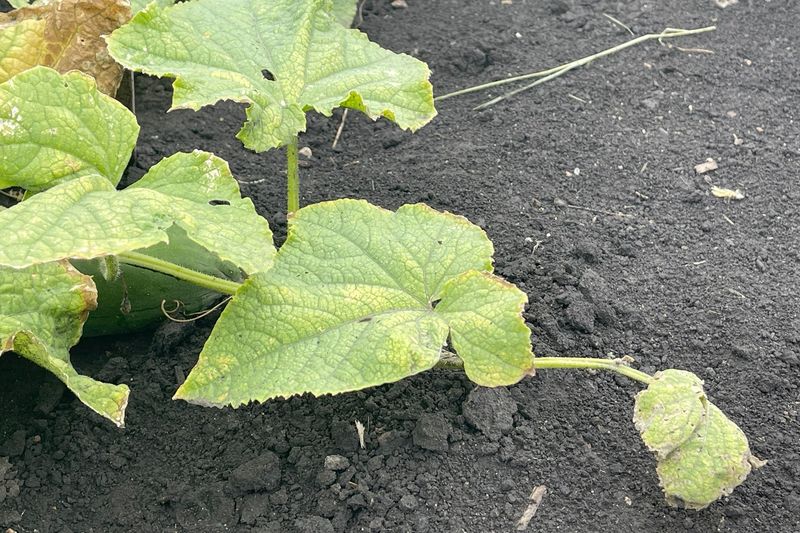
Before you diagnose a disaster, take a breath and look at where the yellowing is happening. Sometimes a few yellow leaves are simply the plant getting older, and it’s completely normal.
As cucumber vines mature and pour energy into producing fruit, the oldest leaves near the base naturally yellow and drop off. It’s the plant’s way of retiring foliage that’s no longer pulling its weight.
The key clue is the pattern. If only the lowest, oldest leaves are fading while the rest of the vine looks vigorous and green with plenty of new growth, you’re probably watching healthy aging rather than a real problem.
Feel free to snip off those spent leaves, since removing them tidies the plant and improves airflow around the base. Just don’t strip away healthy green leaves in a panic, because the vine still needs them to fuel your harvest.
Learning to tell ordinary aging apart from genuine trouble saves you from chasing fixes your plant never needed in the first place.
The One Mistake: Watering the Leaves Instead of the Roots
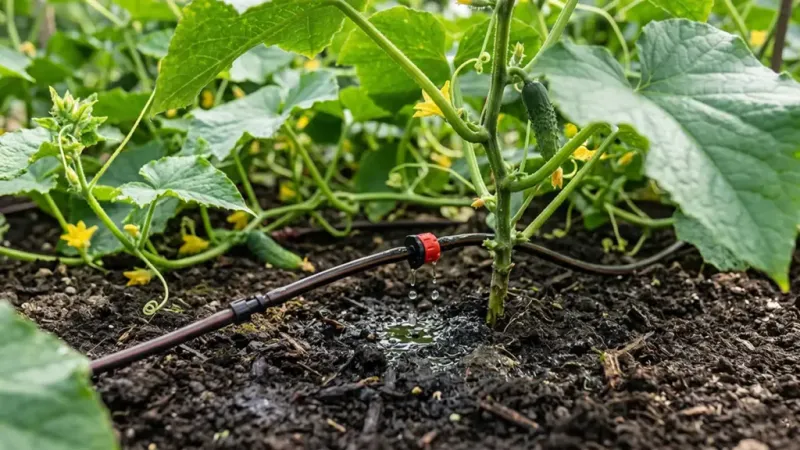
If there’s a single habit quietly weakening cucumber vines across backyard gardens, it’s overhead watering that leaves the foliage soaked. It feels helpful, spraying the whole plant on a hot day, but it sets up a chain of problems.
Wet leaves that sit damp into the evening become the perfect launchpad for the fungal and bacterial diseases we covered earlier. Splashing water also flings soil-borne pathogens up onto lower leaves, spreading trouble around.
Water the soil, not the plant. Direct the hose or a soaker line at the base of the vine so moisture goes straight to the roots where it belongs, keeping the canopy dry.
Watering early in the day gives any stray droplets time to evaporate before nightfall. A drip system or soaker hose paired with mulch makes this almost effortless and keeps moisture wonderfully steady.
Fix this one routine and you’ll head off a surprising share of yellowing before it ever starts. Pair smart watering with good spacing, healthy soil, and regular pest checks, and your cucumber vines have every reason to stay green, strong, and loaded with fruit all season long.