
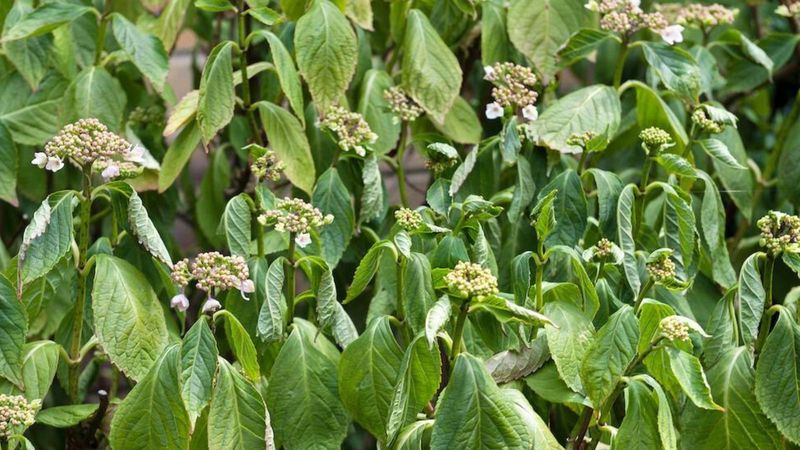
You walk outside on a scorching afternoon and there it is: your hydrangea, leaves flopped and blooms sagging like it’s about to give up. Every instinct says grab the hose. Don’t — at least not yet. That midday droop is very often the plant protecting itself, folding its leaves to cut water loss during peak heat, and many well-watered hydrangeas do exactly this before perking back up by evening.
The dangerous part isn’t the wilt. It’s the reflex. Watering a plant whose soil is already moist can suffocate the roots and invite rot — a common and serious cause of hydrangea decline. The real fix starts with a single free move: feel the soil before you do anything.
This guide shows you how to read what the wilt is actually telling you, how to water correctly when water is genuinely needed, and how to spot the wilting that means real trouble.
The Reflex That Puts Wilted Hydrangeas at Risk

Panic has a signature move, and every hydrangea owner knows it: you spot the flopped leaves at three in the afternoon, your stomach drops, and you’re dragging the hose over before you’ve had a single clear thought. The plant looks like it’s dying. Of course you want to help it.
Here’s the hard part to hear when you’re worried. Pouring water onto soil that’s already moist is one of the quickest ways to make things worse. Saturated ground pushes the air out of the spaces roots need to breathe, and roots that can’t get oxygen begin to decay.
Root rot from overwatering shows up again and again in extension and horticulture sources as a common and serious cause of hydrangea decline. That’s the honest, careful version of the story — not that overwatering kills more plants than heat, and not any tidy percentage you might see quoted online. Those specific figures floating around commercial sites can’t be traced to a real study, so we’ll leave them out.
What matters is the direction of the risk: a well-meaning soak at the wrong moment can do genuine harm. The frightening symptom in front of you — the droop — often isn’t the emergency it looks like.
None of this means your worry is silly. It means your energy is pointed at the wrong first step. Before the hose, there’s a free, thirty-second check that tells you whether the plant actually needs water at all.
Everything that follows is built around that check and what to do with the answer. Take a breath. Your hydrangea is probably in less trouble than it looks, and you’re about to learn how to tell for sure.
Why a Healthy Hydrangea Droops in the Afternoon Sun

Understanding the biology is what makes it possible to stand there, hose untouched, and trust that waiting is the right call. A plant stays firm and upright thanks to turgor pressure — water pressure inside its cells that keeps stems and leaves rigid, like air in a tire.
On a blazing afternoon, leaves release water through tiny pores called stomata in a process known as transpiration. When the heat climbs, that water escapes faster than the roots can pull replacements from the soil. The plant responds by closing its stomata and letting its leaves sag.
Drooping isn’t surrender — it’s strategy. Folded, hanging leaves expose less surface to the punishing sun, which slows water loss and helps the plant ride out the hottest hours. Extension sources make the point plainly: many well-hydrated hydrangeas wilt at peak heat and bounce back once temperatures ease in the evening.
Not every hydrangea behaves the same way, and that’s worth knowing. Bigleaf types (Hydrangea macrophylla), with their big, thin leaves and shallow roots, wilt the fastest and lose moisture most readily. Panicle hydrangeas (H. paniculata) shrug off dry spells far better thanks to deeper, tougher roots, and oakleaf types resist scorching with their leathery foliage.
So the droop you’re panicking over may be your bigleaf hydrangea doing exactly what it evolved to do. It’s protecting itself, not signaling a crisis.
That’s the biology that turns ‘don’t panic’ from a nice sentiment into a defensible decision. The wilt is often the plant coping, not calling for rescue — which is precisely why the next move is to gather information rather than reach for water.
Feel the Soil Before You Reach for the Hose

Right here is where the whole article turns, and the tool you need is already attached to your hand. Skip the hose and use your finger.
Push it straight into the soil near the base of the plant, all the way to your second knuckle. Then read what you feel. If the soil is damp down there, the wilt is almost certainly temporary heat stress — and adding water would be the mistake, not the fix.
If instead the soil feels dry, especially more than about two inches below the surface, that’s your green light. The plant genuinely needs water, and the later watering section will walk you through doing it right.
For a full shrub-sized hydrangea, one extension expert suggests going deeper still — feeling roughly six inches down near the roots gives a truer read of what the root zone is actually experiencing. Treat that depth as helpful guidance rather than an iron rule, because the right number shifts with your plant’s size and your soil type. Sandy soil drains and dries differently than heavy clay.
The beauty of this check is that it costs nothing and takes seconds. It converts a moment of panic into a decision based on evidence instead of instinct.
Damp means wait. Dry-down-deep means water. That single distinction is the hinge the entire rescue swings on.
Once you’ve felt the soil, there’s a second, equally free confirmation that pairs beautifully with it — and it only asks you to be patient until the sun goes down.
The Evening Test: Wait and Watch Before You Act

Patience feels impossible when your favorite plant looks like it’s collapsing, but the evening hours do diagnostic work no amount of water can. As the sun drops and temperatures fall, watch what your hydrangea does.
A plant that wilted at midday and stands perky again by evening was never thirsty. It was conserving water through the heat, exactly as it should — and had you watered at noon, you’d have risked drowning roots that were doing just fine.
Timing is the tell. Wilt that lifts as the day cools is heat-driven and harmless. Wilt that lingers no matter the hour points toward something deeper, like root trouble, disease, or waterlogged soil — problems more water won’t solve and may worsen.
That said, don’t take ‘wait and watch’ as permission to ignore a struggling plant indefinitely. There’s a real limit here.
If evening arrives and your hydrangea still hasn’t recovered its shape, that’s a signal of serious heat stress. Prolonged exposure to extreme sun and temperature can scorch foliage and cause lasting damage, so persistent wilting is not something to shrug off.
The evening test, in other words, sorts the two very different situations you might be facing. Recovered by nightfall means you did the smart thing by leaving the hose alone. Still drooping means you’ve moved past normal heat behavior into territory that needs closer attention.
Pair the soil check with the evening watch and you have a reliable read on nearly every afternoon droop you’ll encounter. When the soil check finally does say ‘dry,’ here’s how to respond.
How to Water Correctly When the Soil Really Is Dry

You’ve done the finger check, maybe watched through the evening, and confirmed the soil is genuinely dry down deep. Now — and only now — the hose earns its place. How you water matters as much as whether you water.
Go deep and infrequent rather than little and often. An established hydrangea often does well with a thorough soak once or twice a week, with a bit more during a genuine heat wave. Deep watering coaxes roots to grow downward, building a plant that copes far better with the next hot stretch.
Timing is non-negotiable: water in the early morning. Morning watering lets moisture soak in before the day’s heat drives it off through evaporation, and it gives the plant a full reservoir before the sun climbs. If it’s been brutal, you can water again in the evening once the sun is off the foliage. Never water at midday or during the hottest part of the afternoon.
Aim at the soil and the base of the plant, not the leaves. Wet foliage sitting under hot sun can scorch, piling one stress on top of another.
How much? One extension expert offers a rough figure of about two to five gallons for a shrub-sized plant to rehydrate the soil several inches down. Hold that loosely — it’s a starting estimate, not a law, and the right amount shifts with your plant’s size and whether your soil is sandy or heavy clay.
Watch for the most common watering error: a light sprinkle that darkens the surface but never reaches the root zone. That leaves thirsty roots below dry ground while the top looks handled. To check your work, feel the soil again a few inches down after watering — it should be moist, not merely damp on top.
Water slowly enough that it soaks in rather than running off. Done this way, a genuinely dry hydrangea can rehydrate and firm back up, though how quickly it recovers depends on how stressed it became.
Special Cases: Containers, New Plants, and Extra Protection

The damp-means-wait rule holds for a settled in-ground shrub, but a few situations rewrite the math — and knowing which one you’re in saves a lot of second-guessing.
Container hydrangeas are the biggest exception. Pots dry out dramatically faster than garden beds, and in extreme heat a potted plant may genuinely need watering every single day. The soil check still applies; you’ll just find yourself doing it far more often, because a container can go from moist to bone-dry in a matter of hours when it’s blazing out.
Newly planted hydrangeas need extra attention too. Their roots are still spreading into the surrounding soil, so they can’t yet reach for moisture the way a mature plant can and will need watering more frequently while they establish. A hydrangea that’s been in the ground two years or more has built a sturdy root system and rarely needs daily water, even through a dry spell.
Beyond watering, a couple of gentle supports can take pressure off a plant during a heat wave. Draping a lightweight white cloth over the shrub during the hottest hours can soften the sun’s intensity and may reduce midday wilting — an easy, temporary shield on the worst days.
Mulch is the quieter hero. A two-to-three-inch layer of organic material spread over the root zone helps hold moisture in the soil, keeps roots cooler, and can meaningfully cut how often you need to water. Just keep it pulled back a little from the stems rather than piled against them.
None of these are miracle cures, and they won’t rescue a plant that’s already badly stressed. Think of them as ways to make heat easier to weather, working alongside — not instead of — the soil check that still governs every watering decision.
When Wilting Means Real Trouble — and the Traps to Avoid

Most afternoon droops are harmless, but some wilting is a genuine cry for help — and the tricky part is that too much water and too little water can look almost identical. Both leave a hydrangea flopped and miserable, which is exactly why guessing is dangerous.
Your fingers settle it. Gently feel the leaves. Soft, mushy, limp foliage points toward overwatering and waterlogged roots. Crispy, dry, brittle leaves point the other way, toward a plant that’s genuinely thirsty.
Pair that with the soil: soggy ground plus stubborn wilting suggests root rot or poor drainage, and dumping on more water will only deepen the problem.
Wilting that keeps coming back — day after day, regardless of the hour — tells its own story. Regular recurring droop can signal chronic underwatering or simply a poor location. Over the long term, hydrangeas do best with morning sun and afternoon shade, so a plant baking in full hot-afternoon exposure may keep struggling no matter how attentively you water.
Now the traps, because the anxious fixer tends to reach for exactly the wrong tools:
First, don’t water at midday or during peak afternoon heat. It’s the instinctive move and one of the least helpful.
Second, resist the urge to prune or cut back a stressed, wilting plant to ‘help’ it. An extension expert warns that removing top growth can actually hamper root development, since the energy from photosynthesis is what fuels those roots. A struggling plant needs its leaves.
Third, ignore the internet trick of submerging the whole stem and bloom in water. That method works only for cut hydrangeas wilting in a vase — it does nothing for a plant rooted in your garden, where the fix always runs through the soil.
Read the leaves, read the soil, and skip the reflexes, and you’ll know the difference between a plant that’s coping and one that truly needs help.
The Bottom Line: Check First, Water Second

When you see that afternoon droop, remember the order of operations that keeps hydrangeas alive. Don’t panic, and don’t grab the hose on instinct.
Feel the soil first. If it’s damp below the surface, wait and let the evening test confirm what the plant is telling you — most well-watered hydrangeas perk right back up as things cool. Water only when the soil is genuinely dry a couple of inches down, and when you do, water deeply at the base in the early morning, never at midday.
Keep the real risk in view: overwatering and the root rot it invites are a common and serious cause of hydrangea decline, so more water is not automatically more care.
And stay alert to the exceptions. Wilting that drags on all day, refuses to recover by evening, or comes with soft, mushy leaves is asking for a closer look — not another drink.
You’ve got everything you need to make the call with confidence now. Check first, water second, and let your hydrangea do what it’s built to do.