
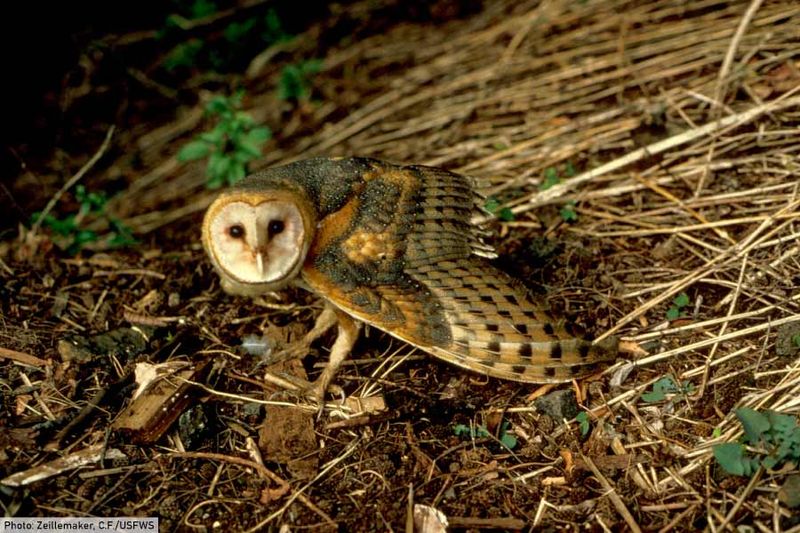
Barn owls are one of Florida’s most effective natural hunters, quietly patrolling yards and fields after dark in search of rats, mice, and other small prey. Many gardeners have heard that the right plants can pull these owls into a yard and wipe out a rodent problem overnight, but the real picture is more interesting and more useful than that. Florida native plants can shape the kind of habitat barn owls actually use, and understanding exactly what owls eat, and what they do not, makes it possible to build a yard that genuinely supports wildlife while keeping pest pressure in check.
Plants support barn-owl habitat indirectly
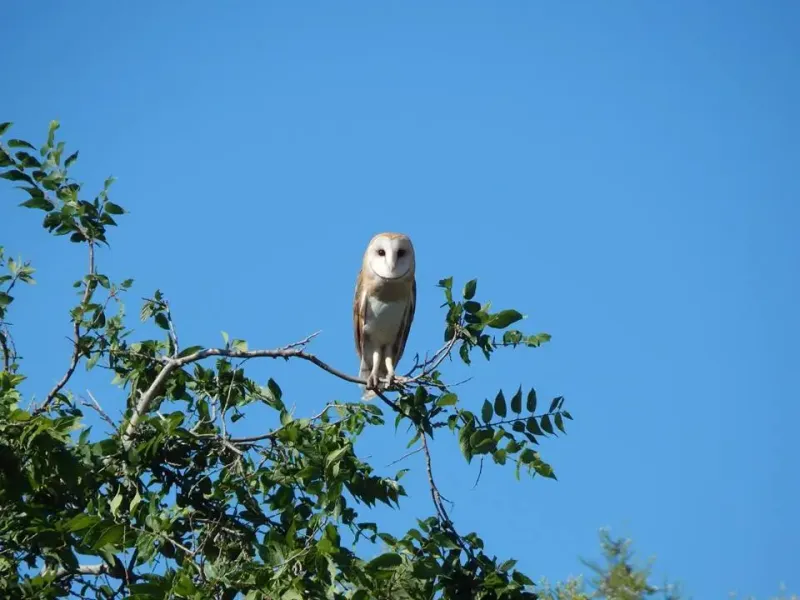
Barn owls do not show up because a gardener planted the right flower or installed a particular shrub. According to Cornell Lab’s barn owl life history profile, these birds choose locations primarily for access to small-mammal prey and suitable nesting cavities or structures, not for a specific plant species. No researched Florida plant has a demonstrated direct attraction effect on barn owls.
That does not mean plants are irrelevant. Native vegetation can influence habitat in meaningful ways by supporting the insects and small mammals that owls hunt, providing structural cover that prey species use, and creating the kind of open-edge landscape that barn owls prefer for low-altitude hunting flights. Plants work as indirect habitat support, not as owl bait.
The realistic goal for a Florida gardener is to make a property more compatible with barn-owl use, not to guarantee visits or promise pest elimination. Florida Fish and Wildlife Conservation Commission guidance frames native plants as the foundation of wildlife habitat because they support the full food web, from insects at the base up through the predators that depend on them. That framing is the right one: plants set the ecological table, and owls decide whether to sit down.
Starting with that honest baseline protects gardeners from two common mistakes. The first is planting heavily and then expecting owls to appear on schedule. The second is assuming that once owls arrive, the rat problem is handled. Both expectations set up disappointment.
A well-planted Florida yard with open hunting space and a correctly placed nest box gives barn owls a reason to investigate, but prey availability, competition, weather, and local owl populations all shape what actually happens next.
Open hunting space matters more than a flower bed
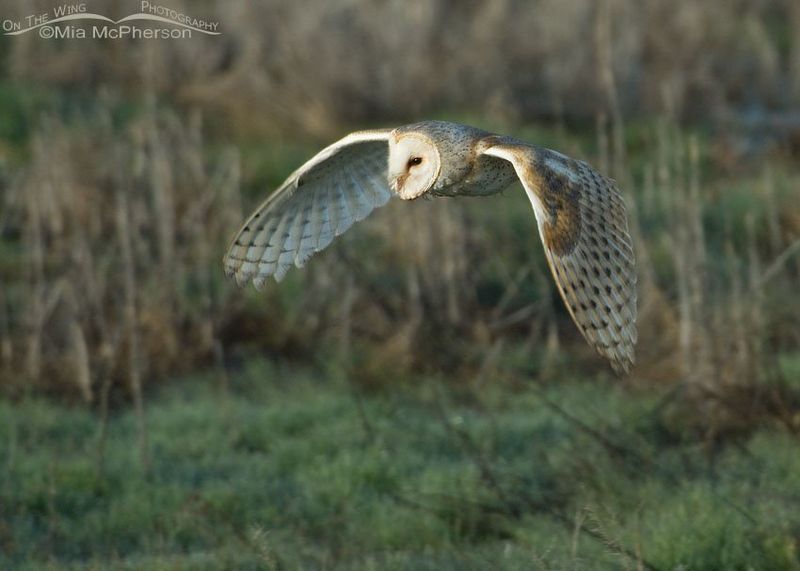
Barn owls are built for low, slow hunting flights over open ground. Cornell Lab describes their preferred habitats as grasslands, marshes, agricultural fields, brushy fields, and some suburban areas where open space allows them to quarter back and forth, listening for prey movement below. A yard packed with dense, tall shrubs and layered canopy is harder for a barn owl to hunt efficiently than a property with open transitions, mowed edges, or nearby fields.
Florida’s regional diversity makes this more complicated than a single prescription. A yard in the sandy scrub of the Ocala National Forest area sits in different ecological conditions than a coastal South Florida lot with salt exposure and flooding risk, or a North Florida property with heavier clay soils and occasional freeze events. FWC’s native plant and wildlife connection resource emphasizes matching plant choices to local conditions, not applying a single statewide formula.
The practical translation for most Florida gardeners is to think in terms of zones. A mixed native planting along a fence line or property edge can provide cover and prey habitat without converting the entire yard into dense vegetation that reduces hunting access. Low-growing native grasses in an open central area preserve the kind of flight corridor a hunting owl needs. Raised beds, dense ornamental hedges, and thick ground-cover blankets planted wall-to-wall work against that goal.
Storm and drainage conditions also affect what is feasible. FWC’s planting-a-refuge guidance encourages gardeners to account for soil moisture, flooding potential, and wind exposure when choosing plants and designing layout. In a yard that floods seasonally, plant placement and species selection both need to reflect that reality. The aim is a habitat that functions through Florida’s wet summers and hurricane season, not just during the mild months when conditions are easy.
Choose Florida natives for the site, not for an owl-attraction promise
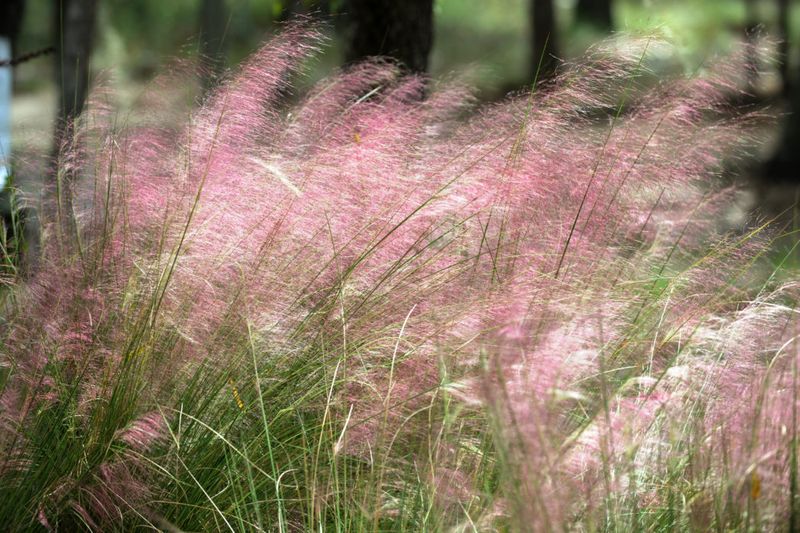
Several Florida native grasses and groundcovers show up regularly in habitat planting recommendations, and they are worth knowing. The UF/IFAS Florida-Friendly Landscaping Pattern Book lists muhly grass, sand cordgrass, Fakahatchee grass, Florida gamagrass, sea oats, and lopsided Indian grass as examples of native options suited to various site conditions. None of these has been established as a barn-owl attractant. They earn their place in a habitat plan by supporting insects, providing structural cover, and fitting Florida’s soils and climate, not by pulling owls in from a distance.
Matching the plant to the site is the first discipline. Muhly grass thrives in well-drained, sandy soils and handles South and Central Florida heat well, but sea oats are coastal specialists and do not belong in an inland yard. Fakahatchee grass tolerates wetter conditions than many ornamental alternatives. Lopsided Indian grass and Florida gamagrass work in open, sunny spots where taller structure is wanted without creating an impenetrable thicket.
Treating any of these as universally appropriate across all Florida regions ignores the variation that makes Florida gardening genuinely complicated.
A note on ornamentals that sometimes appear in informal owl-attraction lists: lantana, jasmine, citrus, and palmetto are not supported by any authoritative source as barn-owl habitat plants with a special effect on owl behavior. Some of those species have their own ecological value or complications, but they do not belong on a barn-owl habitat list for that reason. FWC’s wildlife habitat guidance keeps the focus on natives that support the full food web rather than ornamentals selected for aesthetics or informal tradition.
The planting goal should be a balanced habitat that supports insects, songbirds, and small mammals in proportion, not a yard engineered to maximize rodent numbers as owl bait. FWC’s native plant and wildlife connection page makes the point clearly: native plants support native wildlife across trophic levels, which means a thoughtfully planted yard benefits far more than one species of owl.
A nest box offers more direct nesting habitat—but never guarantees owls
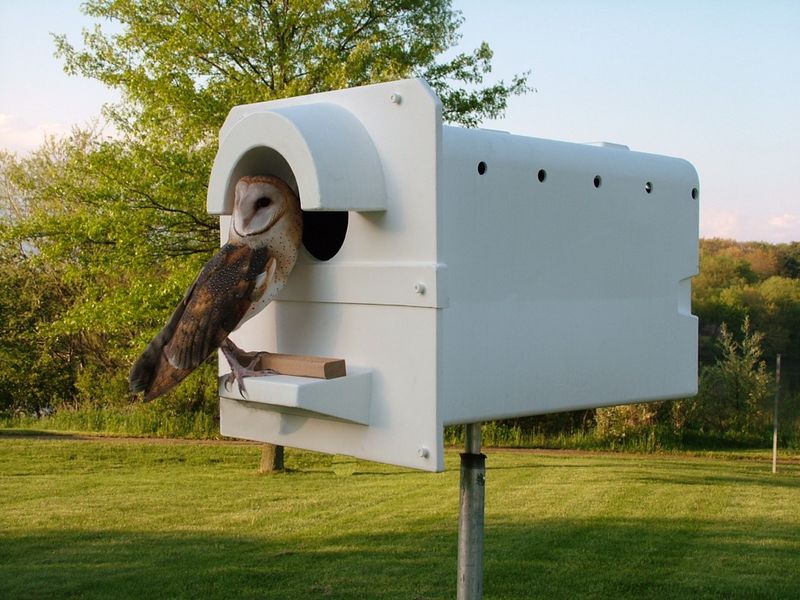
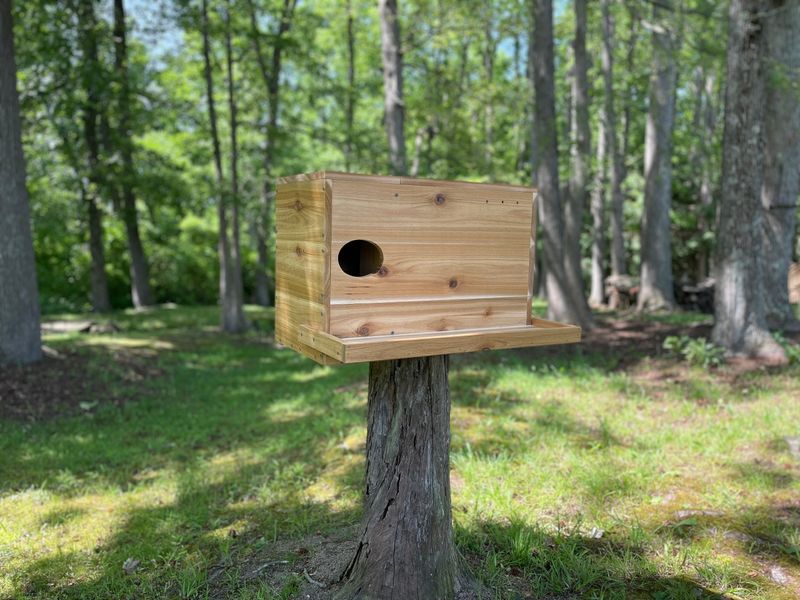
When it comes to making a property more appealing to barn owls, a properly designed nest box does more targeted work than any plant combination. Cornell Lab notes that barn owls naturally use cavities in trees, barns, and buildings, and that correctly sized nest boxes have helped populations recover in areas where natural nesting sites became scarce. A box addresses the cavity requirement directly, something no amount of native grass planting can replicate.
Placement matters enormously. UC Davis guidance on building and mounting owl boxes recommends positioning the box high on a sturdy post or tree in an open area, and keeping nearby branches or ledges clear of the entrance hole to reduce predator access. In Florida, that structural advice has to be filtered through local storm conditions. A box mounted on a poorly anchored post in an area exposed to hurricane-force winds is a hazard, not a habitat improvement.
Adequate bracing, weather-resistant materials, and attention to shade or shelter in South Florida’s intense heat all affect whether a box stays functional through the seasons.
Height and orientation recommendations vary by source and site, and no single universal specification applies across every Florida property. A box that works well on a North Florida farm surrounded by open pasture may not be appropriate for a small suburban lot in Broward County where tall trees, power lines, and neighboring structures create different wind loads and predator access patterns. The goal is a secure, accessible, shaded or sheltered box placed where barn owls can approach from open flight, not a box installed wherever it is convenient to hang one.
Cornell Lab’s barn owl nest FAQ is direct on the occupancy question: a nest box does not guarantee that owls will use it, and in areas where natural cavities and prey are already abundant, a box may go unused for years. Prey availability, local owl population density, competition from other cavity-nesting species, and seasonal weather all shape whether a box gets investigated and adopted. Installing a box is a reasonable step for a property with suitable habitat, but it should be understood as an invitation, not a reservation.
Barn owls may reduce rodents, but the numbers need context
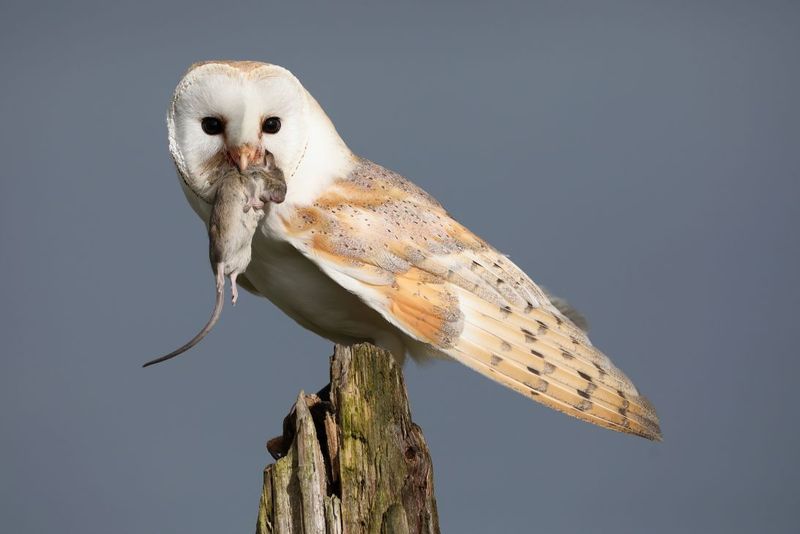
Barn owls do eat rodents, and Florida-specific data supports that. A study published in Florida Field Naturalist found that South Florida barn owls fed almost exclusively on mammals, with cotton rats accounting for roughly 60 percent of total prey biomass. That is meaningful evidence that barn owls in Florida are actively hunting the kinds of small mammals that also cause problems in yards and around structures.
The larger rodent-removal figures that sometimes circulate in owl-attraction content come from a very different context. A vineyard study estimating rodents removed by barn owls reported an average of 616 rodents delivered per nest box during a breeding season, with an estimated 3,466 rodents removed by a barn-owl family over a full year. Those figures involved California vineyards, breeding pairs with chicks, multiple occupied boxes, and extended time periods. Applying them to a single adult owl hunting casually over a Florida backyard misrepresents what the research actually measured.
A systematic review of barn owls as biological control agents found some positive effects from avian predators on rodent populations but concluded that much of the supporting research was short-term, lacked rigorous controls, or did not establish long-term pest suppression. A more recent field study reported a 38 to 52 percent reduction in rodent abundance under measured barn-owl hunting pressure, but that study also involved a vineyard landscape with multiple occupied boxes and active chick-rearing, not a typical residential yard with one nest box.
The honest summary is that barn owls may contribute real predation pressure on rats and mice when habitat conditions are right and a breeding pair is established. That contribution is worth supporting. What it cannot do is replace a managed rodent-control program or be predicted in advance for any particular yard. Owls hunt where prey is available and conditions suit them, and the scale of their impact on a local rodent population depends on far more variables than any gardener can control.
Identify the animal before choosing a treatment
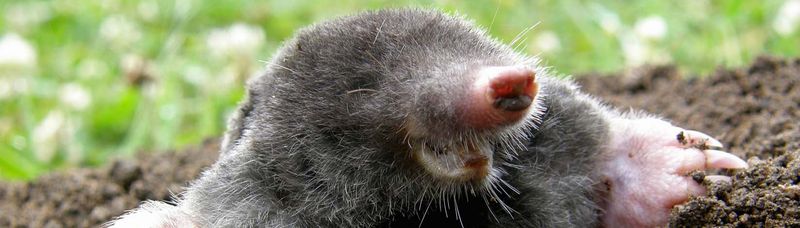
Raised ridges running across a lawn in irregular paths look alarming, but the animal responsible shapes every decision that follows. UF/IFAS extension guidance on moles in Florida lawns makes a foundational point that often gets overlooked: Florida moles are insectivores, not rodents. They feed on mole crickets, beetle larvae, ants, earthworms, and other invertebrates. Barn-owl predation data on small mammals does not translate into mole control, because moles are not part of what barn owls hunt.
Sandy mounds of a different shape, particularly fan-shaped soil piles pushed to the surface, may indicate pocket gophers rather than moles. Rats leave gnaw marks, droppings, and grease trails along walls and pipes. Mice produce smaller signs and tend to concentrate near food sources. UF/IFAS guidance on identifying wildlife damage in Florida yards recommends examining the size, shape, and location of damage before selecting any control method, because the right approach for a mole is completely different from what works for a roof rat.
The UF/IFAS mole management publication notes that mole activity often follows invertebrate populations through the soil, meaning that addressing the underlying insect problem in a lawn can reduce mole activity more effectively than targeting the moles themselves. That is a practical insight that applies regardless of whether barn owls are present, and it illustrates why pest identification shapes treatment strategy so directly.
Skipping identification and jumping to a single solution, whether that is an owl box, a trap, or a pesticide, risks wasting time and money on the wrong target. Florida yards can host moles, pocket gophers, Norway rats, roof rats, house mice, cotton rats, and armadillos all at once, and each requires a different response. The first step is always figuring out which animal is actually causing the damage.
Pair wildlife habitat with integrated rodent control
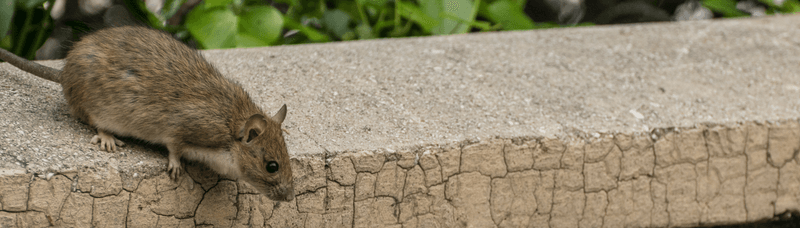
A yard designed to support barn owls and a yard managed to reduce rodent pressure are not opposites, but they do not run themselves. Habitat improvements create better conditions for wildlife, while active pest management prevents rodents from establishing themselves in structures and food storage areas. Both are necessary, and neither replaces the other.
The practical checklist starts with exclusion and sanitation. Seal gaps around pipes, vents, and the base of doors. Store garbage in containers with tight-fitting lids. Secure pet food and bird seed in rodent-proof bins, and clean up spilled seed promptly because seed on the ground is a consistent attractant.
Remove woodpiles, debris, and dense ground cover immediately adjacent to the house, since those areas provide shelter that rodents and other pests actively seek. UF/IFAS integrated pest management resources for Florida homes identify exclusion and habitat modification as foundational steps before any chemical or trap-based approach is considered.
When trapping is appropriate, snap traps placed along walls and in areas of known rodent activity are effective and do not carry the secondary-poisoning risk that rodenticides do. That risk is serious. EPA rodenticide safety guidance warns that predators and scavengers, including owls, can be harmed by eating poisoned rodents. FWC has specifically flagged suburban and urban rodenticide use as an exposure pathway for raptors.
If a rodenticide product is used despite that risk, label instructions and required bait-station specifications must be followed precisely, with no exceptions.
The habitat side of the plan reinforces rather than replaces these measures. FWC’s native plant guidance supports planting for the full food web, which means a balanced native yard can support barn-owl hunting without being engineered to maximize rodent numbers. The combination of native habitat, open hunting space, a correctly placed nest box, and consistent pest-management hygiene gives both wildlife and the gardener the best possible outcome.
Protect active nests and distinguish Florida’s owl species
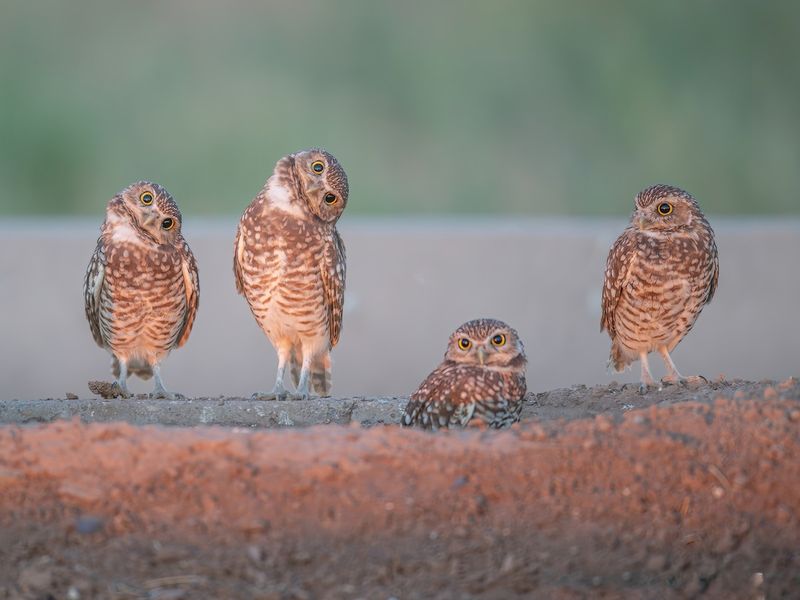
Florida has multiple owl species, and generic owl-attraction advice can cause real problems when it gets applied to the wrong one. Barn owls are associated with open habitats and hunt primarily small mammals. Barred owls favor wooded and semi-wooded environments and have a broader diet that includes rats, frogs, crayfish, and other animals. Florida burrowing owls are a different matter entirely: they are a state-designated threatened species that nests in burrows in open, treeless areas, and they require species-specific care that has nothing in common with barn-owl nest-box advice.
Applying a barn-owl habitat plan to a yard where burrowing owls are nesting is not just ineffective. It can be harmful. Burrowing owl burrows are protected, and any activity that disturbs an active burrow, including placing structures nearby, modifying the surrounding ground, or frightening adults during nesting, can carry legal consequences. The FWC maintains specific guidance for burrowing owl management that is entirely separate from the open-habitat and nest-box recommendations appropriate for barn owls.
Active nests of any owl species receive legal protection. U.S. Fish and Wildlife Service guidance on bird nests and the Migratory Bird Treaty Act makes clear that active nests containing eggs or dependent young generally cannot be destroyed or disturbed without federal authorization. FWC also advises people to keep a respectful distance from defensive adults and from fledglings that have left the nest but are not yet fully independent.
Handling, relocating, blocking, or removing owl nests, burrows, eggs, or young is not something a homeowner should attempt. If an active nest creates a genuine conflict, the appropriate step is to contact FWC or a licensed wildlife rehabilitator for guidance. Responsible habitat work reduces hazards rather than creating new ones, which means designing the yard so that owls can use it safely without requiring human intervention once they arrive.
The realistic Florida payoff is a balanced habitat plan
Pulling together everything covered here leads to a straightforward conclusion: no single plant, box, or owl makes a pest problem disappear. What works is a combination of honest habitat design and consistent management. Plant Florida-appropriate natives that suit the specific soil, drainage, and exposure conditions of the property. Preserve open space where a hunting owl can actually fly.
Consider a properly placed nest box only when the surrounding habitat can support it, understanding that occupancy is never guaranteed.
Identify the pest before treating it. UF/IFAS mole guidance and Cornell Lab’s barn owl profile both point toward the same principle: matching the solution to the actual problem. Barn owls may genuinely help with rats and mice when conditions favor an established pair, but they do not solve mole tunnels, and they are not a substitute for exclusion, sanitation, and trapping where those are needed. EPA rodenticide safety guidance and FWC habitat resources both support avoiding poisons where raptors are present and using safer first-line options instead.
A Florida yard built on native plants, open structure, and sound pest-management habits does something more durable than attracting one owl: it becomes a functioning piece of local habitat, and that turns out to be the most useful thing a gardener can build.