
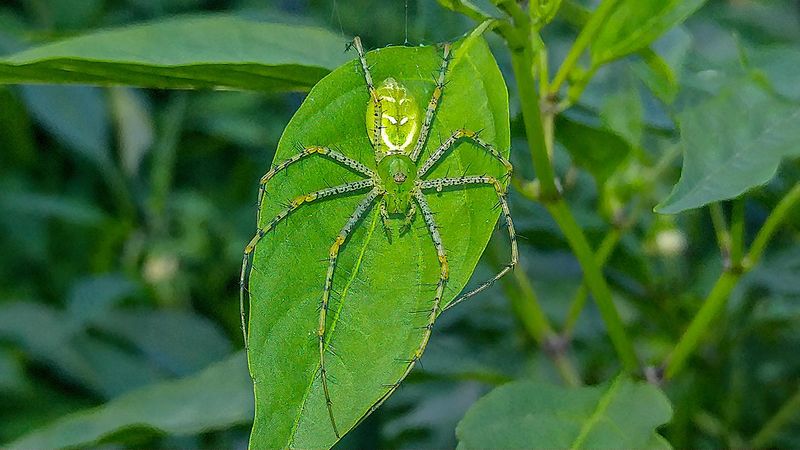
Spotted a bright green spider with long spiny legs lurking in your tomato plants or perched on a Texas sage? That’s likely a green lynx spider, one of the more recognizable hunting spiders in Central Texas gardens.
These spiders do eat caterpillars and other insects, which has earned them a reputation as garden helpers. Before you count on them to solve a pest problem, though, it’s worth understanding what the research actually supports and what it doesn’t.
Recognize the green lynx spider in a Texas garden
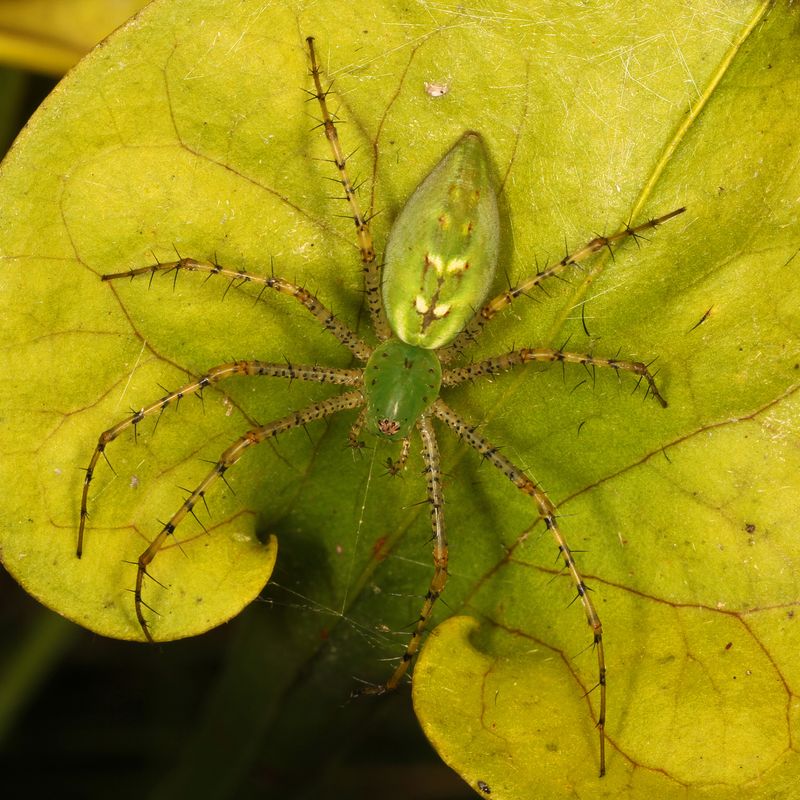
Adult female green lynx spiders are hard to miss once you know what to look for. They typically measure 12 to 22 millimeters in body length and wear a vivid green color decorated with small red or orange markings along the abdomen.
Their legs are long relative to their body, and each leg is lined with conspicuous black spines that stand out even against dense foliage.
Unlike orb weavers or funnel spiders, green lynx spiders do not build sticky prey-catching webs. Instead, the UF/IFAS green lynx spider profile describes them as active hunters that stalk prey on shrubs and herbaceous vegetation, wait for the right moment, and pounce.
You are far more likely to spot one clinging to a flower head, a pepper plant stem, or the underside of a broad leaf than suspended in a web across an open gap.
The species, Peucetia viridans, ranges across most of the southern United States from coast to coast. In Texas, the Texas A&M cotton predator field guide identifies them as a recognized predator in agricultural settings, particularly in cotton-growing regions where they have been observed attacking fleahoppers and bollworm larvae.
One identification note worth keeping in mind: the green lynx spider is a separate species from the striped lynx spider, which is smaller, differently patterned, and carries its own distinct body of research. The two species share some habitat and prey overlap, but evidence from one should not be assumed to apply to the other.
When you see a small, striped lynx spider in your garden, that is a different animal with a different track record.
Documented prey shows potential, not guaranteed control
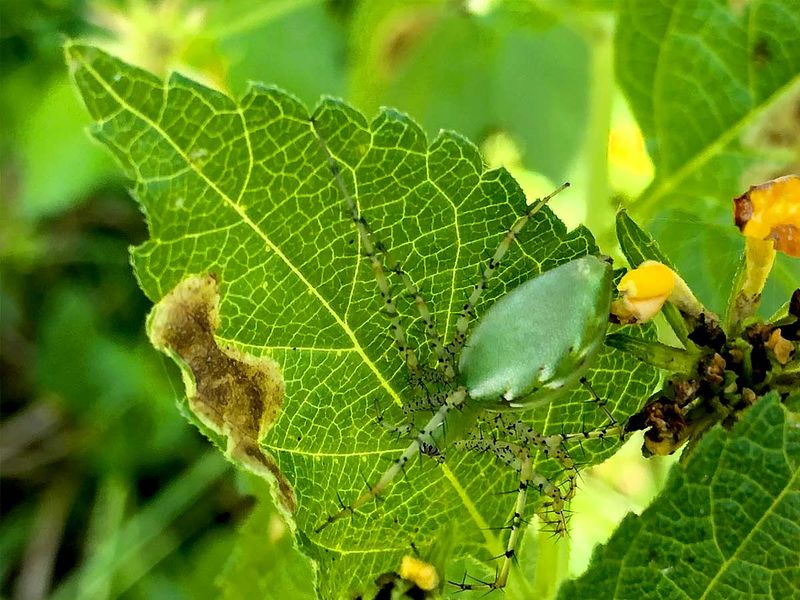
Field observations confirm that green lynx spiders eat a genuinely wide range of prey. Documented items include moths, moth larvae, flies, wasps, beetles, true bugs, other spiders, and various other arthropods.
Caterpillars associated with crop pests, including corn earworm, cotton leafworm, and cabbage looper, have all appeared on the menu.
Texas A&M’s cotton predator guide and the UF/IFAS green lynx spider fact sheet both describe the species as a generalist predator, not a specialist that targets harmful caterpillars by preference. That word, generalist, carries real weight for a gardener trying to set realistic expectations.
A green lynx spider hunting in your squash bed is just as likely to grab a beneficial parasitic wasp, a syrphid fly, a tachinid fly, or a visiting bee as it is to grab a caterpillar that would otherwise chew your crops.
UF/IFAS specifically notes that the pest-control value of green lynx spiders is offset, at least in part, by their attacks on beneficial insects. That is not a reason to remove every spider you find, but it is a reason to stop short of calling them targeted pest controllers.
Their hunting is opportunistic and driven by whatever prey is available and catchable at a given moment, not by any preference for the insects you most want eliminated.
Observing a spider eat a caterpillar tells you that feeding behavior happens. It does not tell you that the spider will eat enough caterpillars, often enough, to prevent measurable plant damage across a growing season.
Those are two very different claims, and only the first one has solid documentation behind it.
Why more spiders may not mean fewer caterpillars
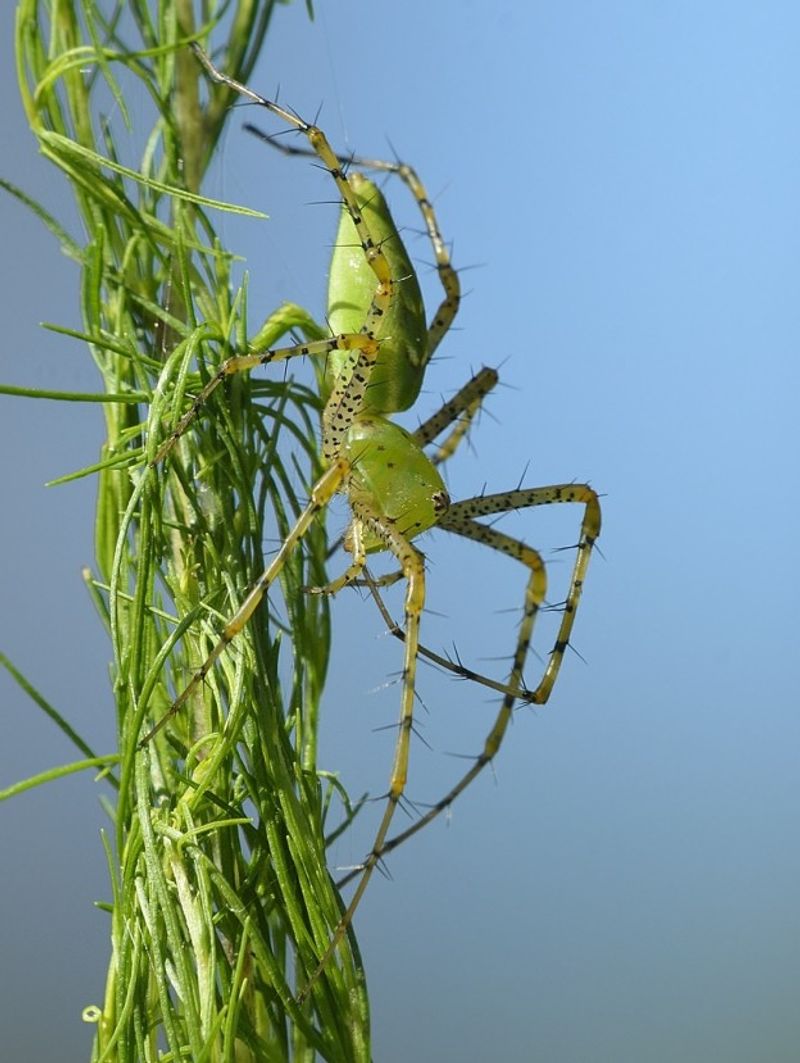
A 1987 field study conducted in East Texas examined green lynx spider predation on cotton and woolly croton plants. The results are worth knowing before you assume that a yard full of these spiders translates into noticeably fewer caterpillars on your crops.
That East Texas predation study found that individual spiders captured fewer than one prey item per day on average. Only 8 percent of recorded prey from cotton consisted of two named cotton pests, while predatory arthropods, meaning other beneficial insects and spiders, made up more than half of the recorded diet.
That study was conducted in a commercial cotton system in East Texas, not in a Central Texas home vegetable garden, so it cannot be applied directly to your raised beds. What it does usefully establish is that capture rates are low, prey is mixed, and a green lynx spider’s daily hunting activity is not dominated by the caterpillars you most want gone.
A spider population increase can also reflect something other than successful pest control. If caterpillar numbers rise and provide more prey, spider numbers may follow simply because food is more available.
More spiders as a result of more prey is not the same as more spiders reducing prey. Conservation biological control research and a multi-system meta-analysis of predator effects on crop pests both show that higher natural-enemy abundance does not consistently translate into lower pest populations or reduced plant damage across every cropping system.
The defensible takeaway is straightforward: green lynx spiders may eat some caterpillars and contribute usefully to the mix of natural enemies in your garden. They cannot serve as stand-alone caterpillar control, and counting on their numbers to keep crop-damaging caterpillars below threshold is not a strategy the evidence supports.
Create outdoor habitat without promising a spider-attracting plant
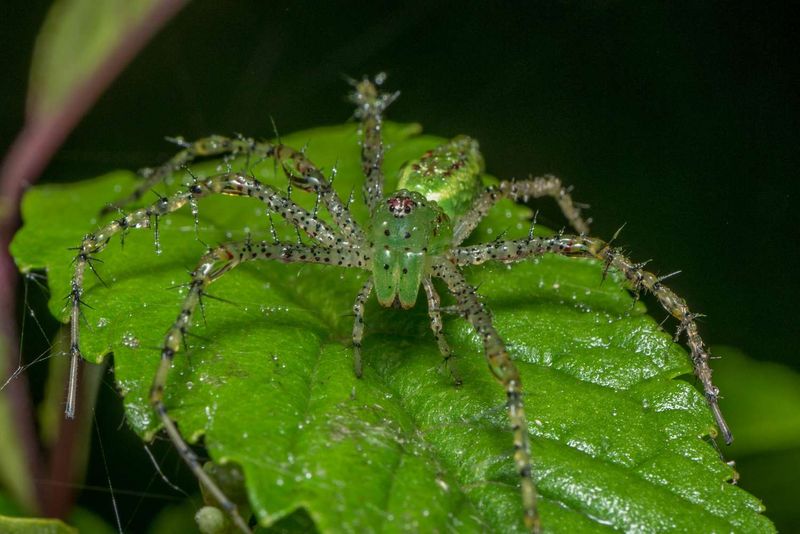
Conserving green lynx spiders in your garden starts with giving them somewhere to hunt. These spiders spend their active lives on plant surfaces, not in the soil or under debris, so plant structure and vegetative variety matter more than any single ornamental choice.
Preserving low shrubs, letting herbaceous plants fill out along borders, and avoiding the urge to cut everything back to bare soil between growing seasons all help maintain the kind of environment where a hunting spider can operate.
UC IPM’s beneficial predator guidance recommends maintaining plant diversity and minimizing soil disturbance as foundational steps for supporting natural-enemy communities broadly. Insectary plant guidance from UC IPM also notes that flowering plants can support a wider natural-enemy community by providing resources like pollen and nectar for beneficial insects, though green lynx spiders themselves are hunters and do not rely on those floral resources directly.
For plant selection in Central Texas specifically, no single ornamental species has been demonstrated in peer-reviewed research to specifically attract Peucetia viridans. Rather than chasing an unproven plant recipe, use the Texas A&M Earth-Kind plant selector, which separates North and Central Texas, the Hill Country, and the Central Coast into distinct regional categories because plant suitability genuinely varies across the state.
Choosing regionally adapted natives and perennials for your area supports a broader community of predators, parasitoids, and pollinators. That broader community, rather than any one spider species, is what actually provides a garden with resilience against pest pressure.
Think of green lynx spiders as one member of that community who benefits from the same habitat investments you are already making for other reasons.
Use integrated pest management to protect both crops and predators
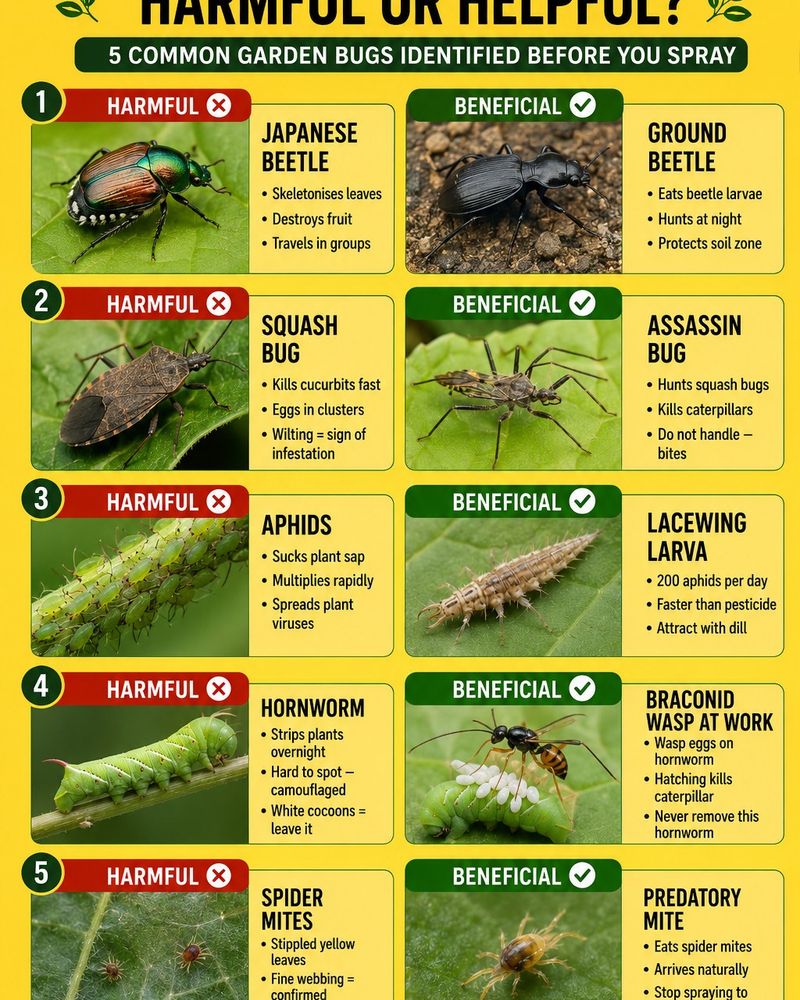
Keeping green lynx spiders around is only useful if they survive long enough to hunt. Routine broad-spectrum insecticides applied on a fixed schedule are one of the fastest ways to eliminate the natural-enemy community you are trying to support.
UC IPM’s natural-enemy guidance warns that persistent broad-spectrum products kill predators alongside pests, which can trigger secondary pest outbreaks or pest resurgence when the surviving pest population rebounds without its natural checks.
The alternative is to monitor first and treat only when you have confirmed that treatment is actually needed. Walk your garden regularly, check both leaf surfaces on susceptible crops, and identify what you are looking at before reaching for a spray.
A handful of small caterpillars on a healthy tomato plant may not warrant any intervention at all, while a dense infestation on transplants may require a prompt response. The decision should follow observation, not a calendar.
When treatment is warranted, protecting natural enemies and pollinators during pesticide applications means choosing the least harmful effective option available, targeting only the affected plants or sections of the garden, and following the product label precisely. Applying a selective biological product like Bacillus thuringiensis to caterpillar-damaged leaves is a very different intervention from spraying an entire bed with a broad-spectrum pyrethroid.
EPA pollinator protection guidance also advises against spraying flowering plants or plants actively visited by pollinators unless the product label specifically permits that application under those conditions. Green lynx spiders often hunt around flower heads, so a spray event timed during bloom can expose both the spider and visiting beneficial insects to unnecessary chemical contact.
Timing applications for early morning or evening, after flowers close or before they open, reduces that risk when treatment cannot be avoided.
Give guarded egg sacs space when practical
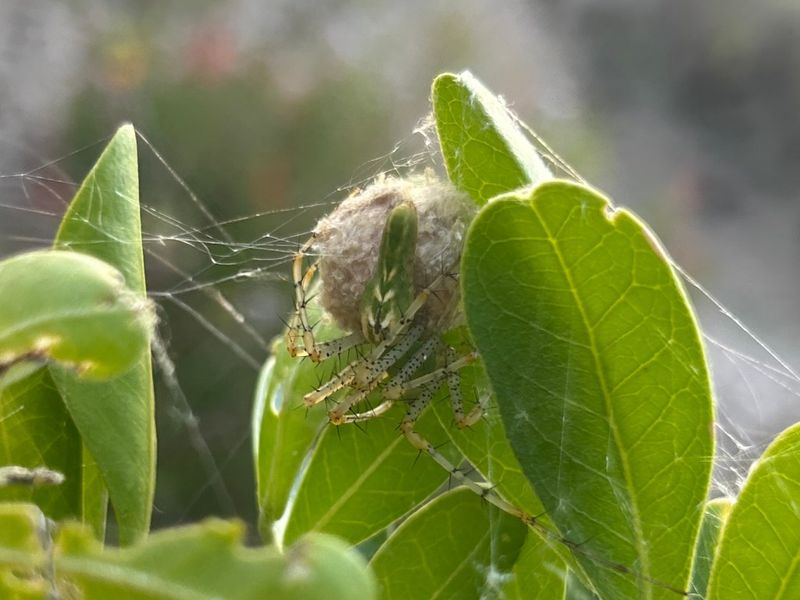
Late summer and fall bring a notable change in green lynx spider behavior. Mated females construct silken egg sacs attached to plant stems or foliage and then stand guard continuously until the eggs hatch.
UF/IFAS reports egg sac clutches ranging from 25 to 600 eggs, a wide range that reflects variation in female size and condition. A behavioral study on maternal investment in green lynx spiders found that females guard their sacs vigorously and continuously, forgoing feeding for extended periods to protect the clutch.
A female on egg-sac duty is more defensive than she would be during normal hunting activity. If you are pruning, staking, or harvesting near a plant that holds a guarded sac, it is worth pausing and working around it when that is convenient.
There is no absolute rule requiring you to preserve every sac in every location. A spider near a frequently used doorway, inside a structure, or in a spot where it is likely to be accidentally crushed can be moved or managed as needed.
On the question of bites: UF/IFAS states that green lynx spiders very seldom bite humans and that their bites are generally of little concern. Minimal handling is still the sensible approach, particularly around females guarding egg sacs when defensive behavior is elevated.
Texas DSHS identifies black widows and brown recluses, not green lynx spiders, as the state’s medically significant venomous spiders. If a suspected spider bite produces swelling, spreading redness, or systemic symptoms, seek medical guidance promptly regardless of the species involved.
Let green lynx spiders help without making them the plan
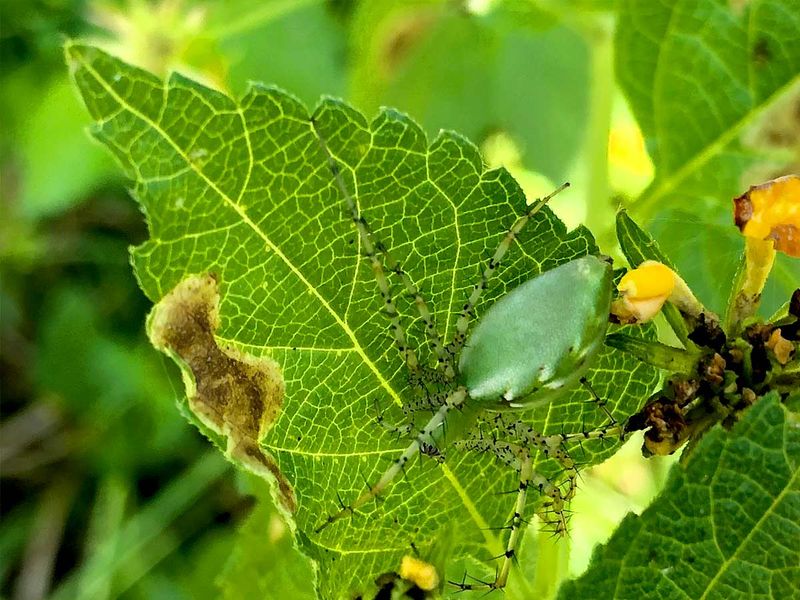
A green lynx spider spotted on your pepper plant or squash vine is worth recognizing and leaving alone where practical. Preserving suitable plant structure, keeping a mix of shrubs and herbaceous vegetation, and cutting back on routine broad-spectrum spraying all support the broader natural-enemy community that includes these spiders.
Those are reasonable, low-effort steps with benefits that extend well beyond any single predator species.
What those steps cannot guarantee is a measurable reduction in caterpillar numbers or crop damage. General guidance on supporting beneficial predators frames natural enemies as one layer of a broader pest-management approach, not a replacement for monitoring and targeted response.
The East Texas predation data underscores that point: low daily capture rates and a mixed prey record mean that even a healthy spider population leaves caterpillar management largely in your hands.
Keep checking your plants on a regular schedule. When caterpillar damage appears, identify the pest, assess how much harm is actually occurring, and respond with the least disruptive effective option.
A green lynx spider adds one potentially useful natural enemy to your garden’s ecological mix. That is a real contribution, even if it is a modest and unpredictable one.
The gardens that hold up best against pest pressure tend to be the ones where no single solution carries all the weight.