
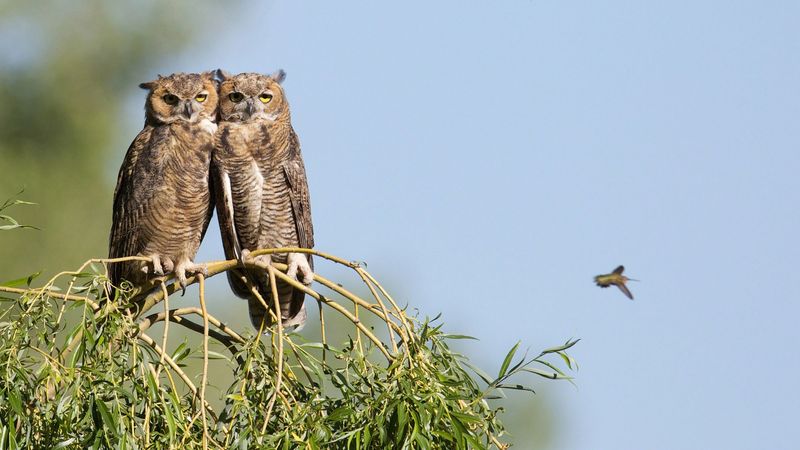
Rats and mice are a real headache for Texas homeowners, especially when they start showing up in garages, gardens, and compost bins. Great Horned Owls are powerful hunters that naturally eat rodents, and plenty of Texas gardeners wonder if inviting one to the yard could help solve the problem. The short answer is that supporting owl habitat is a smart move for wildlife, but it works best alongside proven rodent control methods rather than instead of them. This guide explains what actually draws Great Horned Owls to a Texas property, what they can realistically do about rodents, and how to handle the pest problem directly.
An owl may help with rodents, but it will not clear your yard
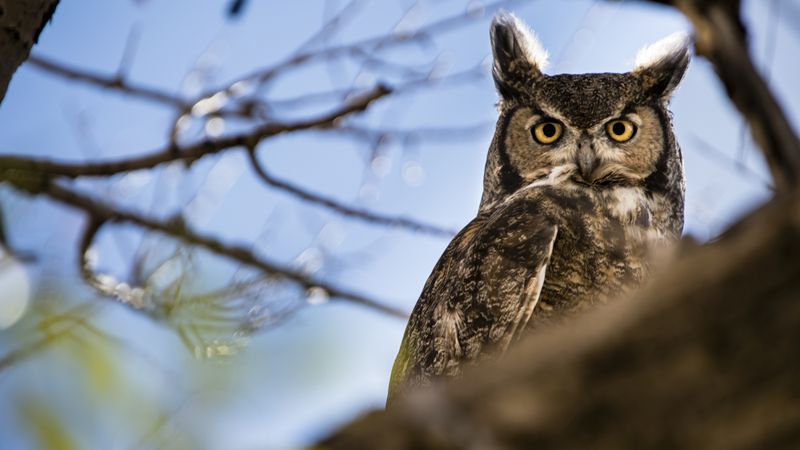
Great Horned Owls are found across every region of Texas, from the Piney Woods in the east to the Trans-Pecos in the west. Texas Parks and Wildlife field records confirm they are among the state’s most widespread and adaptable large owls, capable of living in forests, grasslands, suburban neighborhoods, and everything in between. That adaptability is part of what makes them exciting neighbors.
Their diet is broad. Rats and mice are on the menu, but so are rabbits, gophers, skunks, birds, frogs, reptiles, and large insects. Cornell Lab of Ornithology life-history data notes that a Great Horned Owl hunts across a large home range and takes whatever prey is most available. On any given night, the owl visiting your yard may be hunting the neighbor’s field mice, a rabbit three streets over, or a songbird roosting in a shrub nearby.
That wide-ranging behavior matters for expectations. An owl may pass through, perch, or even hunt near your property without nesting there or making a measurable dent in your rodent population. USDA Forest Service species review data describes Great Horned Owls as generalist predators that respond to landscape-level prey availability rather than a single yard’s rodent count. A yard with an owl is not automatically a yard without rats or mice.
The defensible goal is to make your property more suitable for possible owl use. Think of habitat improvements and direct rodent control as two separate tools that work best together. Preserving the right trees and reducing unnecessary disturbance may give a passing owl a reason to linger, but sealing entry points and removing food sources is what actually stops rodents from living in your home.
What kind of Texas yard can support a Great Horned Owl?
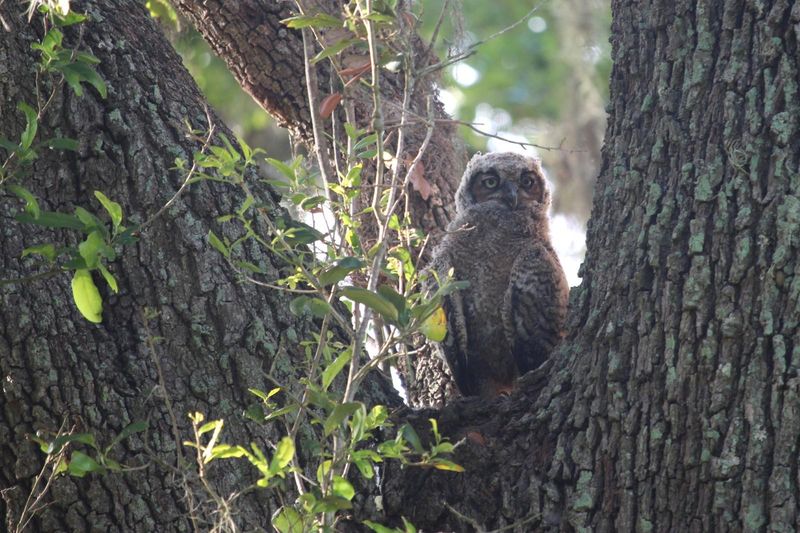
Before spending any money on structures or modifications, take stock of what your landscape already offers. Great Horned Owls favor properties with mature trees that provide substantial perches and canopy cover, open ground or lawn areas where they can spot and dive on prey, and enough quiet space to feel safe roosting or raising young. TPWD owl habitat guidance points to large trees and low human disturbance as the key ingredients.
Connectivity matters just as much as what is on your lot. A Great Horned Owl needs access to a broader landscape that includes hunting corridors, such as creek bottoms, open fields, parks, or greenbelts nearby. The Texas Breeding Bird Atlas account for Great Horned Owls shows that nesting pairs tend to occupy territories that include a mix of wooded cover and open foraging ground, not isolated urban lots surrounded by pavement and fencing.
Standing dead trees, called snags, are another valuable feature. TPWD’s Save a Snag resource identifies snags as important hunting perches and potential nesting sites for Great Horned Owls. If a snag is structurally sound and poses no hazard to people or structures, keeping it standing can make your yard meaningfully more attractive to a passing owl.
A small, exposed suburban lot with young trees, heavy foot traffic, and no connected natural habitat nearby may see an occasional owl flyover, but it is unlikely to support regular hunting visits or a breeding pair. Bird City Texas habitat resources emphasize that habitat quality, not just the presence of a single feature, determines whether wildlife will use an urban or suburban space consistently. Be honest about what your yard can realistically offer before committing to larger improvements.
Protect the nesting features already in your landscape
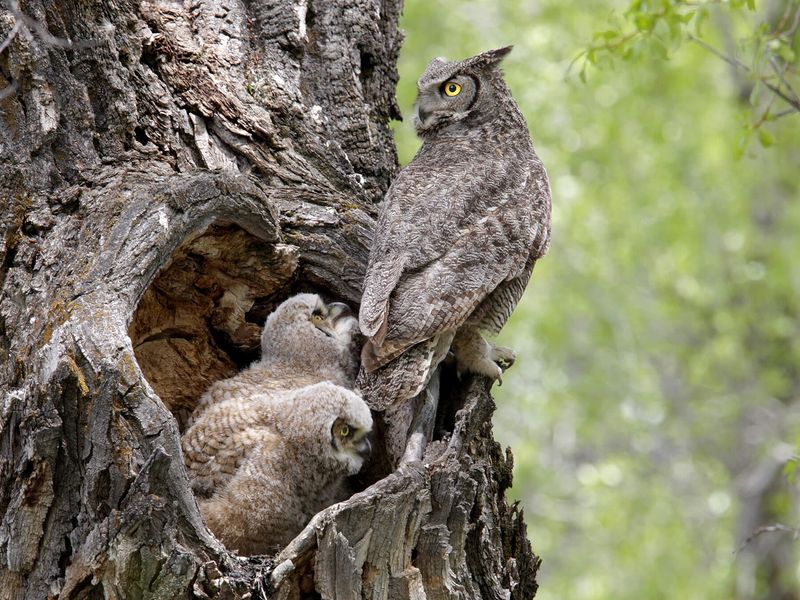
Great Horned Owls skip the nest-building step entirely. Instead of constructing a new nest, they typically move into whatever large, suitable structure they find available. Cornell Lab life-history records show that pairs commonly take over old nests built by red-tailed hawks, crows, herons, squirrels, and other large birds or mammals. They may also use open tree cavities, large crotches where branches fork from a main trunk, rocky ledges, and the rafters or lofts of deserted buildings.
Cornell Lab nest-cam documentation confirms that pairs reuse the same nest sites across multiple years when those sites remain undisturbed. That means the best thing many Texas landowners can do is leave existing large nests in place, avoid pruning major limbs from mature trees during nesting season (typically November through April in Texas), and reduce unnecessary foot traffic or noise near areas where owls have been seen roosting.
Nonhazardous snags deserve the same protection. TPWD snag guidance recommends keeping standing dead wood when it does not pose a safety risk, because it supports a range of cavity-nesting and perching wildlife including owls. However, a dead or dying tree that leans toward a structure, fence, or area where people gather should not be kept standing solely for wildlife value. Consult a certified arborist to assess whether the trunk can be safely retained at a shorter height or whether a portion of the wood can be repurposed as a wildlife feature closer to the ground.
TPWD owl guidance also recommends reducing unnecessary nighttime lighting near mature trees and avoiding any deliberate interference with an active nest. Protecting what is already there costs nothing and often does more than adding new structures.
A large open platform is an option—not an owl magnet
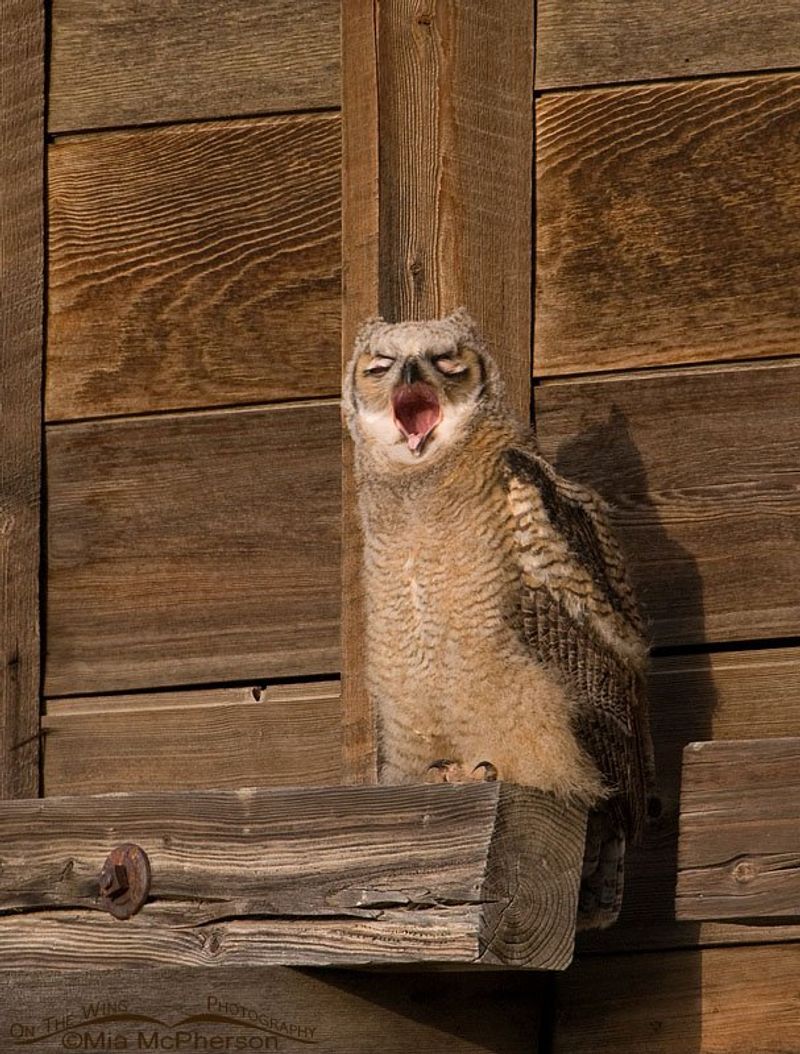
When natural nest sites are scarce, an artificial nesting platform can make a property more suitable for Great Horned Owls. The key word is “open.” Great Horned Owls do not use the small enclosed boxes with round entry holes that are commonly sold for Eastern Screech-Owls or other cavity-nesting species. A platform for this species is a flat, open tray or basket, usually constructed from wood or wire, with no sides high enough to enclose the bird.
NestWatch placement guidance reports that Great Horned Owls typically choose nest sites 15 to 45 feet above ground in hardwood trees with a trunk diameter of at least 12 inches. The platform should face away from prevailing wind, sit in a fork or against a sturdy limb, and have a clear flight path so the owl can approach and depart without obstruction. USDA nesting structure guidance similarly recommends mature hardwoods roughly 15 to 50 feet high, with nearby open foraging habitat and minimal human disturbance around the base of the tree.
Adding a layer of nesting material, such as coarse wood chips, bark, or dry leaves, inside the platform can make it feel more like a natural nest. Some wildlife managers loosely pack the platform with sticks to mimic the profile of a hawk or heron nest, since Great Horned Owls seem to respond to existing nest structure rather than bare boards.
Even with ideal construction and placement, a platform is an opportunity rather than a guaranteed attractant. USDA Forest Service species review findings make clear that nest-site availability is only one factor in habitat quality. The owl must already use the surrounding landscape, and Cornell Lab data confirms that pairs select territories based on prey availability, security, and landscape connectivity, not just the presence of a suitable structure. Install a platform where the broader habitat fits the species, and let the owl decide.
Skip the wrong box and never bait an owl
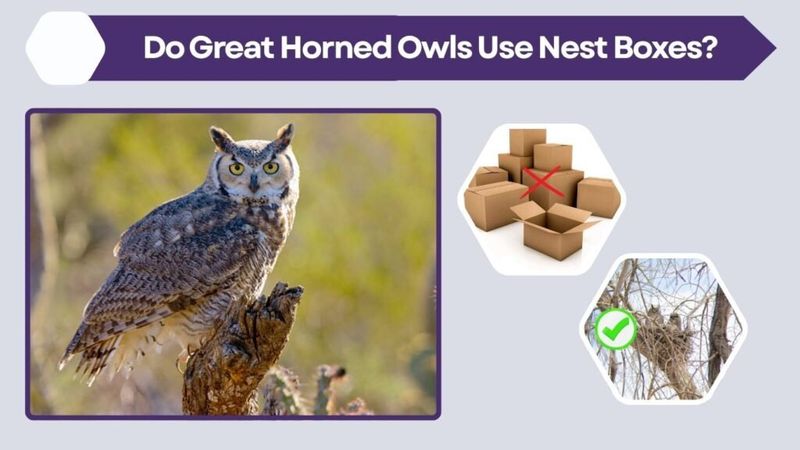
Walk into any Texas feed store or browse online, and you will find products labeled “owl box” that are sized for Eastern Screech-Owls or Barn Owls. Those boxes work well for those species. They will not work for Great Horned Owls. TPWD birdhouse guidance and NestWatch species-specific specifications both distinguish clearly between cavity-nesting boxes and the open platforms appropriate for Great Horned Owls.
Buying a small enclosed box and labeling it a “Great Horned Owl solution” is a mismatch that will likely go unused by the target species.
Equally important: do not try to lure an owl by leaving food out. Placing dead rodents, raw meat, brush piles near your door, or any other bait in the yard to attract a hunting owl is counterproductive and potentially harmful. TPWD owl management guidance does not recommend feeding or baiting owls, and CDC rodent sanitation guidance makes clear that leaving organic material accessible around your property worsens the sanitation conditions that allow rodents to thrive in the first place.
Deliberately increasing rodent habitat, whether through brush piles near the house, accessible garbage, or stored grain left in the open, does not create reliable predator control. It creates a sustained food source that attracts more rodents than any single owl can manage. The goal is to make your property suitable for a predator, not to manufacture a prey population that may outpace what a visiting owl can hunt.
Seal the house first, then use owl-compatible rodent control
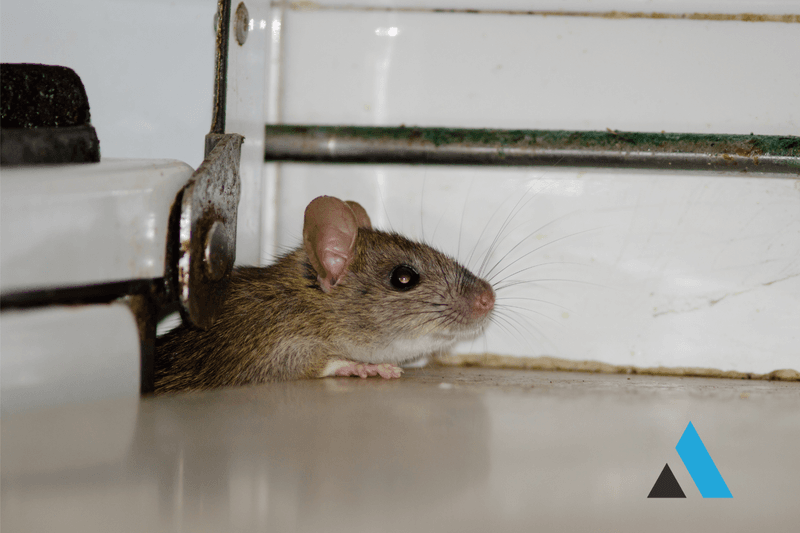
Owl habitat improvements are a supplement, not a substitute, for the steps that actually keep rats and mice out of your home. Start with the structure itself. CDC rodent exclusion guidance states that mice can squeeze through openings as small as one-quarter inch wide, roughly the diameter of a pencil. Rats need only about a half-inch.
Seal gaps around pipes, utility lines, vents, garage doors, and foundation cracks with hardware cloth, steel wool, or caulk rated for exterior use. Check where the roof meets the eaves and where any line enters the building.
Texas A&M AgriLife Extension rodent management guidance recommends a layered approach: eliminate access points first, then address the food and shelter that keep rodents on the property. Store pet food and livestock feed in sealed metal or heavy plastic containers. Secure garbage cans with locking lids, manage compost in a rodent-resistant bin, and pick up fallen fruit from trees. Remove woodpiles, debris, and clutter from against the foundation, since these create the sheltered runways that rats and mice prefer.
Once access and food sources are addressed, snap traps can handle the rodents that remain. Place traps along walls, behind appliances, and in enclosed spaces where rodent activity is visible, such as droppings or gnaw marks. CDC pest-control field guidance recommends positioning traps so that children, pets, and non-target wildlife cannot reach them. Use a bait station, a covered trap box, or a placement inside a wall void or under a secured cabinet when there is any risk of accidental contact.
TPWD owl guidance specifically recommends traps over poisons when owls or other raptors are present in the area. Snap traps kill quickly and leave no chemical residue for a scavenging owl to encounter. Together, exclusion, sanitation, and protected trapping form the direct rodent-control layer that owl habitat cannot replace.
Why rodent poison can turn an owl-friendly yard into a wildlife hazard
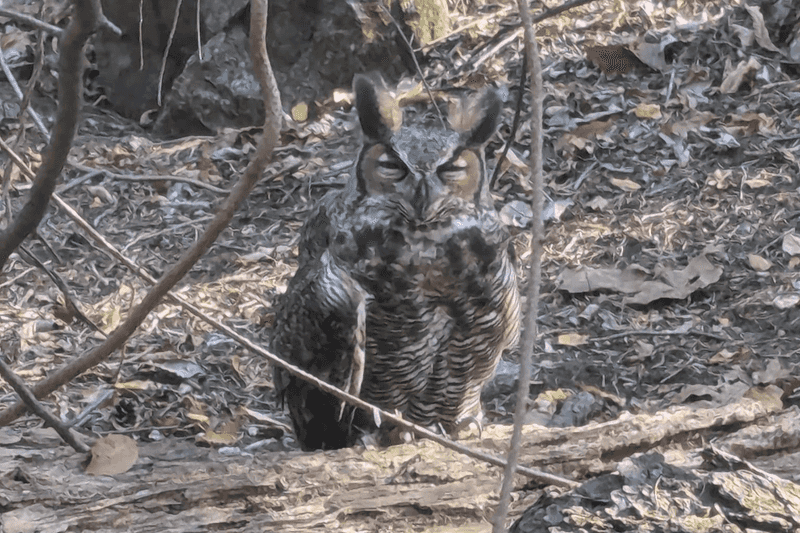
Rodenticide bait stations are widely available and effective at killing rats and mice, but they create a serious conflict for anyone trying to support Great Horned Owls or other raptors. The problem is secondary poisoning. A rat or mouse that has eaten a rodenticide bait does not die immediately. It may remain active for hours or days while the chemical builds up in its body.
An owl that catches and eats that rodent can then ingest a dose of the same compound.
EPA rodenticide safety review materials document secondary-poisoning risks for predators and scavengers that consume poisoned rodents, with owls and other raptors specifically noted as vulnerable species. EPA appendix data on bromadiolone exposure shows that second-generation anticoagulant rodenticides, which are the most common active ingredients in consumer bait blocks, can accumulate in predator tissues after a single feeding event involving a poisoned prey animal.
The actual risk to any individual owl depends on the specific compound, the dose the rodent received, how long after ingestion the rodent was caught, and how many poisoned rodents the owl ate. Not every bait product will harm every owl in every scenario. EPA consumer guidance on rodenticide use recommends using the least-toxic option available, following label instructions precisely, and placing bait only in tamper-resistant stations where non-target animals cannot access it. Where exclusion, sanitation, and snap traps can address the problem, those methods carry no secondary-poisoning risk at all and are the better choice in any yard where owls or other raptors may be present.
Expect wild-owl responsibilities, not a backyard pest service
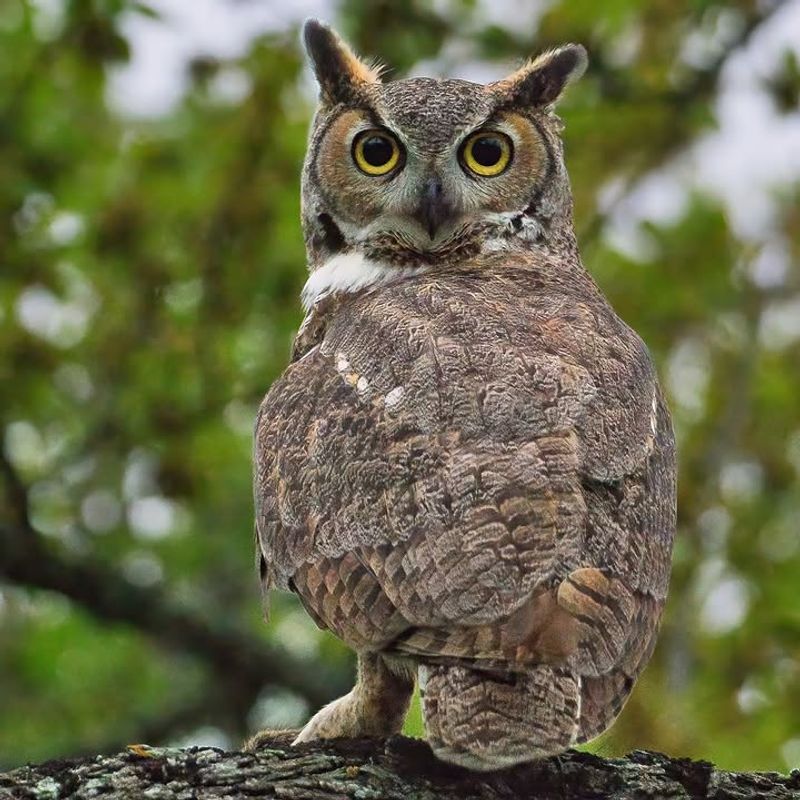
Hosting a Great Horned Owl, even occasionally, comes with practical realities that are worth knowing before you invest in habitat improvements. Nesting pairs are noisy. The deep, rhythmic hooting that makes these birds iconic can carry a long distance and tends to happen at night and in the early morning hours. Beneath an active nest, you will also find pellets, which are compact masses of bones, fur, and feathers that the owl regurgitates, along with prey remains and substantial droppings.
TPWD owl guidance notes that adults defending a nest can be aggressive toward people or pets that approach too closely.
Fledglings add another layer of complexity. Young Great Horned Owls leave the nest before they can fly well and spend days or even weeks on the ground or in low branches while their flight feathers develop. A fledgling on the ground is not necessarily injured or abandoned. The parents know where it is and continue to feed it.
The appropriate response is to leave it alone, keep pets and children away, and give the bird space to develop at its own pace.
Federal and Texas law protect Great Horned Owls. The Migratory Bird Treaty Act and federal regulations at 50 CFR 10.13 cover Great Horned Owls, and TPWD law enforcement guidance confirms that owls are protected under both state and federal law. Do not approach, feed, handle, relocate, or deliberately disturb owls, active nests, eggs, nestlings, or fledglings. Legal requirements depend on the specific conduct and circumstances, so direct detailed questions to TPWD or the U.S.
Fish and Wildlife Service rather than assuming any particular action is automatically permissible or prohibited.
Build an owl-friendly yard, but solve the rodent problem directly
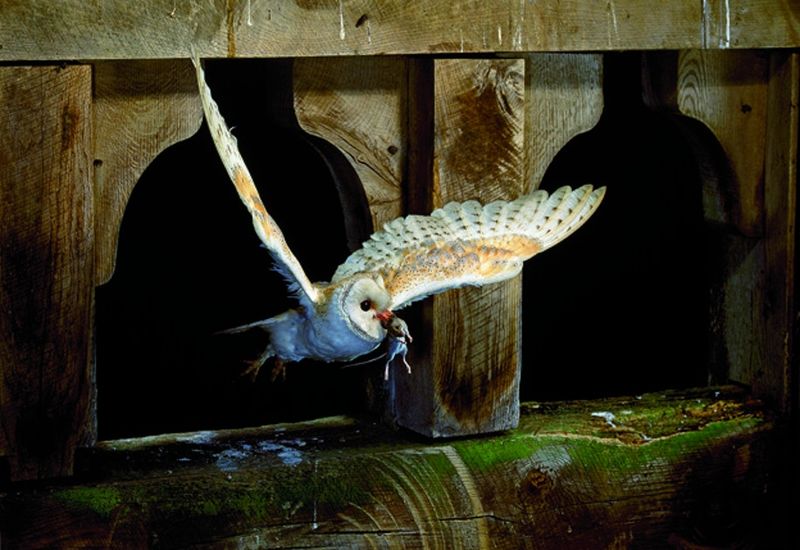
Putting this together comes down to a clear sequence. Assess your landscape honestly. If your yard has mature trees, a connected natural area nearby, open foraging ground, and low nighttime disturbance, it may already be suitable for occasional owl use. Preserve nonhazardous snags, protect existing large nests, and reduce unnecessary lighting.
Consider an open nesting platform, built to the dimensions described by NestWatch species specifications, only if the surrounding habitat genuinely fits the species’ needs.
At the same time, tackle the rodent problem directly. CDC exclusion guidance and Texas A&M AgriLife Extension both point to sealing entry points and removing food and shelter as the most reliable first steps. Follow those with protected snap traps where activity persists, and avoid or tightly control rodenticides in any yard where owls or other raptors may be present. TPWD owl guidance supports exactly this combination: reduce chemical hazards and use traps when direct control is needed.
Treat any owl that visits as a wild predator with its own territory, diet, and schedule rather than a service that runs on your timeline. The honest payoff is a healthier Texas yard that supports native wildlife and gives a wide-ranging hunter a reason to pass through more often. That is worth doing on its own terms, even without a guarantee that the rats and mice will notice.