
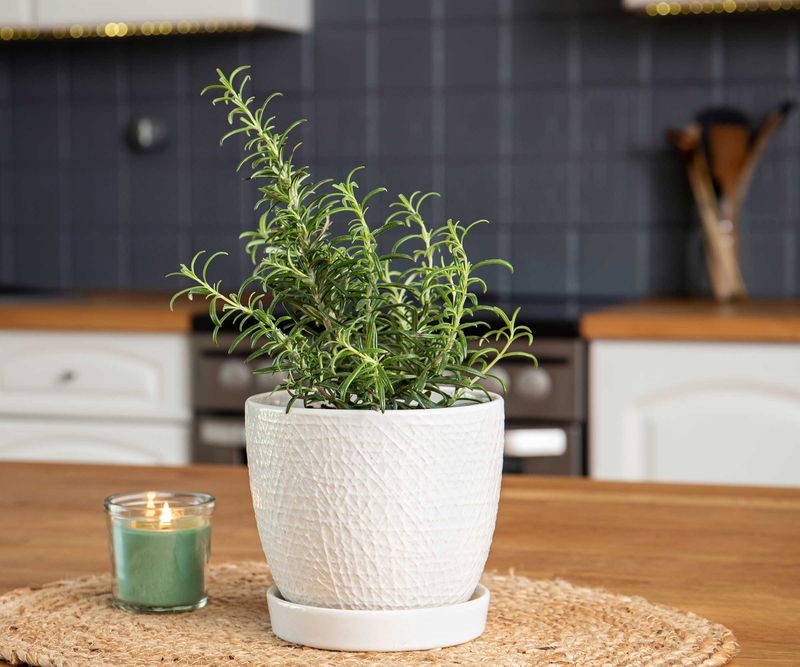
Rosemary that looked fine on the patio can turn crispy and brown within weeks of coming indoors. Heated rooms, short days, and a pot that stays too wet or too dry all change how the plant behaves.
A few simple checks can help you figure out what your plant is dealing with. Here is how North Carolina gardeners can sort out the causes and keep their rosemary as healthy as possible until spring.
A brown tip does not point to one cause
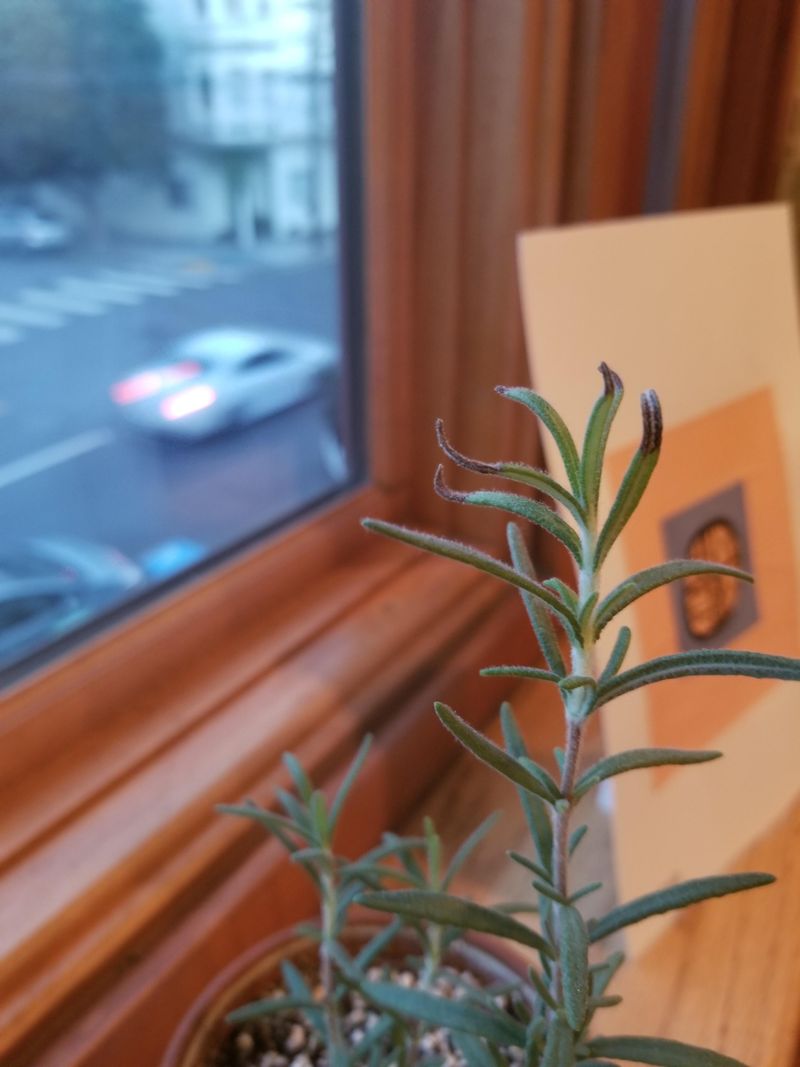
Browning is a symptom, not a diagnosis. A rosemary stem with brown tips might be short on light, sitting in soggy mix, dried out, chilled by a draft, or hosting pests.
Hot, dry air blowing on the plant can brown leaf edges, but it is only one possibility on the list.
Before you change anything, run through four quick checks. Push a finger into the mix and see whether it is wet, damp, or dry.
Look at the drainage holes and the saucer for standing water. Note how much light the plant gets and whether a vent, radiator, or drafty door is close by.
Then look over the foliage for anything unusual.
Soil matters most because the fixes pull in opposite directions. Illinois Extension watering guidance explains that overly wet mix and damaged roots can cause browning and even wilting, so adding water to a plant with wet roots can make things worse.
Illinois Extension’s rosemary page also links indoor dryness to brown tips and dieback, which is why checking the mix first is so useful.
This guide is for potted rosemary you have chosen to bring inside. NC State’s winterizing guide lists rosemary as normally hardy in the Piedmont and Coastal Plain, but not in the Mountains, and it notes that some plants may need indoor overwintering or heavy mulch.
A container is more exposed than an in-ground plant, and cultivar, site, and drainage all matter, so bringing a pot inside is a choice, not a rule for every yard in the state.
Put light first
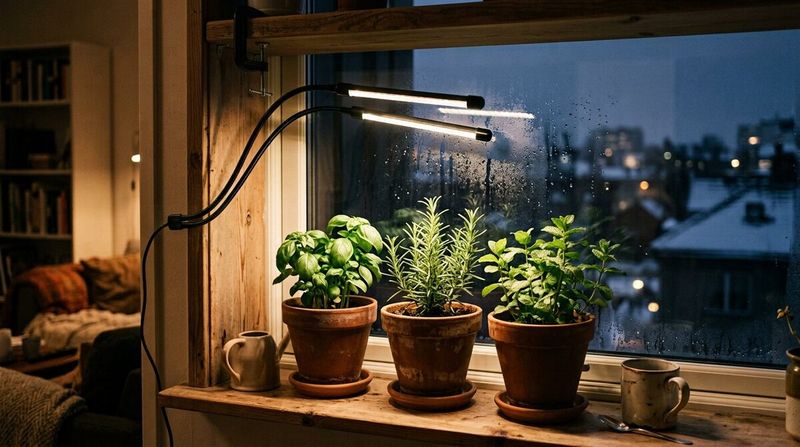
Of all the things you can adjust, light is the one rosemary asks for most. It is a full-sun plant, and NC State’s Plant Toolbox lists at least six hours of direct sun a day.
NDSU Extension suggests closer to eight hours for indoor plants.
Winter days are short and the sun sits low, so most rooms fall well short of that. Pick the sunniest window you can spare, which is often a south-facing one.
Turn the pot every week or so, so all sides get a turn at the glass.
If no window gives enough sun, a grow light placed over the plant can fill part of the gap. Follow the light’s instructions for distance and daily hours, and watch how the plant responds over a few weeks.
Low light has real consequences. Penn State Extension describes rosemary as tricky to overwinter indoors, and weak light can lead to leaf drop.
A warm room does not make up for dim light, so choose brightness over cozy temperatures when you have to pick.
Choose a spot away from direct air streams
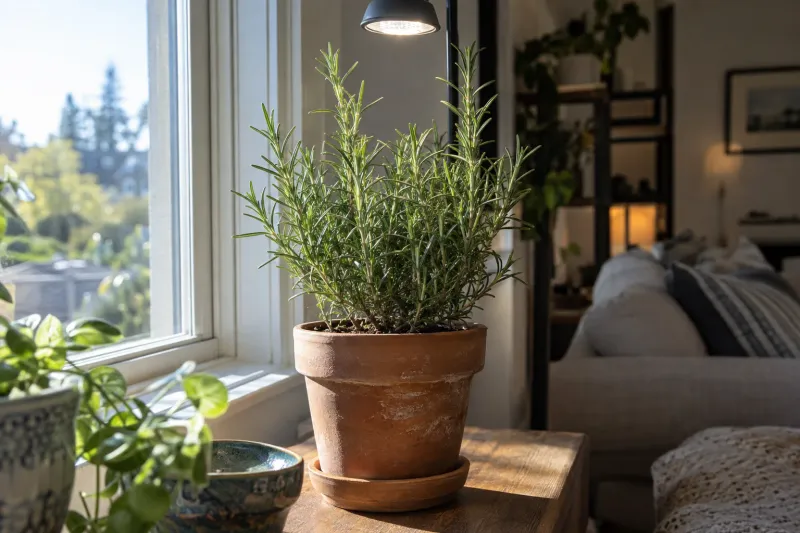
Walk around your sunniest rooms and notice where the air moves. Heating vents, radiators, and space heaters push hot, dry air, and exterior doors and leaky windows let in cold drafts.
Plants parked in either stream can end up with scorched or browned leaf edges.
As University of Missouri Extension’s houseplant care guide explains, hot air blowing on houseplants can brown leaf edges, and sudden temperature swings add stress. A pot on a windowsill can also get a chilly blast if you open the window or the glass is very cold overnight.
A practical test is to hold your hand at plant height for a minute. If you feel a steady puff of warm or cool air, shift the pot a few feet.
If the window is the only bright spot, try redirecting a vent with a deflector, or move the plant at night when the heat runs most.
When you must choose, a consistently cool, bright spot beats a warm, dim one. Penn State Extension recommends cool temperatures for overwintering herbs.
Do not aim a fan at the plant to fix browning, because extra airflow is not a cure and direct streams can do harm.
Moving rosemary away from a vent is sensible, but it will not guarantee green foliage. Treat it as one step among several.
Water by checking the mix
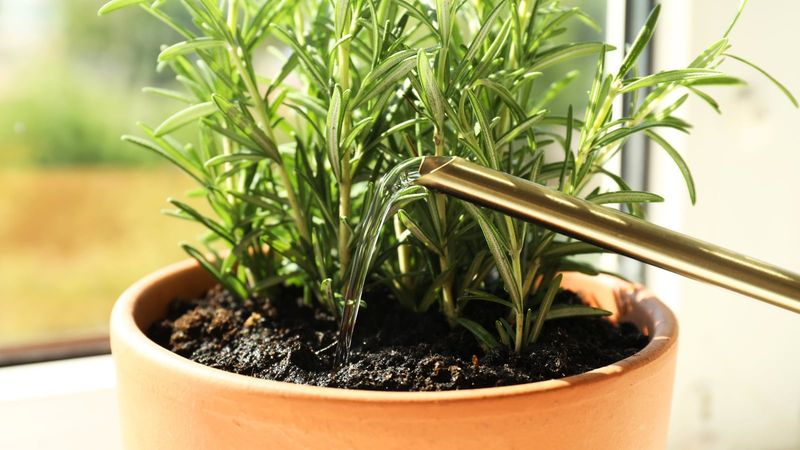
Forget the calendar. A weekly schedule ignores how much light, warmth, and pot size change the plant’s thirst.
Instead, check the mix with a finger or a wooden skewer before you water.
Start with the setup. Use a pot with drainage holes and a well-drained potting mix, as Illinois Extension’s container herb guidance recommends.
Let the top of the mix dry slightly between waterings, then water thoroughly until it runs out the bottom. Empty the saucer so the roots are not sitting in water.
The reason is roots. Illinois Extension notes that overwatering can cause root rot, and rotting roots can cause browning and wilting that looks a lot like thirst.
If the mix stays soggy for days, hold off, and consider repotting into a freer-draining mix.
The opposite problem is real too. Rosemary is called drought tolerant, but a plant in a pot has limited root room and should not sit bone-dry for long stretches.
Illinois Extension ties dry conditions to brown tips and dieback.
A pot that feels very light and a mix pulling away from the edges both suggest it has dried out. When in doubt, wait a day and check again rather than watering every time you see a brown tip.
Address dry air without adding more water

Heated homes can get very dry in winter, and rosemary may show it. Illinois Extension associates dry indoor air with brown tips and dieback.
The tempting response is to water more, but that can push the roots toward rot, which brings its own browning.
Before you act on humidity, find out whether it is actually low. A small hygrometer costs little and tells you the real number in the room.
If readings are low and the plant is struggling, a humidifier is the more defensible option, placed so it does not blow directly on the foliage.
You will see pebble trays and misting recommended often, and extension advice does not agree on them. Illinois Extension suggests both for rosemary, while Penn State Extension says the humidity boost from misting is brief and pebble trays are unlikely to raise humidity much across a room.
If you like the habit, a tray or a light misting will not hurt, but do not count on either to keep rosemary green. Neither one replaces bright light and careful watering.
Fix those first, then consider humidity as a smaller piece of the picture.
Check the undersides of the leaves
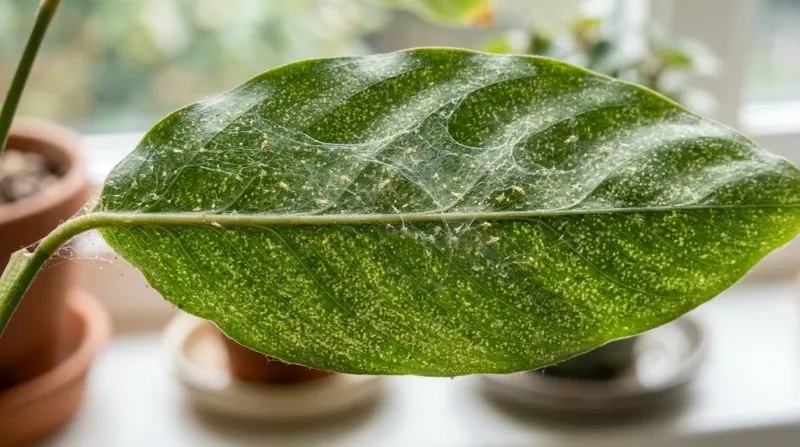
Pests are the check people most often skip. Spider mites are tiny and easy to miss, yet they can cause bronzing or browning, and hot, dry rooms favor them.
A plant on a sunny sill near a heater has the conditions they like.
Look closely at the foliage and stems, especially the undersides of leaves. Signs include fine stippling, which looks like tiny pale dots, and delicate webbing between needles or at stem joints.
A hand lens or a white sheet of paper held beneath a branch you tap lightly can help you spot them.
University of Missouri Extension’s guide to indoor plant pests covers how to recognize spider mites and manage them with least-toxic methods. Check there for approaches before you reach for a product.
Keep the evidence in perspective. Browning alone does not prove mites, since light, roots, cold, and dryness can cause the same look.
If you see no stippling or webbing, move on to the other checks. If you do, isolate the plant from your other houseplants while you sort it out.
Keep winter harvests light and expectations realistic
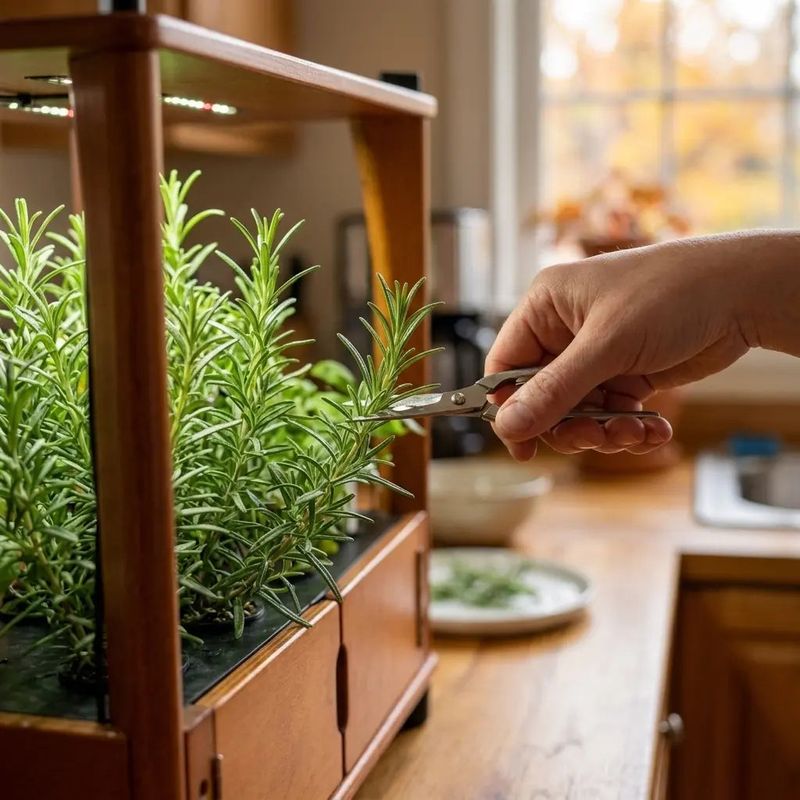
Indoors, the goal for winter is keeping the plant steady, not pushing growth. Expect slow growth and perhaps some leaf drop.
NC State describes rosemary as a tender perennial that can be hard to carry through indoors, so survival to spring is not guaranteed.
Harvest lightly. A few sprigs for a pot of soup is reasonable, but avoid heavy cutting while growth is limited.
Illinois Extension advises harvesting perennial container herbs less heavily than annual herbs, and Penn State notes the limits of indoor growing.
Keep the routine simple: bright light, shelter from hot and cold air streams, and moisture checks before watering. Illinois Extension offers more on rosemary care.
A few brown needles in February are not a verdict. A plant that simply holds on until spring has done its job.